
Drafting Retainer Escalation Terms to Price Client Friction
Contractual retainer escalation clauses convert unbatched communication and approval delays into cardinal fees, protecting operational capacity from unpriced drag.
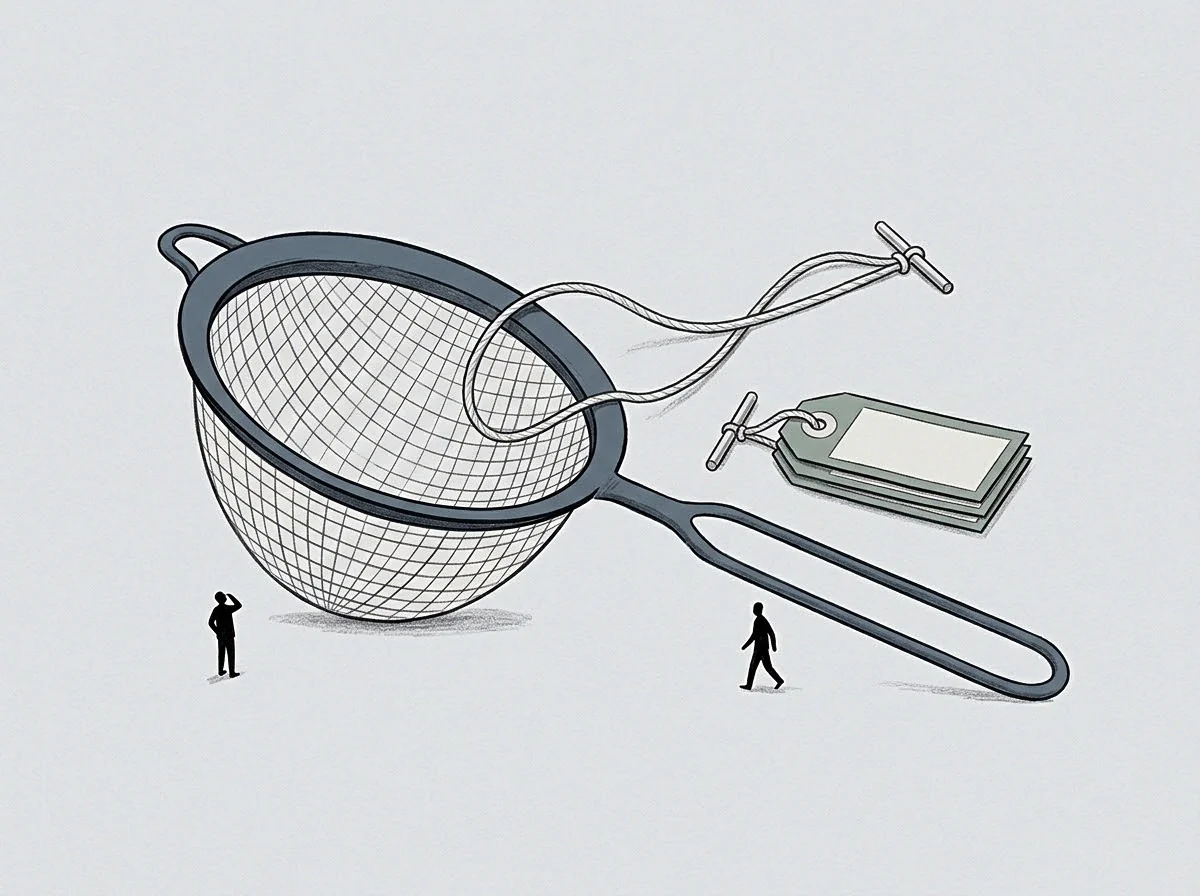
Trigger
Seven messages arrived before noon. An agency team stood midway through a scheduled quarterly build when two brand managers and a product lead from the client organization submitted conflicting design comments across separate Slack channels. None of these remarks referenced the milestone agreement established six weeks earlier.
A designer paused an active layout sprint to reconcile three divergent perspectives on color saturation. The sprint stalled completely.
Retainer agreements frequently assume an orderly exchange of materials between counterparties. Professional services firms structure monthly recurring retainers around expected outputs or reserved blocks of weekly production. Friction emerges when client behavior destabilizes this reserved volume.
Unscheduled check-ins, delayed approvals, fragmented stakeholder reviews, and out-of-channel messages consume executive attention without generating corresponding deliverables.
Unscheduled client messages expand project delivery timelines whenever synchronous coordination replaces pre-agreed weekly batching windows.
When friction accumulates without contractual boundaries, operational output deteriorates. The professional team spends hours arbitrating minor administrative revisions instead of delivering core strategic milestones. The underlying engagement becomes financially unviable, yet the client believes service delivery remains within reasonable retainer boundaries.
Addressing this friction demands establishing exact contractual levers that price operational delay.

Unscheduled Demand in Fixed Fee Agreements
Hourly billing contracts automatically record communication spikes. A fifteen-minute unscheduled phone call registers on the timesheet as billable time, creating natural client discipline. Fixed-fee monthly retainers remove this automatic brake.
When access is untethered from direct hourly billing, the counterparty experiences communication as having zero marginal expense. As a result, client teams route low-priority inquiries directly to senior operators throughout the working day.
This dynamic introduces severe operational overhead into technical and creative teams. Cognitive load research demonstrates that complex engineering or design tasks demand uninterrupted blocks of continuous focus. Fragmenting those focus blocks through intermittent client inquiries forces team members to restart cognitive processes repeatedly.
The engagement yields diminishing economic returns as operational hours climb while the nominal monthly retainer fee remains static.
The client often maintains that unlimited quick questions were included in the monthly advisory fee.

Seat
An operator responsible for service delivery reads organizational friction through calendar compression. When an account requires constant coordination meetings to align divergent client stakeholders, the firm allocates its senior personnel to administrative pacification. The firm absorbs a multi-component expenditure: lost production hours, depleted working energy, and reduced capacity to service other accounts.
Attention is an ordinal capacity. An individual cannot divide executive cognitive focus into identical fractional units across concurrent complex projects. Herbert Simon established that humans operate under bounded rationality, constrained by information processing limits in complex environments.
This principle rests on empirical studies tracking task completion times among technical professionals undergoing systematic interruptions. If knowledge workers could resume deep analytical tasks instantaneously without error or delay, this empirical model would collapse. Because human cognitive recovery requires extended ramp-up periods, fragmented client demands inflict heavy internal drag.
Operational bandwidth contracts as client decision points disperse across separate informal communication tools.
Retainer structures must protect operational focus by defining explicit limits on direct access. The expenditure of client friction lands directly on delivery margins through predictable administrative mechanisms:
- Unbatched feedback loops force production teams to redesign deliverables in piecemeal increments rather than executing single comprehensive revisions.
- Stakeholder misalignment sessions draw senior account leaders into internal political arbitrations that belong strictly inside the counterparty organization.
- Emergency escalation requests displace planned milestone production to resolve client-side timeline failures that do not represent genuine organizational crises.
- Channel dispersion scatters vital project context across text messages, collaborative software threads, and unrecorded phone calls.

Attention Depletion Across Fragmented Feedback
Context switching drains executive reserve. When a client submits five isolated edits over two days instead of delivering a consolidated brief, the account director reviews the source document five separate times. Each review requires reorienting to project specifications, validating dependencies, and briefing production personnel.
The firm incurs genuine capacity loss during these administrative cycles. An operator whose attention is consumed by client friction cannot direct energy toward technical refinement, system improvement, or strategic planning. The engagement rapidly decays into reactive fire-fighting.
Retainer contracts that price access rather than output establish clear pricing floors for this administrative drag.
Client communication habits mirror the structural boundaries outlined in the original commercial agreement.

Table
Commercial contracts define behavioral boundaries through explicit financial penalties. To price friction accurately, an agreement categorizes counterparty behavior into measurable operational events. Each behavioral category maps to a concrete contractual trigger and a cardinal fee adjustment.
| Friction Mode | Behavioral Setpoint | Escalation Mechanism | Fee Adjustment |
|---|---|---|---|
| Unconsolidated Edits | Single batched review per milestone | Audit review tracking logged revisions | Additional markup on base monthly rate |
| Unscheduled Meetings | Pre-booked weekly coordination call | Direct calendar scheduling log | Standard hourly advisory surcharge |
| Approval Latency | Sign-off within two business days | Automatic project freeze notification | Demurrage fee per delayed day |
| Channel Breach | Designated project repository only | Manual message transfer protocol | Fixed administrative transfer charge |
Establishing these contractual definitions creates objective criteria for identifying administrative friction. When terms remain vague, disputes over retainer scope rely on subjective interpretations of partnership goodwill. The table provides an operational baseline that protects the service delivery team from open-ended communication demands.

Does Fragmented Review Activity Justify Surcharges?
Unscheduled reviews carry operational friction. When a counterparty circulates a working deliverable to six internal executives without assigning a single point of final editorial ownership, conflicting directives inevitably reach the supplier. The supplier cannot execute revisions safely without clarifying the counterparty hierarchy.
A structured retainer agreement incorporates an explicit consolidation clause. This term mandates that the client designate one single representative authorized to approve milestones and deliver compiled commentary. If the counterparty forwards conflicting edits from multiple staff members, the supplier issues a formal request for consolidation while pausing active sprint timelines.
Should the client request that the supplier reconcile internal stakeholder differences directly, the contract applies an elevated coordination surcharge.

Objective Thresholds for Asynchronous Communication
Modern service engagements frequently utilize shared collaboration platforms. While asynchronous messaging accelerates rapid problem-solving, it also blurs the distinction between working sessions and off-hours communication. Without contractual limits, client teams treat instant messaging channels as persistent virtual meeting rooms.
The contract establishes explicit parameters governing response obligations. The agreement defines acceptable business hours for message monitoring, standard response windows, and maximum daily query thresholds. Any inquiry demanding immediate intervention outside standard windows triggers an automatic premium response billing event.
Unaddressed friction gradually erodes delivery margins until senior talent departs the account entirely.

Draft
Contractual terms translate operational expectations into legally enforceable structures. A clear retainer agreement balances client access with supplier autonomy. Drafting effective terms requires eliminating ambiguous words such as reasonable access, standard support, or periodic consultations.
Precision replaces interpretation.
A contractual demurrage provision converts client approval delays into predictable daily fee escalations.
In heavy maritime commerce, demurrage penalties resolve dock congestion by charging charterers for occupying berths beyond agreed loading windows. Industrial manufacturing similarly levies warehouse staging fees when completed machinery sits waiting for client transport. Professional services retainers require identical mechanisms.
When a client withholds critical feedback, the supplier retains capacity without producing billable output. Contractual escalation terms guarantee that dormant capacity receives fair remuneration.

Structural Provisions for Response Latency
Late approvals halt active production. A robust escalation clause contains three interlocking components designed to prevent operational gridlock:
- Explicit review windows allocate a defined duration for client inspection of intermediate deliverables, typically two to three business days from delivery.
- Automatic schedule suspension freezes project delivery dates upon expiration of the review window without placing the supplier in breach of deadline commitments.
- Reactivation premiums apply a percentage surcharge to the subsequent monthly invoice to offset the overhead of re-onboarding internal teams to delayed workflows.
These mechanics maintain project momentum. When client executives realize that delayed feedback generates direct administrative charges and reschedules active sprints, sign-offs arrive predictably.

Contractual Mechanics of Scope Recalibration
Revision cycles consume billable bandwidth. Fixed retainers frequently suffer from slow scope creep, where minor additions expand the total volume of work without triggering a formal new statement of work. Drafting escalation terms resolves this by incorporating tiered volume limits.
The agreement specifies the exact number of concept drafts, refinement rounds, and stakeholder review meetings included within the base retainer fee. Work exceeding these baseline allocations transitions into an automatic fee tier. The contract stipulates: Any request exceeding stated monthly round allocations will be billed at standard premium rates without requiring an executed contract amendment.
The revision threshold clause automatically activates the higher billing tier upon delivery of the third round of feedback.
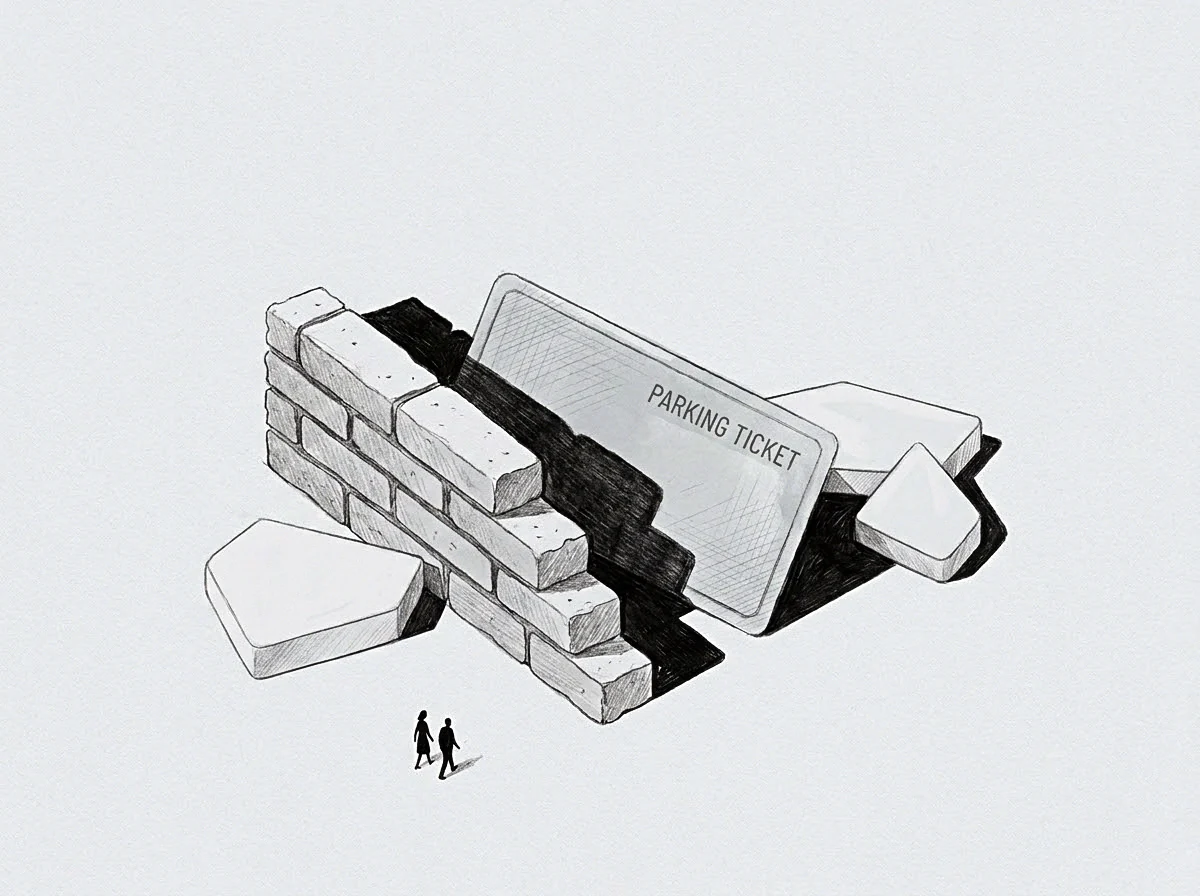
Rate
Financial adjustments convert administrative drag into cardinal figures. While internal operational capacity is measured ordinally by tracking team fatigue and competing priorities, invoices communicate cardinal figures. The contract bridges this gap by applying transparent arithmetic multipliers to the baseline retainer.
The literature on psychological contracts emphasizes that business relationships survive unilateral contract enforcement only when rules appear transparent and pre-negotiated. Relational contract theory rests on studies of commercial supplier networks over multi-year procurement cycles. If commercial relationships operated purely on informal goodwill without contractual recourse during operational breakdowns, the theory of formal relational contracting would lack empirical support.
Stating escalation rates openly during initial contract signing prevents surprise invoices from fracturing client trust.
Surprise administrative charges destroy counterparty goodwill faster than explicit contractual escalation schedules.
The desk cannot fully defend the universal adoption of an arbitrary two-times hourly multiplier for client friction. Determining an exact conversion rate remains subject to market position, industry vertical, and competitive leverage. Operators manage this uncertainty by indexing friction surcharges directly to standard executive hourly rates rather than applying arbitrary punitive penalties.

Cardinal Conversion of Latent Drag
Cardinal rates require clear baselines. To establish an escalation fee, the firm computes the baseline daily value of its dedicated retainer team. If an enterprise retainer allocates a dedicated engineering pod at a fixed monthly fee, that fee reflects a specific daily production rate.
When client approval delays freeze that engineering pod for four business days, the supplier cannot reassign those specialists to other client projects without incurring onboarding latency. The contract applies a daily holding rate equal to seventy-five percent of the pod’s implied daily retainer fee. The counterparty pays the difference.

Managing Counterparty Pushback on Billings
Clients often resist administrative friction charges upon first invoice delivery. They argue that collaborative communication should not be monitored with accounting precision. The account lead addresses this pushback by referencing the objective contractual triggers established during contract onboarding.
The invoice documents specific instances where behavioral boundaries were breached: unbatched Slack threads, missed milestone sign-offs, and unscheduled stakeholder meetings. The firm explains that these charges protect reserved team capacity for primary deliverables. Presenting documented logs alongside explicit contract language shifts the conversation from subjective emotional debate to contractual compliance.
Whether enterprise clients will permanently accept rigid friction surcharges when broader macroeconomic contractions force service suppliers to compete aggressively on flexibility remains an open commercial question.