
Enforcing Contract Exit Floors When External Client Revenue Caps Destroy Internal Scalability Vector
Enforcing contractual exit floors prevents margin compression when external spend caps freeze top-line revenue while internal operational costs expand.

Gate
A commercial contract enters dangerous ground when external spending limits restrict total realization while internal service commitments continue expanding. Corporate buyers frequently demand budget predictability through hard fee ceilings or capped billing arrangements. When a service provider agrees to a revenue ceiling without constraining client usage, internal operating economics decouple from realized cash flow: labor demands and engineering hours accumulate quickly against an immovable ceiling, causing operating losses to compound.

Fixed Spend Limits and Operational Density
Client agreements often incorporate annual billing caps to establish budgetary certainty. The vendor entering this arrangement usually assumes that automated operational improvements will lower delivery expenses faster than client usage grows. This assumption fails when client expansion requires custom integration, continuous account management, or specialized compliance overhead.
In these cases, internal unit expenses flatten while consumption metrics continue rising. The vendor absorbs every additional hour as pure margin reduction because the contractual top line remains immovable.
When an enterprise account reaches its revenue cap early in a billing cycle, operational capacity becomes an uncompensated contribution. Software platforms experience increased infrastructure query loads, and services firms face unending support tickets. Internal delivery vectors shift from non-linear efficiency toward linear labor scaling.
The provider continues performing to maintain account reputation, yet each additional unit of service reduces the net contribution margin of the enterprise account. Labor allocation decisions made inside the vendor organization begin competing directly with higher-margin accounts.
The operational tension intensifies when client procurement officers treat the spending ceiling as an absolute legal right while treating service depth as an elastic requirement. Scope creep under a fixed billing ceiling transforms an operating margin into a structural loss vector. The provider’s delivery leadership attempts to manage this disparity through internal productivity mandates, but productivity gains cannot bridge an infinite expansion of client requests against a hard realization ceiling.
The agreed ceiling was meant to stabilize corporate budgeting for the fiscal year, and additional compensation cannot be approved without executive review.

Span
Evaluating operational profitability across multi-year enterprise accounts reveals a direct tension between client financial controls and internal delivery efficiency. Contracts negotiated without exit floors force vendors to absorb all margin risk generated by client volume growth. A scalable delivery model requires that increases in client consumption generate corresponding realization or, at minimum, trigger structural terms that allow contract renegotiation.

Measuring Vector Divergence Across Contract Cycles
Service delivery platforms rely on structural efficiency to expand operating margins over time. When unit costs drop faster than price per unit, the internal scalability vector moves upward. An external revenue cap disrupts this trajectory by establishing an absolute price floor on client contribution while client consumption drives unit delivery costs upward.
The gap between internal delivery expenses and realized revenue expands over time. Operating margins collapse once client utilization crosses the threshold where automated infrastructure transitions into manual operational intervention. Common contractual cap structures impact internal vendor scalability in distinct ways.
| Cap Structure | Scalability Vector Impact | Internal Cost Vector Accumulation | Exit Floor Trigger Condition |
|---|---|---|---|
| Absolute Spend Ceiling | Destroys operating leverage once utilization exceeds base tier assumptions. | Accumulates linearly through uncompensated labor hours and infrastructure overhead. | Contract termination option when realized hourly return drops below base margin floor. |
| Tiered Utilization Cap | Preserves partial scalability up to defined volume boundaries. | Step-function increases at tier boundaries without proportional realization adjustments. | Mandatory pricing recalibration upon reaching tier capacity limits. |
| Fixed Rate Escalation Cap | Erodes margins gradually during inflationary operational cost cycles. | Compounding increases in wages, vendor platform costs, and compliance overhead. | Annual rate adjustment linked directly to external inflation indices or operational labor indices. |
A vendor operating under an absolute spend ceiling without exit protections eventually reaches a point where terminating the agreement yields higher net enterprise value than continuing service delivery. Continued delivery consumes engineering attention that could generate positive contribution margins on uncapped accounts, forcing capital to shift elsewhere.
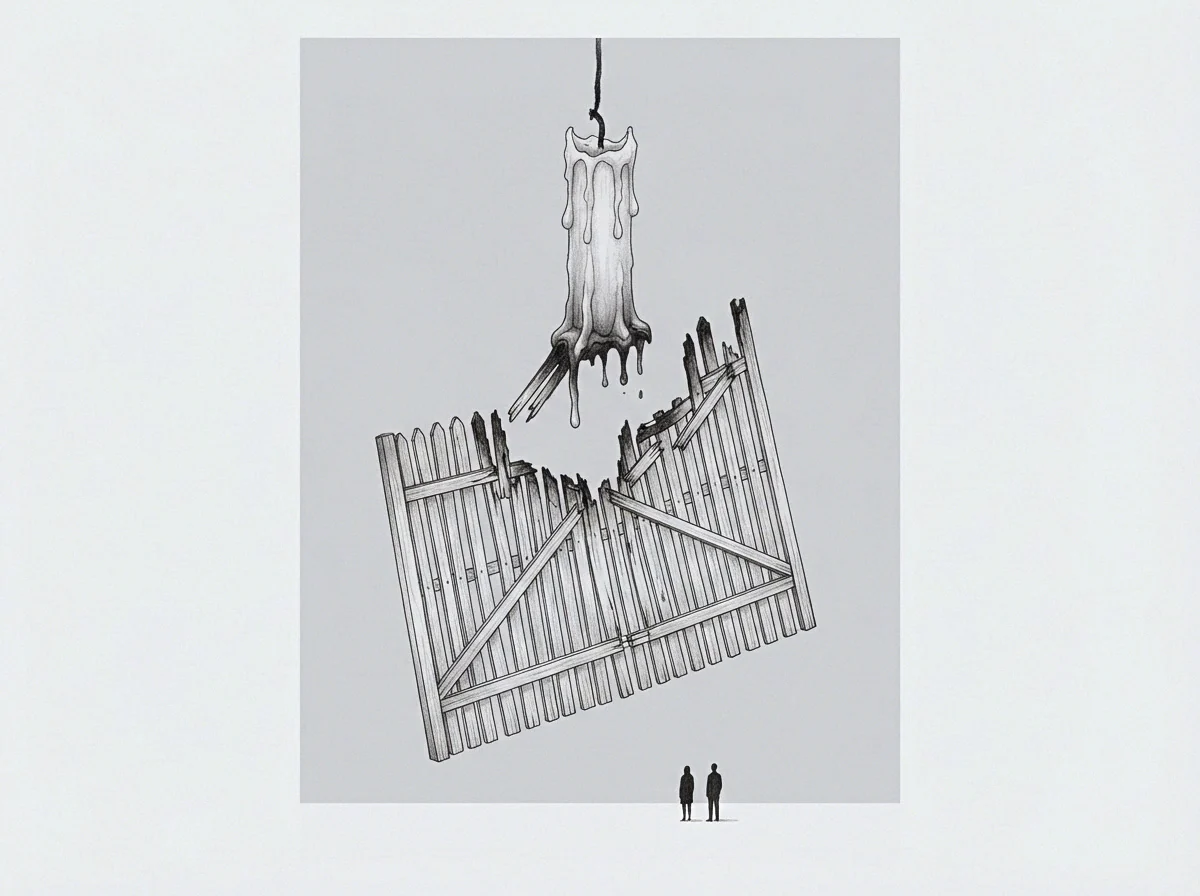
Fixed revenue ceilings convert expanding client service utilization into direct operating loss whenever internal unit costs fail to drop at the same rate.
Inserting an annual volume threshold clause into the master agreement converts a capped revenue liability into a mandatory scope renegotiation point once engineering effort exceeds three hundred hours.
Ramp
The structural erosion of vendor margins becomes fully visible during long delivery engagements with fixed billings. Operational capacity committed to an unprofitable account limits company growth and prevents investment in product enhancements. Understanding this dynamic requires examining how operational hours accumulate against fixed billing limits across real delivery cycles.
Worked Dynamics of Uncompensated Capacity Allocation
Consider an enterprise agreement where a software platform vendor agrees to a six hundred thousand dollar annual fee cap. Assume the initial delivery plan specifies four hundred hours of custom configuration and twenty thousand dollars in monthly infrastructure load. In year one, the account yields a healthy gross margin of sixty-two percent.
In year two, the client expands platform usage across three additional operational divisions, increasing support ticket volume by two hundred percent and requiring continuous data pipeline maintenance.
Because the fee cap remains locked at six hundred thousand dollars, the additional delivery demands directly compress operational returns. Infrastructure consumption climbs to thirty-five thousand dollars monthly, while annual engineering support reaches fourteen hundred hours. Labor expenses alone absorb four hundred and twenty thousand dollars at an internal cost rate of three hundred dollars per hour.
Total delivery expense reaches eight hundred and forty thousand dollars annually against six hundred thousand dollars in capped realization, making the account unviable.
This operational failure follows a predictable structural sequence across client engagements:
- Cap Alignment establishes baseline service expectations against a hard annual expenditure limit set by client procurement officers.
- Volume Expansion drives operational ticket creation and system resource consumption beyond original contract baseline estimates.
- Margin Compression reduces realized net contribution as manual labor replaces planned automated platform scale.
- Capacity Exhaustion diverts senior technical talent from core roadmap development toward maintaining the unprofitable client account.
- Contractual Lockout prevents price adjustments due to the absence of explicit renegotiation triggers or exit floors.
Contractual spend caps function much like physical pressure release valves in industrial pipelines, designed to prevent cost overruns for the buying entity. However, when an enterprise pipeline lacks a corresponding return valve for the supplier, excess operational pressure blows out the vendor’s operating margin. The vendor absorbs the structural shock of client growth.
The agency theory finding on information asymmetry in fixed-fee governance explains why client procurement teams resist voluntary scope adjustments during contract execution. This research rests on empirical observation of enterprise procurement data in standard service agreements, demonstrating that buying organizations consistently extract maximum operational service depth when price caps isolate them from consumption expenses. This finding would move if real-time telemetry fully transparently aligned operational labor tracking between counterparty systems, making client teams directly accountable for operational drag.
A contract exit floor tied to labor hour thresholds prevents catastrophic margin erosion by granting the provider a legal exit pathway.
Failing to link exit floors to client spend caps forces the provider to subsidize client scale through uncompensated engineering labor until operating liquidity breaks.
Loss
Operational deficits accumulate silently when account teams absorb extra client scope to protect account renewal prospects. Account leaders often convince themselves that temporary operational losses will yield long-term expansion revenue once the client contract reopens for negotiation. This expectation neglects the reality of client procurement behavior, where established fee caps serve as permanent baselines for future renegotiations.

When Do Fixed Revenue Caps Force Terminations?
Contractual relationships reach a critical boundary when the operational labor required to maintain service levels exceeds the economic margin generated under the ceiling. When delivery teams spend fifty percent of their total bandwidth servicing an account that contributes less than ten percent of company revenue, structural exit floors become essential for business survival, as continuing the account damages internal operational capacity.
The organizational failure modes stemming from unbacked revenue caps include several distinct operational patterns:
- Resource Starvation occurs when high-margin clients experience degraded service levels because senior technical staff remain trapped resolving tickets for capped enterprise accounts.
- Engineering Atrophy develops when core development teams spend technical hours on client-specific workarounds rather than scalable product capabilities.
- Key Talent Churn emerges as top engineers leave the organization after spending quarters working under high operational pressure without business progress.
- False Pipeline Growth deceives corporate leadership by reporting high top-line contract values while net contribution margins trend toward negative figures.
The prospect theory risk-aversion asymmetry in contract renegotiation explains why vendor leaders hesitate to enforce exit floors even when accounts operate at a loss. This framework rests on laboratory and observational studies of negotiation behavior under loss frames, proving that managers prefer taking substantial operational losses over risking immediate client termination. This finding would move if automated smart contracts executed parametric exits without human emotional loss-aversion interventions.
An unresolved question in commercial contracting involves determining the precise ratio of exit floor threshold to revenue cap where client churn probability shifts from linear to exponential. Empirical variance across enterprise verticals prevents defining a universal quantitative ratio for this transition. An operator manages this uncertainty by setting the contractual exit floor equal to baseline operating costs plus minimum target return on capital, testing client rate sensitivity through direct renegotiation whenever usage breaches defined operational bounds.
Contractual scalability requires aligning operational capacity commitments directly with realization limits.
A contract that limits top-line revenue without capping operational consumption inevitably shifts structural delivery risk onto the vendor.
Rule
Protecting vendor solvency requires translating internal margin requirements into enforceable contractual remedies. Master service agreements maintain delivery health by incorporating exit floors that trigger automatic pricing recalibration or contract termination options when external revenue caps destroy operational profitability. An effective floor clause converts internal operational metrics into unambiguous contract triggers.

Contractual Mechanics of Floor Enforcement
Contract drafting must establish parametric boundaries that protect the vendor’s internal scalability vector. An effective clause defines maximum allowable engineering hours, infrastructure resource limits, or ticket volumes tied directly to the fee cap. Crossing these operational boundaries automatically converts the billing structure from a fixed cap into a time-and-materials model, or grants the vendor the right to terminate the agreement without penalty upon thirty days notice.
When the exit clause triggers, operational leverage brings clarity back to commercial negotiations as the account is renegotiated or closed. Exit floor terms eliminate the legal exposure of unilateral service termination by framing scope limits as mutual agreement thresholds rather than vendor default conditions.
Client procurement teams frequently accept floor enforcement mechanisms when clauses frame operational thresholds as platform security and stability protections. Defining capacity limits as system availability boundaries protects client service quality while defending vendor margins. Structuring exit floors as objective contract mechanics preserves long-term enterprise value.
Clients enforce spend ceilings to stabilize budgets, while providers absorb the operational variance when terms lack clear floor boundaries.
What remains unsettled is whether enterprise procurement teams will accept parametric exit triggers when market conditions reduce client negotiating leverage.