
Managing Unpriced Informal Communication In Shared Vendor Channels
Unpriced vendor communication channels extract continuous engineering attention, converting fixed retainer deliverables into unbilled operational support triage.

Conduit
A vendor engagement begins with defined statements of work, formal deliverables, and designated points of contact. Over several billing cycles, daily coordination drifts into shared chat applications. Direct real-time messaging establishes an ambient presence where technical personnel answer spontaneous queries, debug remote environments on demand, and review preliminary mockups without formal tickets.
The boundary between structured contractual obligations and casual consultative exchange disappears into the stream of notifications.
Attention fractures instantly.
Each ping arrives without direct transactional expense, making the interaction feel free to the client team. The client product manager who drops an unvetted architecture question into a shared channel treats the exchange as casual clarification. For the vendor, answering that query interrupts active engineering sprints, forcing senior staff to reconstruct system context before typing a two-sentence reply.
The formal engagement tracks project completion while the informal medium consumes operational energy that never appears on an invoice.
When query volume expands beyond logged scope without financial adjustments, technical capacity shifts from planned deliverables toward real-time triage.
The channel never sleeps.
Unpriced communication functions as an uncollateralized loan of attention. The client draws upon the agency’s cognitive reserves without registering the withdrawal as an expansion of scope. Over weeks, the vendor leadership observes scheduled milestones slipping while individual contributors report exhaustion despite low ticket completion tallies.
Unchecked operational access transforms high-margin specialized engagements into subsidized on-call technical support.

Drain
When an engineer transitions between deep development tasks and ad-hoc chat support, cognitive switching imposes an ordinal penalty. The mind retains residual activation from the abandoned problem, impeding focus on the subsequent task. A simple request for status, delivered casually across a desktop application, derails complex system modeling.
Context evaporates quickly.
Internal tracking systems measure gross project duration, yet they fail to quantify attentional fragmentation. When three enterprise clients share real-time access to the same technical lead, the cumulative distraction eliminates uninterrupted working blocks. The team delivers compromised output while billing identical hours, obscuring the primary driver of organizational velocity loss.
A three-minute reply on a shared screen frequently costs forty minutes of technical recovery.
Interruptions demand immediate sorting.
- Ambient Availability Syndrome emerges when engineers monitor external chat rooms continuously, sacrificing speculative design work to avoid appearing unresponsive.
- Scope Evaporation manifests as complex technical consultations dissolve into undocumented message histories, leaving contractual requirements unchanged while staff execute unpaid advisory labor.
- Attentional Dilution develops when key implementers split concentration across multiple client messaging environments simultaneously, multiplying defect rates on core sprint commitments.
Delivery slows down.
The client operator reviews weekly sprint velocity and notes a persistent decline in completed story points. From their perspective, the agency possesses full headcount allocations, regular retainer payments proceed without delay, and every direct message received a prompt, courteous reply within minutes.

Wire
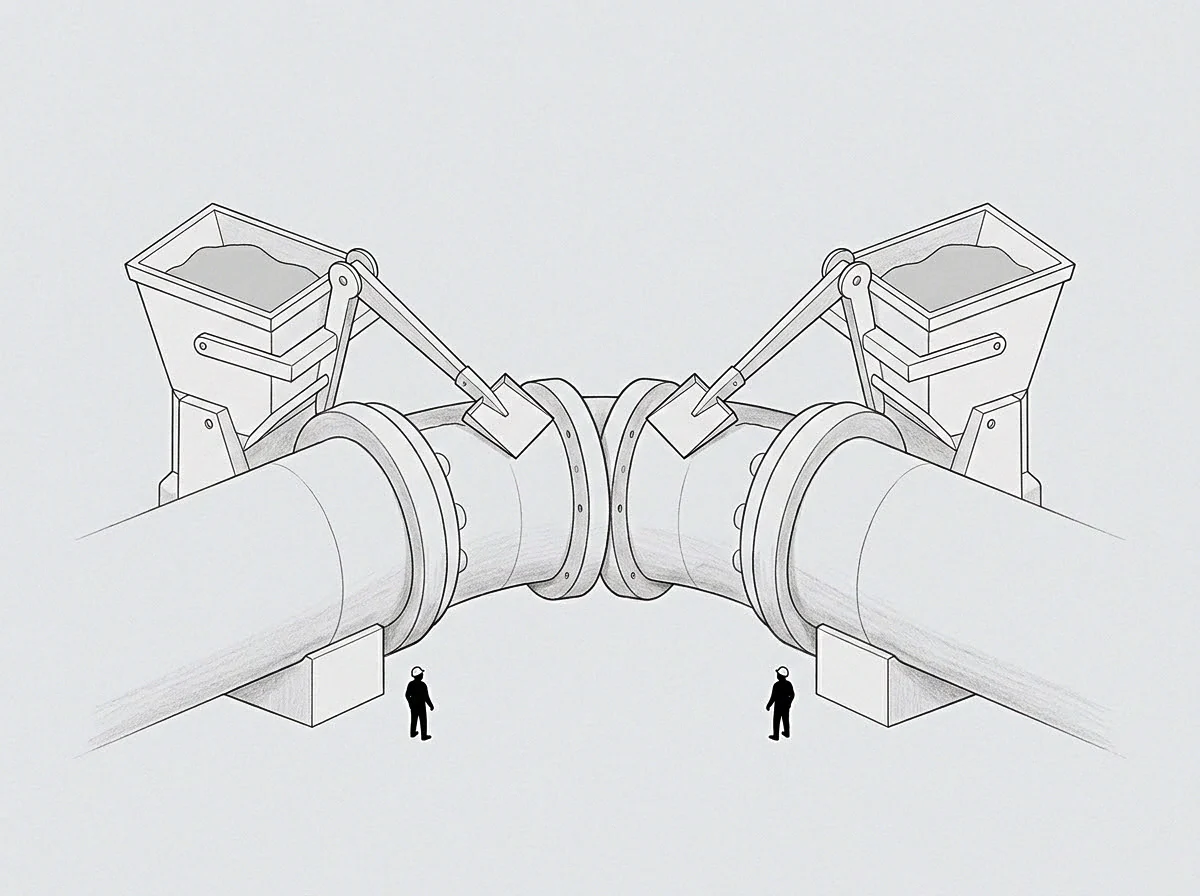
Restoring boundary integrity requires physical separation of communication pathways. When real-time streams remain open without friction, behavioral default directs all inquiries through the lowest-resistance path. Establishing hard technical conduits forces users to weigh the immediacy of an inquiry against formal logging requirements.

Should Synchronous Interruptions Carry Defined Quotas?
Restricting instant messaging access restores project cadence. Establishing explicit intake rules redistributes operational cognitive load back toward agreed production goals. Teams that restrict direct communication to scheduled windows recover substantial blocks of concentration.
Speed degrades judgment.
- Define batch processing intervals where external client channels are reviewed strictly at fixed daily increments.
- Redirect speculative architecture questions into asynchronous ticketing queues that enforce written problem definitions before technical personnel engage.
- Isolate engineering teams behind dedicated account facilitators who absorb synchronous noise and insulate production environments.
Availability is an asset.
The engineer logs off.
The durability of an operational boundary depends on uniform enforcement rather than client consensus.
Tariff
Communication represents an unpriced commodity until formal mechanisms quantify its consumption. Without defined pricing mechanisms, client consumption of vendor time defaults to excess. A service provider must calculate the cardinal price of technical attention to defend contractual profit margins.
Scope expands unchecked.
| Modality | Attentional Penalty | Scoping Precision | Attribution Traceability | Triage Latency |
|---|---|---|---|---|
| Ad-Hoc Shared Chat | Extreme cognitive fragmentation | Informal and unmeasured | Scattered across chat histories | Immediate real-time distraction |
| Structured Ticket Queue | Isolated to scheduled review | Rigid acceptance criteria | Full historical audit trail | Guaranteed response service tier |
| Designated Liaison Buffer | Zero technical team disruption | Managed by project lead | Filtered by commercial role | Batched operational digest |
The invoice arrives monthly.
When communication parameters remain loose, clients treat the vendor as an ambient extension of their internal operations. Establishing structural tariffs converts ephemeral discussions into measurable units of production. Converting conversations into logged work protects senior personnel from casual, persistent interruption.
Contractual retainers that omit explicit communication quotas guarantee unbilled labor extraction.
The contract remains static.
A Master Services Agreement containing a stated quota for real-time communication converts unlimited channel access into a metered commercial transaction.

Stance
Relational anxiety often prevents vendors from executing channel restrictions. Operators fear that slowing down response times will signal indifference, driving clients toward competing providers who promise round-the-clock intimacy. This posture misinterprets responsiveness as quality, sacrificing execution speed to maintain conversational compliance.
Latency creates silence.
Deliberate latency signals institutional discipline. When a vendor refrains from answering non-emergency inquiries within minutes, the counterparty learns to formulate complete problems before initiating contact. The volume of spurious questions contracts dramatically once instant resolution disappears from the channel dynamic.
Relational stability increases when operational boundaries are demonstrated rather than defended.
Silence carries informational value.
Retainers absorb friction poorly.
What remains undetermined is the degree of initial relational strain an agency must absorb before a client internalizes deliberate communication latency as high-value discipline rather than contractual neglect.