
Mathematical Limits Of Real Time Context Restoration Across Distributed Multi Threaded Engineering Systems
Context restoration latency in concurrent execution scales non-linearly due to memory bus saturation and crosstalk parameters governing state deserialization.

Bounds
Execution suspension forces multi-threaded software systems to capture processor register states, stack pointer locations, and volatile heap memory references before yielding compute cores to adjacent worker threads. Reinstating that information across distributed computing clusters introduces non-linear latency bottlenecks that governed mathematical laws predict with exact precision. When thread density grows, the operational duration required to restore active working memory scales far past linear estimates, driven by lock contention, cross-node serialization overhead, and memory bus bandwidth limits.

Universal Scalability Limits on State Rehydration
System throughput under concurrent context recovery obeys the Universal Scalability Law derived by Neil Gunther. Parallel computing architectures exhibit three distinct scaling regimes defined by a contention parameter and a crosstalk parameter. The mathematical model defines total achievable capacity through a precise ratio:
Capacity equals the number of execution workers divided by the sum of one, the contention parameter multiplied by worker count minus one, and the crosstalk parameter multiplied by worker count times worker count minus one.
When worker threads pause to restore operational state from external persistent buffers or shared distributed caches, the contention parameter dominates system overhead. As thread counts rise, crosstalk overhead creates an asymptotic ceiling beyond which adding execution threads reduces system throughput. Latency scales superlinearly.
Information entropy dictates the minimum bandwidth required to reconstruct working execution state. High-entropy application state requires full memory serialization, while low-entropy state permits compressed delta recovery. Restoring high-entropy context across network interfaces saturates memory channels, causing worker threads to stall while waiting for missing cache lines.

Queueing Theory and Context Switch Latency
Distributed queue performance during thread context recovery follows Little’s Law, which relates items in queue to arrival rate and average wait time. When an active thread experiences context preemption, pending execution requests join an ingress queue. The average queue depth increases linearly with thread arrival rates but explodes exponentially when state restoration service times fluctuate.
Memory bandwidth saturates early.
Thread context switches trigger cache invalidations across L1 and L2 hardware buffers. When a preempted thread returns to a CPU core, the processor core encounters cold cache misses across execution stacks and heap structures. The physical CPU core stalls for hundreds of clock cycles while fetching state variables from high-latency L3 cache or main system memory.
Coherence traffic dominates cycles.
Thread restoration throughput degrades non-linearly whenever state serialization crosstalk exceeds available memory bus bandwidth.
State recovery across distributed nodes requires explicit memory barrier synchronization to guarantee snapshot consistency across threads. The synchronization barrier forces parallel thread execution pools into serial sequences until all context frames validate their payload integrity. Concurrency drops to zero.

Shelf
Hardware architecture dictates the physical speed at which processor registers and dynamic memory locations reload execution state. Modern processor architecture places small, fast static memory cells adjacent to execution units, creating a hierarchy where distance translates directly to time delay. Moving execution context off the physical compute core into external storage shelves creates execution stalls that persist long after thread switching logic completes.
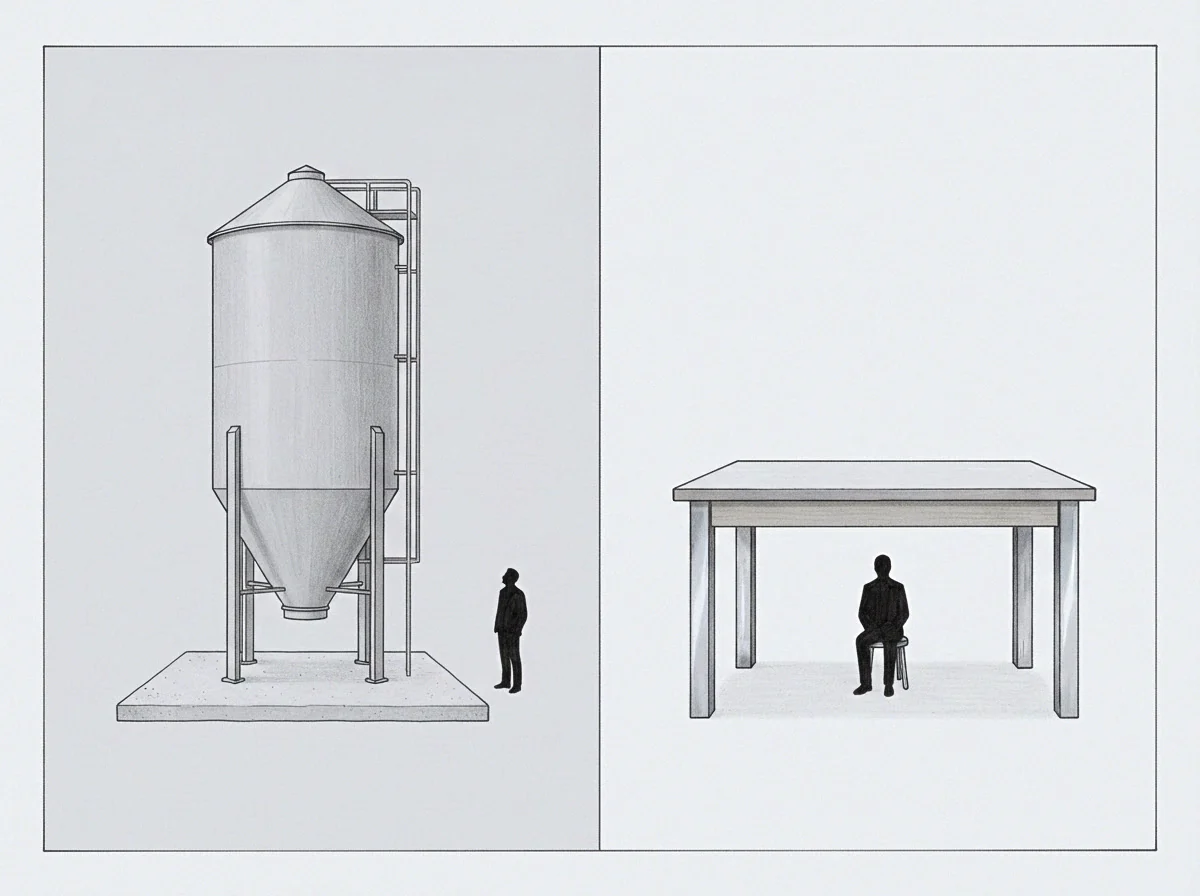
L1 Cache Line Invalidation during Execution Suspension
Suspending an active thread flushes processor register pipelines and forces dirty L1 cache lines down into lower memory tiers. Subsequent context restoration requires reloading working sets back across main memory buses, saturating hardware channels and triggering bus locks across concurrent socket architectures.
Context restoration stalls threads.
Engineering architectures encounter distinct physical barriers when managing real-time thread context recovery across multi-tiered hardware nodes:
- Cache Invalidation Overhead forces compute cores to fetch instructions from dynamic random access memory, generating hundreds of idle clock cycles during initial thread resume phases.
- Memory Bus Interconnect Contention saturates cross-socket channels when multiple worker threads simultaneously issue read operations for suspended context frames.
- Non-Volatile Storage Latency introduces millisecond-scale execution pauses whenever context restoration requires pulling state snapshots from flash-based solid state volumes.
- Thread Preemption Cascades force dependent pipeline processes into prolonged starvation states while waiting for precursor threads to rehydrate volatile variables.
Serialization creates queue backpressure.
Distributed applications maintaining large execution states suffer severe performance penalties when context switches occur during high-throughput operational windows. Invalidation of translation lookaside buffer entries compounds cache misses by forcing virtual-to-physical address re-translations for every restored heap reference.
Context recovery delays compound across system dependencies whenever storage buses experience queue depth saturation.
Execution halts instantly.
Architectures that ignore physical memory reload constraints incur severe latency penalties across real-time transaction processing boundaries.

Vector
Cost in real-time execution context recovery operates as an ordinal vector with multiple distinct magnitudes rather than a single numerical currency figure. Measuring context switch impact requires tracking latency duration, memory bus utilization, cache miss volume, compute worker starvation time, and engineering capacity consumed by system remediation. Evaluating context recovery purely through time metrics conceals structural trade-offs occurring across underlying hardware systems.

Which state variables force exponential restoration delays?
State variable size and structural complexity directly govern restoration latency profiles across concurrent execution pools. Deeply nested pointer structures, dynamic allocation maps, and uncommitted transaction buffers require extensive pointer swizzling and heap reconstruction during thread context recovery.
The vector stays rising.
Evaluating multi-attribute context restoration overhead requires isolating each component magnitude within the operational system state:
- State Volume Magnitude measures total byte payload size requiring deserialization from persistent storage or remote memory caches into local thread stacks.
- Cache Invalidation Rate quantifies the percentage of high-speed L1 and L2 cache lines evicted during execution suspension cycles.
- Inter-Thread Contention Index tracks lock acquisition delay experienced when suspended threads attempt to re-acquire shared execution resources upon resume.
- Pipeline Re-hydration Latency counts the explicit CPU instruction cycles expended refilling branch prediction buffers and instruction pipelines post-switch.
State size dictates delay.
Multi-threaded engineering systems balance vector components by trading memory space for restoration speed. Pre-allocating thread stack pools and maintaining hot standby thread contexts reduces restoration latency while increasing baseline idle memory overhead. Parallelism degrades under load.
Context restoration vector magnitudes expand exponentially when memory access patterns disrupt hardware prefetching mechanisms.
A context restoration vector that rises across consecutive execution runs indicates structural memory contention that thread pool expansion cannot resolve.
Circuit
Control feedback loops govern state synchronization across distributed computing nodes and multi-threaded processor clusters. When context restoration events trigger execution pauses, feedback loops adjust incoming traffic routing to prevent queue saturation. Slow context restoration response times degrade feedback loop stability, causing oscillation in thread scheduler allocations and triggering system-wide execution stutter.

Concurrency Architectures under Context Reload Stress
Different execution architectures handle thread context reload operations through distinct memory management mechanisms. Choosing an appropriate architecture involves matching system context size against strict latency recovery deadlines.
Cache misses cascade rapidly.
| Restoration Pattern | Memory Footprint | Restoration Latency | Cache Impact | Contention Risk |
|---|---|---|---|---|
| Inline Rehydration | Minimal static footprint | High initial switch pause | Total cache invalidation | High lock contention |
| Out-of-Band Snapshots | Double memory allocation | Low deterministic delay | Partial cache eviction | Low lock contention |
| Thread-Local Shadow Buffers | High persistent overhead | Minimal switch pause | Localized cache impact | Zero shared lock contention |
| Shared Write-Ahead Logs | Moderate log storage | Variable replay delay | Broad cache eviction | Moderate bus contention |
Locks force sequential execution.
Thread-local shadow buffers minimize restoration latency by eliminating cross-thread synchronization during state rehydration. This design increases overall baseline memory consumption, requiring larger physical storage footprints to maintain idle state frames. System designers accept higher capital hardware expenditure to guarantee bounded latency during thread preemption events.
Throughput drops beneath baselines.
Systems built around shared write-ahead log replay encounter unpredictable latency spikes when transaction volumes surge. The replay mechanism must read, parse, and apply state modifications sequentially, converting parallel execution threads back into single-threaded bottleneck pipelines during state recovery operations.
The downstream processing system cannot accept additional payload traffic while thread context rehydration remains incomplete.

Price
Converting an internal ordinal cost vector into a cardinal price figure occurs when execution limits force an engineering team to commit financial capital or public service level agreements to another party. While internal engineering cost remains multi-dimensional, the external price is expressed in rigid cardinal figures: strict latency limits, fixed compute server bills, or financial breach penalties. Mistaking internal ordinal trade-offs for external cardinal prices obscures the physical limits governing context switch dynamics.

Conversion of Latency Vectors into Operational Price
Translating context restoration overhead into cardinal billing metrics demands evaluating hardware resource allocation against achieved transaction throughput. Adding memory channels, high-bandwidth interconnects, or specialized memory hardware reduces context rehydration delays but increases monthly infra capital expenses. The cardinal price reflects physical hardware procurement choices required to maintain real-time performance guarantees.
Software architectures that attempt to bypass mathematical rehydration bounds through unconstrained thread creation inevitably collapse under context switch overhead. As active thread counts exceed physical execution core availability, CPU time spends more cycles swapping thread context frames than executing actual application code. Operating system schedulers enter thrashing states where compute utilization approaches maximum limits while productive work output drops toward zero.
Stating context restoration overhead early in project architecture cycles protects engineering teams from committing to impossible real-time SLAs. When context reload latency bounds are quantified before system construction, engineering teams can design coarse-grained task distribution mechanisms that minimize context preemption frequency.
At what exact threshold of state payload entropy does the cardinal price of hardware memory bandwidth exceed the operational utility of distributed real-time thread suspension?