
Measuring Multi Attribute Capacity Vectors During Unquantifiable Cash Collapses
Tracking multi attribute capacity vectors isolates operational survival from nominal cash balances by ranking non-monetary capabilities on ordinal scales.

Scale
The bank balance reaches zero on a Tuesday morning while the production system handles record load without incident. Cash flow projections, built on linear receipts that failed to arrive, drop below zero and turn cardinal arithmetic into fiction. Financial insolvency registers on a single numerical line.
Operating competence, technical delivery, supplier goodwill, and labor endurance exist across separate dimensions that do not collapse at identical velocities. An observer who treats the disappearance of currency as an instantaneous wipeout of every operational attribute misreads the nature of industrial systems.
Measurement theory defines levels of evaluation with rigid mathematical boundaries. A cardinal scale permits subtraction, addition, and the calculation of ratios, which financial statements exploit to report net liquid reserves. When unquantifiable cash collapses destroy the stability of the price denominator, cardinal figures cease to deliver reliable information.
The multi attribute capacity vector fills that informational vacuum. This vector tracks distinct attributes: human attention spans, machine throughput ceilings, vendor credit patience, and technical execution competence. Each attribute occupies an ordinal scale where states can be ranked from superior to depleted, yet cannot be blended into a single aggregate balance.
When monetary denominations fail under sudden shock, operational survival depends on the rank ordering of functional reserves rather than nominal balances.
Evaluating multi attribute capacity demands isolating each vector property from monetary translation. An enterprise facing an unquantifiable collapse in operating funds still commands physical machine cycles, specialized knowledge, and contractual options. Tracking these attributes requires treating them as an orthogonal basis set.
Progress or decay along the axis of engineering capability proceeds independently of immediate liquidity. A team retains the physical skill to ship code even when payroll checks bounce. Treating capacity as a monolithic scalar obscures the survival pathways that persist beneath monetary insolvency.
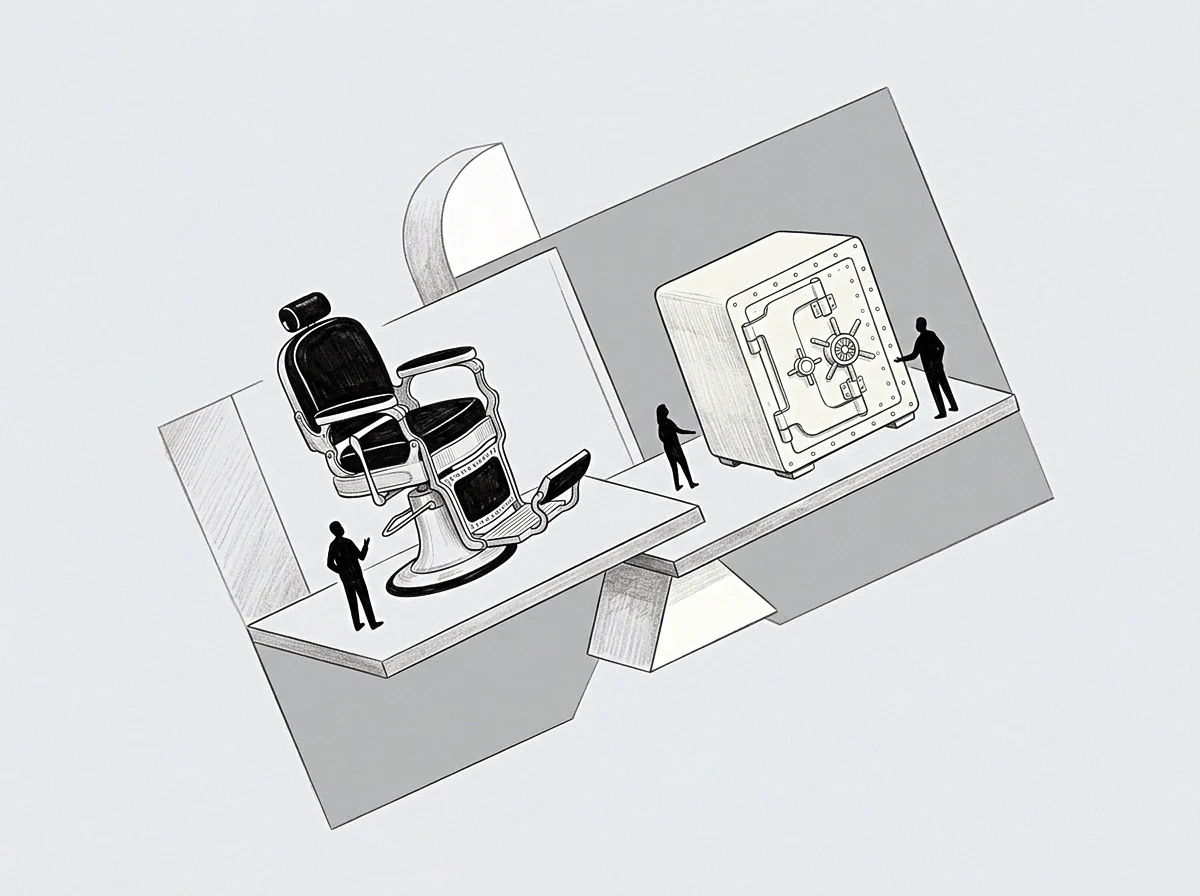
Non-Monetary Properties Under Severe Depletion
Every operational node possesses several distinct attributes that experience friction differently when funds evaporate. Physical infrastructure deteriorates slowly, bounded by thermodynamic wear rather than payroll calendars. Attentional reserves among core personnel degrade according to physiological stress thresholds.
Commercial partnerships hold residual trust built during previous operating cycles, which serves as an unpriced buffer against immediate liquidation. Converting these attributes into a single cash equivalent during a liquidity freeze introduces distorting noise because market clearing prices do not exist during systemic panic.
The calculation of multi attribute status relies on vector comparisons where one state dominates another only if it equals or exceeds it across all observed attributes without falling behind in any single category. When complete dominance cannot be established, trade-offs must be evaluated by identifying which specific attribute constitutes the immediate binding constraint on physical operations. If machine uptime remains high while team attention disintegrates from missed rent payments, the system fails along the cognitive dimension before hardware degradation occurs.
The toll fell squarely on the attention reserve.
Mistaking a localized collapse in liquidity for the simultaneous vaporization of all organizational capability causes operators to abandon functioning infrastructure, surrender viable commercial assets, and concede defeat while substantial physical capacity remains intact.

Clock
Temporal horizons govern how capacity attributes decay once the monetary engine halts. A financial ledger registers distress in discrete accounting intervals, but the decay curves of physical systems operate on divergent schedules. Vendor grace periods expire after thirty days, key employees maintain active problem-solving focus for approximately three weeks without wage receipts, and data center leases enforce hardware eviction at sixty days.
Measuring a capacity vector during monetary chaos requires plotting each attribute against its particular time to exhaustion.
The operator tracks these divergent decay rates through continuous observation rather than historical benchmarks. Under normal operating conditions, market rates establish the cost of replacement for any depleted attribute. Under sudden cash starvation, replacement markets vanish.
The system runs strictly on stored momentum. Measuring the remaining vector entails calculating the remaining hours before each separate reserve drops below its critical minimum operational threshold.
Empirical findings in industrial ergonomics show that human attention collapses under unhedged personal financial risk. This baseline finding rests on studies of skilled assembly and technical troubleshooting teams subjected to abrupt compensation interruptions. The finding would shift if the observed cohort possessed independent wealth or collective equity pacts that shielded domestic living arrangements from corporate liquidity shocks.
In the absence of those buffers, attentional bandwidth decays within days, rendering high technical capability unusable because cognitive energy redirects toward immediate personal survival.
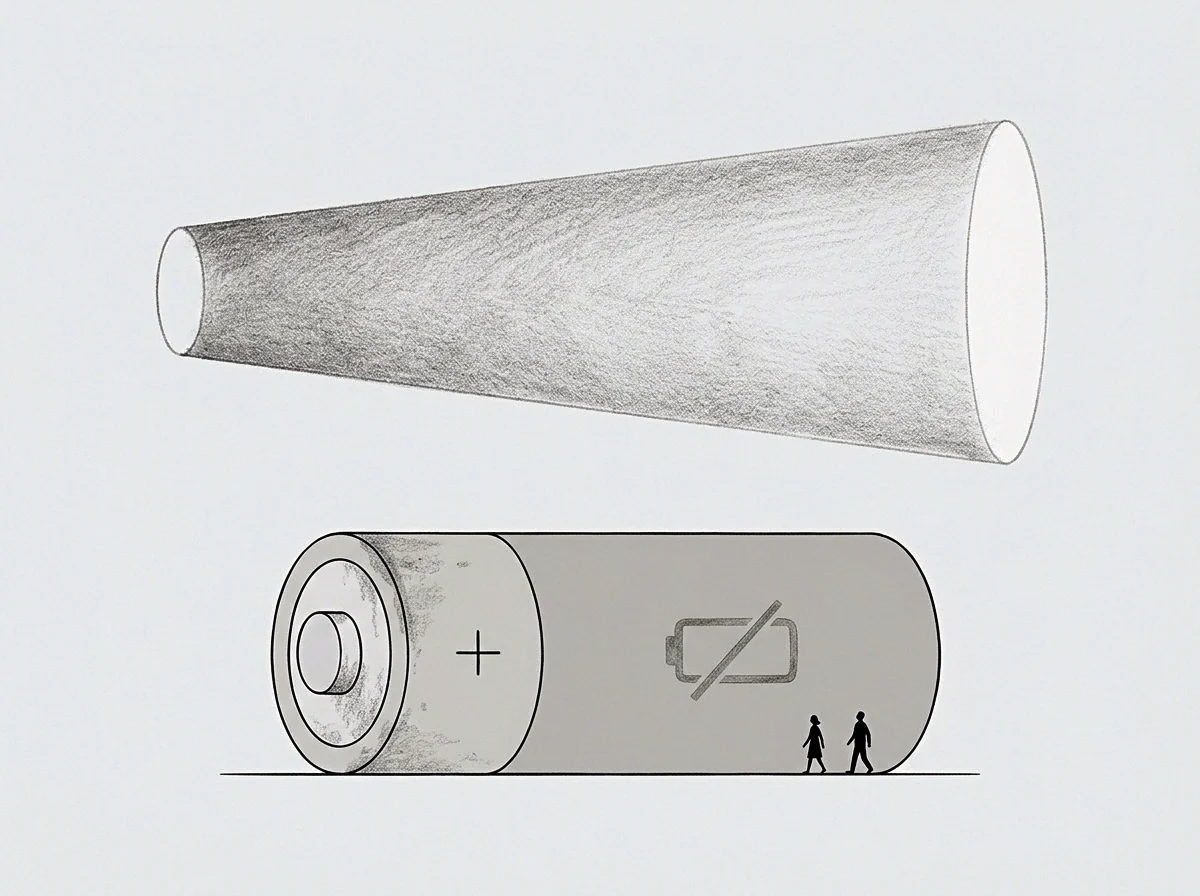
Does Liquidity Exhaustion Invalidate Prior Capability Vectors?
Loss of liquidity limits immediate motion without erasing historical skill accumulation. A software team that mastered complex asynchronous database synchronization does not lose neurological wiring when corporate bank accounts freeze. The vector element representing technical capability stays elevated.
What changes is the transmission mechanism between capability and commercial output.
Unstated temporal limits accelerate systemic breakdown far faster than known physical constraints.
A machine shop in an industrial district during an electrical blackout illustrates this separation. The lathes stand functional, the tooling retains its edge, and the machinists possess intact motor skills. The physical capacity vector remains unchanged.
The external medium required to actuate the vector has temporarily vanished. When operators confuse the lack of an actuating medium with the loss of underlying capability, they liquidate tooling at scrap valuations to satisfy transient debts. Capacity measured correctly prevents fire-sale liquidations during external distribution failures.
Speed of decision during a sudden dry spell dictates whether residual capabilities freeze into recoverable assets or burn away in panic.

Load
Operational stress redistributes friction across internal processes as soon as external capital markets close. Systems designed around abundant working capital routinely rely on cash to smooth over organizational inefficiencies, expediting shipping via premium freight, purchasing ready-made components, and hiring temporary contractors. When liquidity disappears, physical load shifts directly onto organizational architecture and personal endurance.
Measuring capacity vectors under this stress reveals the raw structural efficiency of the operating core.
The primary load-bearing elements during cash starvation divide into distinct functional categories:
- Cognitive bandwidth determines how many conflicting survival priorities leadership can evaluate before strategic coherence shatters into fragmented reactions.
- Contractual latitude describes the actual legal flexibility available to defer commercial obligations without triggering immediate involuntary bankruptcy proceedings.
- Structural friction registers internal process overhead that consumes labor hours without generating direct, deliverable output to surviving customers.
- Relational resilience gauges whether counterparty networks maintain operational cooperation based on past performance despite defaulted invoice timelines.
Tracking these attributes prevents the common error of overloading a single weakened dimension. When founders attempt to compensate for missing vendor payments by demanding seventy-hour work weeks from remaining staff, they transfer a financial deficit directly into an attentional deficit. The financial deficit was survivable through negotiated standstill agreements.
The attentional deficit results in catastrophic operational errors, accidental database erasures, and voluntary resignations that terminate the company permanently.
The burden landed directly on the night shift.
Counterparties observe this redistribution of load with acute precision. Their internal risk committees do not care about internal morale or technical sophistication; they watch cash collection dates, track invoice aging reports, and prepare formal breach notifications the moment statutory grace windows expire.
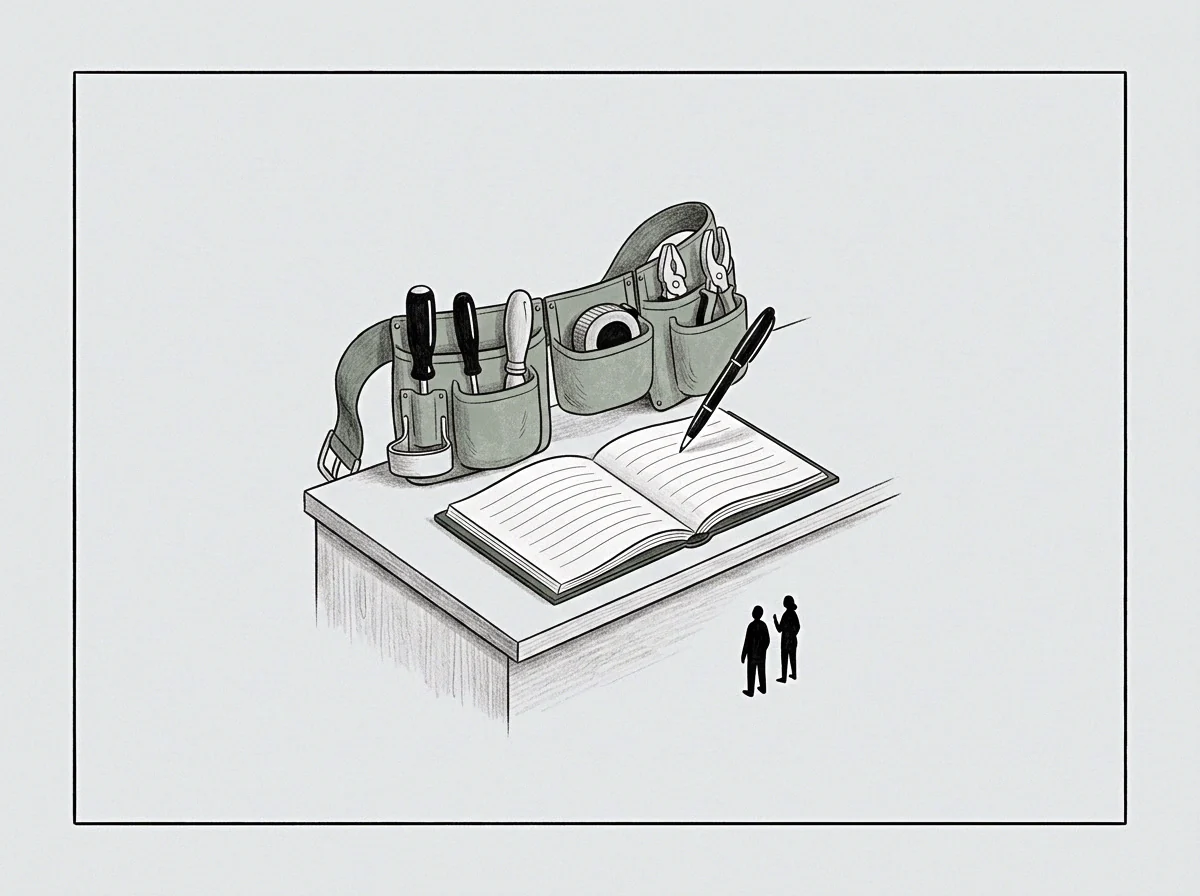
Tank
Every operational node maintains an internal reserve tank of uncommitted resources. In healthy monetary climates, cash operates as a universal solvent that refills these peripheral reservoirs on demand. When cash collapses unpredictably, each subsystem survives solely on the contents of its local tank.
Evaluating the multi attribute capacity vector requires measuring the depth of these distinct containment zones before deciding which operations to sustain and which to mothball.
Consider an enterprise generating complex analytical machinery with fifteen active client contracts, where a major custodial banking failure freezes ninety percent of operating deposits overnight. The cardinal income statement indicates immediate failure: accounts payable exceed available cash by a factor of twenty. An ordinal vector analysis across physical equipment, customer dependence, and internal stamina paints a completely different picture.
Ten clients cannot substitute the software without six months of costly technical retooling. The physical server infrastructure is paid four months in advance. The fuel inside the customer-dependence tank remains full, granting operational leverage that nominal financial metrics fail to display.
The analytical practice of observing baseline burn rates proves inadequate during systemic dislocation. Standard burn rates assume stable input prices and voluntary customer retention. Under a liquidity collapse, customer payment cycles lengthen arbitrarily, vendor credit terms contract to zero, and legal fees escalate unpredictably.
Research on organizational resilience within capital-intensive shipping and supply infrastructure demonstrates that buffer depletion follows non-linear step functions rather than smooth downward gradients. This conclusion rests on historical observations of freight carriers navigating currency controls and credit freezes. Should counterparties adopt algorithmic smart contracts with automatic liquidation triggers, these step functions would compress into instantaneous binary shutdowns, destroying the observational buffer that human negotiation historically provided.
Capital preservation during extreme currency volatility requires immediate mothballing of high-maintenance assets to protect core functional competencies.
The desk cannot fully defend the theoretical assumption that every non-monetary capacity attribute remains strictly independent during multi-month panics. Protracted monetary starvation eventually corrodes moral commitments, erodes technical tooling through deferred maintenance, and scatters specialized labor. Under persistent uncertainty, a prudent operator assumes an unquantifiable cross-attribute contamination rate, evaluating each capacity dimension as if its decay curve steepens as adjacent tanks run dry.
A formal standstill covenant with senior creditors alters the entire equation, freezing external payment demands while preserving operational autonomy over surviving physical assets.

Shelf
Capabilities held on the organizational shelf possess variable expiration profiles. Software architecture patterns and proprietary manufacturing recipes enjoy prolonged shelf lives, retaining utility over multi-year intervals even if development activity ceases entirely. Conversely, customer attention spans, commercial regulatory approvals, and specialized team dynamics spoil rapidly when left unattended.
Navigating an unquantifiable financial collapse requires categorizing the capacity vector according to shelf durability.
Items with high shelf durability should be sealed and preserved with minimum maintenance outlay. Active expenditure must concentrate exclusively on preserving attributes that suffer irreversible spoilage. If an operator spends remaining cash reserves attempting to keep slow-moving long-term research projects alive while neglecting basic vendor communications, perishable relational trust spoils while durable intellectual property sits safely on the shelf regardless of expenditure.
Allocating remaining physical momentum to the least perishable assets is an operational failure.
The drain landed on regulatory standing.
When the monetary collapse eventually abates, through debt restructuring, external recapitalization, or revenue recovery, the entity that emerges is not an abstract financial ledger. What emerges is the exact configuration of capacity attributes preserved on the shelf during the starvation cycle. Measuring multi attribute capacity vectors during the dark interval is the discipline that ensures an operating core survives to meet new capital when liquidity returns.
The unresolved question remains whether an operating group can accurately distinguish between temporary cash illiquidity and permanent economic obsolescence before its most perishable human capacity attributes expire in the field.