
Quantifying Irreversible Technical Human Capital Atrophy Across Extended Cash Conservation Cycles In Early Startups
Extended cash conservation degrades technical human capital through tacit knowledge loss and skill obsolescence faster than capital preservation extends runway.
Decay
Balance sheets record prolonged cash conservation as operational efficiency. As spending drops, capital duration stretches in a straight line, but engineering capability moves on a different curve that standard accounting metrics fail to track. Technical capacity depends on steady execution and solving real problems under load.
When feature work halts and a team shifts exclusively to routine infrastructure care, technical competence erodes without showing up on internal metrics; titles stay the same while the group’s capacity to deliver new architecture falls away.
Organizations measuring survival strictly by runway months tend to treat technical capability as a static asset. Code sitting in a repository does not rot on disk, but the human capacity to modify, debug, and build on top of it atrophies during long pauses. Senior engineers kept entirely on low-intensity maintenance tasks lose ground rapidly against an external software ecosystem that continues to shift.
Separating Cash Runway Preservation From Capability Degradation
Freezing hires and pausing product work reshapes the engineering organization from the inside out. Senior staff who rely on hard architectural work leave once technical progress stalls, shifting the institutional knowledge balance toward junior developers who lack deep context. The remaining team ends up spending disproportionate hours untangling earlier design decisions without knowing why systems were structured that way in the first place.
Unchanged code keeps its syntax, but slowly falls out of step with external infrastructure. Framework versions advance, security baselines tighten, and dependencies demand steady maintenance. Postponing structural upkeep buys financial runway over a few quarters, but technical debt builds quietly underneath, surfacing only when an engineering team attempts to ship new features again.
A reduction in capital deployment preserves financial duration while increasing the erosion rate of specialized engineering capability.
Evaluating this degradation requires tracking the gap between current team competence and prevailing industry engineering standards. Over multiple quarters of capital preservation, an organization surrenders its capacity to execute demanding technical pivots. The books report stability, but the underlying engineering base loses its structural resilience.
Pinpointing the exact month when conserved cash no longer compensates for lost engineering capacity remains an unresolved operational problem.
Floor
Running below a minimum threshold of technical execution inflicts lasting operational damage. Software systems need ongoing iteration if engineers are to stay familiar with how they behave in production. Once active development stops, teams lose touch with deployment pipelines, test harnesses, and telemetry, turning minor updates into prolonged investigations as institutional memory fades.
Setting an operational floor keeps aggressive cash conservation from eroding core engineering competence. An organization needs clear criteria for minimum baseline maintenance: the baseline work needed to keep developers sharp and the codebase legible to those running it.
Minimum Operational Thresholds For System Competence
Drawing a firm line between warehousing static code and actively maintaining live systems marks the difference between a survivable pause and irreversible technical decline. Teams that sink below critical maintenance thresholds face severe friction the moment they try to regain normal delivery speed.
| Strategy Mode | Financial Impact | Knowledge Erosion Rate | Recovery Cost Vector |
|---|---|---|---|
| Active Feature Freeze | Moderate cash preservation | Low context dissipation | Predictable onboarding hours |
| Selective System Maintenance | High cash preservation | Moderate skill decay | Elevated refactoring expenses |
| Total Engineering Suspension | Maximum cash preservation | Severe tacit knowledge loss | Full system rebuild budget |
Keeping continuous deployment pipelines warm preserves team habits. Shipping small refactors on a regular cadence maintains familiarity with tests, environments, and deployment discipline. Shutting down engineering entirely breaks those routines, so that routine releases feel like high-risk deployments once work resumes.
Senior engineers depart early in the cycle, while maintenance tasks and green status dashboards obscure the compounding structural decay underneath.
A startup freezing product expansion to protect runway sheds its strongest engineers long before its bank balance runs dry.
Vector
Assessing engineering capacity requires tracking several variables rather than relying on a single budget figure. A team carries domain knowledge, architectural fluency, system familiarity, and delivery cadence, and cost-cutting measures hit each of these at different speeds. Collapsing engineering into a single line item conceals exactly where operational capacity is unraveling.
Tracking deferred work across multiple operational attributes captures the real toll of a freeze. Direct spending drops, but the actual cost surfaces through consumed attention capacity, higher operational exposure, and declining technical competence. Following each dimension shows what extended cash preservation actually takes from an organization.
When Do Deferred Upgrades Cross Into Permanent Capacity Degradation?
Delaying foundational platform upgrades yields quick savings in cloud hosting and contractor invoices. The engineering organization absorbs that deferred expense through daily operational drag, fragile workarounds, and unending legacy bug fixes. Eventually, senior developers spend their full attention capacity propping up temporary solutions, leaving no hours to design future product architecture.
Components Of Capability Degradation During Freezes
Breaking engineering capacity into distinct operational components exposes where systems fracture during extended spending pauses.
- Tacit Knowledge Dissipation occurs when the context behind unwritten design decisions fades from the team during prolonged idle stretches.
- Toolchain Skill Obsolescence accelerates when modern frameworks progress while internal infrastructure stays pinned to legacy versions.
- Senior Talent Attrition increases as experienced developers leave for organizations running active builds and moving at scale.
Although the original codebase remains in place, the operational understanding required to run and scale it atrophies without continuous practice. When an organization finally tries to launch new initiatives after an extended freeze, developers run headlong into execution bottlenecks.
Preserving capital without exercise degrades technical capacity faster than operating under moderate financial scarcity.
Measuring technical losses requires comparing current delivery pace against earlier production benchmarks. Recovering lost architectural familiarity burns months of engineering capacity that financial models almost never anticipate when extending runway.
Overlooking this multi-component cost vector during prolonged runway extensions routinely forces companies to rebuild core infrastructure at triple the cost of steady, ongoing maintenance.
Loss
Take an early-stage company operating under a twenty-four-month cash conservation plan. Leadership cuts engineering spending by eighty percent, keeping two engineers from the original eight-person roster. Those two focus exclusively on bug patching and keeping revenue-generating services alive, while all active refactoring, dependency upgrades, and architectural improvements halt overnight.
Through the first six months, system stability holds. Financial reports show runway jumping from eight months out to twenty-six months. On paper, the strategy looks sound, with cash balances showing immediate capital efficiency gains.
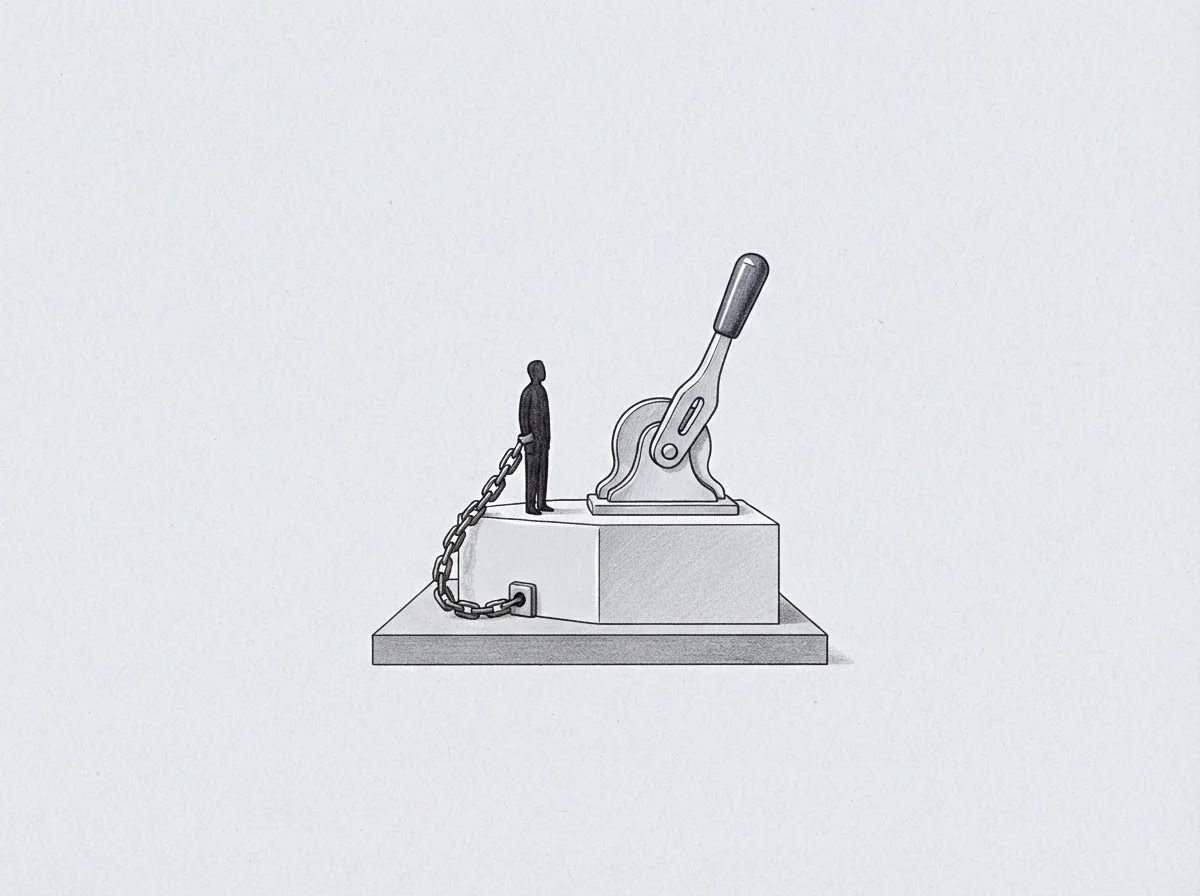
Sequential Progression Of Technical Capability Atrophy
By month twelve, secondary operational costs begin surfacing across the codebase. Without routine refactoring, neglected dependencies fall out of date, triggering compatibility breakages against third-party interfaces. The two engineers now devote sixty percent of their working hours to writing emergency patches for legacy integrations instead of improving core features.
- Initial feature freezes pull senior developers into routine maintenance and documentation upkeep.
- Prolonged architectural drift creates fragile edge cases that slow everyday debugging.
- Key engineers leave for active technical projects, leaving operational gaps for less experienced staff to manage.
- Restarting product development demands comprehensive code audits and foundational refactoring.
By month eighteen, external libraries require major upgrades to meet current security baselines. Because maintenance sat idle, touching a single package causes cascade failures across connected services. The remaining engineers struggle under mounting complexity without the historical context needed to refactor dependencies cleanly, turning simple feature edits into weeks of exploratory auditing.
Engineers remaining through extended conservation cycles spend more hours navigating legacy workarounds than delivering functional updates.
By month twenty-four, the company secures fresh growth capital and tries to expand its product line. But institutional knowledge is gone; the two remaining developers leave shortly after the round closes, exhausted by two years of triage. Incoming hires burn six months simply parsing the codebase without understanding the assumptions behind it.
Rebuilding the neglected platform ultimately demands more capital than the business preserved during the two-year freeze.
Runway expands on financial statements while genuine technical capability drops to zero, and recovering that capacity takes twice as long as planned.
The architecture of the original platform appears foreign to the new team because nobody who designed the original services remains with the company.
Mesh
Guarding against capability loss during cash conservation requires translating engineering concerns into clear operational covenants. Technical leaders cannot lean on vague warnings about debt; they have to present capability decay in terms that board members and financial controllers track directly.
Grounding technical decay in measurable metrics means tracking delivery slowdowns, unresolved dependency vulnerabilities, and retention probabilities. Placing these numbers next to runway projections reframes discussions from bare survival to total asset maintenance.

Converting Ordinal Skill Degradation To Cardinal Financial Planning
Establishing operational boundaries early shields engineering capacity before spending cuts do lasting damage. Engineering leadership establishes baseline requirements directly inside budget plans, carving out non-negotiable hours for quarterly refactoring, dependency updates, and targeted architectural spikes.
A contract clause that caps maintenance deferral periods prevents irreversible technical human capital erosion during runway extensions.
Financial controllers often treat paused development strictly as capital saved, whereas engineering leaders recognize that the pause converts cash into latent structural liabilities. Reconciling those views requires putting capability thresholds directly into capital allocation agreements.
A runway expansion covenant approved at the board level, linking spending limits to mandatory maintenance cycles, guards against permanent skill and knowledge loss before cash reserves run dry.