
Structural Dynamics of Friction Transfer During Multi-Level Organizational Boundary Realignment
Boundary realignments conserve systemic friction, transferring operational coordination drag down to lower organizational tiers unless interface throughput scales.

Shelf
A reorganized division looks orderly on a chart while daily work stalls behind unassigned tickets and slow approvals. When executive leadership reconfigures operational boundaries across enterprise tiers, operational resistance rarely dissipates; it migrates across interfaces. Moving an operational division into product units displaces the drag of alignment into informal channels.
An altered org chart removes explicit coordination points between functions, leaving the coordination load directly on frontline team leads who lack the authority to resolve jurisdictional overlaps.
Every operational interface carries a baseline transaction cost. Moving a jurisdictional boundary relocates where work handoffs hit delay, misinterpretation, and political friction. Work naturally seeks the path of least resistance: when a formal handoff requires six administrative layers, staff coordinate through direct messages to bypass governance.
Friction remains constant across organizational topologies until structural coordination mechanisms absorb it. Reallocating departmental perimeters simply dumps coordination overhead onto lower tiers unprepared for lateral arbitration.
When leadership moves jurisdictional boundaries without rewriting approval protocols, coordination overhead drops down the reporting ladder onto team leads.
Redrawing a boundary at the executive tier moves where lateral dependencies surface. The executive layer sees immediate speed because senior committee debates stop, but below them, team leads absorb ambiguity around budget ownership, engineering review rights, and production release sign-offs. Friction settles where structural clarity is weakest, showing up as lost engineering hours, delayed roadmaps, and unbudgeted cross-team sync meetings.
The operational cost lands on the frontline manager triaging conflicting department charters. Executive layers celebrate organizational elegance, while frontline operators spend afternoons working out who signs off on deployment pipelines.

Conduit

Mechanisms of Cross Boundary Momentum Transfer
Work handoffs operate as transactions between separate groups. When two engineering teams report to different vice presidents, handoffs follow documented APIs, formal contracts, and structured change management protocols. That structure imposes explicit overhead, but consolidating both teams into one business group dissolves the formal process without removing underlying technical dependencies, which persist regardless of reporting lines.
Without formal service-level agreements between isolated groups, informal negotiation replaces institutional governance. Lateral channels fill with boundary negotiations as team leads spend hours establishing who reviews PRs and maintains deployment pipelines. The transfer of friction follows a downward vector along reporting lines.
Boundary realignment introduces an impedance mismatch. Senior leadership aligns divisions along geographic or functional axes to minimize executive reporting complexity, but the actual workflow cuts across those divisions. Handing a project between them then requires escalating upward or establishing ad hoc conduits downward.
Teams set up shadow operational committees simply to bypass functional bottlenecks.
The executive tier observes reduced friction in administrative reviews, while frontline teams run redundant meetings to establish domain ownership.

Displacement Vectors Across Structural Strata
Displacement vectors track the path of transferred friction through an organization. When management removes functional boundaries to create cross-functional delivery pods, administrative overhead transforms into operational overhead. Cross-functional pods move fast initially, then stall when central infrastructure, security, and compliance protocols mandate review processes that the new teams cannot trigger.
Rather than vanishing, friction re-emerges at the boundary where the autonomous pod interacts with shared platform services. The shared platform team faces a flood of custom integration requests from dozens of isolated teams, forming a bottleneck at the interface. Central teams respond by erecting ticketing barriers, reintroducing the latency the redesign was intended to eliminate.
Displaced operational friction collects at shared platform interfaces whenever autonomous delivery units scale their inbound demands.
A realignment shifts where work conflicts materialize. Moving from a matrix structure to dedicated business units transfers friction from matrix alignment sessions into fights over corporate resources. Divisions battle for exclusive access to finite legal, recruitment, and security infrastructure.
The organizational surface area exposed to contention remains identical in volume; its spatial distribution shifts down to the interfaces between operational delivery units and shared services.
Frontline managers either fund their own redundant support teams or endure indefinite ticket queues.

Ledger
Accounting for Latent Structural Drag
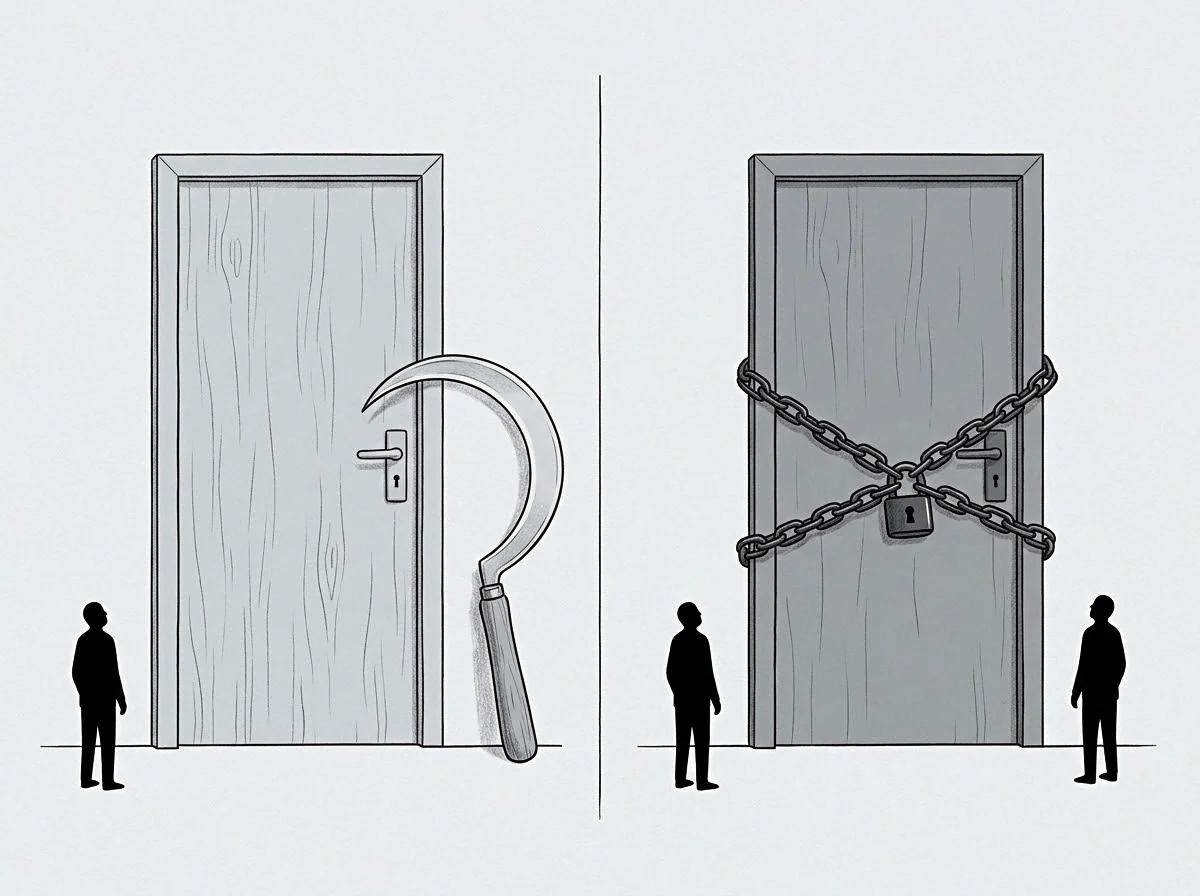
Every organization carries an unstated tally of coordination drag. Realignment changes reporting coordinates without modifying the system’s baseline drag coefficient. Restructuring initiatives account for immediate payroll adjustments and reporting span ratios while ignoring secondary friction generated across downstream interfaces.
Latent structural drag accumulates at points where redefined boundaries interrupt historical workflows.
The table below contrasts transaction dynamics across two standard boundary configurations. It highlights how structural reorganizations relocate administrative drag between management tiers and execution teams.
| Interface Topology | Primary Locus of Friction | Downstream Coordination Impact | Dominant Escalation Route |
|---|---|---|---|
| Functional Specialization | Inter-departmental handoffs at middle management layers | Predictable operational queues paired with slow asset dispatch | Vertical hierarchy through functional directors |
| Cross-Functional Business Units | Platform and shared-service capacity interfaces | Uncoordinated resource contention among parallel delivery pods | Lateral negotiation through informal frontline agreements |
| Decentralized Product Pods | Governance, architectural integrity, and compliance layers | Fragmented tooling stacks alongside duplicated technical debt | Reactive crisis escalations directly to executive sponsors |
| Centralized Platform Matrix | Prioritization queues at shared engineering boundaries | Extended cycle times and passive operational stalling | Formal committee arbitration across VP portfolios |
A restructuring transfers friction from structured, cardinally measured delays into unmeasured cognitive costs. In a functional setup, a ticket sits in a visible queue for eight days. In a decentralized pod structure, the lead engineer spends two hours each day debating project scope with four peers.
The enterprise records higher velocity because the central queue disappeared, but delivery slows because senior engineering talent spends energy negotiating lateral permissions.
Latent structural drag expands whenever realignment separates authority from operational execution. When a team gains delivery responsibility without receiving authority over platform dependencies, friction concentrates at that interface. The team lead expends capacity to secure resources from teams that owe them no contractual allegiance.
The cost appears as turnover among frontline leaders.
Structural friction cannot be destroyed by redrawing team lines. It can only be transformed into explicit governance or abandoned into lateral chaos.
Wall

The Boundary Barrier of Structural Capacity
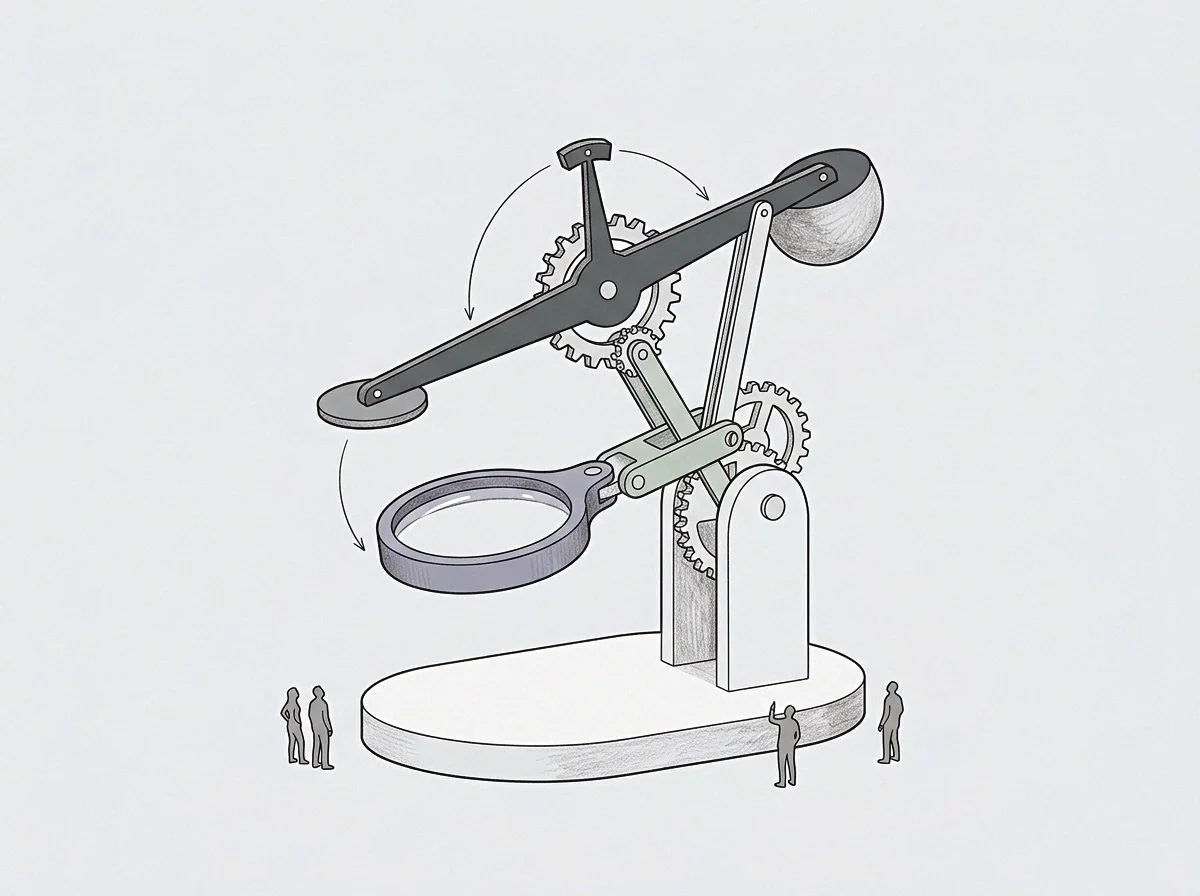
An organization hits a structural wall when its interface layers cannot process the volume of coordination transactions required by a new topology. The capacity of an interface is limited by human bandwidth, tooling limits, and informational transparency. When an executive reorganization floods an interface with cross-tier disputes, that boundary becomes a choke point.
Work accumulates at the boundary, generating operational queues and systemic latency.
Workaround patterns signal the location of structural walls. Teams route around broken interfaces rather than confront the governance breakdown. When corporate procurement imposes a four-week review process following a regional realignment, local engineering leads charge software expenses to personal corporate cards under miscellaneous categories.
When architecture review boards fall three months behind, teams deploy shadow infrastructure to cloud accounts outside the enterprise directory.
Workaround vectors reveal structural choke points where administrative hurdles outstrip the throughput of formal handoff interfaces.
Systems follow paths of least resistance. Redesigning organizational perimeters without upgrading the transaction capacity of interface boundaries drives work into underground pathways. Shadow channels maintain short-term execution at the expense of enterprise compliance, security, and maintainability.
The wall marks the perimeter of what the formal operational model can process.
The distance between formal operating protocols and subterranean delivery paths measures latent operational liability. When this gap widens, the organization operates on an obsolete map: executive leadership makes strategic allocations based on formal reporting channels, completely disconnected from the unofficial pathways that keep core operations functioning.
The structural wall hardens when leadership disciplines workers for bypassing dysfunctional interfaces without resolving the throughput limitations of the formal boundary.

Anchor
How Do Operational Handoffs Absorb Latent Shear?
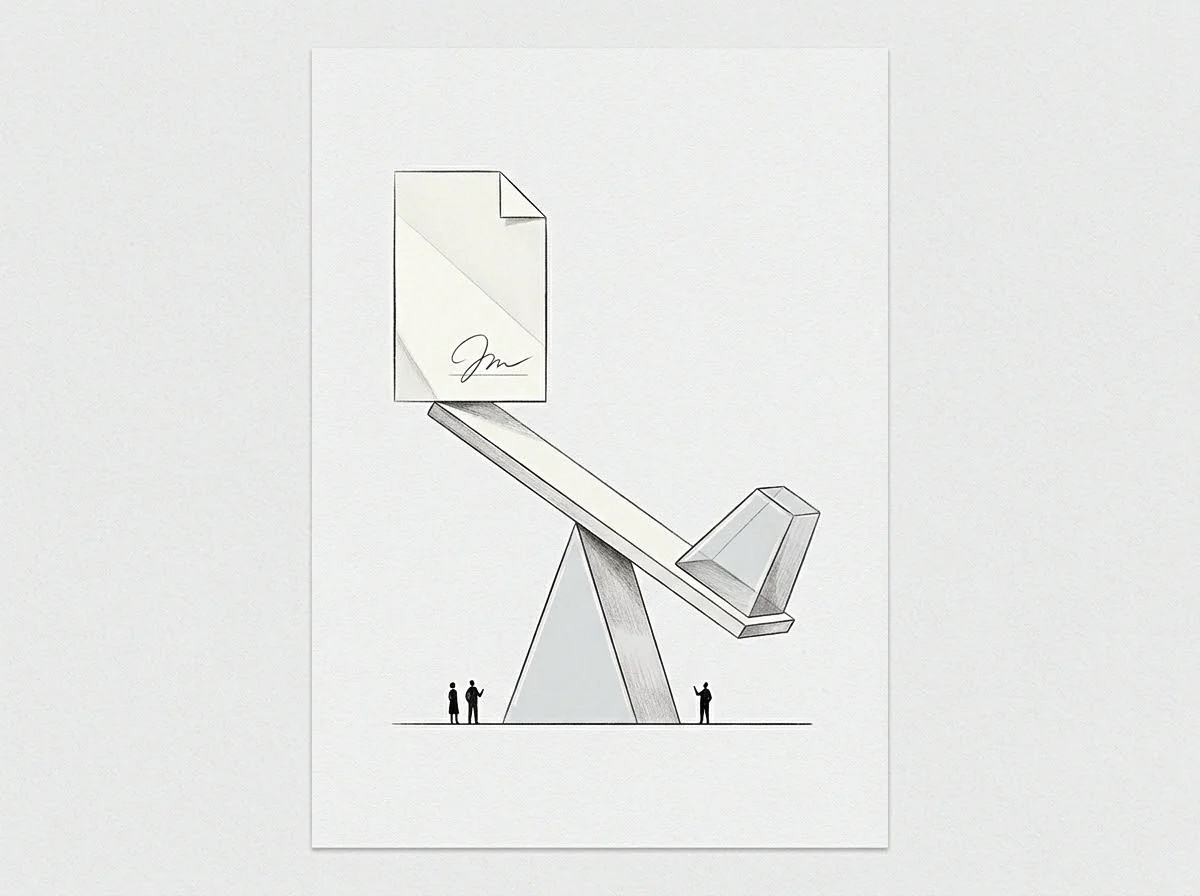
Systemic shear occurs when distinct tiers within an enterprise move at asymmetrical operational cadences. Executive strategy pivots on monthly cycles. Delivery teams operate in bi-weekly sprints.
Infrastructure layers require multi-quarter deployment horizons. When management reconfigures team perimeters, these differing cadences tear across structural seams. Stabilization requires establishing operational anchors capable of absorbing lateral momentum transfer.
Organizations deploy specific boundary designs to stabilize realignment stresses across their operational layers:
- Programmatic interface contracts formalize inputs, outputs, and delivery expectations across teams to eliminate recurring interpersonal negotiations.
- Dedicated platform arbiters clear dependency logjams by evaluating cross-tier priorities without requiring vertical executive escalations.
- Decoupled technical architecture mirrors jurisdictional limits, allowing teams to deploy software without depending on external release approval gates.
- Explicit operational buffers absorb cadence mismatches by providing elastic capacity between high-speed product teams and rigid shared infrastructure.
Every operational buffer demands excess capacity to function properly. A platform team operating at ninety-five percent utilization cannot absorb sudden priority shifts from newly configured product units. Latency compounds exponentially once interface queues exceed eighty percent utilization.
Buffer capacity serves as an economic shock absorber that protects the enterprise from boundary-induced gridlock.
A realignment succeeds only when the organization pays the explicit overhead required to anchor new interfaces. Bypassing this investment simply transfers coordination drag to frontline staff, who must trade delivery speed for endless administrative diplomacy.
Under-resourced shared platforms eventually drop non-essential maintenance tasks to manage the constant flow of incoming operational requests. Platform reliability erodes as technical debt escalates across the code base, and delivery pipelines lock up months after leadership proclaimed the reorganization a decisive success.
When interface contracts remain ambiguous, project priorities drift toward whichever team lead argues most aggressively during lateral review sessions.