
Measuring Operational Attention Degradation Across Multi Client Retainer Portfolios To Set Boundary Price Floors
Boundary price floors are calculated by dividing revenue requirements by maximum cognitive capacity rather than billable calendar hours.

Drain
A retainer agreement sells availability before it sells labor. When a practitioner accepts five concurrent retainers at four thousand dollars each month, the nominal commitment appears to divide twenty weekly hours across five commercial accounts. The calendar shows forty open working hours.
The operational reality deteriorates through an unbilled physical transfer of cognitive state between disparate problems.
Every account demands active working memory. A production issue on account alpha ruptures continuity on account beta. Attention degrades through context eviction: mental models of codebases, organizational politics, architectural constraints, and strategic goals are repeatedly dumped and reloaded.
The practitioner experiences this decay as unrecovered fatigue, lengthened latency on routine tasks, and an inability to sustain uninterrupted analytical depth.
Attention degrades along an exponential curve as concurrent retainer obligations increase linear context switches.
Each client operates on an independent calendar of urgency. An unexpected message arrives in an asynchronous channel at ten in the morning. An executive requests a sudden briefing at two in the afternoon.
Even without direct billable intervention, the monitoring obligation holds working memory captive. Attention does not stay pooled in a central reservoir waiting for deployment. It fragments across every active channel maintained by the firm.
Firms regularly misdiagnose this dispersion as a scheduling friction. They install task trackers, asynchronous update templates, and calendar shields. These structural interventions fail because availability agreements grant clients an unpriced option on operational presence.
The holder of an option exercises that claim whenever variance strikes their internal environment. Unsynchronized demands across multiple clients collide, compressing the unallocated processing capacity required to clear analytical logjams into nonexistence, leaving the practitioner exhausted while recorded direct hours remain well below forty.

Residue
Mental switching incurs an immediate metabolic drag that outlasts the interruption itself. Experimental research on executive function establishes that when an operator disengages from one incomplete task to answer an emergency on another, a physical trace of the prior activity lingers in consciousness. This persistent mental activation limits the working memory available for the second objective.
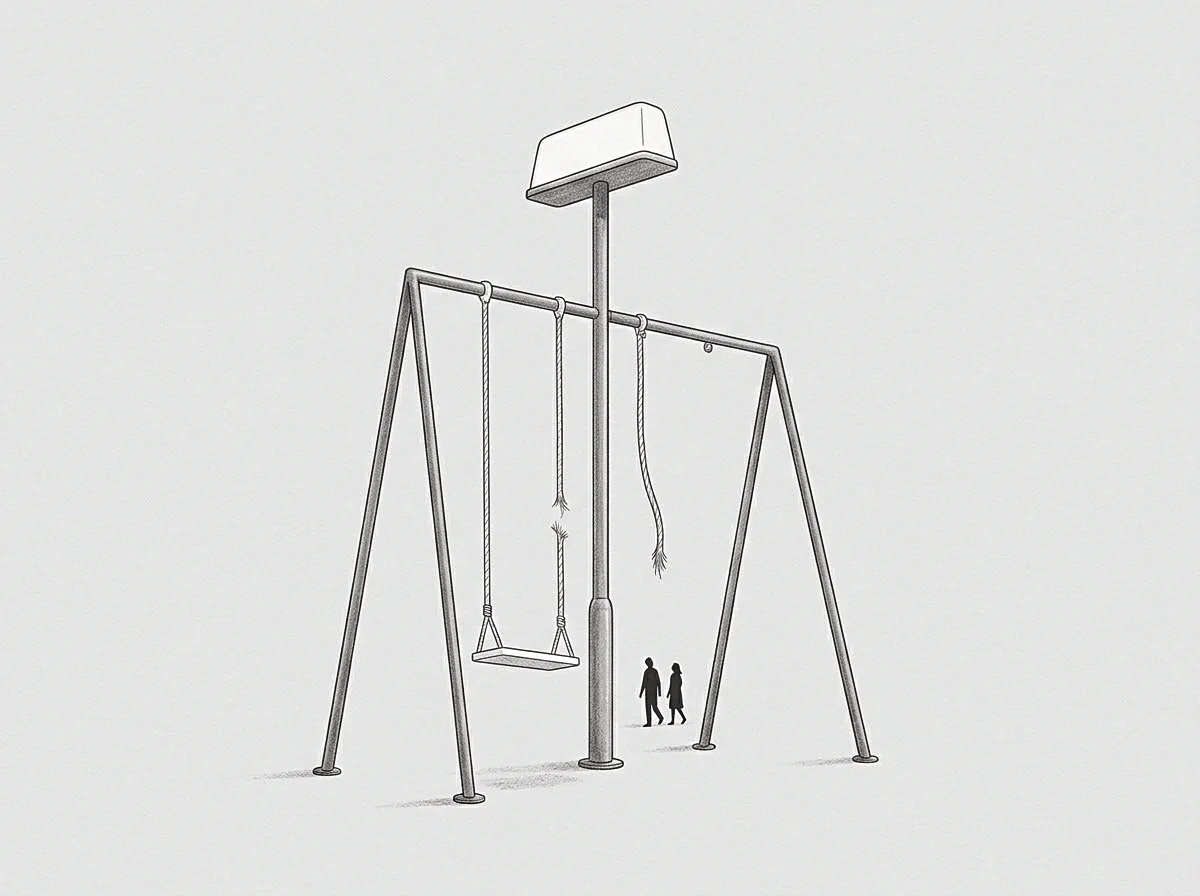
Is Latent Cognitive Overhead Measurable Across Client Rosters?
Quantifying this effect across a professional services portfolio reveals non-linear capacity consumption. The primary metric is context recovery interval: the elapsed duration between the conclusion of an unscheduled interruption and the resumption of deep analytical flow on the original problem. In complex knowledge work, recovery intervals routinely average twenty-three minutes per occurrence.
Five interruptions across five distinct retainers consume nearly two hours of capacity purely in mental reconfiguration.
- Interruption frequency density tracks the average count of unscheduled contact events logged across client communication endpoints inside a standard four-hour morning block.
- Domain divergence index scores the structural dissimilarity between client industries, requiring complete resets of vocabulary, mental models, and regulatory environments during handoffs.
- Urgency volatility ratio measures the percentage of incoming client requests demanding same-day operational responses against planned deliverables.
The cumulative decay appears in error rates and delivery drag. When attention residue remains elevated, complex synthesis slows down. The practitioner compensates by working earlier mornings and later evenings to locate silence.
The retainer appears profitable on an invoice while destroying the practitioner’s discretionary energy reserves.
A portfolio carrying divergent operating domains drains working memory faster than a portfolio of equal size operating within one specialized field.
Retainers sharing identical industry assumptions produce lower contextual drag. A practitioner servicing three regional logistics companies transfers structural intuition across assignments. Servicing a hospital software firm, an industrial parts manufacturer, and a consumer subscription business simultaneously forces total mental reorientation during every operational transition.
Contextual switching friction compounds with every divergent client added to the roster.
Bench
Commercial capacity is bounded by attention rather than raw clock duration. A services firm operating five retainers at low monthly fees inevitably exhausts its high-focus cognitive reserves before fulfilling thirty percent of contracted calendar availability. The floor beneath which an account becomes structurally unprofitable is dictated by this attention threshold.
| Retainer Count | Direct Hours Allocated | Daily Context Switches | Residue Overhead Hours | Effective Usable Capacity |
|---|---|---|---|---|
| Two Retainers | 30 Hours Weekly | 4 Per Day | 3.5 Hours Weekly | 88 Percent |
| Four Retainers | 30 Hours Weekly | 12 Per Day | 10.5 Hours Weekly | 65 Percent |
| Six Retainers | 30 Hours Weekly | 24 Per Day | 21.0 Hours Weekly | 30 Percent |
| Eight Retainers | 30 Hours Weekly | 42 Per Day | 36.5 Hours Weekly | Negative Balance |
Direct labor hours remain static across the four scenarios, yet effective capacity evaporates. In an eight-client portfolio, operational attention decays entirely into task arbitration and channel monitoring. No uninterrupted intervals remain for strategic execution.
Unpriced access rights create unmetered operational drag.
The firm cannot correct this decay through labor efficiency gains. Doubling execution speed on individual tasks yields negligible benefits when fifty percent of total mental capacity vanishes into context reloading. The structural solution requires enforcing strict portfolio headcounts, anchoring client capacity limits to absolute physical switching constraints rather than wishful time allocations.
The client expects immediate access because the retainer invoice specifies open advisory availability across thirty calendar days.

Floor
Deriving an absolute price minimum demands calculating the true depletion of portfolio capacity caused by onboarding one additional account. If a firm maintains an absolute capacity ceiling of four concurrent clients before cognitive fragmentation causes execution failure, each seat represents exactly twenty-five percent of total organizational throughput.

Mathematical Derivation of the Retainer Boundary Floor
Let total annual target revenue for the senior practice equal four hundred thousand dollars. In a model ignoring switching decay, an operator might divide this total across ten retainers at three thousand three hundred thirty-three dollars monthly. Because eight retainers create cognitive insolvency, a ten-client portfolio causes catastrophic operational collapse.
When the maximum sustainable client volume sits at four accounts due to residue overhead, each account must carry at least twenty-five percent of total target revenue. The mathematical floor surfaces through hard operational constraints:
- Capacity ceiling identification establishes the exact breaking threshold where daily switching residue exceeds ten weekly hours per senior operator.
- Seat allocation division divides annual firm revenue targets by the maximum sustainable account count rather than theoretical hours.
- Option premium integration calculates the specific premium required to offset client volatility, unmonitored channels, and asynchronous interruption rights.
Boundary pricing protects the practice against its own physical constraints. An account accepted below this floor robs attention from higher-tier engagements, degrading delivery across the entire portfolio while paying insufficient fees to justify the collateral damage.
A contract stipulating forty-eight-hour asynchronous response windows preserves sixty percent more consecutive analytical flow than an agreement granting real-time chat access.

Term
Boundary price floors only function when protected by unambiguous operational covenants. The contract must delineate between advisory availability and asynchronous operational execution. A failure to state these operational borders early allows the client to assume complete real-time access, triggering the exact fragmentation the pricing structure was designed to neutralize.
Terms must explicitly restrict communication channels. Email and structured ticketing preserve batch processing; instantaneous messaging tools erode attention boundaries continuously. Specifying two dedicated synchronization windows per week isolates interruption zones into predictable blocks, allowing deep work to proceed uninterrupted during remaining operational hours.
The retainer agreement also requires clear definitions of emergency escalation paths. When every minor operational question is treated as a critical emergency, attention fragmentation returns immediately. Senior practitioners enforce financial penalties or scope adjustments when clients violate defined escalation criteria.
Protecting the practitioner’s cognitive capital remains the foundational condition for client results. By enforcing high boundary price floors, limiting total active client rosters, and anchoring operational boundaries in binding contracts, professional firms eliminate unbilled context switching drag, maintaining peak analytical clarity across their entire retainer portfolio.