
Measuring Real Time Attention Depletion Magnitudes Inside Venture Operational Resource Allocation Models
Real-time attention depletion measures cognitive fatigue across operational workflows, exposing how context switching drains venture execution capacity.

Signal

Attentional Inflow and Runaway Cognitive Friction
Executive attention functions as a bounded, non-renewable asset within discrete operational cycles. Early-stage operating models often treat managerial effort as an infinitely divisible inventory. Allocators assign strategic shifts, hiring loops, technical arbitrations, and customer remediations to operators on the assumption that personnel absorb administrative overhead without lost performance.
That assumption fails under compressed execution windows. Every shift in context extracts an attention cost before execution begins. When interruptions outpace mental reset rates, task debt builds in operational queues, stalling strategic execution even as calendars show full saturation.
Direct measurement requires separating logged time from active processing capacity. A spreadsheet logs sixty minutes spent in a vendor negotiation identically whether scheduled following eight hours of system architecture work or during uninterrupted morning focus. Attentional depletion manifests through measurable operational latency.
Response times slow on basic technical directives, reversible choices receive excessive hedging, and risk assessments grow overly conservative because evaluating second-order dependencies requires analytical reserves the depleted operator lacks. The resource model shows high activity while throughput falls toward zero.
Execution quality degrades long before an operational schedule shows calendar exhaustion.
Tracking this depletion requires observing behavioral signals across daily work. Communication velocity offers a primary indicator: depleted operators write terse, ambiguous specifications that generate clarifying exchanges downstream, spending three units of coordination attention tomorrow to save one unit of focus today. Decision deferral also rises predictably.
When an operator faces twelve consequential trade-offs inside eight hours, late afternoon items default to arbitrary consensus or indefinite deferral. The operating model treats both outcomes as normal pipeline pace, obscuring the systemic exhaustion behind the delay.
Ignoring cognitive exhaustion in allocation budgets causes organizational friction, leading to misaligned priorities and stalled execution across the team.

Wire

Mechanical Routing of Executive Reserve
Operational infrastructure functions like a circuit routing energetic charges across team nodes. Every incoming signal draws on cognitive supply. As headcount scales, communication channels expand exponentially, allowing internal requests to bypass formal boundaries and hit core operators through messaging software, calendar bookings, and emergency alerts.
The operator becomes a high-resistance conduit absorbing operational volatility without filtration.
The table below outlines four primary resource expenditure modes against their active recovery timelines and depletion coefficients observed across engineering management functions.
| Expenditure Mode | Attentional Drag Rate | Mean Reset Window | Throughput Variance |
|---|---|---|---|
| Context switching across split disciplines | High ordinal severity | Ninety minutes | Elevated error rate on architectural commitments |
| Crisis arbitration under incomplete data | Severe acute burn | Four hours | Persistent deferral of structural resource allocations |
| Repetitive operational synchronization | Moderate compounding drag | Forty minutes | Superficial consensus without technical rigor |
| Sustained unilateral project design | Controlled linear burn | Ten minutes | Stable deterministic velocity with minimal defect leakage |
Energy drains rapidly under structural ambiguity. When organizational authority lines blur, decisions require endless consensus building. Each synchronization meeting consumes executive reserve while yielding minimal operational momentum.
Five short meetings scatter focus across an afternoon: the calendar records only two hours of total commitment, yet the operator produces zero deep output in the intervening spans.
Unstructured coordination channels drain focus faster than difficult technical problems.
Resource allocation systems can measure these costs by tracking calendar dispersion alongside asynchronous workflow turnaround rates. An operator shifting between four distinct operational domains within three hours incurs a severe context switching penalty that directly reduces the analytical depth of product roadmap definitions. Left unmonitored, the venture burns human capability on trivial routing overhead.
Establishing strict routing rules, where unscheduled interactions face automatic gates, restores cognitive bandwidth across critical delivery phases.
Inserting a formal twenty-four-hour deliberation clause into major operational pivots protects executive reserve by converting reactive cognitive panics into scheduled analytical evaluations.

Index

Quantifying Depletion States Inside Workflows
Constructing a functional proxy index requires tracking behavioral indicators rather than self-reported exhaustion surveys. Self-reporting fails because high-agency operators routinely understate internal depletion to project competence. Real-time indicators emerge from observable friction inside production environments:
- Commit cadence volatility registers rapid drops during prolonged cross-functional planning cycles, revealing structural fatigue before output drops completely.
- Documentation ambiguity metrics reveal increased downstream support tickets caused by shallow engineering specifications written under mental strain, placing the real cost on the downstream team.
- Choice deferral frequency flags operational items rescheduled more than twice without updated risk parameters, marking acute paralysis in leadership.
Contextual reset intervals demand explicit modeling. Cognitive science demonstrates that returning to deep technical work after a trivial disruption takes substantial focus time. When an operational model schedules an executive across six half-hour checkpoints punctuated by fifteen-minute gaps, productive output vanishes as the operator spends the entire interval re-orienting to new inputs.
Planning models that omit switching friction miscalculate productive capacity by half.
Clear operational boundaries protect high-conviction execution better than flexible working hours.
Allocation models need to incorporate dynamic friction variables. When an operating node crosses a depletion threshold, its processing speed drops while its error propagation rate surges. Assigning another high-stakes task to an exhausted node creates negative system yield.
The sensible move redirects routing flows away from strained nodes toward buffered queues, preventing acute cognitive depletion from becoming broad operational failure.
Strategic velocity stays steady when teams measure output quality rather than logged desk hours.

Tariff
Capitalized Attrition and Structural Remedies
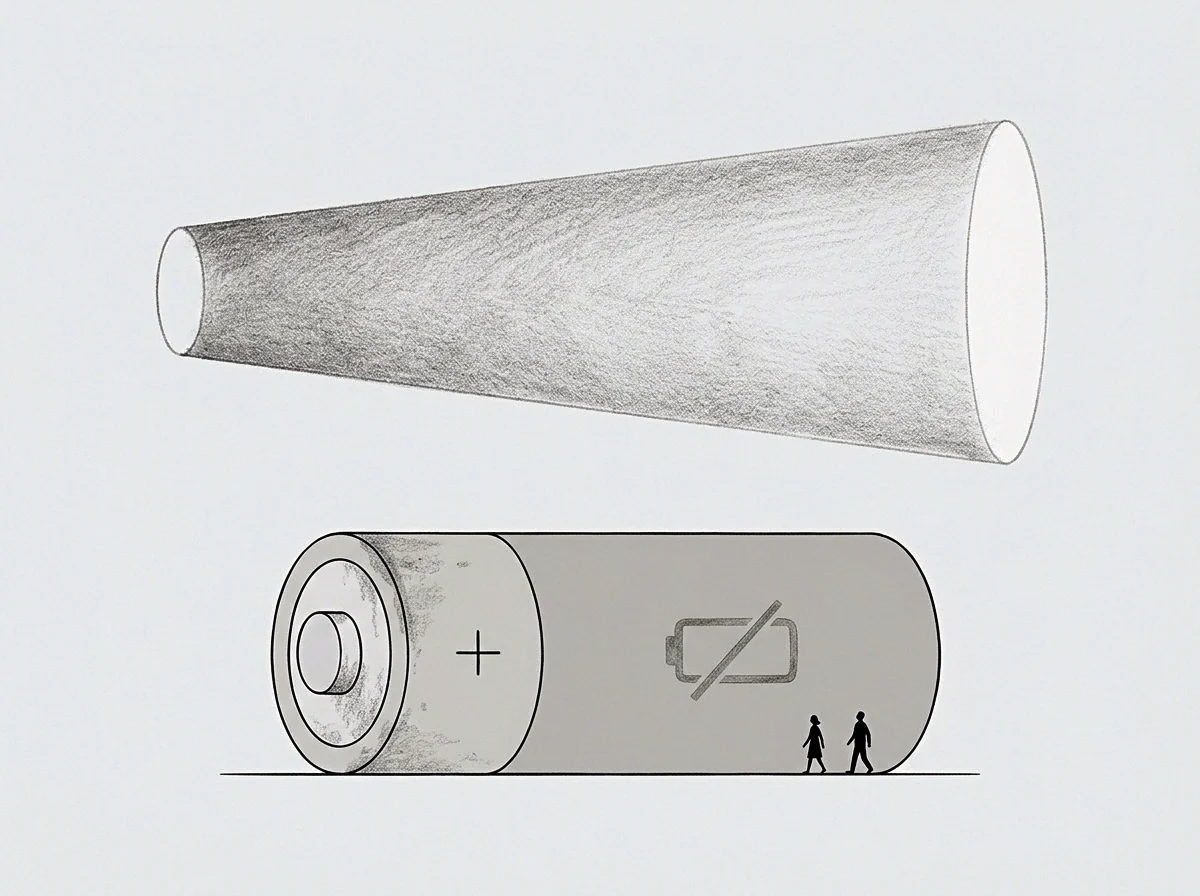
Treating executive focus as an infinite free resource imposes a massive hidden tariff on equity value. This tariff manifests as poor technical selections, mispriced commercial agreements, and turnover among high-leverage personnel. When an operator runs out of focus, complex systemic problems receive superficial patches.
The patch functions temporarily, but creates compounding technical debt that later drains months of engineering time while the root cause remains unaddressed because leadership lacked the mental reserve for a permanent solution.
Allocation architectures must integrate real-time focus limits into project scheduling logic, treating executive focus like finite liquidity. When daily limits hit capacity, incoming demands enter waiting queues or drop from current roadmaps. Shielding key operators from peripheral noise preserves the cognitive clarity required for core venture bets.
Protecting high-leverage attention preserves firm value far more reliably than relentless task saturation.
A schedule can look completely filled while yielding no substantial progress over the course of a week.