
Pricing Unscheduled Operational Friction Inside Enterprise Service Agreements
Enterprise service pricing converts ordinal practitioner friction into cardinal agreement surcharges through clear operational baselines and tracked variance buffers.

Margin
Enterprise service contracts distinguish sharply between scheduled delivery commitments and unscheduled operational friction. Scheduled commitments populate the statement of work, carrying explicit deliverables, milestone dates, and defined staffing levels. Operational friction arrives through unscripted channels: ad-hoc security reviews, custom vendor management portal updates, recurring off-book status calls, and extended access provisioning sequences.
Contractual terms filter expectations. When enterprise service agreements fail to price this unscheduled friction, the cost lands entirely on the vendor’s internal operating margin.
Internal cost exists as an ordinal vector holding several distinct magnitudes at once: engineering hours consumed, senior technical attention diverted, delivery team capacity reduced, and organizational focus fragmented. Money paid out represents a cardinal price, fixed and single-dimensional on an invoice. A service agreement specifies a cardinal price for deliverables while ignoring the ordinal cost vector required to navigate client-side administrative hurdles.
Unpriced friction dilutes gross margin. When an enterprise client demands sixteen distinct identity verification steps across three separate software tools prior to initiating code deployment, the billable scope remains unchanged while the internal cost vector expands significantly.
Service providers frequently absorb minor administrative friction under the assumption that relationship longevity compensates for short-term operational noise. This assumption fails when unscheduled demands compound. The field of decision economics establishes that multi-attribute costs are rarely evaluated component by component during contract execution; instead, operational teams adapt by cutting internal quality verification or extending working hours until burnout occurs.
The financial loss manifests months later during margin reconciliation, long after the friction vectors have permanently consumed team capacity.
Failure to price unscheduled friction early creates an implicit agreement that vendor capacity is an unlimited, zero-cost asset available for client governance routines. Unpriced operational friction forces high-touch delivery teams to absorb administrative costs within static fixed fee boundaries.

Seat

Capacity Fragmentation at the Engineering Desk
The practitioner seat experiences operational friction not as a financial figure, but as continuous task switching and lost focus. When an enterprise agreement grants client managers direct, unthrottled access to technical leads through real-time messaging channels, unscheduled interruptions break deep execution blocks. Attention carries an internal price.
A fifteen-minute request for log exports routinely destroys two hours of analytical output, as the practitioner moves out of complex code bases to navigate security tokens and unmapped client reporting templates.
Consider an enterprise software delivery team operating under a fixed annual service contract with an initial value of seven hundred thousand dollars. The primary agreement assumes a standard delivery model with monthly status reporting and standardized access protocols. Across twelve calendar weeks, the client security group introduces three unpriced clearing routines, each requiring senior developers to submit manual hardware attestations, re-certify access permissions across five sub-domains, and participate in weekly risk mitigation calls.
Hours move without formal tracking. The team logs forty-eight engineering hours per month strictly servicing access compliance, equivalent to ten percent of total technical capacity dedicated to project milestones.
Administrative overhead absorbs engineering hours. The primary invoice reflects full milestone completion, yet internal project metrics reveal a sharp decline in feature velocity. The team leader reallocates secondary capacity to offset the lost hours, drawing down reserves intended for platform maintenance and technical debt reduction.
The cardinal price on the contract remains static while the underlying capability vector degrades.
| Friction Type | Primary Cost Vector | Average Engineering Hours | Contractual Remediation |
|---|---|---|---|
| Out-of-Band Governance Calls | Senior Attention Diversion | 12 hours per month | Structured Retainer Thresholds |
| Custom Audit Evidence Formatting | Task Switching Delay | 24 hours per quarter | Standardized Reporting Clause |
| Ad-Hoc Identity Portal Maintenance | Direct Execution Loss | 18 hours per month | Friction Surcharge Rate Card |
The operational load remains invisible to executive sponsors who observe only completed milestone tickets. When the vendor eventually requests budget adjustments to cover extended timelines, the client steering committee references the broad language of the baseline service agreement, noting that standard governance participation was agreed upon as a natural component of enterprise partnership.

Variance

Where Does Unscheduled Work Hide inside Delivery Logs?
Operational variance measures the discrepancy between planned execution paths and actual work patterns inside delivery teams. Unscheduled friction hides inside secondary communication channels, manual data conversion tasks, and compliance re-verification loops that never register on primary project management dashboards. Tracking this variance requires observing the exact points where practitioner hours diverge from defined scope items.
- Governance Drift occurs when informal weekly sync meetings expand into multi-departmental status defense sessions requiring hours of advance slide preparation.
- Compliance Churn involves repeated manual submissions of security evidence to client internal audit platforms operating without standardized interfaces.
- Access Latency represents lost time spent waiting for client IT desks to approve environment permissions necessary for scheduled milestone execution.
- Tooling Fragmentation requires vendors to operate inside multiple competing client internal ticketing systems simultaneously without synchronization tooling.
Contractual clauses that establish explicit operational baselines convert invisible capacity drain into billable administrative scope.
Capacity vectors decline under friction. Control theory establishes that complex operational systems operating without clear feedback loops experience continuous performance degradation. When an enterprise service agreement lacks a precise measurement mechanism for unscheduled operational friction, delivery teams accept incremental administrative work as normal baseline activity.
This dynamic shifts the baseline error signal: the friction becomes the expected standard, and genuine technical execution becomes the exception that requires overtime effort.
Quantifying operational variance transforms abstract delivery frustration into concrete cost components. Measuring the precise hours spent inside non-standard client workflows enables service leaders to present verifiable evidence of friction during annual contract renewals. Inclusion of a master service agreement amendment defining explicit limits on unpriced audit support immediately converts unmetered client requests into structured, billable administrative change orders.

Surcharge

Converting Ordinal Friction into Cardinal Pricing Structures
Translating internal ordinal friction vectors into external cardinal contract prices requires structural pricing mechanisms integrated directly into enterprise service agreements. Enterprise clients value predictability over speed. Relying on end-of-year disputes over absorbed hours damages client relationships and leaves money unrecovered.
Master service agreements must incorporate proactive pricing levers that automatically trigger financial adjustments when operational friction exceeds established thresholds.
Pricing structures require clear boundaries. Operational friction surcharges function as contractually defined rate adjustments applied when client governance demands surpass agreed baselines. These mechanisms protect the service provider from unmetered scope expansion while granting the enterprise client complete visibility into the cost of their internal administrative requirements.
- Establish Baseline Hours by recording the specific administrative hours required for standard service delivery during the initial ninety days of deployment.
- Define Friction Triggers within the statement of work, identifying precise activities such as custom reporting or manual security re-certification that count toward administrative caps.
- Publish Friction Rate Cards detailing the exact cardinal hourly charges applied when out-of-scope operational requests exceed baseline allowances.
- Automate Variance Invoicing by linking time-tracking categories directly to monthly client billing statements upon passing the threshold.
Systematic tracking of out-of-band communication protects baseline service margins from gradual governance expansion.
Scope creep takes structural form. Implementing explicit operational surcharges aligns incentives across organizational boundaries. When client project managers realize that requesting custom weekly status formats triggers an automatic friction surcharge against their departmental budget, administrative demands drop rapidly toward standard contractual baselines.
A service provider that states friction pricing terms early establishes operational boundaries that protect both delivery margins and technical capability vectors.
Tether
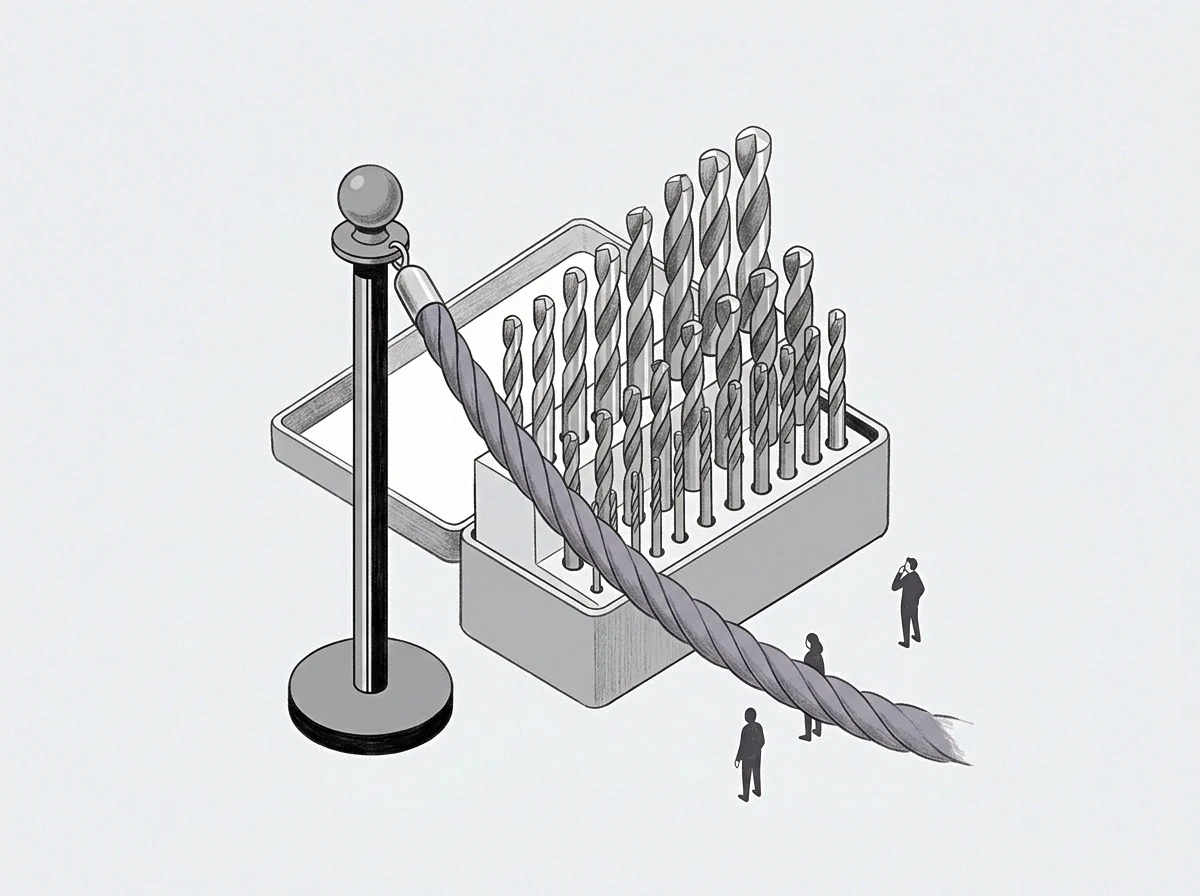
Dynamic service agreements tether cardinal pricing directly to live operational friction metrics. Rather than treating an enterprise service agreement as a static document negotiated once every three years, modern delivery management relies on continuous contract reconciliation. Silence accepts the operational burden.
When delivery teams log operational friction in real time, management holds the exact data required to enforce contractual caps or negotiate equity adjustments during service expansion conversations.
Operational friction compounds across teams. The ultimate stability of an enterprise service provider rests on maintaining alignment between what a contract promises, what the delivery team expends, and what the client pays. Leaving unscheduled operational friction unpriced destabilizes this alignment, consuming engineering capacity and degrading service quality under the weight of unmeasured administrative routines.
At what point does persistent operational friction signal an unviable client governance model rather than an underpriced service contract?