
Quantifying Long Term Capacity Degradation Driven by Continuous Emergency Incident Interventions
Continuous incident interventions degrade baseline capacity by compounding cognitive switching costs and forcing teams to trade long-term architectural health for immediate uptime.
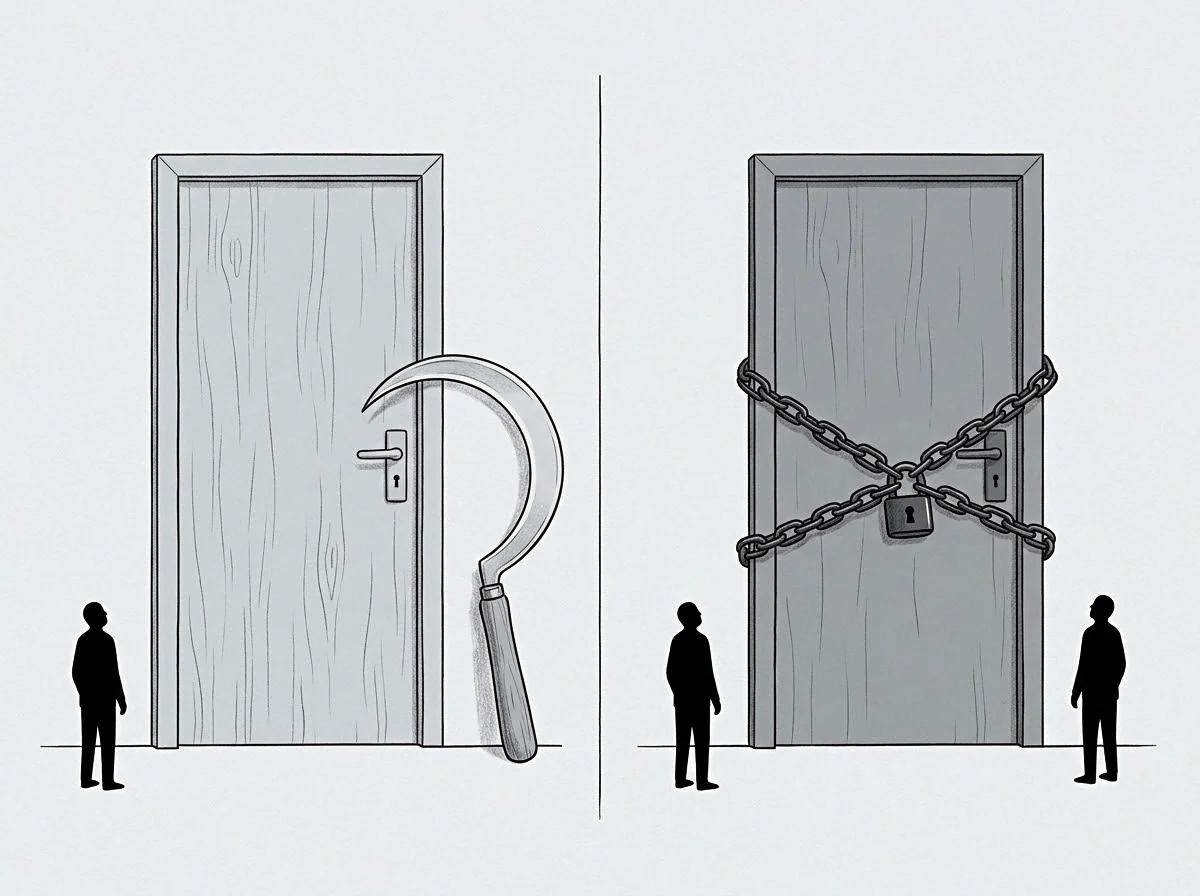
Drain
An operator receives a high-priority pager alert at two in the morning, resolves the database deadlock inside forty minutes, and returns to sleep. By nine in the morning, that operator sits at a desk to resume feature implementation. The visible incident logged forty minutes of labor, yet the primary project output for that day falls to zero.
Interruptions destroy baseline focus. The primary mechanism responsible for this divergence between logged incident time and lost baseline capacity is the high cognitive switching penalty imposed on complex tasks.
When an engineer transitions from deep technical work to urgent emergency intervention, working memory flushes completely. Restoring the cognitive state required to reason about non-trivial architectural boundaries requires substantial uninterrupted focus. The baseline operational capacity of an engineering organization does not recover the moment an incident closes.
Recovery takes time. Operational research into cognitive workload reveals that short, repeated interruptions generate exponential recovery delays rather than linear additions of down time.
Continuous incident interventions transform the nature of the work environment. When incident frequency exceeds a critical threshold, team members adopt defensive work patterns. Engineers stop initiating complex refactoring or long-range system redesigns because they anticipate inevitable disruption.
Reactive tasks displace strategic output. The team redirects effort toward small, low-context tasks that fit between expected interruptions. Over several quarters, this continuous operational posture resets the team baseline output expectation to a fraction of its design capacity.
The total cost of continuous emergency interventions comprises multiple distinct variables operating across different timescales. The immediate labor hours consumed by the incident represent only the most visible component. Secondary components include the context restoration delay, the operational fatigue accumulation, and the deliberate avoidance of high-value complex initiatives.
Each component carries a distinct magnitude. While financial accounting captures the logged labor hours, it fails to record the ordinal shift in task complexity that the engineering group can safely undertake.
Consider an engineering group of twelve operators maintaining a high-throughput transaction platform. Assuming an average of three severity-two incidents per day, each lasting thirty minutes, standard tracking reflects nine hours of weekly incident work per person. The true operational penalty includes two hours of cognitive recovery per incident, leading to thirty-six hours of fragmented focus per operator every week.
The remaining four hours of uninterrupted focus are insufficient to sustain deep engineering progress. The group continues to report forty hours of weekly labor, yet strategic progress halts entirely.
A system operating under continuous emergency interventions develops structural fatigue similar to physical materials under mechanical stress. The degradation remains invisible while monitoring basic output metrics like ticket closing velocity. Ticket counts remain stable because the team substitutes simple maintenance tasks for heavy architectural commitments.
Internal metrics decay silently. The operational surface appears functional right up to the moment where baseline architectural integrity fails under normal load spikes. The precise threshold where continuous context switching converts temporary focus loss into permanent organizational capacity degradation remains difficult to isolate prior to structural failure.

Index
Evaluating long term capacity decay requires establishing scales that separate cardinal accounting figures from ordinal capacity vectors. Cardinal figures, such as monetary spend or total hours logged on shift, fail to capture the directional erosion of engineering capability. Ordinal scales rank the state of system capability over successive operational windows, providing a clearer reading of systemic health.
A team executing thirty maintenance tasks per week while losing the ability to modify core database schemas has suffered severe capacity degradation, despite stable cardinal metrics.
Measuring operational cost demands decomposing incident outcomes into structural components rather than aggregating all effort into a single hour count. The hours vector records the physical duration of incident resolution alongside the secondary context recovery window. The attention vector tracks the ratio of uninterrupted focus blocks to fragmented intervention windows during normal business operations.
The capability vector logs the highest order of architectural complexity the group can execute without introducing critical errors. Tracked together, these vectors illustrate whether total capability moves upward or downward across quarters.
Incident interruptions consume baseline working memory, multiplying cognitive recovery costs far beyond the logged duration of the disturbance.
A multi-attribute capacity assessment reveals that continuous incident response depletes non-renewable operational margins before monetary costs become visible. The continuous consumption of attention margins leaves zero reserve capacity for planned operational improvement. Latent debt compounds quickly.
When emergency interventions become continuous, the team trades future execution speed for immediate system stability. This trade remains rational on an hourly horizon but guarantees severe capacity degradation over a multi-year timeline.
- Hours vector records the absolute duration of active incident response combined with the secondary context restoration window necessary to resume primary development.
- Attention vector measures the structural fragmentation of working time by evaluating the ratio between continuous four-hour focus blocks and fractured execution periods.
- Capability vector tracks the maximum structural complexity of initiatives the team can safely execute without triggering operational failures.
- Capacity vector quantifies the total reserve force available to absorb sudden operational spikes without dropping planned baseline commitments.
The relation between incident frequency and capacity loss remains non-linear. Low-frequency incidents allow cognitive recovery and system stabilization between events. High-frequency incidents force interventions to overlap with cognitive recovery windows, locking the engineering organization into a permanent reactive state.
Once an organization enters this zone, every additional incident causes compounding capacity decay. The group spends its total operational energy maintaining current system state rather than advancing operational capability.
Baseline capacity drops continuously. In practice, operational leaders often confuse high activity levels with high productivity. A team operating under continuous emergency conditions demonstrates extreme effort and high task velocity, yet moves zero strategic initiatives forward.
Evaluating the capacity trajectory requires measuring the delta between planned baseline delivery and actual structural output over six-month windows. A persistent negative delta confirms that continuous interventions are eroding the structural foundation of the operational unit. The operational rule dictates that capacity readings must rely on continuous focus blocks rather than logged activity hours.
Erosion
Systemic capacity degradation manifests as a silent shift in organizational dynamics and technical baseline integrity. Continuous emergency interventions alter the architectural choices made by developers. To minimize operational risk during frequent interruptions, engineers favor localized, temporary patches over systemic refactoring.
Technical debt accumulates along the paths of highest operational disturbance. Over time, the software infrastructure becomes increasingly brittle, generating higher incident rates and deepening the capacity loss cycle.
Why Does Nominal Velocity Mask Structural Decay?
Nominal output measures such as completed story points or merged pull requests create an illusion of stability while core capability declines. A team losing structural capacity adapts by decreasing the scope and complexity of individual work items. Smaller, simpler changes pass through code review faster and carry lower immediate risk during an incident-prone week.
Nominal velocity metrics capture the count of these smaller units, masking the total collapse of major architectural progress. Tracking velocity without calibrating for task complexity produces false confirmation of health.
The control loop governing system health relies on feedback signal fidelity. Continuous operational emergencies distort these feedback signals. When incident resolution commands total operational priority, long-term system health indicators like test coverage, architectural modularity, and documentation depth are systematically ignored.
The organizational setpoint shifts from maintaining quality standards to maintaining immediate system uptime. This shift establishes a gradient where quality standards decay without explicit executive approval.
Unstated capacity erosion converts future strategic execution options into immediate emergency operational maintenance.
Consider the contrast between an engineering team operating under standard baseline conditions and one subject to continuous emergency incident interventions over a twelve-month observation window:
| Operational Dimension | Standard Baseline Execution | Continuous Incident Environment |
|---|---|---|
| Task Distribution | 70 percent strategic progress, 30 percent maintenance | 15 percent strategic progress, 85 percent firefighting |
| Focus Continuity | Uninterrupted blocks exceeding four hours daily | Fragmented blocks under forty-five minutes |
| Architectural Approach | Systemic refactoring and modular design | Localized patching and short-term workarounds |
| Knowledge Retention | Documented design patterns and shared ownership | Siloed operational context held by primary responders |
| Turnover Risk | Predictable operational fatigue levels | Accelerated departure of senior technical staff |
The structural transformation outlined in the comparison table demonstrates how continuous interruptions alter the operational fabric of a team. Senior technical staff experience the highest rate of context depletion during continuous incident interventions. Because senior operators hold the deep contextual knowledge required to resolve complex outages, incident routing logic systematically targets them.
Consequently, the individuals best equipped to execute strategic architectural improvements spend the highest proportion of their working hours on tactical firefighting. Their strategic capacity drops to zero.
When senior operators exit the organization due to sustained operational fatigue, the loss of implicit contextual knowledge causes a step-function drop in baseline capacity. The remaining team members possess lower familiarity with system edge cases, resulting in longer incident resolution times and higher error rates during routine operations. The continuous intervention environment converts human capability into an operational burn rate.
Failing to account for this human contextual decay results in catastrophic system failure when market demands require rapid product adaptation.
Invoice
Translating internal capacity degradation into cardinal financial figures requires constructing an accurate price conversion model for executive counterparties. Internal engineering costs are experienced as ordinal friction, lost focus, and baseline decay. Executive layers and external stakeholders evaluate decisions through monetary capital, revenue projections, and contract commitments.
Value cannot survive transmission across these layers without conversion; cost expressed as an explicit financial figure carries the necessary weight.
To convert capacity loss into a cardinal price, an organization calculates the fully loaded cost of engineering hours diverted from baseline development to incident management, supplemented by the delayed feature market entry cost. When an engineering unit loses sixty percent of its strategic execution capacity to emergency interventions, six out of ten salary dollars spent on that unit are consumed by system maintenance rather than enterprise growth. Stating this clear financial figure early prevents executive leadership from treating operational incidents as free operational adjustments.
Converting internal ordinal friction into cardinal financial figures allows baseline capacity costs to survive executive transmission.
A worked scenario illustrates this conversion process clearly. Assume an enterprise engineering division with an annual compensation expense of five million dollars. Continuous emergency interventions consume forty percent of total working hours across the year, with cognitive switching penalties burning an additional twenty percent of total capacity.
The total direct capital diverted away from strategic development equals three million dollars annually. Expressing this degradation as a three-million-dollar annual operational loss changes the strategic conversation at the executive table.
In discussions with board members or financial counterparties, stating operational degradation early protects long-term strategic viability. Delaying this communication leads to a common corporate narrative where failure to deliver strategic roadmap initiatives is blamed on poor execution rather than capacity starvation. Stating cost the moment it arrives keeps strategic choices conscious.
When capacity decay is surfaced immediately through clear metrics, executive management must explicitly choose whether to fund infrastructure stabilization or accept delayed product delivery.
Counterparties receiving these reports often attempt to minimize the reported price by emphasizing nominal release velocity. They argue that as long as deployment frequencies remain high, engineering capacity remains intact. The Transmission Writer recognizes this argument as a fundamental failure to distinguish between transactional activity and strategic capability.
The appropriate response presents the structural trade-off directly, detailing how tactical speed today consumes structural capacity tomorrow. The counterparty eventually acknowledges that continuous operational emergencies have rendered the original strategic delivery timeline mathematically impossible.
Floor
Protecting baseline capability requires establishing non-negotiable operational boundaries and explicit circuit breakers. Without structural protection, continuous incident interventions will naturally consume every available hour of organizational focus. A system without explicit capacity floors defaults to maximum operational consumption, routing every unexpected disturbance directly to the core engineering team.
Setting a firm operational boundary creates a protective barrier that forces the organization to prioritize and contain operational chaos.
An effective intervention floor establishes strict criteria for what constitutes a legitimate severity-one emergency requiring immediate context destruction. Non-critical incidents are queued for scheduled operational shifts, preserving uninterrupted focus blocks for primary development. Furthermore, capacity management mandates that when emergency intervention hours exceed a defined percentage of total team bandwidth during a single sprint, all strategic roadmap execution halts automatically.
The entire team pivots to dedicated platform remediation until incident frequency drops below the threshold.
Continuous emergency interventions default to consuming total available focus unless constrained by non-negotiable capacity floors.
Implementing these structural protections requires enforcing a clear operational protocol across the organization:
- Define explicit severity thresholds that strictly limit real-time context-destroying alerts to true critical outages.
- Establish isolated on-call operational shifts that shield the remainder of the engineering team from daily operational noise.
- Implement automatic circuit breakers that halt strategic feature deployment when incident work exceeds twenty percent of sprint capacity.
- Mandate immediate post-incident remediation sprints to permanently eliminate recurring failure modes before resuming feature development.
- Track and report the weekly cognitive focus ratio to executive stakeholders as a primary health metric.
Limits protect baseline capability. Circuit breakers stop total collapse. These operational mechanics ensure that emergency interventions remain temporary exceptions rather than the continuous operating standard.
By enforcing strict boundaries around engineering focus, the organization preserves its capacity to innovate, adapt, and build resilient long-term systems.
The long-term preservation of engineering throughput depends on maintaining this continuous structural discipline. Organizations that treat capacity as a finite, physical resource protect their market advantage over competitors who burn baseline technical capability in perpetual operational firefighting. The enforced capacity floor clause in the operational agreement guarantees that strategic architectural health takes precedence over short-term feature demands.