
Quantifying Multi Dimensional Capacity Vector Failure Cascades In Post Crisis Venturing Operations
Post-crisis failure cascades propagate non-linearly across interdependent operational dimensions when single-scalar financial accounting hides critical resource exhaustion.
Aperture
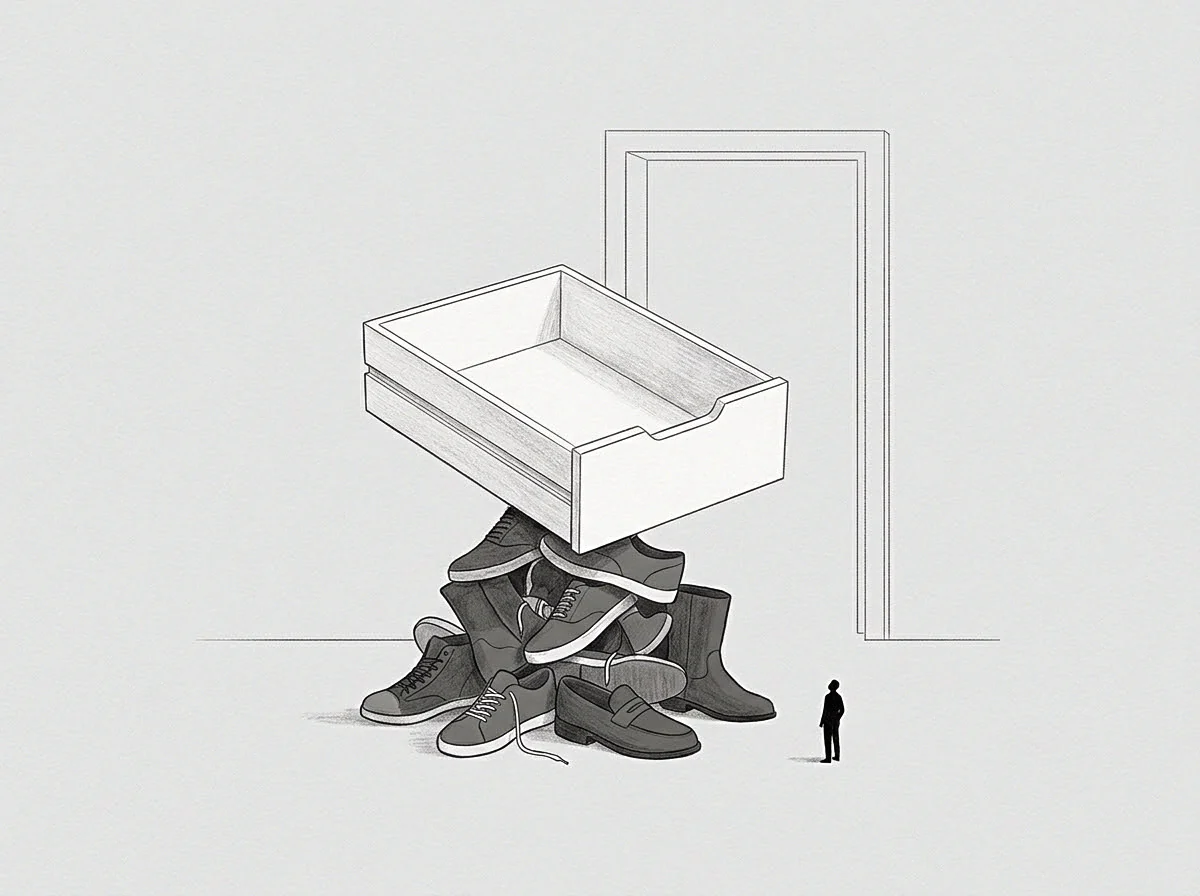
After an acute capital contraction, operating a venture requires a different way of measuring capacity. In ordinary market conditions, founders treat cash burn as a workable proxy for runway. After a contraction, that single number hides the depletion of non-monetary reserves.
A company can show eighteen months of cash in the bank while its leadership bandwidth, engineering slack, and partner trust are nearly gone.
In formal terms, a scalar measures magnitude along a single axis, while a vector tracks multiple independent components. Under existential stress, operational capacity behaves as an ordinal vector made up of capital reserves, specialist hours, executive focus, institutional trust, and architectural safety margin. The operational error is treating these separate dimensions as fungible assets.
A scalar cash balance hides the exhaustion of operational attention.
Each dimension has its own recovery rate and physical constraints. Cash can arrive through structured bridge financing within days. Trust lost through missed commitments or abrupt layoffs takes quarters of quiet, uninterrupted delivery to rebuild.
An executive team exhausted by continuous crisis management cannot design strategic changes, no matter how much capital sits in reserve accounts. Founders who plan post-contraction survival around financial burn alone consistently misjudge where the business actually breaks.
The cascade starts when one dimension falls below a critical floor, forcing the business to draw down adjacent reserves. An engineering group without senior architecture guidance spends excess hours patching unstable releases. That mechanical drag drains management attention, which leads to late partner deliveries and damages commercial relationships.
The deficit moves through each dimension in sequence until progress stops entirely, even while bank accounts show positive runway.
Decay
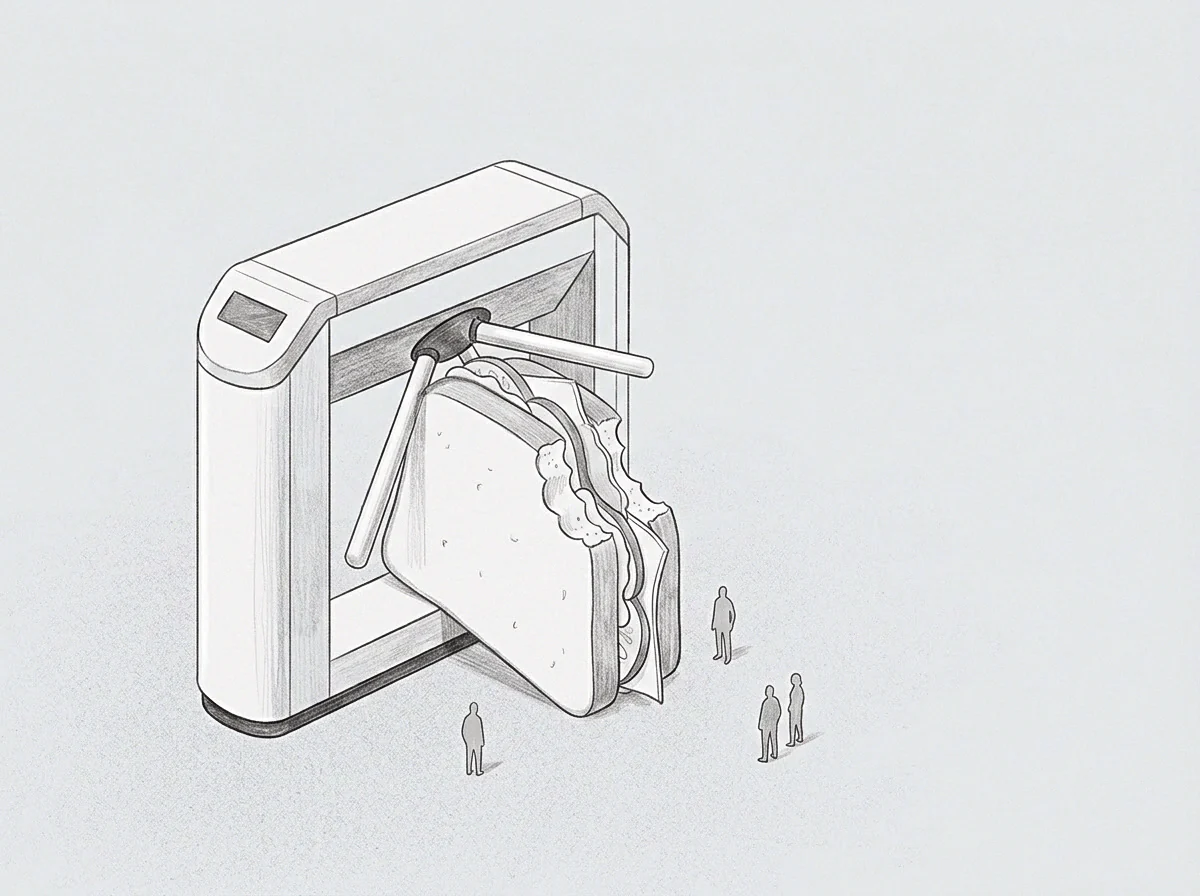
Understanding this collapse requires tracking how different reserves drain under pressure. Capacity rarely falls off in straight lines. Instead, drag compounds rapidly once any individual component drops below fifty percent of nominal baseline.
Nonlinear Propagation Across Operational Surfaces
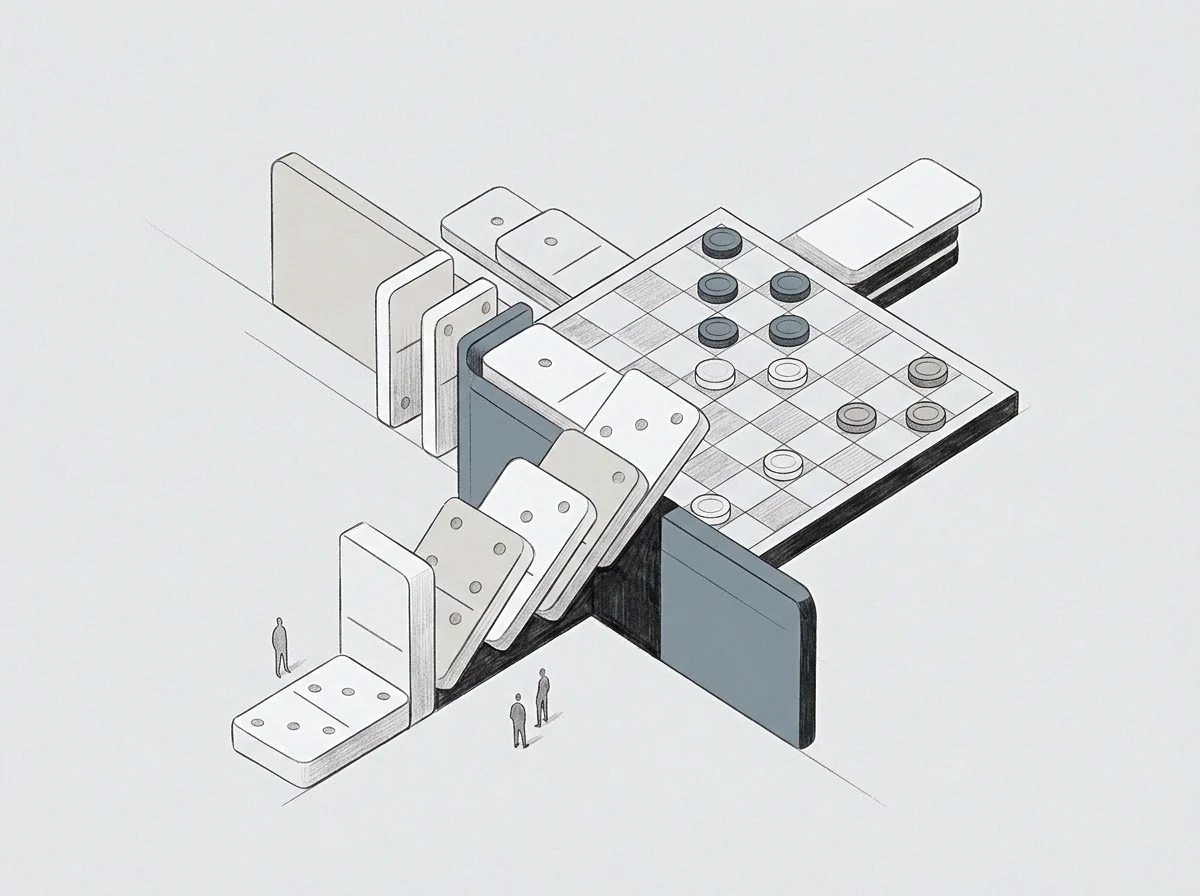
Take a venture emerging from restructuring with sixty percent of its workforce retained. The financial model typically assumes a tidy forty percent reduction in productive output. Standard queuing theory demonstrates otherwise.
As utilization nears system limits, wait times and ticket backlogs climb exponentially. Retained staff spend more and more of each day handing off unfamiliar code, sorting out disputed responsibilities, and sitting in defensive coordination meetings.
Losing specific expertise multiplies the workload on everyone left. When a specialized infrastructure engineer departs, generalist developers take over release pipelines. A task previously requiring two hours now consumes twelve hours across three engineers.
That deficit directly reduces core delivery, causing downstream delays in product releases and commercial commitments.
Queue latencies compound exponentially as operational utilization approaches saturation limits.
Leadership attention drops faster than other reserves. Under sustained cognitive overload, the ability to synthesize complicated problems deteriorates long before basic execution fails. During a crisis, executive focus splinters across debt renegotiations, key-employee retention negotiations, and nervous clients.
The capacity left for core strategic decisions drops to zero, even as the leadership team records eighty-hour workweeks.
The table below outlines the five operational dimensions comprising the capacity vector, detailing their measurement scales, typical recovery cadences, and cascading cross-dimension vulnerabilities.
| Dimension | Measurement Metric | Replenishment Cadence | Primary Cascade Target |
|---|---|---|---|
| Capital | Cardinal runway currency units | Discontinuous discrete events | Vendor counterparty trust |
| Labor Bandwidth | Uncommitted specialist hours | Medium linear cycle | Technical debt margin |
| Strategic Attention | Uninterrupted focus blocks | Short diurnal recovery | Operational coordination quality |
| System Trust | Ordinal counterparty observation | Extended multi-quarter cycle | Commercial contract terms |
| Technical Margin | System tolerance thresholds | Protracted structural cycle | Direct labor hours |
Systemic failure occurs when cross-dimensional deficits accumulate faster than replenishment mechanisms can supply new capacity. The enterprise exhausts its resilience reserves across three distinct stages.
- Latent depletion takes hold while throughput still looks acceptable, even as internal safety margins, discretionary specialist hours, and goodwill quietly drain away.
- Coupled friction surfaces once the failure of one dimension directly taxes an adjacent one, producing visible schedule slips and defensive internal meetings.
- Terminal lock sets in when all remaining capital and attention are burned simply keeping the current structure from falling apart, leaving zero capacity for forward work.
A venture in terminal lock cannot execute a strategic pivot. The physical hours and executive attention required to stand up new customer offerings are fully claimed by propping up existing, fragile systems.
Strain
Evaluating multi-dimensional capacity degradation demands rigorous mathematical formulation. Treating operational capacity as a static pool generates false confidence. Capacity operates dynamically as an interdependent system of differential equations.
Formulating Vector Invariants and Boundary Constraints
Let operational capacity at time t be represented as an n-dimensional vector C(t), where components denote specific functional resources. The rate of capacity consumption depends upon external environmental demand and internal operational drag. Environmental demand behaves stochastically, whereas operational drag compounds based on the inverse of remaining systemic reserves.
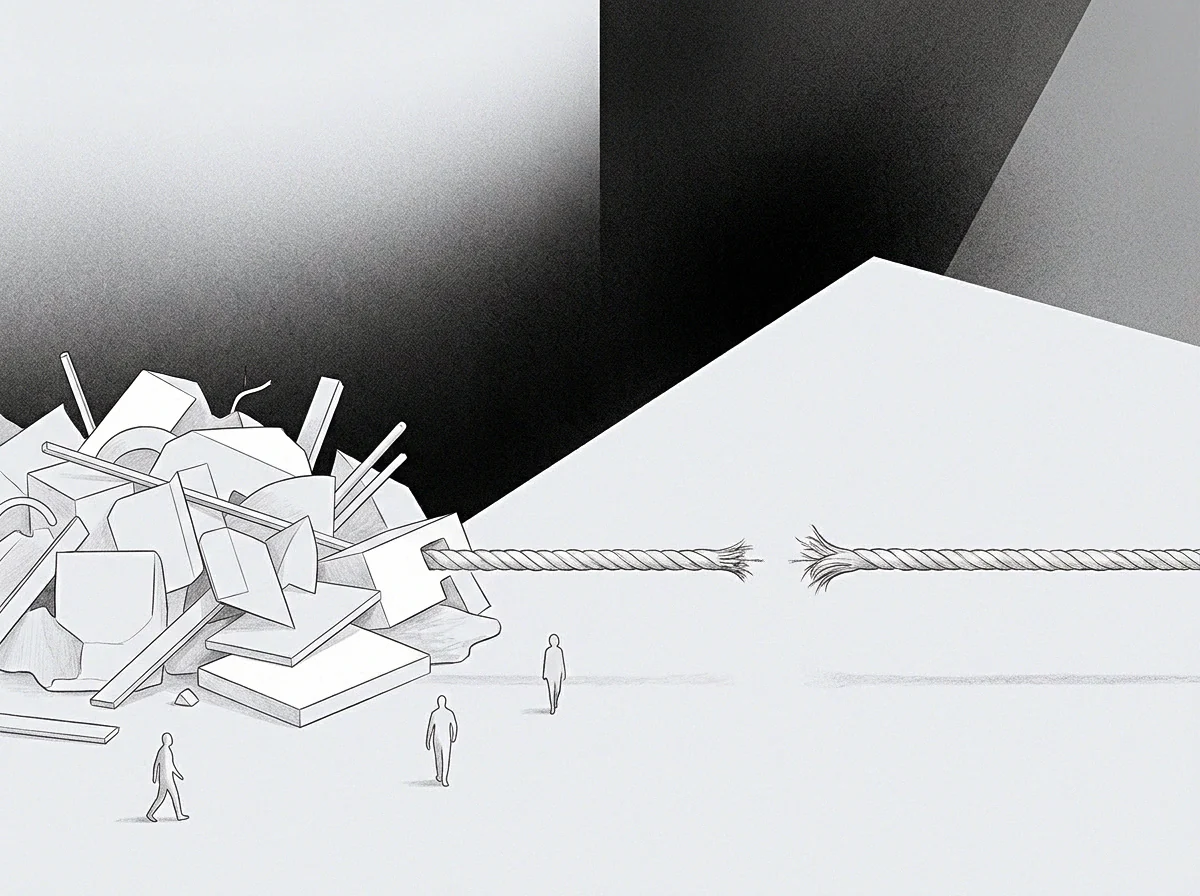
Each dimension holds a lower critical boundary. When any component C_i(t) crosses below its specific lower bound, the derivative of adjacent components dC_j/dt experiences an immediate negative step-change. This structural interdependency explains why ventures often appear stable until an abrupt collapse occurs.
The system absorbs stress until an individual component breaches its critical perimeter, instantly transmitting its deficit across the remaining vector components.
Industrial control theory terms this phenomenon cascade tripping. In electrical distribution grids, the unexpected failure of one transmission line forces power through parallel lines, causing them to exceed thermal limits and trip in rapid succession. Within a restructuring startup, the sudden loss of regulatory compliance attention trips legal risks, which forces immediate defensive capital outlays, tripping supplier confidence and accelerating liquidity contraction.
The transmission of cost across these interfaces is governed by ordinal realities. A founder cannot pay for missing attention with surplus equity once the market enters contraction. The price of an external resource remains cardinal, written cleanly on an invoice.
The actual cost to the enterprise remains ordinal, measured in the permanent forfeiture of alternative strategic paths. Every hour allocated to pacifying nervous bridge-round investors is an hour subtracted from enterprise product validation.
Cross-dimensional deficits propagate instantaneously once a single capacity perimeter is breached.
Systemic vulnerability concentrates in the coupling coefficient between technical margin and labor bandwidth. When software infrastructure degrades during a crisis, founders often impose a hiring freeze to conserve cash. The infrastructure failures continue unabated, forcing product engineers to divert sixty percent of daily activities into emergency maintenance.
Cash runway is mathematically extended on paper, yet the venture experiences an acute operational shutdown in real capability.
Circuit
Preventing catastrophic failure cascades requires the deliberate introduction of operational circuit breakers. A circuit breaker functions as a predetermined, non-negotiable policy that severs the transmission line between failing dimensions before the collapse infects the entire capacity vector.

Where Should Operational Firewalls Be Placed?
Engineers design firewalls to contain physical combustion within isolated bulkheads. Venturing executives must construct equivalent firewalls across operational surfaces. The first firewall must stand between customer delivery commitments and baseline software architecture.
When engineering capacity drops below nominal requirements, management must shed secondary client obligations rather than allowing infrastructure decay to consume the entire development core.
Shedding client obligations incurs cardinal financial penalties. Contracts may require fee refunds or service-level dispute credits. Conventional managerial intuition resists accepting monetary losses during periods of capital starvation.
However, measurement on the capacity vector reveals that accepting a discrete cardinal penalty is preferable to an uncontained collapse of core engineering bandwidth. The financial penalty is bounded; the cascade of team attrition, technical debt, and executive exhaustion is open-ended and fatal.
The second operational firewall isolates executive attention. Leaders must establish protected operational windows dedicated entirely to structural stabilization, delegating all tactical fire-fighting to operational leads during designated hours. If the executive layer becomes permanently embedded in daily operational triage, long-term strategic calibration ceases, ensuring the enterprise navigates blindly into subsequent structural bottlenecks.
Operational triage during recovery demands strict structural prioritization. The sequential steps below describe how leadership teams contain multi-vector collapses before system reserves are exhausted.
- Isolate failing vector components by mapping operational dependencies and identifying which functional surface is transmitting negative drag into adjacent units.
- Terminate non-core functional loops immediately, releasing labor bandwidth and executive focus from low-margin business lines or speculative experimental initiatives.
- Establish cardinal containment bounds by negotiating explicit, capped concession terms with critical creditors and enterprise partners to prevent continuous attention leakage.
- Rebuild single-dimension reserves systematically, prioritizing high-cadence components like operational focus and technical margin before attempting complex commercial expansion.
Enacting these firewalls forces painful trade-offs. Counterparties frequently react with vocal resistance when service tiers are abruptly reduced or non-core feature sets are deprecated. An operator who attempts to keep every counterparty satisfied during a restructuring guarantees the distributed exhaustion of every vector component.
Preserving the core engine requires the decisive abandonment of peripheral commitments.
Tally
Post-crisis venturing survival is fundamentally an exercise in honest multidimensional auditing. Enterprise leaders who survive severe contraction environments discard single-scalar accounting in favor of granular vector monitoring. They evaluate weekly operations by checking the precise condition of each interdependent capacity dimension rather than relying on remaining bank balances alone.
The discipline requires recognizing that non-monetary deficits carry real, punishing interest rates. Deferred architectural maintenance extracts compounding labor tax. Fractured partner relationships demand endless executive attention.
Chronic cognitive exhaustion yields catastrophic decision-making errors that capital reserves cannot undo. These costs arrive quietly, accrue invisibly, and extract payment simultaneously.
Long-term operational resilience depends on establishing realistic baseline requirements across all five dimensions. When a venture undergoes downsizing or market contraction, leadership must scale back commitments until operational throughput matches the true capacity vector, rather than forcing a diminished team to fake nominal scale through heroic exhaustion. Heroic efforts mask structural deficits until the failure cascade strikes with unmanageable force.
Measuring the full capacity vector transforms ambiguous organizational distress into concrete structural mechanics. When capacity is quantified across its true dimensions, cascades lose their mystery. The operator spots the breach at the perimeter, severs the infected transmission lines, and preserves the structural core necessary to rebuild.