
Resolving Structural Balance Sheet Deficits Before Cognitive Depletion Destroys Core Synthesis Assets
Resolving structural balance sheet deficits early prevents cognitive depletion from destroying the high-context synthesis capacity needed for strategic choices.

Vault
Late at night, an operator reviews multi-tenant database schematics with an unpaid invoice on the desk and twelve weeks of cash runway remaining. Cash balances drop with every payroll cycle while architectural trade-offs go unresolved. Trying to synthesize a long-term enterprise platform architecture while calculating whether liquid reserves cover next month’s obligations splits attention between software optimization and immediate cash preservation.
That split pulls down both technical focus and strategic clarity.
Sustaining an enterprise over long horizons requires two distinct classes of resources. A balance sheet tracks cardinal figures: debt instruments, accounts payable, cash reserves, and contractual penalty clauses. Executive cognition holds synthesis assets, such as high-context pattern recognition, mental models of software design, counterparty evaluation, and multi-variable trade-off analysis.
High-level synthesis runs on an ordinal scale of bandwidth. When structural balance sheet deficits grow unchecked, incoming liabilities keep executive attention locked in continuous risk evaluation, depleting cognitive reserves faster than baseline operational rest can restore them.
Core synthesis assets decay when unhedged balance sheet deficits force executive attention into continuous liquidity survival.
How an enterprise absorbs stress depends on the difference between cardinal price obligations and ordinal cost vectors. Cardinal obligations exist as explicit, fixed accounting figures. Ordinal costs register instead as internal drain, measured in hours spent, fractured focus, and sacrificed capability.
An unhedged financial liability generates an ongoing ordinal drag that continuously pulls attention away from executive work. Stating costs early prevents gradual performance decay, whereas identifying cognitive drain three years into an enterprise lifecycle often leads to sudden collapse.
Different deficit categories impose distinct attentional demands that wear down executive capacity:
- Capital Runway Deficits balance sheet liabilities that compress the operational calendar and force emergency financing decisions.
- Mispriced Commercial Commitments unhedged service level agreements that consume disproportionate engineering hours for fixed revenue.
- Unstructured Debt Obligations short-term liabilities with ambiguous settlement terms that trigger unpredictable cash calls.
- Cap Table Entanglements unaligned equity allocations that produce persistent governance friction during strategic shifts.
Architectural decisions depend on sustained concentration and multi-variable pattern recognition. When liquid assets dip below operational thresholds, cognitive resources swing from value synthesis to financial defense. Unhedged liabilities create a constant mental drag, forcing operators to trade long-term structural viability for immediate solvency.
Failing to separate structural liabilities from operational trade-offs exhausts mental reserves well before balance sheet adjustments can take effect.

Erosion
Sustained operational pressure cuts into working memory long before financial failure arrives. When a company carries unhedged short-term debt alongside mispriced commercial commitments, executive attention splinters across hundreds of daily micro-decisions. Under persistent allostatic load, the mental faculties required to synthesize complex systems, evaluate trade-offs, and detect subtle market shifts lose fidelity.
Physiological stress responses evolved for acute physical hazards adapt poorly to chronic financial strain: elevated cortisol and interrupted sleep erode prefrontal cortex function, shrinking the working memory required to maintain intricate architectural models in mind.
Executive control operates within strict metabolic limits. Synthesizing high-context systems requires uninterrupted focus across multiple operational dimensions at once. Once ongoing deficits force leadership into permanent crisis response, executive reasoning gives way to reactive shortcuts.
Rather than weighing five-year architectural trade-offs, an operator starts making decisions purely for immediate operational breathing room. Tactical patches supplant fundamental design, accumulating technical debt and mispriced commitments that deepen balance sheet deficits over the following quarters.
Persistent financial exposure shifts mental bandwidth from structural synthesis to immediate liquidity maintenance.
As liabilities accumulate, incoming demands force constant switching between competing priorities. An operator who spends the morning negotiating vendor payment extensions rarely has the mental clarity needed for an afternoon architecture review. Attention splinters into low-leverage, high-stress exchanges that generate no lasting capability.
Managing creditor communications produces no structural gains in product architecture or commercial distribution; the ordinal cost registers as heavy losses in executive attention and working hours with zero increase in enterprise value.
Prolonged mental exhaustion induces systematic decision biases across leadership teams. Fatigued operators consistently overvalue immediate cash inflows while overlooking severe long-term liabilities. Onerous partnership agreements, aggressive credit terms, and heavily discounted equity warrants are often accepted during periods of depletion merely to secure temporary breathing room.
That brief drop in financial pressure leaves behind structural obligations that depress synthesis capacity indefinitely, while payment schedules remain fixed regardless of technical delays.

Threshold
Organizational recovery involves a distinct inflection point governed by two competing time horizons: financial runway and cognitive capacity. The runway horizon marks the exact weeks left before cash depletion forces insolvency. The cognitive horizon tracks the weeks remaining before mental exhaustion prevents complex structural reasoning.
If cognitive reserves fall below operational thresholds before the balance sheet is restructured, leadership loses the ability to execute the necessary strategic maneuvers.

Is Restructuring Possible Below Baseline Synthesis Capacity?
Decision velocity deteriorates non-linearly in advanced stages of fatigue. Below a critical cognitive threshold, operators can no longer properly evaluate multi-party contracts, restructure cap tables, or adjust commercial fundamentals. While routine administrative tasks may still get done, the ability to synthesize novel structural solutions disappears.
Restructuring attempts made beneath this baseline frequently introduce secondary balance sheet liabilities, such as senior liquidation preferences or unhedged operational covenants, that quicken organizational decline.
Executing structural balance sheet repair after cognitive synthesis capacity drops below operational baseline produces mispriced concessions.
Survival through a prolonged cash deficit comes down to two rates of change. The deficit resolution rate measures how quickly balance sheet liabilities are converted into stable, cardinal figures. The cognitive depletion rate measures how fast executive synthesis assets erode under continuous stress.
When depletion outpaces resolution, the enterprise enters a decline where structural repair is no longer cognitively viable.
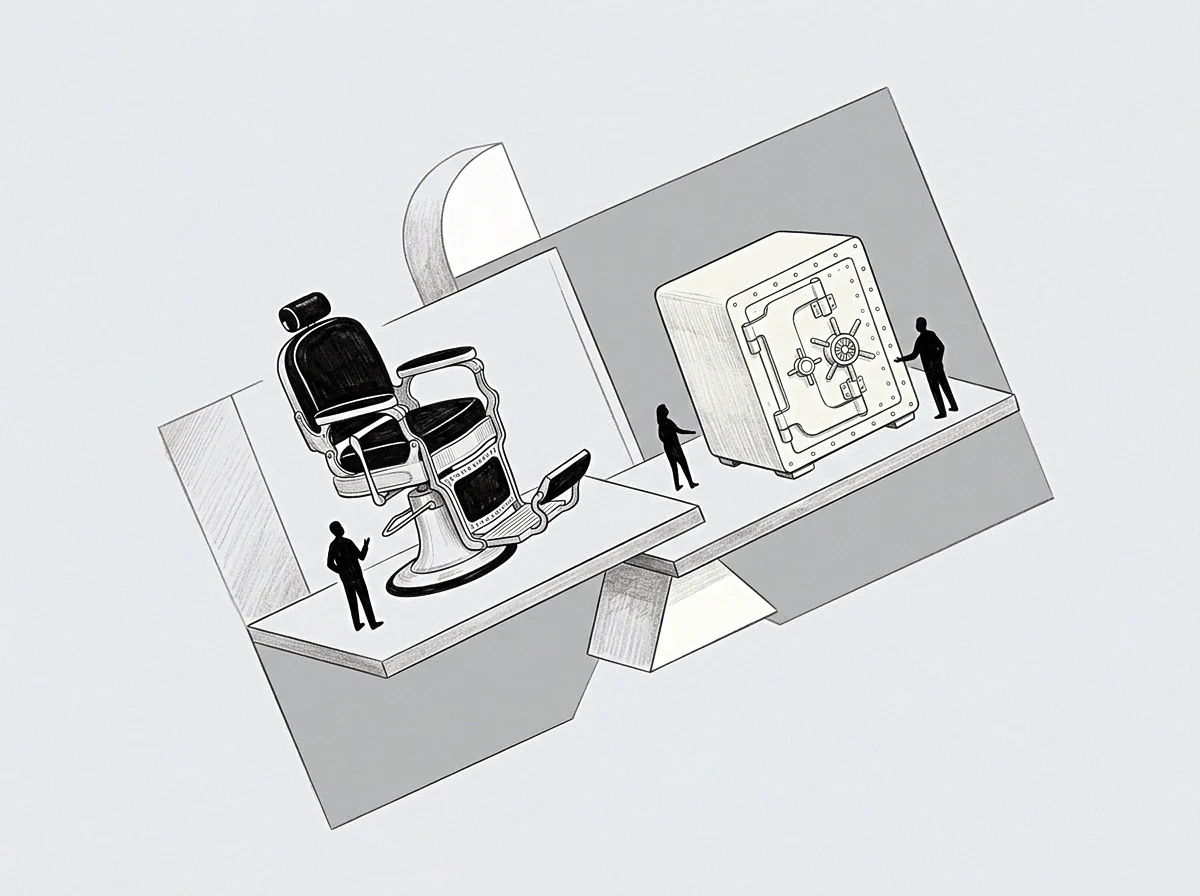
The crossover point occurs when available cognitive capacity drops below the bandwidth required to triage the balance sheet. Decisions made past this line routinely trade long-term viability for immediate cash relief. Whether an operator can accurately assess their own mental baseline while deep inside exhaustion remains an open question.
Triage
Resolving balance sheet liabilities requires intervention before executive exhaustion peaks. Restoring solvency without burning through core cognitive assets calls for disciplined triage: isolating high-drain liabilities, turning open-ended obligations into explicit cardinal commitments, and shedding low-leverage tasks. The goal is to arrest cognitive drain early enough that remaining bandwidth can be directed into high-leverage restructuring.
Informal understandings and ambiguous commercial terms generate continuous cognitive friction. An enterprise contract that promises custom integration work without clear performance limits creates an open-ended attentional draw. Converting that relationship into a capped agreement with defined deliverables turns an unbounded ordinal drain into a fixed cardinal commitment.
Once the counterparty accepts explicit limits, the operator regains attentional capacity by removing speculative obligations from active tracking.
The mechanics of balance sheet repair under tight cognitive constraints become clear in practice. Consider a software company with six months of cash runway, an enterprise service contract that demands forty engineering hours weekly for minimal revenue, and three short-term promissory notes nearing maturity. The operator works seventy hours a week, spending thirty of them fielding creditor inquiries and client complaints.
Cognitive fatigue leaves no capacity for product platform design or strategic licensing discussions.
Carrying out structural triage involves a sequence of deliberate steps:
- Identify all unhedged liabilities and assign each a cardinal cash figure alongside its ordinal attentional weight.
- Freeze non-essential operational commitments that consume executive bandwidth without generating near-term liquidity.
- Convert open-ended service agreements into capped contracts with explicit performance and delivery limits.
- Negotiate debt extensions or equity conversions against predetermined threshold metrics before cognitive reserves fall below baseline.
Comparing structural deficit categories shows how targeted conversions reduce cognitive overhead while extending enterprise runway:
| Deficit Category | Obligation Structure | Attentional Load | Restructuring Move | Cardinal Consequence |
|---|---|---|---|---|
| Short-Term Debt | Imminent Promissory Maturity | High Continuous Drain | Convert to Equity Warrants | Extends Cash Runway 12 Months |
| Mispriced Contract | Uncapped Custom Integration | Extreme Task Switching | Cap Service Scope to Standard API | Frees 30 Weekly Engineering Hours |
| Payable Backlog | Dispersed Vendor Liabilities | Moderate Intermittent Interruptions | Consolidate into Single Note | Reduces Creditor Contacts to 1 Monthly |
| Cap Table Dispute | Unallocated Advisor Equity | High Governance Friction | Execute Final Severance Agreement | Eliminates Legal Uncertainty |
| Source: Operational analysis of balance sheet restructuring under cognitive constraint. | ||||
Converting open-ended operational obligations into fixed cardinal agreements halts attentional bleed immediately.
Through these conversions, administrative demands drop from thirty hours to four hours weekly. The balance sheet deficit shifts from an erratic crisis generator into a predictable debt amortization schedule. Remaining synthesis capacity can then return to high-margin product work and customer acquisition.
In parallel, writing a fixed debt conversion milestone into the financing agreement automatically halts open-ended service penalties once cash reserves reach ninety days.

Margin
Once solvency is restored, operational boundaries are what protect executive bandwidth from another decline. Rebuilding runway without establishing cognitive safeguards leaves an organization exposed to repeated depletion cycles. Preserving synthesis capacity over the long run requires explicit governance rules that restrict unhedged operational commitments before they start absorbing mental focus.
Maintaining baseline efficiency requires firm caps on open-ended exposure. Operating policy needs to rule out uncapped performance guarantees, unhedged indemnities, and informal debt arrangements. Every commercial contract must specify scope limits, fixed delivery milestones, and defined remedies.
When operational liabilities are clearly bounded, executive attention stays anchored on core synthesis work, technical architecture, and commercial expansion.
Sustainable operations depend on contractual safeguards rather than individual stamina. Operators preserve cognitive capacity by evaluating internal attention vectors alongside standard balance sheet accounts. Measuring internal costs early prevents unnoticed capacity loss, safeguarding the pattern recognition that builds enterprise value.
Defining operational constraints in cardinal figures before committing synthesis capacity to new initiatives protects the organization from structural overextension.