
Resolving Unpriced Human Cognitive Depletion Within Fixed Multi-Year Enterprise Software Delivery Retainers
Dynamic capacity gating converts unpriced cognitive depletion in software retainers into cardinal contractual fee adjustments.

Load
A software delivery team enters month fourteen of a three-year enterprise retainer anchored to a static quarterly fee. Discovery initially framed the baseline architecture, but thirty-seven unpriced technical steering meetings, nine executive dashboard overhauls, and continuous compliance mandates have broadened the scope considerably. Though quarterly invoices clear without delay, preserving delivery pace now requires twice the original engineering headcount.
On paper the engagement appears profitable, even while senior staff spend sixty percent of their hours negotiating competing stakeholder priorities.

The Fixed Fee Erosion Spectrum
Enterprise procurement regularly treats custom software engineering as deterministic manufacturing, assuming billable hours map straight to finished capabilities. Multi-year retainers establish cardinal price tags based on early sizing models that take domain complexity as fixed. In practice, requirements, corporate governance, and integration standards shift across client environments.
When an agreement fixes revenue to a rigid figure, any expansion in systemic complexity falls on the vendor team as an unpriced operational cost.
Attention and problem-solving bandwidth degrade under fragmented context switching and ongoing architectural churn. Migrating three legacy systems concurrently alongside baseline maintenance takes substantially more mental capacity per unit of code than working down an isolated, coherent repository. Traditional balance sheets conceal that drain because they track expenditures rather than cognitive strain, leaving teams to bridge the gap with overtime, thinner test coverage, and postponed refactoring.
Dynamic retainer pricing aligns contractual fees with true operational complexity rather than static headcount forecasts.
The gap between contract price and operating capacity drives gradual delivery drift. Quarterly billings suggest steady progress to executive sponsors, but cognitive debt accumulates across the codebase. Technical leads reallocate their hours away from structural architecture toward triage, routine patching, and escalation management.
Revenue arrives on schedule while the firm drains its main operational asset: the specialized context and problem-solving capacity of its technical staff.

Cognitive Exhaustion as an Unaccounted Delivery Vector
Working in large software architectures requires engineers to maintain detailed mental models of state logic, dependency trees, and business rules. When enterprise clients redirect project goals without updating contract scope, staff must repeatedly reconstruct those conceptual models. The work required to rebuild context scales non-linearly with system size, and every interruption forces engineers to spend measurable focus simply regaining their bearings before shipping functional updates.
Working memory handles only a limited number of distinct information items at once. Under multi-year retainers filled with unpriced requests, developers spend long periods operating near their mental bandwidth limits. Elevated load reduces precision, raises defect counts, and degrades architectural choices.
The contract price remains stationary while the mental effort needed to resolve an ordinary user story triples.
Ignoring human capacity limits builds an invisible deficit into the vendor organization. Because standard accounting ledgers do not track attention drain, management rarely spots the problem until senior contributors resign or production outages surface. Leadership often misinterprets these disruptions as personal performance failures rather than structural contract defects, guaranteeing margin decline and avoidable turnover.
Floor
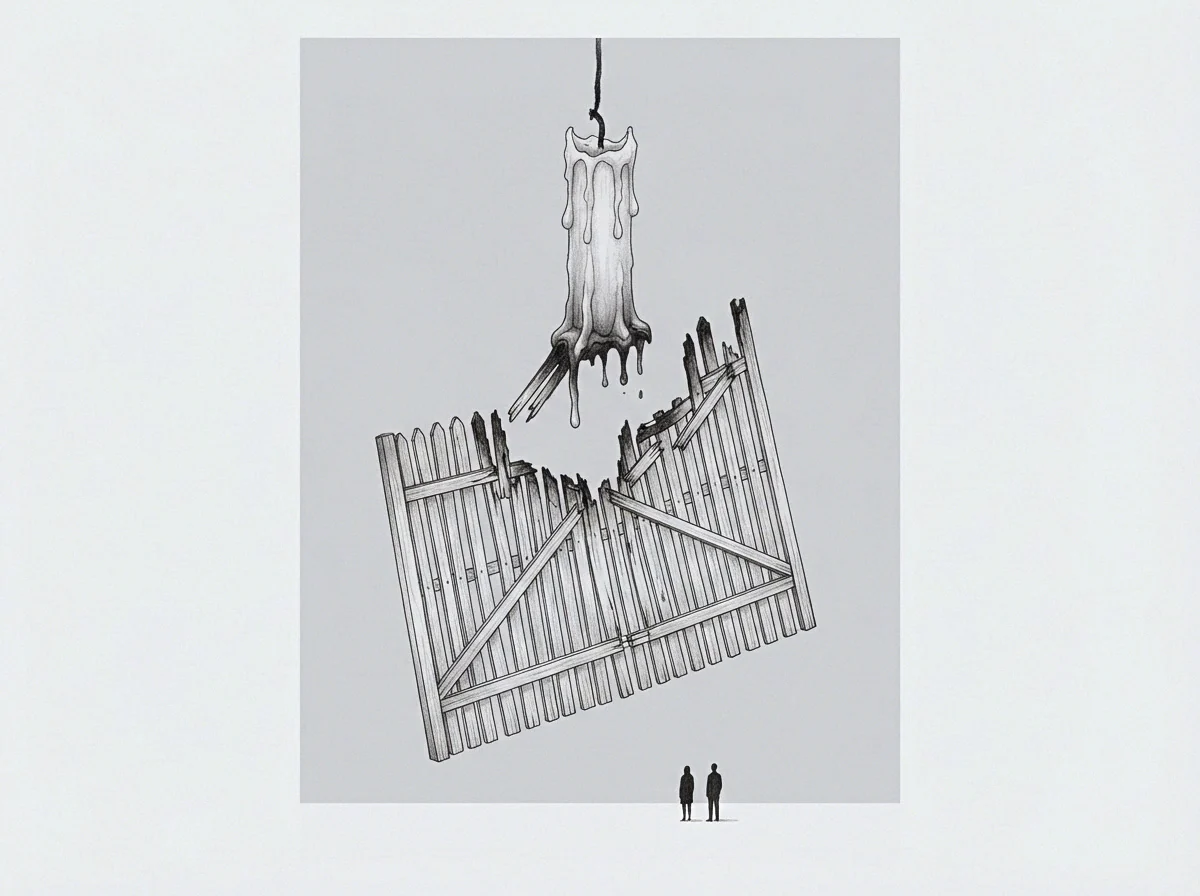
Stability fails when operational strain routinely outstrips human stamina. Across long-term enterprise engagements, sustained mental overextension lowers technical quality and prompts senior engineers to leave. Delivery drops from deliberate system design into triage, with developers burning their daily hours keeping brittle modules running against steady client pressure.
Structural Modes of Capacity Degradation
Capacity loss follows predictable patterns when fixed retainers fail to account for client-side volatility, showing up across multiple operational areas at once:
- Architectural context fragmentation occurs when developers balance multiple conflicting domain models, leading to fragmented system designs, incomplete code abstractions, and high defect rates across service boundaries.
- Decision fatigue acceleration reduces the capacity of lead engineers to evaluate long-term technical trade-offs, resulting in quick patches, hardcoded logic, and technical debt accumulation.
- Institutional memory drain takes place when experienced engineers leave the organization to escape chronic cognitive overload, taking undocumented system knowledge with them.
- Quality Assurance compression emerges as delivery timelines compress, forcing teams to skip integration testing and manual verification to meet fixed contractual milestones.
- Reactive engineering paralysis locks the delivery team into continuous fire-fighting, where no operational bandwidth remains for infrastructure improvements or strategic planning.
Each point of failure intensifies pressure on remaining engineers. As output slows and delivery milestones slide, enterprise sponsors schedule extra status check-ins and governance calls. These governance tasks consume further attention, pushing baseline capacity down and compounding risk.

Systemic Error Accumulation at Capacity Boundaries
Software bugs are rarely isolated flukes; they are the natural consequence of fatigued teams working through complex logic against deadlines. Experimental findings in software engineering indicate that defect density tracks with task-switching rates and developer exhaustion. When enterprise contracts demand rapid output against rigid compensation structures, code quality drops across every active service boundary.
Systemic code quality drops when technical teams operate continuously past cognitive capacity limits.
Defects accumulate beneath normal operations before triggering outages in production. Pressed for time, engineers ship localized patches that resolve visible symptoms without addressing brittle architecture beneath them. Across a multi-year retainer, these deferred fixes compile until an ordinary update initiates cascading failures in downstream systems, often costing more to remediate than the engagement earned in profit.
When enterprise clients demand oversight, delivery firms typically assign project managers to track execution, adding management overhead without fixing underlying capacity constraints. Client frustration mounts alongside internal engineering costs, turning the account unprofitable and demonstrating how unpriced cognitive demand ultimately converts into financial losses.

Variance
Enterprise technical environments rarely remain stable over multi-year horizons. Corporate reorganizations, library upgrades, security requirements, and evolving product roadmaps generate continuous variance between discovery assumptions and day-to-day delivery. Fixed retainers absorb none of this change naturally, forcing delivery personnel to shoulder the volatility under static commercial terms.

Why Do Fixed Retainers Obscure Cognitive Capacity Losses?
Fixed contracts conceal depleted capacity because standard accounting tracks billable hours while ignoring the cognitive difficulty of the assignments. A timesheet treats an hour spent updating documentation identically to an hour spent debugging race conditions in legacy transaction services. Pricing development purely through cardinal hours assumes engineering inputs are interchangeable, masking the wide variance in mental effort required across technical tasks.
Empirical studies in software economics show that complex refactoring demands far more working memory and executive attention than writing greenfield features. When clients redirect architectural priorities mid-term, they introduce massive cognitive overhead that never registers in billing platforms. The engineering team absorbs that burden internally, and because logged hours stay within contractual thresholds, leadership sees little reason to reopen contract terms.
This oversight generates friction between vendor sustainability and client expectations. Enterprise sponsors assume consistent billing means the vendor retains surplus capacity for new feature requests, altered governance, and architectural revisions. Vendors, hesitant to provoke commercial disputes, often exhaust their team members’ mental bandwidth instead of addressing scope discrepancies directly.

Quantifying the Divergence Between Price and Structural Capacity
Evaluating fixed retainers against dynamic capacity frameworks clarifies how flat pricing models compromise operational stability over time. The table below compares both approaches across key operational markers:
| Delivery Metric | Static Fixed-Fee Retainer | Dynamic Cognitive-Indexed Retainer |
|---|---|---|
| Architectural Velocity | Degrades steadily as context switching and technical debt compound over time. | Maintains consistency through strict limits on context switches and task concurrency. |
| Senior Engineer Retention | Low retention due to unmanaged decision fatigue and chronic burnout. | High retention driven by predictable workloads and bounded mental demands. |
| Defect Density | Escalates non-linearly as cognitive capacity limits are continuously breached. | Remains baseline through controlled task volume and mandatory recovery windows. |
| Margin Drift | Negative drift as unpriced coordination effort expands over contract life. | Stable margins secured by automatic price indexing against scope complexity shifts. |
The comparison illustrates the basic vulnerability of fixed-fee arrangements. Selling static blocks of hours rather than managing cognitive throughput introduces margin erosion and turnover across long projects. Dynamic pricing protects technical stamina and client deliverables by tying fees directly to operational complexity.
Accounting for variance means tracking task complexity rather than simple ticket counts. Adding a column to a relational database schema consumes negligible mental effort, whereas restructuring an asynchronous reconciliation workflow demands intense systems modeling and comprehensive regression verification. Contracts that treat both as equivalent work misjudge the human effort required.
An agency operating on a fixed retainer must recognize that every unpriced architectural pivot erodes future capacity. When clients introduce unbudgeted compliance steps or mandate new integration standards, the provider must either adjust pricing terms or accept diminished output quality.

Index
Accounting for hidden cognitive depletion requires mechanisms that translate internal attention metrics into concrete contract terms. Delivery firms need to shift away from simple hourly billing toward dynamic indexing models that incorporate context switching, architectural volatility, and decision load directly into retainer agreements.

Constructing an Ordinal Metric for Cognitive Depletion
An ordinal scale gives delivery teams an objective way to gauge operational difficulty before committing development resources. Rather than trying to attach dollar values directly to mental strain, an ordinal system ranks assignments according to relative cognitive load, external dependencies, and task concurrency.
Under this approach, teams categorize tickets by their structural impact on working memory and delivery risk. Straightforward changes in isolated modules rate low, while cross-service integrations, legacy refactoring, and real-time performance adjustments rate high. Grouping tasks by cognitive demand allows leads to balance assignments and keep engineers from working under relentless operational strain.
When telemetry indicates sustained cognitive strain across consecutive sprints, the agreement should initiate capacity rebalancing protocols. Setting explicit thresholds protects staff by scheduling consolidation periods and capping high-demand backlog items allowed in a single billing window.

Translating Human Attention Limits into Cardinal Contract Terms
Turning ordinal indices into binding contractual terms requires concrete capacity gates in enterprise master services agreements. These terms limit context switching, governance meetings, and unbudgeted architectural shifts, ensuring client compensation tracks operational complexity.
- Define baseline cognitive capacity units based on standard feature delivery within bounded architecture domain boundaries.
- Establish dynamic fee multipliers that apply automatically when client requests exceed agreed context switching thresholds.
- Incorporate mandatory cool-down periods following high-intensity release cycles to allow technical teams time to refactor code and recover operational focus.
- Set strict limits on client governance meetings and steering committee allocations, converting excess governance hours into billable capacity units.
- Include architectural stability clauses that trigger formal contract renegotiation whenever underlying platform dependencies change significantly.
Agreements should make the relationship between scope volatility and service fees explicit. If an enterprise partner demands swift changes in technical direction, baseline fees must adjust upward to cover the resulting coordination overhead and delivery risk.
Enterprise delivery demands explicit limits.
Managing long-term operational uncertainty becomes more predictable when retainers incorporate short, recurring fee adjustment windows. Quarterly indexing lets engineering firms align contract fees with actual system complexity without initiating full contract revisions, preserving operating margins and stabilizing the working relationship over time.

Reset
Restructuring an ongoing enterprise software retainer means shifting discussions from logged hours to capacity thresholds. Delivery leaders need to present operational data transparently, pairing empirical throughput metrics and defect trends with turnover figures to demonstrate why existing contract terms jeopardize ongoing delivery.

Execution Protocols for Enterprise Retainer Restructuring
Contract renegotiation starts with documenting the divergence between initial assumptions and operational reality. Delivery leadership should catalog unbilled steering meetings, context switches, and architectural revisions absorbed over prior quarters, framing the restructure around preserving code quality, release cadences, and platform uptime.
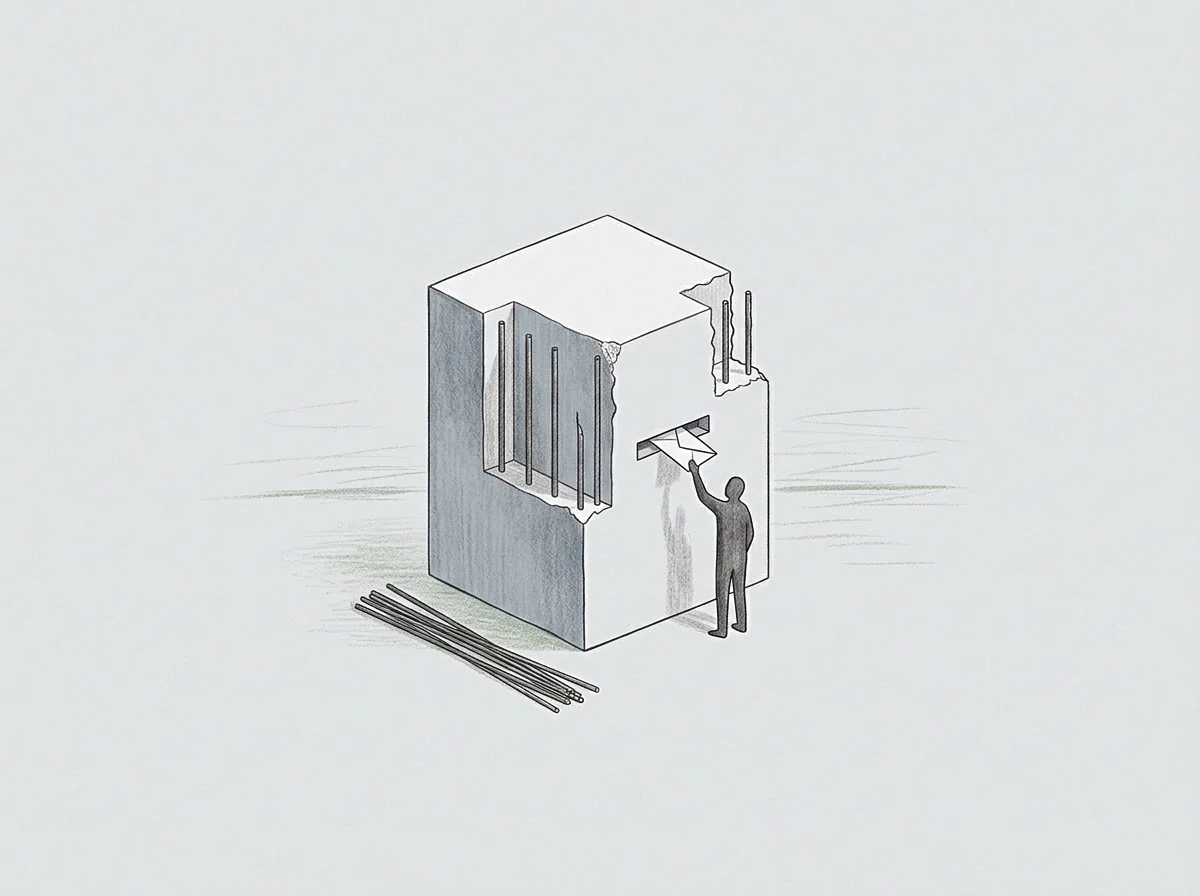
In civil infrastructure maintenance, engineers continuously monitor structural fatigue limits on bridges to prevent catastrophic failure under increasing traffic loads. Software retainers require identical operational oversight: when human mental fatigue limits are reached, structural integrity deteriorates rapidly unless load factors are recalculated and reinforced through updated contractual terms.
The firm should propose a restructured retainer that swaps flat quarterly retainers for dynamic capacity indexes. Incorporating terms that bound context shifts, cap steering hours, and adjust fees for scope changes aligns commercial incentives with technical capacity, supporting delivery stability for the client and predictable margins for the vendor.

Sustained Capacity Governance Across Multi-Year Cycles
Maintaining execution across multi-year contracts requires monitoring team strain as work progresses. Setting up internal capacity audits evaluates context switching, fatigue levels, and accumulated technical debt, giving operators concrete indicators to guide staffing decisions and invoke contractual adjustments before teams hit capacity walls.
Engineering managers must have the authority to apply contractual capacity caps during day-to-day delivery. When client stakeholders propose changes that exceed baseline complexity limits, leads should route those requests through formal index reviews rather than absorbing the work informally.
Long-term software retainers succeed by balancing engineering throughput against operational stamina. By pricing cognitive load directly, introducing adaptive fee models, and establishing firm operational boundaries, software organizations turn unpriced human strain into structured, sustainable enterprise engagements.