
Structural Friction in Converting Ordinal Capacity Burden into Cardinal Contract Overages
Translating ordinal operational strain into cardinal contract overages fails because linear unit prices cannot capture non-linear team exhaustion.
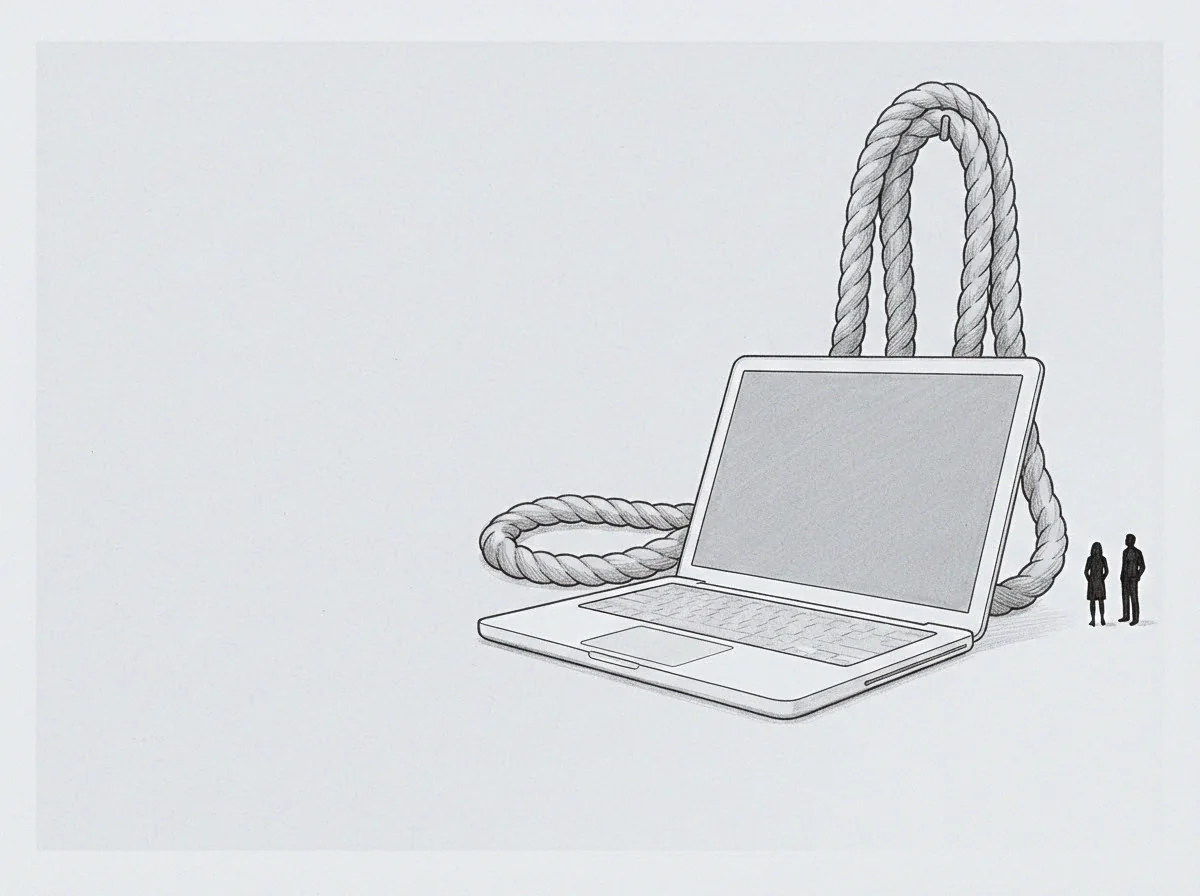
Load
A dispatch terminal registers twenty incoming maintenance requests during an afternoon shift. Three senior engineers absorb the intake, rearranging their scheduled queue to suppress an immediate client escalation. By midnight, the client account stands nominally balanced under the master services agreement, showing zero contract infractions.
The personnel who absorbed the run collapse into the following morning with their cognitive reserves depleted, their unbilled exploratory development halted, and their internal project calendar set back by three days. That operational strain remains strictly internal. Contractual language records nothing of the sequence because the agreement prices completed work orders rather than team exhaustion.
Operational burden sits on an ordinal plane. When a team handles complex operational requests, the fifth concurrent delivery task feels distinctly heavier than the fourth, while the tenth generates acute paralysis. This progression represents a sequence of relative rank orders.
Ordinal strain describes states of progressive depletion where each added tier of effort exacts an escalating toll without corresponding to an identical increment of physical production. In formal measurement theory, S. S. Stevens established that ordinal scales allow comparisons of greater or lesser intensity while prohibiting addition, subtraction, or the calculation of equal intervals. The person managing delivery knows that task six inflicted severe strain compared to task two.
That observer cannot assert that task six consumed precisely three and a half units of internal vitality.
Under high service demand, operational strain accumulates as an ordinal sequence of relative exhaustion that resists addition.
Commercial contracts discard relative rankings entirely. A service agreement functions on cardinal arithmetic: billed hours, closed support incidents, server cycles, flat monthly retainers, and explicit overage rates pegged to discrete units. Cardinal scales demand stable units of measure with identical intervals between consecutive numbers.
Ten billable hours equal ten individual one-hour blocks, and twenty tickets equal two batches of ten tickets. A contract demands this arithmetic predictability to enforce billing thresholds. The supplier absorbs an experiential, non-linear depletion curve, yet must translate that exposure into uniform integers before demanding financial compensation.
When an operating team attempts this translation, friction appears immediately. Cardinal instruments treat every delivered unit above a baseline quota as an interchangeable commodity. A client who consumes fifteen complex custom workflows pays the exact same unit overage price as a client whose fifteen requests involve trivial configuration changes.
The service organization experiences severe internal friction because the supplier incurs an accelerating multi-attribute loss while collecting single-attribute linear revenue. The burden lands squarely on attention.

The Multi Attribute Decomposition
An internal burden is composed of several distinct components operating simultaneously. Each component moves along its own vector, possessing a unique magnitude and rate of decay.
- Cognitive friction consumes analytical stamina and leaves the operating team unable to evaluate subsequent architectural problems with baseline precision.
- Queue displacement pushes deferred internal tasks into subsequent production windows, generating downstream bottlenecks across unrelated accounts.
- Attentional fragmentation fractures uninterrupted working blocks, requiring operators to restart diagnostic processes repeatedly after brief client interruptions.
- Reserve erosion strips the organization of protective slack, ensuring the next unexpected operational shock causes immediate delivery failure.
Suppliers routinely fail to bill for these hidden vectors. When a counterparty signs an agreement with explicit volume caps, the client assumes that any demand beneath the overage ceiling carries an equivalent internal delivery toll. The supplier assumes the client recognizes the compounding severity of rapid fire requests.
Both assumptions collapse when operational volume spikes.
The failure to capture this relative strain produces systematic underpricing of client overages, transferring uncompensated operational depreciation directly onto the balance sheet of the delivering organization.

Shelf
A physical work surface holds a fixed number of open assemblies before components tumble onto the shop floor. In knowledge services and operational delivery, the dispatch queue functions as this holding space. When incoming client requests arrive faster than the processing cycle clears them, jobs sit in temporary storage, creating an invisible pile of deferred obligations.
This inventory incurs holding costs that never appear on a client invoice.
Queuing theory models this accumulation through arrival intervals and processing distributions. In the analytical formulations of A. K. Erlang and subsequent operations research, once arrival rates approach processing capacity, wait times scale exponentially. The mathematical relationship rests on the assumption of Poisson arrivals and exponential service times across stationary systems.
Should those underlying distributions display heavy tails or sudden volatility, real-world queue latency outpaces the theoretical estimate by several orders of magnitude. The operator watching the ticket portal sees incoming volume rise by twenty percent. Internal delivery latency climbs by two hundred percent.
The resulting delay generates an unpriced operational liability. Clients perceive waiting as idle time, whereas the operational team spends that interval triaging dependencies, appeasing stakeholders, and reordering task priority. The physical room grows quiet.
The operational pressure mounts continuously.
A contract pricing model that ignores queue latency converts operational triage into uncompensated labor.
The table below outlines how operational attributes diverge when an account crosses from standard service allocations into sustained overage conditions.
| Delivery Dimension | Baseline Volume Allocation | Low Overage Phase | Severe Overage Saturation |
|---|---|---|---|
| Measurement Scale | Cardinal ticket counts | Nominal task logs | Ordinal priority ranking |
| Resource Allocation | Scheduled standard shift | Ad hoc queue expansion | Emergency engineer diversion |
| Attentional Coherence | Single task focus | Frequent task switching | Continuous triage paralysis |
| Secondary Impact | Zero project disruption | Minor backlog accumulation | Complete development halt |
| Billing Alignment | Exact contract match | Partial overage capture | Total margin inversion |
When high demand saturates available holding space, the operating team faces an impossible administrative choice. They can log every granular friction event manually, drowning their specialists in time-tracking overhead. Alternatively, they can group diverse operational pains into blunt unit increments that fail to capture the true toll of the disruption.
Most teams choose the second path. They preserve administrative peace while sacrificing economic recovery.
The account rep will say the contract already covers extra requests at the agreed fifty-dollar rate and additional tracking entries are simply unapproved administrative bloat.
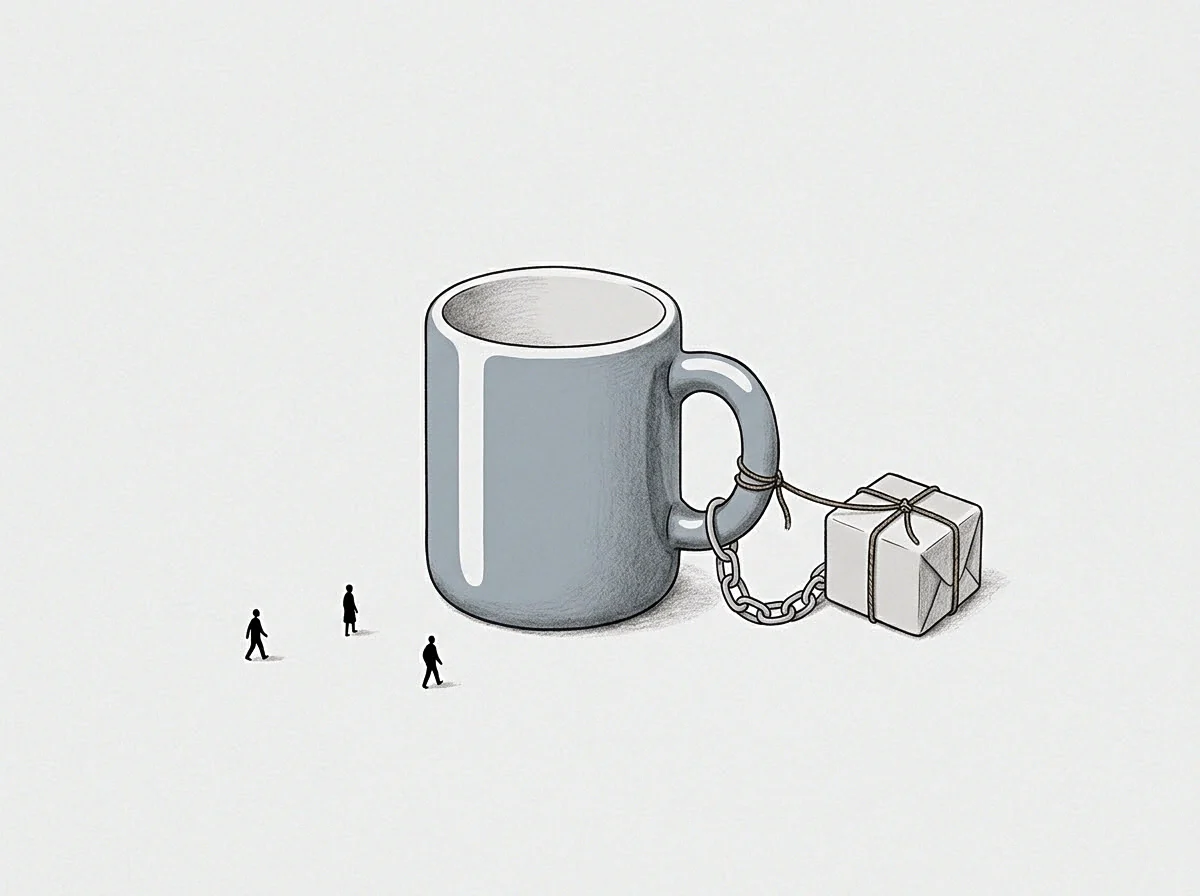
Tally
Assigning an integer to an exhaustion state demands a conversion formula that does not exist in nature. An operator logs eight hours of technical intervention on a Saturday morning to resolve a database lockout caused by unauthorized client scripting. The client agreement specifies that weekend support carries a cardinal billing multiplier of 1.5 times the standard hourly rate.
The invoice shows twelve billable credit units. The company recovers cash, yet the team loses two key contributors who tender their resignations three weeks later citing prolonged burnout.
This outcome exposes the primary defect of mechanical time tracking. An hour spent in quiet routine maintenance carries a low ordinal cost. An hour spent under emergency conditions, managing hostile counterparty inquiries while balancing cascading systems failures, carries an astronomical ordinal cost.
Cardinal billing systems treat both intervals as sixty minutes. The financial metric captures duration while discarding intensity.

Can Uncounted Operational Fatigue Survive Cardinal Accounting?
The field of human factors engineering documents that operational fatigue accumulates non-linearly under sustained cognitive friction. Research on work physiology reveals that recovery times double when continuous cognitive performance extends beyond specific fatigue thresholds. This finding rests on clinical measurements of executive function across controlled testing cohorts, requiring predictable resting periods between testing intervals.
In commercial environments characterized by uninterrupted interruptions, that restorative baseline disappears entirely, multiplying the degradation rate. The damage lands on capacity.
Cardinal invoicing instruments cannot accommodate non-linear physiological states without extensive contractual modification. If an enterprise attempts to introduce subjective strain scores into an invoice, corporate procurement departments reject the billing. A corporate billing officer demands auditable verification: clock stamps, ticket numbers, software access records, or data throughput tallies.
The corporate buyer operates inside an audit cycle that accepts cardinal counts and penalizes qualitative variance.
Consider two parallel service agreements managed by an infrastructure consultancy. Assume both agreements establish a baseline allowance of forty operational tickets per quarter, with subsequent tickets billed at four hundred dollars each. Both accounts trigger fifteen overage tickets during a single release cycle.
In the first account, the fifteen extra tickets consist of standardized password resets and user permission updates spread evenly across ninety days. In the second account, the fifteen extra tickets arrive within a single forty-eight-hour window following an unannounced database migration executed by the client. The cardinal invoice produces identical bills of six thousand dollars for both accounts.
The internal economic reality of the two arrangements shares no common ground. The first account delivered predictable gross margins with zero team disruption. The second account cannibalized scheduled roadmap commitments, caused three missed delivery milestones on unrelated client projects, and required executive mediation.
The cardinal overage charge captured the transaction count while ignoring the organizational devastation. The revenue matched. The internal loss diverged wildly.
A flat unit rate applied to erratic overage spikes subsidizes destructive client behavior at the direct expense of operational longevity.
In steam boiler operations, pressure gauges monitor physical force per square inch to prevent catastrophic structural rupture. If the release valve relies entirely on a mechanical counter recording how many times a piston cycles rather than reading the internal steam pressure, the boiler casing cracks under sudden thermal expansion. Operational service agreements make this precise measurement error every single day.
They count the transactions while the structural frame bends under unmeasured internal tension.
Whether an operational team can establish objective cardinal proxies for compound cognitive depletion remains an active dilemma that empirical management studies have yet to resolve.

Tariff
Contractual overage architecture requires structural redesign to bridge this measurement gap. Rather than pretending ordinal burden converts directly into linear unit pricing, sophisticated agreements establish non-linear pricing tariffs that reflect escalating systemic friction. A resilient agreement establishes progressive penalty structures that rise in step with operational saturation.
To convert qualitative burden into enforceable cardinal terms, legal agreements deploy tiered overage ratchets. The initial overage block carries a modest premium above the baseline unit rate. The second block, triggered when volume threatens delivery stability, doubles that fee.
A third block introduces exponential surcharges coupled with mandatory delivery delays. The tariff uses price as a rationing instrument to alter counterparty behavior rather than viewing it merely as retrospective compensation.
The operational move requires three structural elements embedded directly within the commercial contract.
- Velocity throttling thresholds restrict the volume of overage units processed within any single rolling seventy-two-hour window regardless of total monthly caps.
- Compound rate multipliers escalate the unit price by fifty percent for every ten percent increment of volume delivered above agreed baseline capacity.
- Dedicated recovery buffers grant the supplier contractually protected non-billing intervals following sustained emergency interventions without incurring service level penalties.
The desk cannot fully defend the proposition that aggressive rate ratchets completely eliminate client overreach without damaging commercial client retention. In markets crowded with undifferentiated commodity competitors, demanding non-linear overage pricing often drives procurement teams toward suppliers who maintain naive flat-rate billing. An operator balancing this trade-off must choose between absorbing uncompensated team attrition or accepting lower client acquisition volume.
That choice requires deliberate calculation rather than defensive hesitation.
The client relationship shifts the moment ordinal strain receives explicit contractual boundaries. When overage terms force clients to pay cardinal premiums matching the real operational disruption they introduce, consumption patterns alter abruptly. The counterparty either disciplines their internal operational queue or provides the financial capital required to hire dedicated surge capacity.
The price finally tells the economic truth.
A contractual rider specifying that any unscheduled emergency deployment exceeding four hours automatically triggers a four-thousand-dollar surge fee converts ambiguous operational grievance into immediate cardinal cash recovery.