
Calibrating Launch Signal Envelopes Against Primitive Friction Vectors
True adoption reveals itself only when early signal telemetry is discounted against the baseline friction inherent to the operational environment.
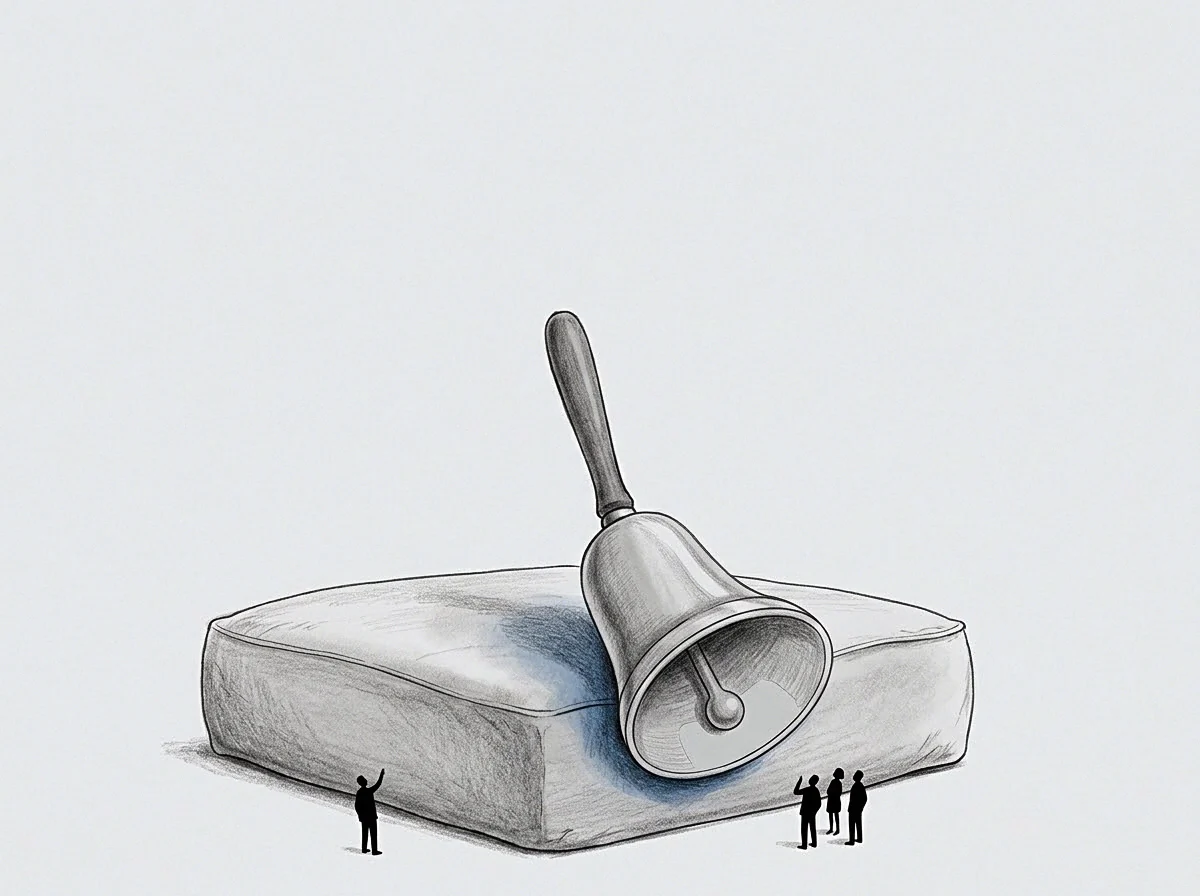
Pulse
The intake console recorded eighty accounts in the opening six hours while the local registry remained entirely unwritten. A founder watched the counter advance, noting the discrepancy between incoming clicks and local storage writes. The initial burst looked like adoption.
The live server showed incoming network packets, yet the underlying system state recorded zero schema updates. Traffic registered on the edge nodes, but nothing anchored to disk.
The intake console flickered. What appeared on the surface was an operational surge; what occurred beneath was the deflection of that surge by immediate technical resistance. In measurement science, this early displacement forms the launch signal envelope, the observed geometry of initial system activity before user effort encounters resistance.
When an operator pushes an asset into production, early indicators skew high because curiosity and novelty exert brief force. The initial wave represents transient energy rather than sustained work. The reading stayed flat.
A transmission wave decays immediately when incoming pressure meets an unyielding interface.
A launch signal envelope contains three distinct phases: the rising front, the peak displacement, and the decay curve. Most teams read the peak displacement as market demand. The peak registers the unresisted volume, which reflects nothing about transactional persistence.
A proper baseline requires separating surface telemetry from recorded state transitions over a thirty-day window. The delta between initial registrations and recurring transactions reveals how much of the launch pulse was genuine kinetic progress and how much was mere deflection.

Distinguishing Surface Velocity From Durable Commits
A high intake velocity routinely conceals a complete absence of durable execution. When an operator introduces a workflow tool to an enterprise cohort, signups occur because clicking an authentication link demands zero behavioral sacrifice. Friction absorbs early force.
The real test begins when the tool asks the enterprise user to alter an established habit, export proprietary data, or secure budgetary approval from a finance department. At that exact juncture, the initial amplitude collapses.
The delta that measures authentic movement appears only when the operational environment imposes an active tax on the user. If an operator tracks volume during the initial forty-eight hours without discounting for distribution drag, the resulting projection creates an illusory trajectory that burns capital through premature scaling. Speed yields false certainty.

Drag
Inertia governs production environments with greater certainty than verbal agreements or initial interest. Every human and technical operating environment contains primitive friction vectors, which are the baseline resistances inherent to the medium itself. These vectors exist prior to the rollout, operate independently of user intent, and exert steady counterforce against any new process.
The baseline held steady. When a founder attempts to introduce an operational change, five distinct friction vectors immediately engage:
- Cognitive Switching Latency demands substantial mental effort from operators who already maintain automated habits across legacy tools.
- Administrative Clearance Overhead stalls deployment through security reviews, procurement workflows, and permission checkpoints that freeze implementation schedules.
- Data Migration Drag creates technical debt when schema disparities between legacy stores and current schemas require custom transformation scripts.
- Social Consensus Hesitation emerges when team members wait for peer validation before committing personal time to an untested instrument.
- Verification Cost mounts as administrators manually inspect every automated transaction to ensure accuracy before surrendering oversight.
Delay compounds unseen drag. These friction components do not operate sequentially; they compound as an integrated resistance envelope. If an operator calculates customer acquisition or user activation without subtracting these specific drag values, the observed velocity reflects noise rather than signal.
Measurement tracks direct movement.
Imposing a new operational requirement without accounting for switching drag guarantees systemic rejection.
A reference class provides the historical baseline necessary to interpret early engagement numbers accurately. When entering an unfamiliar operational domain, an operator lacks an internal reference class and misinterprets early compliance as permanent victory. Without fifty previous launches in the same environment to serve as a comparative standard, the observer assumes that absence of early resistance equates to absence of structural drag.
Calibration occurs over months by recording the variance between projected activation and realized transactional persistence.
The resistance vector always increases as the interaction approaches the core balance sheet or primary data repository.

Plate
Testing an operational hypothesis demands a rigid surface against which live execution can be verified. In materials engineering, an inspection plate offers an unyielding, ground reference plane against which physical components are measured for flatness. In operational testing, the verification plate consists of non-negotiable transactional criteria that reveal whether user engagement is computed live or retrieved from a cached routine.
Retrieval outpaces live execution. When an organization interacts with a new instrument, early responses are often cached compliance, meaning users perform the minimum action to satisfy an inquiry without reorganizing their underlying workflow. A cached response produces the identical output regardless of the operational input.
A live computation varies with the input, demonstrating active integration.
| Verification Tier | Primary Friction Vector | Envelope Distortion | Observed Delta Metric |
|---|---|---|---|
| Interface Interaction | Cognitive Switching Latency | Transient Amplitude Surge | Drop-off after second session |
| Workflow Integration | Verification Cost | Suppressed Signal Amplitude | Export volume to legacy files |
| Financial Commitment | Administrative Clearance Overhead | Prolonged Latency Phase | Contract redlines on indemnification |
| Data Schema Anchor | Data Migration Drag | Immediate Total Attenuation | Zero writes to primary database |
The table demonstrates how different forms of drag warp the incoming signal envelope. When an operator observes a rapid surge in interface clicks accompanied by zero schema modifications, the system is reading cached curiosity. True calibration requires matching the envelope against the specific drag native to that verification tier.
Capital cannot buy calibration.
A user demonstrates workflow adoption when they alter an existing dependency rather than when they complete an account registration.
The pilot ran silently. During a structured trial involving seventy enterprise accounts, fifty-eight completed registration within thirty minutes. An inexperienced operator celebrates this metric as product validation.
A calibrated analyst inspects the server logs to discover that only two accounts imported active data sets, while fifty-six accounts remained empty shells. The sixty enterprise participants engaged in cached compliance, providing polite surface assent while routing their daily operations around the unverified software. The client stated that the software appeared interesting and would be reviewed again next quarter.

Gradient
Resistance surfaces create steep slopes that human behavior routes around naturally. When work encounters an obstacle, human effort follows the path of least resistance, descending along the steepest local slope to minimize exertion. An operator who miscalibrates a launch signal confuses user avoidance with operational fluency.
Every system routes around friction. In high-pressure environments, workers do not openly dispute a poor tool; they establish shadow spreadsheets, secondary databases, and offline communication channels. In mechanical fluid dynamics, a laminar flow smoothly navigates an obstruction, giving the illusion of unhindered passage while leaving the obstacle entirely undisturbed.
Workflows behave identically. The surface metrics report complete compliance while organizational reality continues through unofficial channels.

How Does Latency Mask Structural Rejection?
Time delay is the most deceptive friction component in early telemetry. When a business transaction requires multiple approvals, the signal envelope stretches across weeks. The operator interprets the elapsed time as careful deliberation, drafting revenue forecasts based on pending closures.
In truth, prolonged administrative latency is frequently silent operational rejection, where counterparties avoid saying no by letting calendar invitations expire.
Take an operational scenario involving two distinct software rollouts across a healthcare system, tracked over a 180-day window. Assume each software tool targeted administrative intake coordinators, holding an identical price point and similar interface layouts. Tool A required single-sign-on integration and altered the patient insurance verification field.
Tool B introduced an external dashboard that operated in a standalone browser tab without touching core patient records.
During the first thirty days, Tool B generated four times the active session minutes of Tool A. The operator concluded Tool B achieved rapid product alignment. By day ninety, however, coordinators stopped launching Tool B because maintaining a secondary screen created unmanageable cognitive drag during phone calls. Meanwhile, Tool A, which initially generated intense user complaints and sluggish onboarding times due to strict verification drag, achieved eighty-five percent daily retention by day 180.
Tool A altered the operational state; Tool B merely entertained surface attention.
A controlled calibration loop requires reading the error signal rather than praising the volume. The error signal represents the mathematical difference between where the operational workflow should be and where user behavior actually settles. In behavioral control theory, a persistent error signal indicates that the incoming force is insufficient to overcome the natural vector of system inertia.
The window expired yesterday. Does an extended delay in system feedback reflect structural verification depth, or does it confirm an absolute absence of operational demand?

Tally
Systematic measurement replaces speculative interpretation through continuous recording of the delta. To calibrate an envelope against friction, an operator measures the baseline prior to introducing change, sets a defined monitoring window, and tallies only those movements that cross the verification plate. Anything short of structural alteration remains uncounted.
Invariance marks the shortcut. When evaluating whether an operational signal is genuine, the analyst checks if the response varies when environmental parameters change. If an enterprise buyer offers identical positive feedback regardless of whether the software price is set at ten dollars or ten thousand dollars, the response is cached.
The buyer is paying with cheap social approval to terminate the meeting. A live computation responds directly to price, demanding contract concessions, service-level agreements, and implementation timelines. The presence of friction is the primary proof of contact with reality.
The registry showed zero change. Building calibration requires tracking four discrete properties across the trial duration:
- Baseline Transaction Volume captures the historical rate of operational output achieved by legacy processes before any new variable enters the environment.
- Envelope Peak Latency records the exact duration required for the initial surge of novelty-driven activity to subside into standard operating velocity.
- Attenuation Ratio measures the percentage of volume lost as an interaction progresses from surface interaction to deep balance-sheet commitments.
- Residual Execution Floor documents the minimum volume of repeated, unprompted usage sustained after external promotional pressure drops to zero.
Calibrating these vectors requires an operator to accept uncomfortable telemetry without flinching. The human tendency after founding an initiative is to search for validation, treating friendly conversations and superficial click rates as evidence of progress. Feedback lives in tangible operational metrics that require no external validation, such as database writes, verified payments, and irreversible workflow migrations.
When early signals are discounted against the friction native to the environment, what remains is the true delta: the actual distance the system moved away from inertia.
The standard contract clause specifying mandatory integration milestones within forty-five days establishes whether a partner views the technology as an active infrastructure shift or an expendable surface experiment.