
Calibrating Software Operational Variance Bands During Large Enterprise Strategic Redirections Without Reference Classes
Calibrating variance bands without reference classes relies on measuring runtime delta gradients across dynamic compute windows to separate churn from failure.
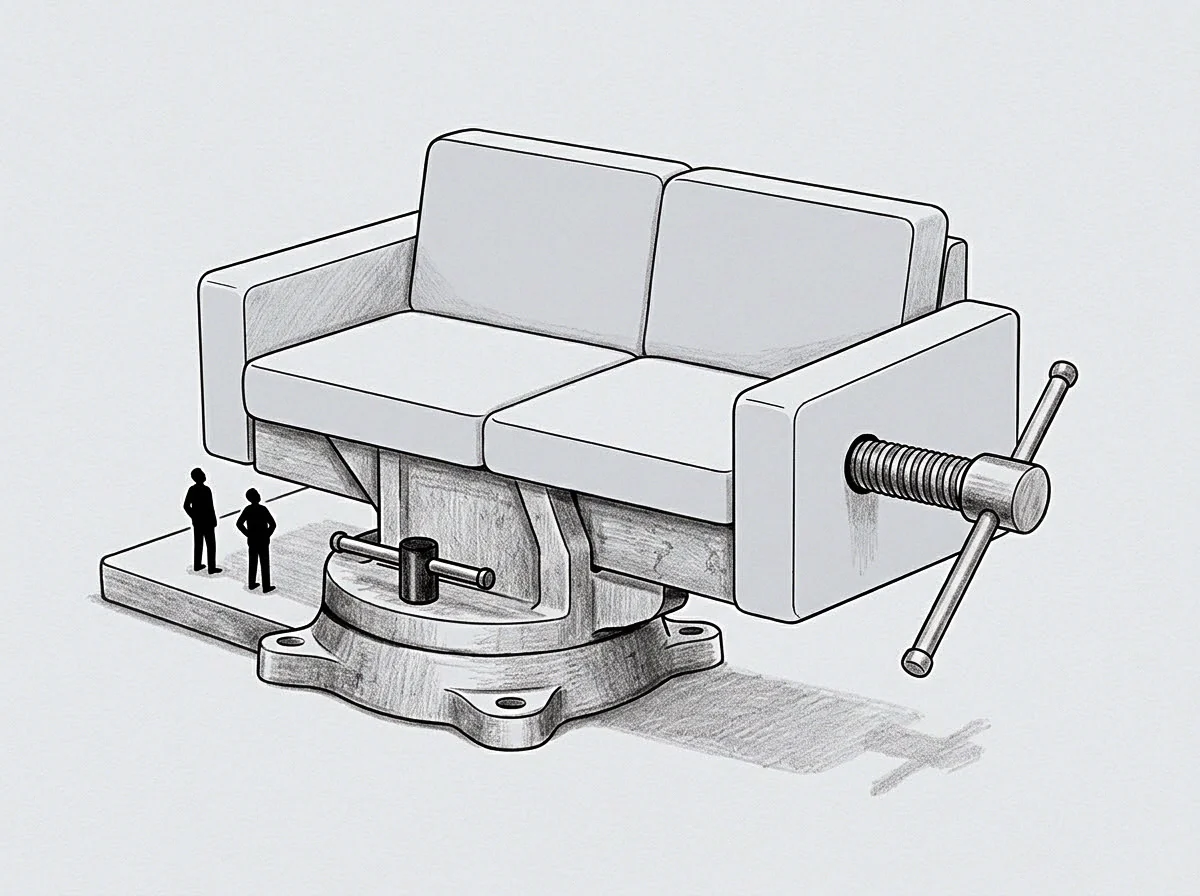
Scale
A strategic redirection moves forty percent of core transactional traffic from relational databases to an event-driven edge platform overnight. Latency variance expands from twelve milliseconds to four hundred milliseconds during peak processing windows. Systems operators view the telemetry output and face an ambiguous signal.
The database locks. Latency expands. Traffic shifts.
Historical operational telemetry provides zero predictive utility when underlying execution topologies change. Strategic redirections dismantle the structural assumptions built into legacy monitoring infrastructure.
Enterprise platform pivots alter execution pathways, asynchronous dependency trees, and resource consumption profiles simultaneously. Operational teams frequently react to expanded variance bands by applying static thresholds derived from historical platforms. Applying historical reference classes to novel architectural states miscalibrates failure detection.
Normal migration volatility triggers false severity alerts, while true system degradation remains hidden inside elevated baseline noise. The baseline disappears. Queue depths climb.
Historical operational metrics corrupt variance predictions when workload topology changes under a platform move.
Operators calibrating operational variance bands without reference classes evaluate raw system telemetry through localized execution windows. A baseline recorded on day one of a strategic redirection captures transitional behavior rather than steady-state performance. Computing the variance delta across rolling six-hour windows exposes whether execution stability moves toward convergence or structural degradation.
When engineering teams fail to measure variance against live operational deltas during platform transitions, incident response costs scale quadratically with system throughput.

Table
Physical tracking of system state across architectural shifts demands recording raw delta observations rather than relying on cached aggregations. Visualizing operational variance requires structured evaluation across distinct operational phases. The table below delineates system telemetry profiles across legacy baseline states, uncalibrated migration states, and recalibrated synthetic variance states during a strategic enterprise shift.
| Operational State | Latency Delta Window | Error Budget Burn Vector | Variance Interpretation | System Action |
|---|---|---|---|---|
| Legacy Baseline | 10ms to 25ms static window | Linear, predictable 0.01 percent daily burn | Deterministic process noise within historical limits | Automated scaling based on static threshold alerts |
| Uncalibrated Redirection | 15ms to 850ms dynamic swing | Exponential spike during workload handoffs | Ambiguous signal conflating churn with system failure | Manual operator intervention and alert fatigue |
| Recalibrated Synthetic Band | 50ms to 300ms dynamic band | Asymptotic leveling across rolling compute windows | Validated transitional drift within calibrated bounds | Automated throttling based on variance gradient delta |
Evaluating telemetry inputs across these structural phases prevents premature operator intervention. When platform architectures pivot, execution latency variations reflect transitional routing adjustments rather than immediate engine breakdown.
When architectural redirections strip legacy context, variance boundaries establish stability by measuring delta drift across moving execution windows.
Setting dynamic variance bounds based on observed runtime gradients protects engineering capacity. The explicit condition of dynamic range calibration alters how automated remediation tools evaluate resource contention during strategic redirections.
Bound
Constructing variance bounds without external reference classes relies on live compute testing and localized entropy measurement. When historical reference sets are unavailable, operators establish initial bounds by isolating core execution invariants from transient environmental noise. Memory leaks propagate.
Threads stall. Buffers fill rapidly.
Uncalibrated operational variance bands destabilize platform migrations through predictable breakdown patterns:
- Cascading Retries occur when microservices misinterpret normal migration latency as downstream timeouts, flooding new network interfaces with duplicate request volumes.
- Resource Starvation develops when dynamic memory allocations expand beyond underlying host limits during uncalibrated background data re-indexing processes.
- Silent Queue Saturation emerges when ingestion pipelines accept incoming payloads faster than newly deployed worker nodes can deserialize and write them to storage.
Isolating these failure patterns requires establishing synthetic baselines directly from runtime compute primitives. Operators measure thread contention, memory allocation rates, and packet drop vectors over forty-eight-hour execution blocks. Comparing consecutive execution blocks reveals whether system entropy increases or stabilizes.
Setting fixed threshold alerts during strategic architecture shifts accelerates incident burn rates by confusing migration churn with structural degradation.
System variance naturally widens during architectural shifts before settling into new operational equilibrium states.
Noise
Disentangling transient operational noise from core execution failure requires evaluating input invariance across runtime variables. Strategic redirections introduce systemic volatility that mimics functional degradation. Signals clash.
Noise masks failure. Metrics drift. Telemetry spikes.
Engineers wait.
Does Telemetry Obscure System Divergence?
Aggregated telemetry dashboards obscure system divergence during major platform transitions by smoothing extreme variance spikes into misleading averages. High-frequency telemetry sampling combined with rolling standard deviation calculations provides the necessary resolution to separate benign operational churn from structural breakdown.
- Record raw latency and resource distribution across a seventy-two hour window following the architectural redirection.
- Isolate telemetry spikes caused by one-time schema conversions from recurrent execution loops.
- Compute the variance gradient by measuring changes in standard deviation against throughput volume over rolling time windows.
- Establish dynamic operational bands that scale linearly with instantaneous traffic volume.
When telemetry processing isolates operational noise, systems engineering teams gain clear visibility into actual platform health. The engineering organization insists the elevated latency reflects transient migration overhead that will resolve automatically once legacy caches expire.
Telemetry streams hide structural engine degradation beneath transient operational noise during platform migrations.
Without dynamic operational variance bands, distinguishing between expected transitional volatility and impending system collapse remains impossible.
Index
Securing operational stability across unmapped strategic redirections ends with embedding live feedback loops into automated orchestration layers. Modern distributed architectures demand continuous runtime verification rather than static operational rules. The pipeline completes.
Execution grounds. Bands lock.
Operators measure output variance continuously against live compute inputs. When input load varies while execution output variance remains rigidly fixed, the system indicates cached execution path lockup rather than true adaptive scaling. Live computation outputs shift dynamically alongside input variance changes, reflecting real-time system adjustment.
Calibrating variance bands without reference classes requires recording the precise delta between expected runtime distribution and actual operational performance over defined observation windows. Systems that incorporate dynamic variance feedback loops adjust alert tolerances automatically, preserving operational velocity while maintaining system integrity during large enterprise strategic redirections.