
Constructing Synthetic Reference Classes For Early Product Telemetry
Synthetic reference classes supply informative variance bounds for zero-day product telemetry by mapping behavioral analogs across structurally identical workflows.

Desk
A telemetry dashboard displaying three hundred events from nine test accounts shows numbers without meaning. The events arrive in sequence, timestamps advance, and the raw event counts register on the server log. Nothing in that telemetry stream indicates whether seventy-two seconds spent in a configuration flow signals engagement or cognitive stall.
The person staring at the terminal faces an empty baseline. Internal data collected during the first sixty days of deployment lacks historical dispersion, variance bounds, and cohort survival curves.
An operator attempts to evaluate user activation without a comparative baseline. The product possesses unique workflows, idiosyncratic state transitions, and a zero-day deployment footprint. Telemetry arrives stripped of context, offering cardinal counts that refuse to translate into ordinal performance gradients.
A telemetry stream without an established dispersion baseline registers state transitions without identifying user friction.
Early telemetry fails to inform product intervention because the observed events have no historical counterpart inside the corporate partition. Building an anchor internally demands months of user exposure, yet capital and runway drain while teams wait for sample convergence. The operational imperative forces evaluation long before natural cohorts mature.
Leaving this information void unaddressed produces capital allocation errors, feature development on top of undetected user abandonment, and premature growth commitments based on noise.
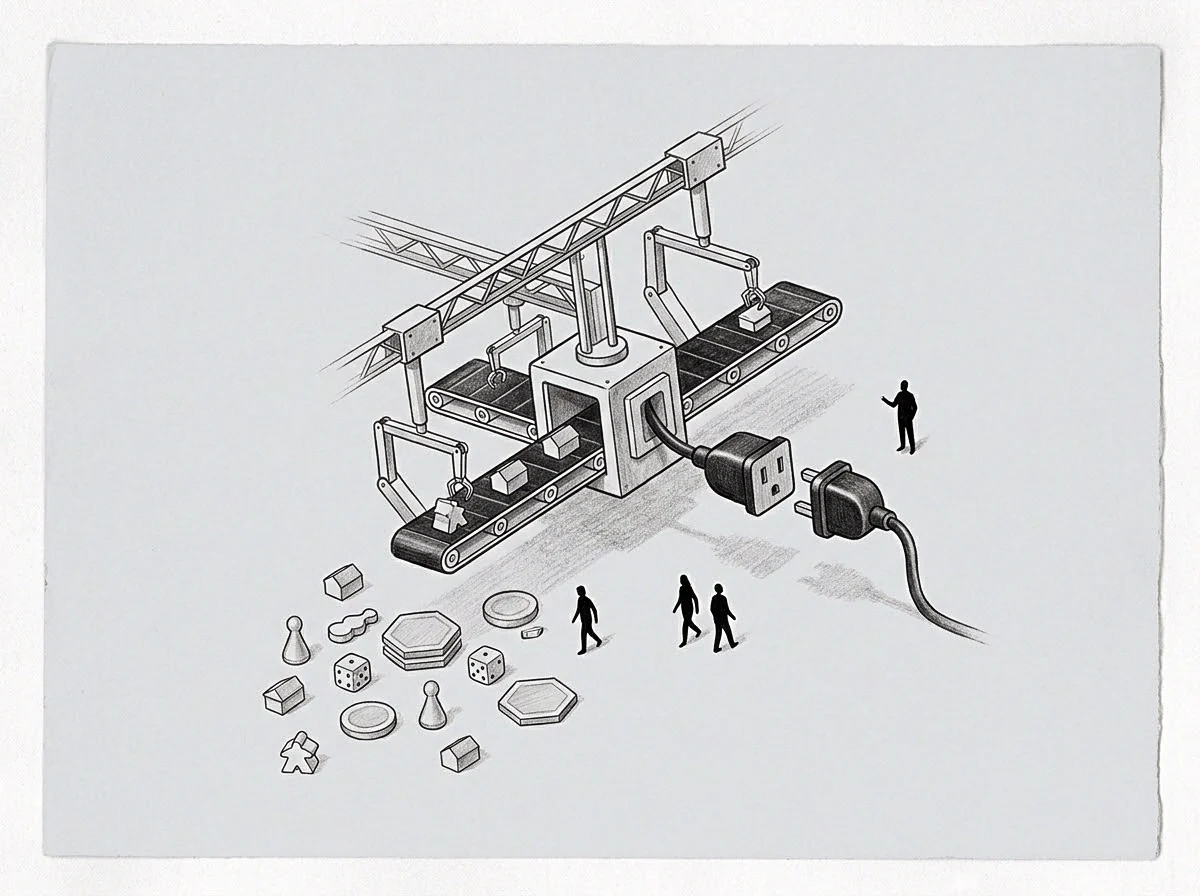
Prior
Statistical calibration begins before the first real customer authenticates against the production database. In pure decision theory, forecasting an unknown distribution demands drawing observations from an established population of structurally similar events. Novel software interfaces possess no private reference class.
The discipline requires importing distributions from external environments that share fundamental interaction topologies.
The builder establishes the primary baseline by abstracting away product semantics. When an application requires a user to ingest a tabular dataset, map external identifiers, and configure transformation rules, the software acts as an extract-transform-load pipeline. The interaction profile mirrors spreadsheet schema mapping, query builder configurations, and accounting ledger reconciliations across enterprise environments.
A structural analog yields predictive distributions long before proprietary product events accumulate.
The telemetry events decompose into observable primitive properties across three dimensions:
- Cognitive friction coefficients measure time distributions between interface stimulus and the subsequent user state mutation, matching latency distributions found in complex database configuration environments.
- Session abandonment slopes map the cumulative hazard rate across sequential stages of onboarding, derived from legacy administrative tooling workflows.
- Feature return cadences capture the recurring interval between discrete functional queries, matching established utilization schedules observed in mature enterprise utilities.
External distributions act as informative Bayesian priors. Instead of treating zero-day metrics as raw variables with flat probability distributions, the operator seeds the analytical model with the dispersion parameters of the chosen structural analog. Synthetic reference classes provide the variance boundaries that raw internal telemetry cannot supply.
Treating early user counts as distinct, unprecedented anomalies delays calibration until operational capital runs dry.

Proxy
Constructing an analog class demands extracting formal properties from disparate transactional domains. The product team selects external reference classes by isolating structural mechanisms from superficial product presentation.

What Generates Stable Behavioral Analogs Across Unrelated Products?
Interface topology governs behavioral convergence across software categories. A user confronting a five-step verification wizard behaves predictably, regardless of whether the software provisioned cloud infrastructure or underwrote commercial credit. The behavioral hazard function depends on state complexity, required input fidelity, and immediate sensory feedback.
A reference class constructor maps three fundamental properties across historical datasets:
- Interaction topology establishes the operational sequence of the workflow, enforcing strict step dependencies that match historical conversion rates.
- Commitment asymmetry defines the transactional friction born from user liability, dictating the latency curve between draft creation and final submission.
- Feedback velocity indexes the elapsed seconds between user execution and system verification, anchoring cognitive attention spans across diverse application categories.
Consider two software environments operating across distinct industrial sectors. The first application automates database schema migrations for systems engineers. The second platform enables financial controllers to balance intercompany transactions.
Both applications require users to parse tabular data, resolve relational ambiguities, and execute high-liability transactions with zero fault tolerance.
| Telemetry Attribute | Direct Target Metric | Primary Analog Metric | Structural Weight |
|---|---|---|---|
| Initial Session Time | 840 seconds | 780 seconds | 0.35 |
| Error Recovery Rate | 0.42 recovery ratio | 0.45 recovery ratio | 0.25 |
| Schema Mapping Latency | 195 seconds | 210 seconds | 0.40 |
The financial ledger tool provides the dispersion bounds for the database migration interface. The engineer maps sixty minutes of user deliberation not as anomalous drag, but as typical variance within high-liability data reconciliation workflows. The synthetic class provides immediate normative bounds.
Systemic friction parameters remain invariant when transaction liability and workflow topology match.
The validation threshold requires historical variance bounds to constrain ninety percent of observed initial test sessions before team members modify core interfaces.

Sieve
Telemetry filters remove spurious signals before mathematical models process early usage events. Inexperienced teams frequently mistake fast session completion for successful user activation. A user racing through configuration screens often signals careless default acceptance rather than competent adoption.
Testing for invariant behavioral patterns uncovers deceptive telemetry readings. A genuine operational computation produces variance in interaction time proportional to input complexity. A user navigating a ten-field security allocation layout in twelve seconds executes an automated script or clicks randomly to bypass friction.
Both behaviors represent telemetry pollution.
The builder applies statistical sifting protocols against incoming raw metrics. These protocols verify whether telemetry changes dynamically across distinct user cohorts. The evaluation model rejects invariant signals that generate identical velocity scores across simple and dense administrative payloads.
The external stakeholder reviewing the analytical report notes that the observed engagement metrics match the expected distributions of automated test accounts rather than actual human operators.
Trace
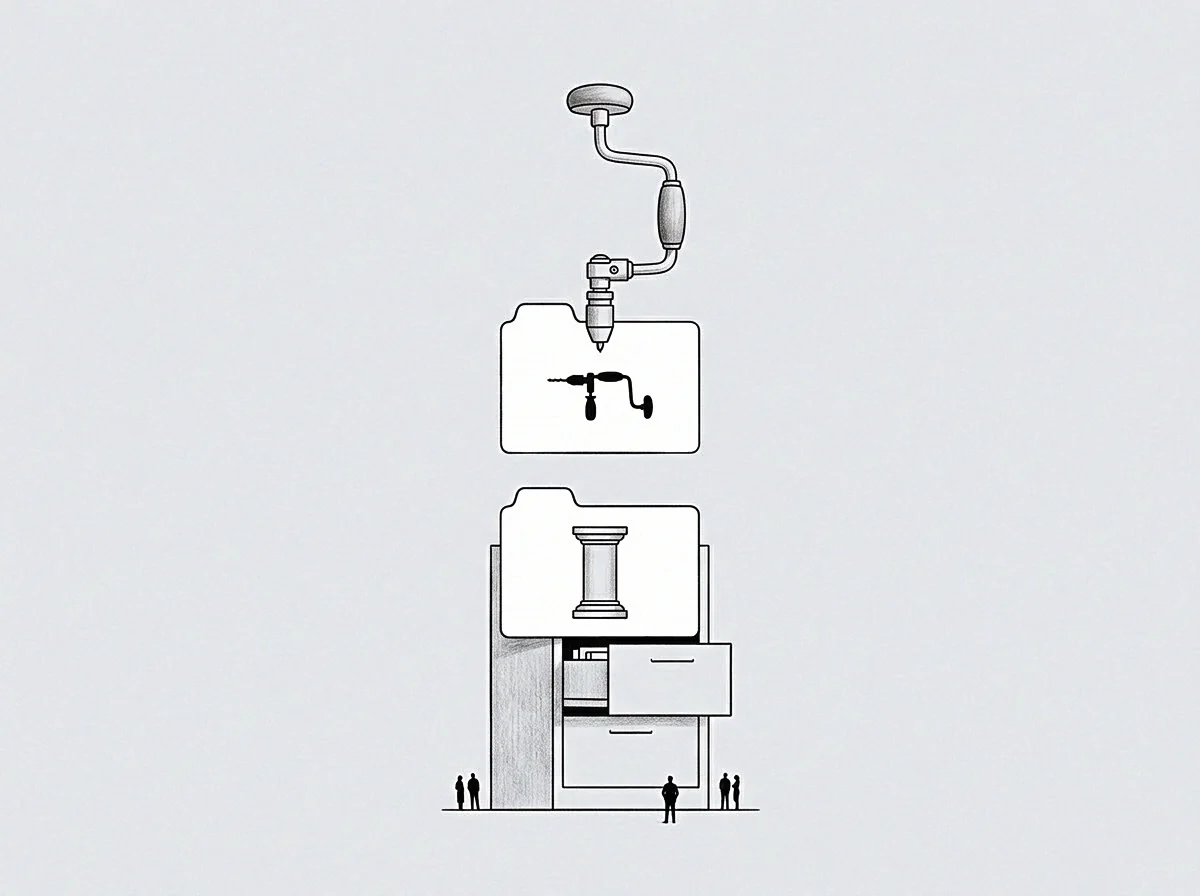
The recorded trace connects historical reference classes to daily product changes. Once synthetic bounds establish expected variance, the team measures the empirical delta generated by each release. True operational progress registers as an ordinal shift in baseline performance across sequential observation windows.
The operator documents the baseline on day one. Every subsequent code deployment generates a forty-eight-hour telemetry window. The analytical system measures whether task completion latency dropped relative to the synthetic prior.
If the distribution remains clamped within the external class variance, the software modification produced no meaningful delta.
Physical measurement demands discipline. A builder notes the divergence between synthetic predictions and actual telemetry output every Monday morning. Over six months, internal variance stabilizes.
The synthetic class gradually yields authority to empirical product records as private observations attain statistical power.
The transition boundary between synthetic reference distributions and proprietary empirical baselines remains difficult to formalize when novel features alter user interaction topologies continuously.