
Decoupling Reciprocal Vector Delta Adjustments Under High Noise Baselines
Decoupling reciprocal vector adjustments under noisy baselines requires asynchronous sampling windows, strict threshold deadbands, and invariant physical anchors.
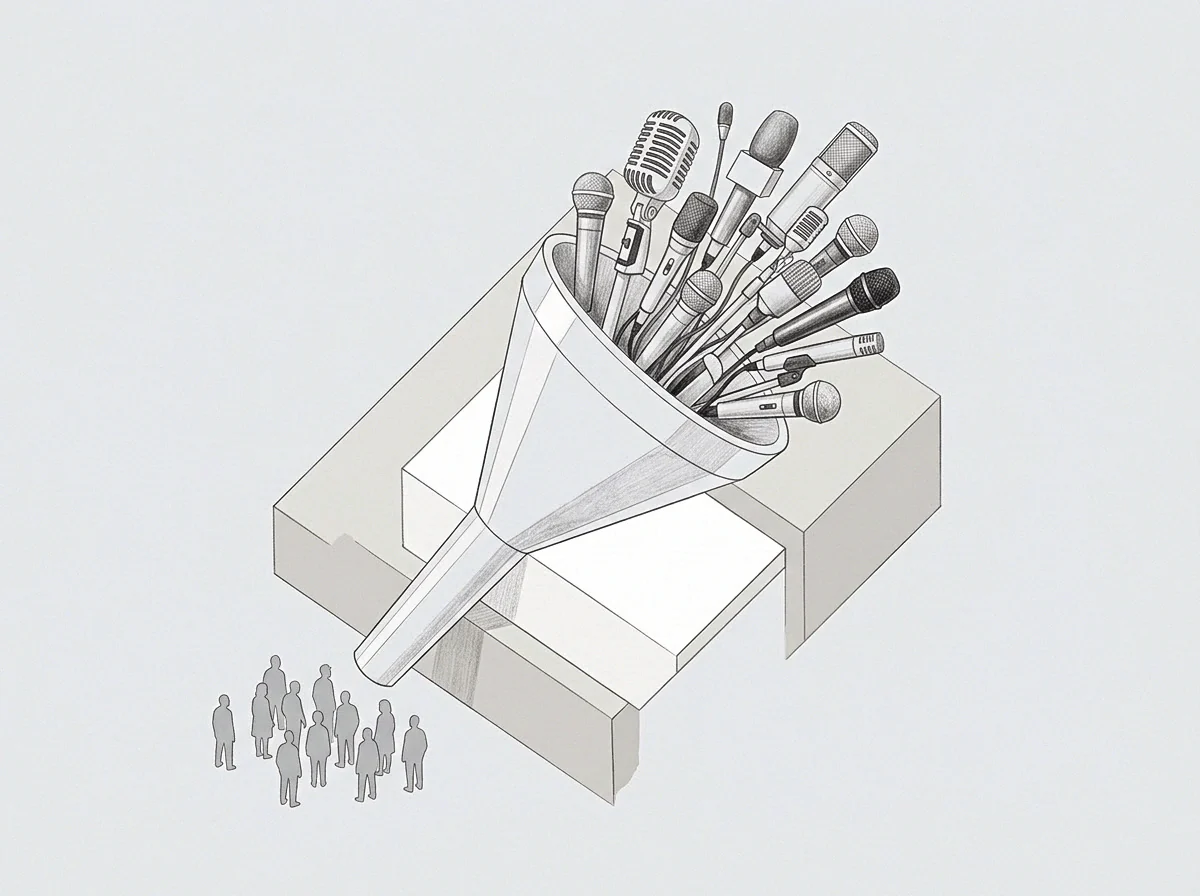
Rig
Two operators sit across from each other in a room, watching delivery times drift upward during peak deployment hours. One operator trims batch capacity by ten percent to relieve queue pressure. The other operator notes the reduced volume, interprets the change as a drop in throughput capacity, and widens routing timeouts to prevent pipeline drops.
By evening, both operators have altered sixteen operational parameters without either person establishing whether client requests actually shifted. The initial recorded variation measured five percent, well inside standard atmospheric deviation for the infrastructure. Both operators responded to statistical variance as if it represented directed intent.
Mutual counter-reactions develop when two actors continuously adjust their respective vectors against telemetry that contains minimal usable data. In production environments, vector updates comprise directional changes in effort, resource allocation, inventory movement, or interface latency. When random fluctuation exceeds genuine signal drift, every unilateral correction injects artificial turbulence.
The second actor observes that turbulence, assumes purposeful displacement, and calculates an equal counter-measure. This feedback cycle converts baseline jitter into structural volatility.
A vector adjustment executed against environmental noise creates the drift it was calculated to prevent.
A founder frequently observes this dynamic during distributor negotiations or joint technical integrations. The distributor delays weekly confirmations by thirty hours because customs paperwork stalled at a physical terminal. The founder interprets the delay as strategic hesitation, responds by withholding integration credentials, and prompts the distributor to assign engineering staff to alternative accounts.
True demand never fluctuated. Speed mimics precision.
- Interleaved parameter updates occur when counterparties modify operational variables faster than system latency allows outputs to settle.
- Observational jitter amplification drives secondary corrections when ambient background variance gets treated as intentional strategic repositioning.
- Uncalibrated baseline drift blinds teams to structural change by concealing secular trends beneath reactive daily rebalancing maneuvers.
The counterparty sees the sequence plainly and concludes the working arrangement lacks operational discipline.

Oscillation
When telemetry fluctuates without structural cause, immediate operational corrections guarantee system instability. The mathematical foundation of mutual tracking errors rests on signal-to-noise deterioration. If entity A adjusts vector parameter X based on observed vector parameter Y from entity B, while both measurements sit within a ninety-five percent dispersion band, the resulting mathematical operation computes difference vectors on random distributions.
The error cascades quickly. Each adjustment introduces an additive variance component that gets amplified during subsequent cycles.
Calculations derived from coupled control loops establish that when measurement noise exceeds twenty percent of total signal variance, simultaneous proportional adjustments produce undamped cyclical swings. The finding rests on standard stochastic differential control literature evaluating continuous-time Kalman filtering under cross-correlated observation errors. The conclusion holds across industrial supply chains and dual-agent pricing algorithms.
A sustained shift in underlying customer demand would alter this outcome, yet absent external shocks, reciprocal adjustments create perpetual cycles of overcorrection. Both parties adjust blindly.
| Regime | Coupling State | Sampling Interval | Observed Vector Divergence | Primary Failure Mode |
|---|---|---|---|---|
| Synchronous Reactive | Direct Bilateral | Sub-Hourly | High Positive Autocorrelation | Resonant Oscillation |
| Damped Proportional | Attenuated Delta | Daily Aggregation | Bounded Variance Expansion | Sensitivity Drift |
| Orthogonal Staggered | Decoupled Baseline | Weekly Batch Window | Zero Mean Drift | Information Lag |
| Static Reference | Isolated Vector | Fortnightly Epoch | Deterministic Step Response | Local Attenuation |
Raw metrics invite overreaction. In early-stage commercial ventures, customer service ticket volume offers a typical demonstration. A sudden spike of ten tickets on a Tuesday morning prompts the lead developer to pause sprint tasks and patch three interfaces.
The client success lead notices the developer modifying code repositories, concludes the deployment was broken, and sends a broadcast warning to fifty enterprise accounts. The enterprise accounts flood the ticketing portal with inquiries. Ticket volume quadruples before noon.
The original ten tickets arose from a local email gateway restart that had completed forty minutes prior.
Unchecked vectors amplify noise. When leadership teams confuse transactional frequency with informational quality, the organization expends immense physical capital neutralising ghosts. Teams burn hours running root-cause analyses on stochastic spikes that would have resolved themselves had every terminal remained untouched for six hours.
The cost manifests as perpetual operational exhaustion, degraded engineering morale, and fractured inter-departmental trust.
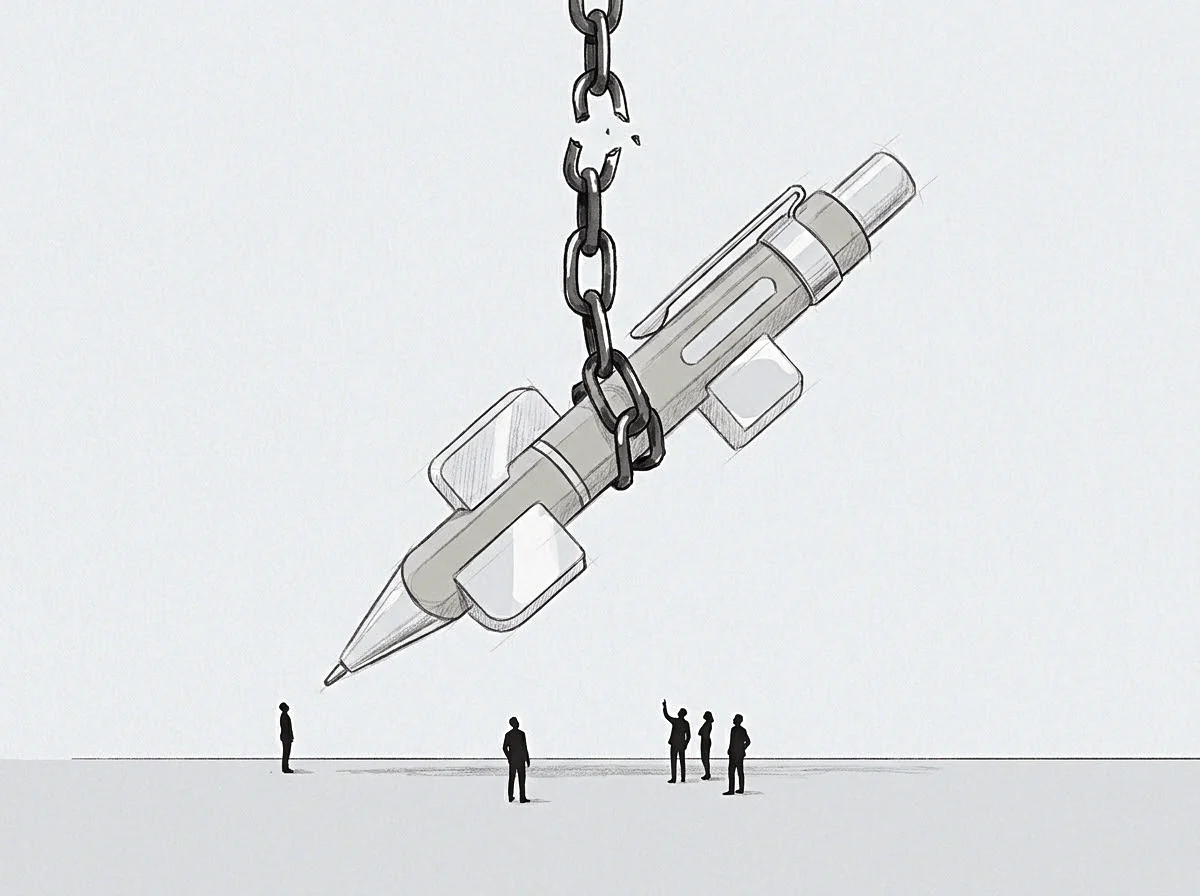
Valve
Mechanical governors in eighteenth-century steam engines utilised counterweights to decouple rotational momentum from valve aperture settings, preventing destructive engine runaway under fluctuating thermal loads. Digital systems require identical physical separation. Decoupling reciprocal adjustments demands severing the direct real-time dependence of vector X on incoming changes in vector Y. This separation requires an intermediate buffering mechanism that filters high-frequency baseline variance before parameters shift.
A parameter throttle held active during high-variance periods prevents localized noise from translating into systemic reallocation.
A founder builds stability by installing explicit rate limiters and deadbands around critical operational levers. A deadband defines a specific numerical range around a baseline within which observed deviations generate zero operational response. If customer response latency ranges between twelve and twenty-four hours historically, variations inside that twelve-hour band produce no schedule adjustments.
True vector variance remains hidden until the observation breaches the outer threshold. Unilateral pauses break resonance.
- Threshold gating verification halts reactive parameter tuning until moving averages exceed three standard deviations above established historical baselines.
- Asymmetric update schedules mandate that partner A modifies allocation vectors exclusively on odd calendar weeks while partner B modifies exclusively on even weeks. Two independent entities adjusting on alternating schedules prevent synchronous feedback resonance.
- Orthogonal state projection maps incoming fluctuations against independent external benchmarks rather than against the counterparty’s recent tactical maneuvers.
The specific operating agreement establishes that no capacity adjustment takes effect until an independent third-party log records seventy-two consecutive hours of unidirectional volume drift.
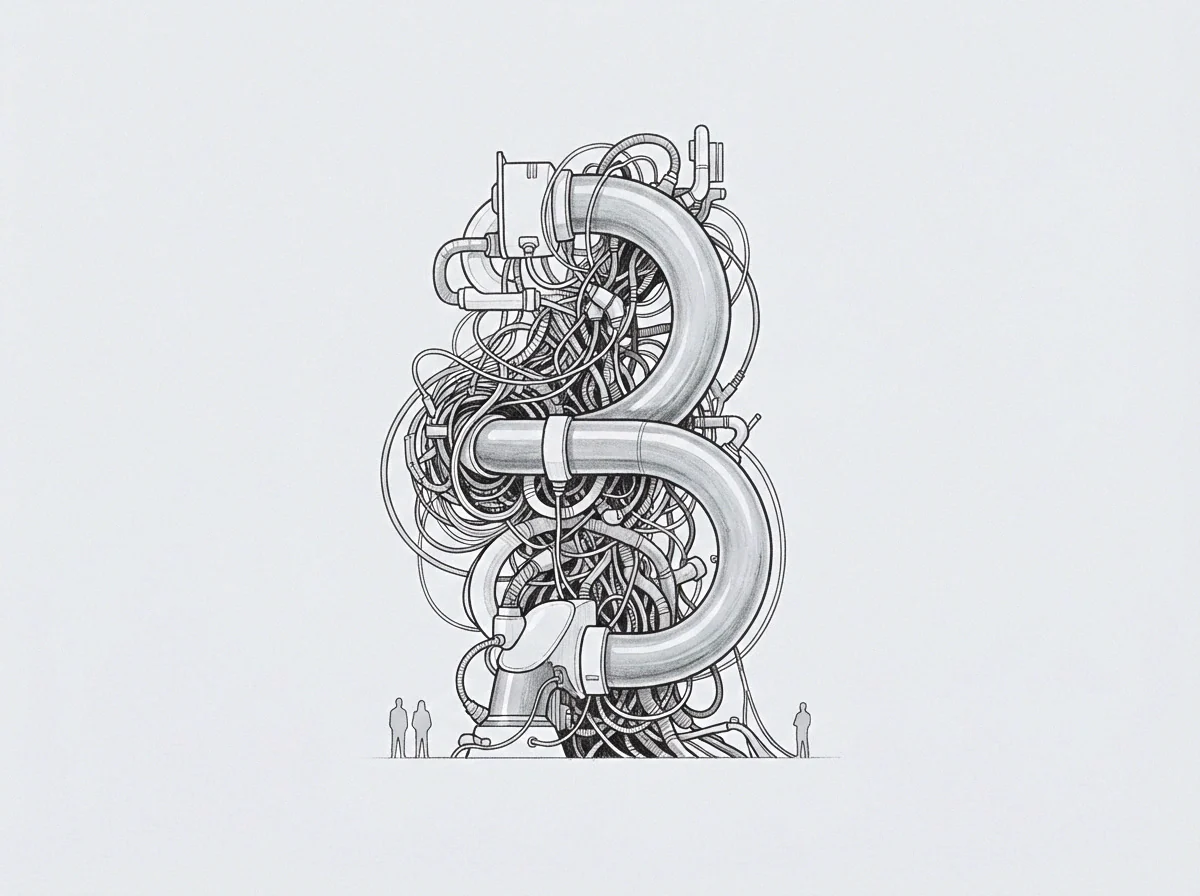
Stride
Direct inspection of real-world workflows reveals that continuous operational visibility often ruins sound judgment. When an operator observes real-time conversion rates minute by minute, cognitive fatigue produces an irresistible urge to intervene. Expanding the evaluation window acts as a natural noise filter.
The length of the stride defines whether an observed delta constitutes actionable information or atmospheric chatter.

Will Orthogonal Sampling Intervals Halt Mutual Adjustments?
Separating the schedules on which two parties evaluate operational data eliminates reciprocal feedback loops. When one company reviews shipping velocity on the first of the month and their logistics provider adjusts routing capacity exclusively on the fifteenth, neither party directly reacts to the other’s real-time counter-measures. The fourteen-day gap forces both organizations to aggregate data over meaningful operating intervals.
Noise masquerades as intentional drift. The computation stays cold.
The desk cannot fully defend whether an optimal evaluation window exists for all business models, leaving operators to balance responsiveness against stability based on cash reserves and inventory shelf lives. When reserves run thin, leadership teams instinctively compress observation windows, precisely when extended windows are required to prevent ruinous panic adjustments. Under this uncertainty, experienced operators maintain rigid evaluation cadences regardless of emotional anxiety.
Fast responses compound distortion.

Calibrating Windows Against Stochastic Baselines
Establishing an appropriate measurement duration requires recording baseline standard deviations across quiet operational periods. A company tracking weekly retention across eighteen months establishes a concrete reference class for normal volatility. If historical variance sits at seven percent, a four percent contraction in a single week warrants zero executive attention.
The operator logs the value, closes the interface, and awaits the completion of the full quarterly stride. Separation protects the measurement.
Adjust parameters only when the cumulative delta across three successive strides outstrips historical background variance.
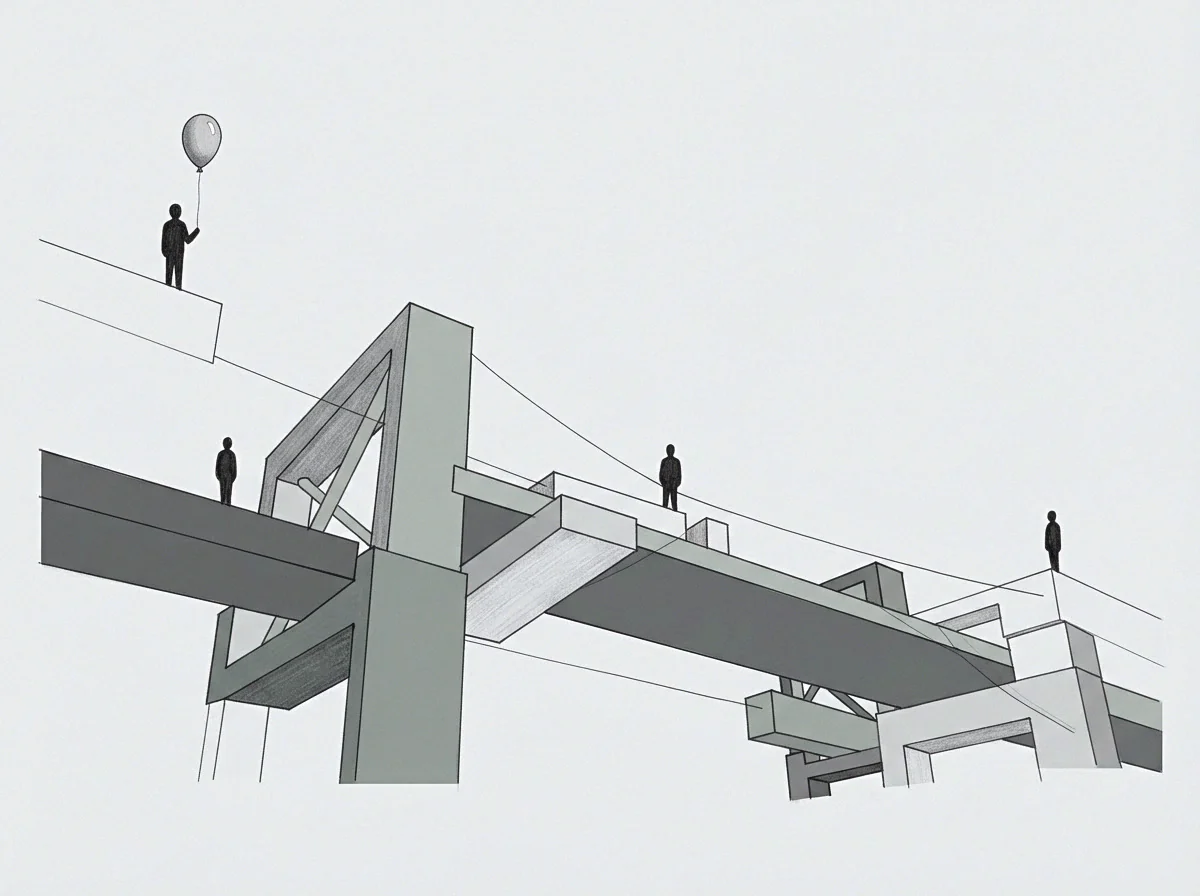
Floor
A sound baseline functions as an absolute reference class that anchors operational reality against mutual delusion. When two entities execute reciprocal adjustments under severe noise, they gradually float away from empirical reality, resembling two ships drifting together in dense maritime fog while crew members gauge position solely by measuring the gap between hulls. Without an external reference line tied directly to physical constraints, internal consensus replaces factual verification.
Both parties drift in tandem while congratulating themselves on tight alignment.
A measurement framework anchored to invariant physical constraints prevents reciprocal drift from eroding operating margins.
Physical constraints supply the only reliable floor. Unit production costs, available warehouse floor space, terminal bandwidth limits, and statutory working hours provide invariant anchor points. When a software engineering lead and a marketing director argue over release pacing, customer acquisition velocity metrics frequently mislead both participants.
Grounding the operational pace in server memory thresholds and hard engineering payroll limits cuts through subjective estimates. The system stabilises slowly.
How long can two interacting organizations maintain decoupled evaluation disciplines before external market shifts render their historical baselines obsolete?