
Designing Independent Regional Baselines for New Market Operations
Independent regional baselines isolate local operational friction by replacing imported corporate benchmarks with unassisted regional telemetry.

Drift
Expansion into an adjacent territory usually begins with an imported spreadsheet. The operating team takes the conversion curves, customer acquisition velocity, and retention decay observed across five years in the domestic territory and pastes them into the financial model for the new market. Two quarters later, acquisition expense runs three times higher than forecast, yet the local general manager reports that checkout conversion matches historical benchmarks.
When an enterprise measures regional performance against its domestic center of gravity, that imported reference point conceals local operational defects.
Regional baseline engineering isolates a new operating unit from parent-level distortion. In a secondary geography, domestic metrics function as a cached answer, applying stored results from legacy conditions to fresh operational friction. A live computation calculates performance directly from current friction in the field.
The home territory benefits from established supplier credit, cumulative search footprint, and organic customer familiarity. Imposing those parent figures onto a regional branch masks whether the unit is clearing local unit economics or consuming corporate capital to simulate traction.
A performance reading taken against an imported standard conceals the friction of the new operating environment.
Calculating the true operational delta requires regional isolation. An observer computes that delta by tracking the distance between initial state and current execution across a defined observation period. Without an independent local starting point, operational variance reflects parent resource allocation rather than regional viability.
Capital subsidies obscure baseline performance, cash flows hide delivery delays, and corporate brand equity conceals uncompetitive local dispatch times until central support is withdrawn.
Establishing an independent baseline demands an audit of operational dependencies across four distinct operating layers.
- Corporate operational subsidy includes shared customer service teams and parent vendor discounting that reduce perceived regional expenditures.
- Legacy digital footprint measures domain equity and brand retrieval queries that artificially lower local customer acquisition outlays.
- Central treasury guarantees represent credit facilities that conceal local supplier payment terms and banking frictions.
- Cross regional inventory transfers mask regional fulfillment deficits by running emergency shipments through mature distribution pipelines.
Carrying parent assumptions into fresh operating territories produces structural capital exhaustion as corporate leadership funds phantom regional efficiency.

Anchor
Every reliable operational measure rests on local environmental realities. A logistics business expanding from a coastal container hub into an inland river territory encounters different labor liquidity, fuel distribution networks, and municipal regulatory enforcement. Applying coastal turnaround times to inland cargo manifests produces fictional operational targets.
The inland team hits those numbers only by paying overtime to contract stevedores, which drains the operating budget within four months because the underlying measurement architecture was flawed.
Field calibration requires establishing the anchor directly from regional field data collected during the first ninety days of unassisted operation. During this initial observation window, the operating unit runs without parent intervention or emergency inventory transfers. The organization records three foundational figures: unassisted customer acquisition expenditure, natural inventory dwell time, and regional cash conversion latency.
These figures define the operational floor. While they compare poorly to domestic metrics, they present an accurate record of local environmental friction.

Where Do Transferred Assumptions Fail First?
Assumptions fail where municipal friction meets physical distribution. An enterprise operating software-enabled fleet services across three contiguous regions discovers that driver idle hours vary by municipal jurisdiction. One city permits commercial parking along transit corridors while an adjacent city impounds unattended commercial vehicles.
The parent operating model assumes identical vehicle utilization rates across both municipalities. To preserve route delivery windows in the restrictive municipality, the regional team absorbs towing penalties. The central dashboard displays on-time fulfillment while the local income statement shows steady margin destruction.
Setting an operational standard without local field telemetry guarantees budget deficits across initial trading cycles.
The table below contrasts the behavioral characteristics of an imported parent operating standard against an independently engineered regional baseline.
| Measurement Attribute | Imported Domestic Standard | Independent Regional Baseline |
|---|---|---|
| Measurement Source | Mature domestic operational history | Initial ninety-day regional telemetry |
| Fulfillment Friction | Assumes established vendor networks | Measures raw local supply volatility |
| Customer Acquisition | Blended with legacy brand equity | Isolates cold unassisted conversion |
| Treasury Integration | Central credit lines buffer deficits | Local receivables dictate working liquidity |
| Diagnostic Validity | Generates false operational confirmation | Surfaces true local cost gradients |
Local operators understand that parent targets frequently reflect corporate planning assumptions rather than physical route conditions.

Wedge
Splitting domestic metrics from regional reality requires a mathematical wedge, an isolation mechanism that strips parent advantages out of regional performance calculations. Consider a consumer service business that launches operations in an adjacent country with ten million dollars in allocated capital. The parent organization provides centralized payment gateway integrations, global insurance underwriting, and shared executive oversight.
The regional branch reports twelve percent monthly transaction volume expansion, which the domestic board celebrates as expansion velocity.
The wedge computation isolates that growth from central subsidies by assigning specific accounting charges to every corporate asset deployed within the regional operation. Shared legal support carries a billed hourly cost, central software hosting takes an allocated infrastructure fee, and insurance policies transfer at commercial market rates. Under these charges, unassisted regional gross margin drops from eighteen percent to negative six percent.
The twelve percent volume growth represents corporate capital distribution rather than sustainable local demand.
Operational momentum appears only after removing central leverage. A business clears regional viability when local revenue covers local customer acquisition, territory fulfillment costs, and regional regulatory compliance overhead. The delta between unassisted regional margins and domestic margins reveals the true regional friction index.
When that friction index remains static across three consecutive observation windows, the model cannot bridge local operational reality and the expansion stalls.
Local variables dictate operating resistance. Fuel costs fluctuate, labor retention varies across regional employment markets, and customer dispute rates reflect local consumer finance habits. The operator records these deltas every thirty days.
A widening gap between local gross revenue and fully burdened local operating expense signals structural failure in the regional value equation.
A metric that improves only through central corporate intervention signals regional commercial failure.
Regional operational health corresponds to internal cash regeneration rather than corporate balance sheet access.
Room
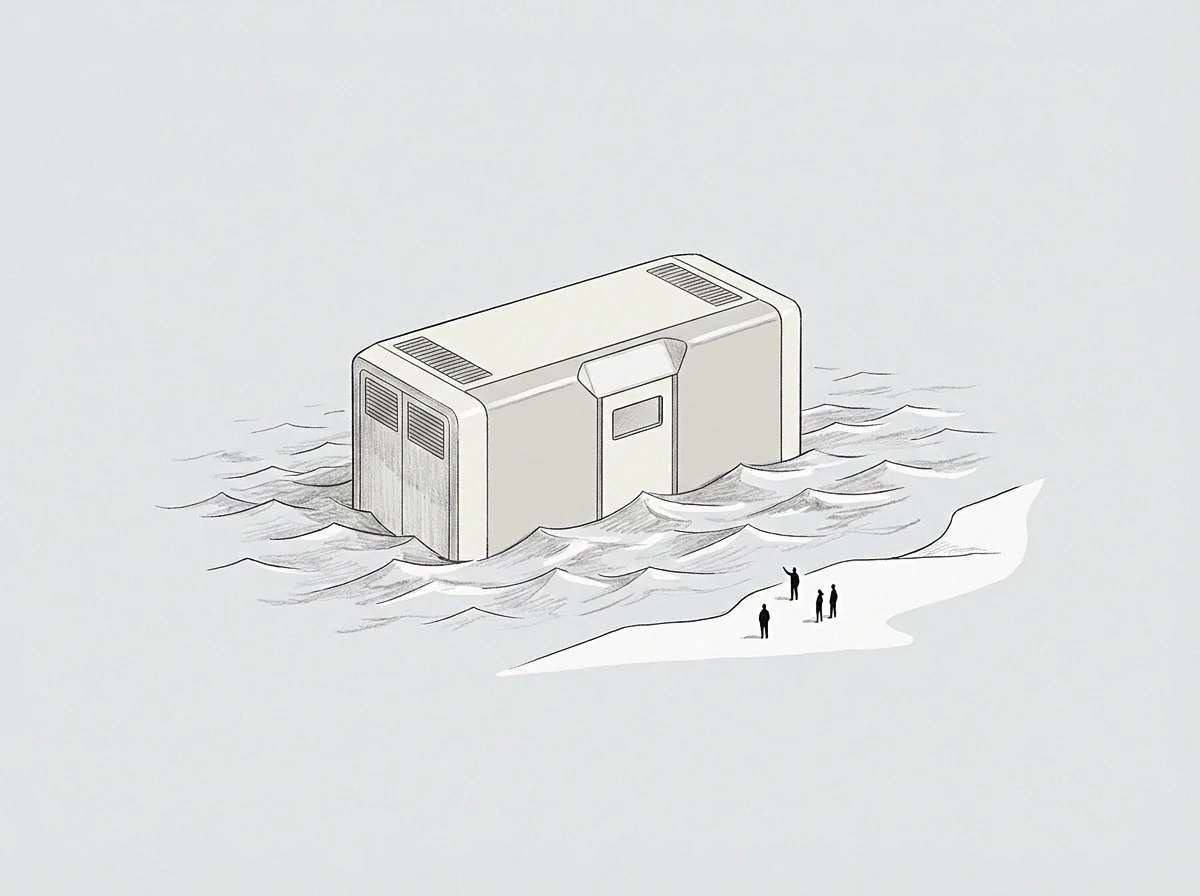
A regional business needs physical room to establish independent feedback loops. When corporate headquarters monitors daily ticket queues and intervenes in regional dispatch schedules, the local team stops computing live answers and waits for headquarters instructions. The local branch transforms into a passive execution outpost, unable to adapt to market shocks and passing local volatility back to corporate headquarters as unanticipated variance.
Building an independent regional baseline requires deliberate institutional separation during the calibration window. The corporate board defines the initial risk capital allocation and fixes the observation window at six months. Corporate headquarters monitors two cardinal numbers: net capital consumption and local customer dispute ratios.
The regional leadership team receives operational autonomy over staffing ratios, inventory reorder triggers, and local vendor selection, building local operating memory by absorbing the consequences of initial route miscalculations.
Physical isolation uncovers local operational realities. In an industrial equipment leasing business, regional field mechanics discover that high ambient humidity accelerates hydraulic seal deterioration. The parent operating model schedules hydraulic maintenance every eighteen months, but in the new territory, seals fail at seven months.
A regional branch controlled by central maintenance schedules suffers equipment breakdowns during client harvest cycles. An autonomous regional branch records early seal wear during initial forty-day inspections, resets the regional maintenance baseline to six months, and prices the lease contract to absorb the added component wear.
The open problem rests on corporate patience: how long can an organization permit an autonomous regional branch to absorb local friction before executive leadership concludes that an elevated operating baseline reflects management failure rather than authentic regional resistance?