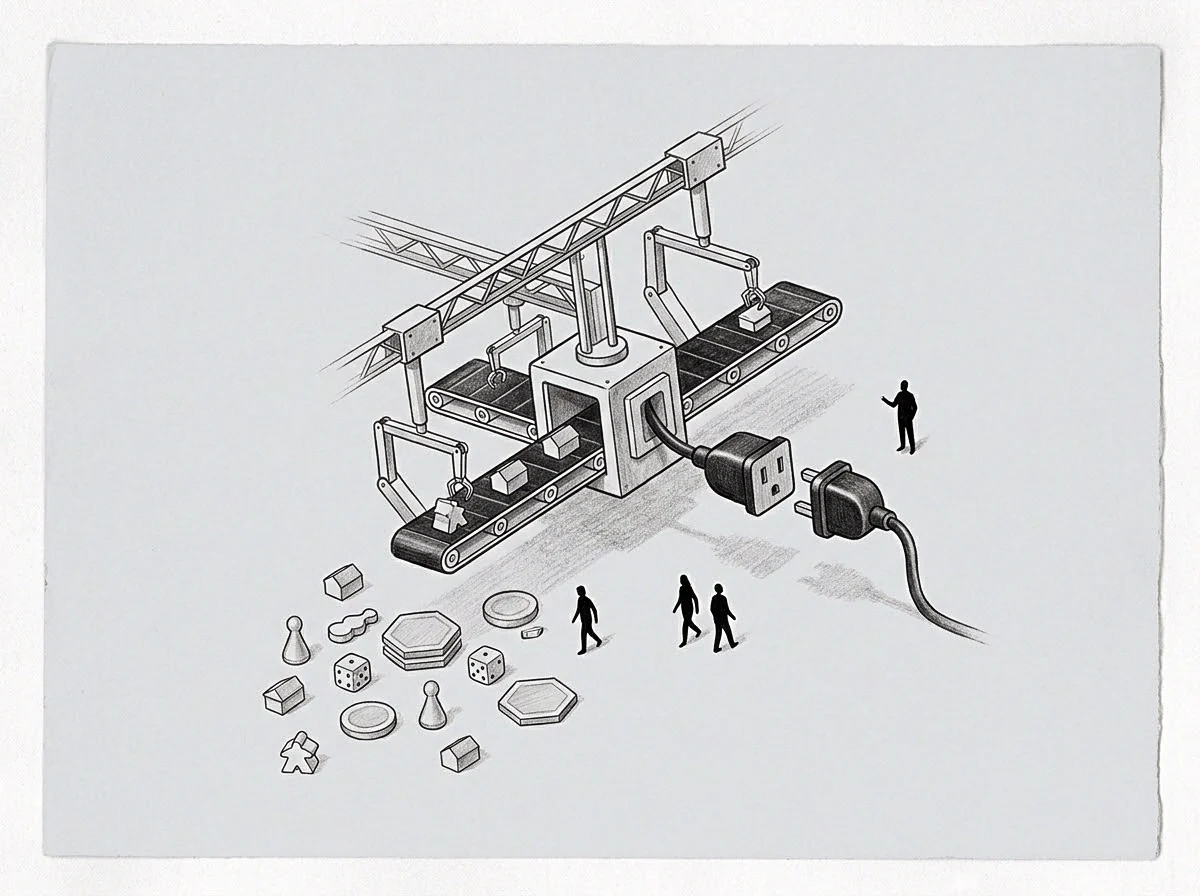
Did it move. Feedback lives in data that needs no third party; validation is the moment a thing leaves the head. The shortcut is invariant, the same answer whatever enters it, and invariance is the tell.
Covariate shift detection bounds expand predictably under long conversion lag, requiring density ratio variance scaling to prevent false positive retraining alerts.
Direct density ratio estimation across sparse data streams requires temperature scaled score mapping and adaptive kernel widths to prevent unbounded variance.
Early venture conversion metrics require sparse baseline reference classes and extended observation windows to prevent mistaking low-sample noise for strategic signal.
Early capital depletion tracking relies on Bayesian prior distributions constructed from historical reference classes to isolate structural overhead from experimental burn.
Decay rate vectors measure output degradation across early execution reference classes by comparing live baseline readings against historical performance windows.
Production degradation velocity quantifies metric degradation rates by comparing short sliding observation windows against static invariant telemetry anchors.
Six fields, each writing its own terms
The terms are written where they belong. Each field holds three desks, and every entry a desk writes raises the terms it uses, each term given a meaning, a mechanism and the places it appears. The record on these pages stays first person and hand made; the fields grow the nomenclature.