
Mathematical Constraints Of Signal Resolution In High Latency Early Stage Optimization Loops
Signal resolution collapses when feedback latency exceeds decision cadence, trapping optimization loops in environmental noise and invalid surrogates.

Wire
A pipeline carrying measurements across six months delivers data long after the action that prompted it has changed state. When an operator alters a product onboarding sequence or shifts a pricing tier in January, enterprise contract cycles, cohort retention curves, and referral cascades prevent meaningful outcome separation until July. During that six-month silence, the system continues to accept changes, stacking interventions atop an unmeasured base.
Observation delay alters the mathematical structure of system learning. In standard continuous feedback formulations, an agent acts at step t, observes feedback at step t plus one, and computes a gradient update to choose the next action. High-latency environments break this coupling by introducing a delay parameter tau, where tau represents an interval significantly larger than the decision interval delta t.
The state observed at the moment of intervention reflects conditions that existed tau steps prior, contaminated by all intermediary interventions applied during the transit time.
A transmission line stretching past the decision cadence renders recent output uninformative for current state estimation.
The core difficulty stems from the degradation of mutual information. Let the underlying quality of an early-stage deployment be an unobserved parameter theta. The agent emits a sequence of interventions x sub t.
Because the true outcome y sub t arrives at index t plus tau, intermediate choices occur under an information deficit equal to the cumulative actions taken across that delay horizon.

Transit Time and Information Loss
Delay dampens high-frequency information. When the observation horizon stretches across multiple quarters, daily and weekly metrics function as surrogate indicators rather than primary ground truth. Surrogates introduce biased gradients.
A surrogate metric correlates with the final outcome only under specific environmental assumptions that break down the moment the surrogate becomes an explicit target.
Consider an operator tracking thirty-day account activation rates as a proxy for second-year contract expansion. The thirty-day indicator registers in weeks, while contract expansion takes twenty-four months. If the operator adjusts product flows to maximize thirty-day activation, the distribution of incoming accounts changes.
The statistical relationship between the thirty-day indicator and the two-year outcome shifts because the intervention exploits the surrogate shortcut. The true gradient remains buried in the transmission delay, while the observed gradient rewards local policy drift.
Intervention frequency determines system stability. When adjustments occur faster than the feedback transit time, the optimization loop acts on historical ghosts, compounding parameter errors until the business exhausts its runway on false-positive directional changes.

Variance
Early-stage operations work in low sample size regimes where standard statistical estimators display extreme dispersion. A seed-stage software company closing twelve enterprise accounts a quarter generates empirical distributions characterized by heavy tails and high standard errors. Evaluating an intervention through these sparse outputs exposes the estimation loop to severe variance inflation.
Noise accumulates across latency gaps. If an outcome variable requires nine months to realize, background market conditions fluctuate during the measurement window. Macroeconomic interest rate shifts, seasonal procurement freezes, and competitor releases enter the observation channel alongside the effect of the deliberate intervention.
In statistical terms, the variance of the observed outcome scales directly with the length of the latency interval tau.
The signal-to-noise ratio drops proportionally. Formally, when modeling the cumulative outcome as a diffusion process with drift mu and volatility sigma, the variance of the background noise expands linearly with observation time tau, while the incremental treatment effect of an intervention often remains constant or grows sub-linearly. Long horizons wash out subtle product improvements inside environmental fluctuations.

Diffusion of Environmental Shocks
External shocks mask internal system improvements. An engineering team implements a performance improvement that reduces workflow completion time by twelve percent. Over the four months required to gather eighty enterprise customer interactions, the client company initiates corporate restructuring, replacing procurement leads and altering software budgets.
The measured retention delta displays zero statistical separation from baseline. The internal improvement occurred, yet unobserved variance from organizational turnover erased the signal entirely.
Separating intrinsic policy effects from environmental diffusion requires tracking invariant controls that remain shielded from the intervention. In practice, early-stage ventures rarely possess the volume to partition traffic into clean treatment and control cohorts without rendering both groups statistically underpowered. When cohort sizes drop below fifty units per arm, the power of a standard two-sample hypothesis test drops below twenty percent for moderate effect sizes.
Most early-stage measurements report random noise fluctuations dressed as validated learning.
True progress leaves a trace across invariant baselines rather than volatile aggregate outcomes.

Batch
Delay mandates batched exploration rather than sequential gradient adjustments. In standard multi-armed bandit settings, an algorithm observes instant feedback, applying upper confidence bounds or Thompson sampling to allocate traffic dynamically toward winning variations. In delayed feedback bandits where latency exceeds the deployment pace, the algorithm must select batches of actions before receiving outcomes from previous choices.
Regret bounds expand under latency constraints. When feedback delay tau is uniform, the minimax regret of a multi-armed bandit over time horizon T shifts from the classic square root of KT bound to an additive or multiplicative penalty involving tau. Theoretical literature on delayed bandits establishes that regret scales with the square root of KT plus K times tau in worst-case distributions.
The delay imposes a fixed sample complexity tax that cannot be bypassed by clever optimization logic.
A decision cycle compressed below observation delay forces actions into blind parallel batches.
Table 1 compares optimization regimes across varying delay horizons, showing how feedback latency fundamentally reshapes sample complexity, estimation error, and algorithmic choice.
| Latency Horizon | Sample Size Needed | Feedback Architecture | Primary Failure Mode |
|---|---|---|---|
| Instantaneous (Days) | Minimal (O(1/epsilon^2)) | Sequential Bandit Updates | Overfitting Local Trends |
| Intermediate (Weeks) | Moderate (Batch O(B)) | Batched Thompson Sampling | Surrogate Proxy Gaming |
| High Latency (Quarters) | Severe (Expanded O(K tau)) | Fixed Policy Exploration | Noise-Driven Thrashing |
The sample size required to resolve an effect size epsilon scales inversely with the square of the difference between alternatives. When the environment includes latency, each sample carries an opportunity cost measured in burned capital and organizational attention. Testing four distinct product architectures sequentially across six-month increments consumes two years of operational runway.

Why Do Parallel Interventions Fail to Converge?
Running simultaneous tests creates overlapping causal pathways that degrade attribution accuracy. If an operator launches a redesign, alters sales compensation, and updates the core database layer within the same quarter, outcomes arriving six months later reflect the joint distribution of all three variables plus their non-linear interactions. Isolating the marginal contribution of the database layer becomes computationally intractable without factorial trial designs that require sample sizes far exceeding early-stage reality.
The mathematical limit of early-stage exploration enforces a binary choice. The company can run sequential single-variable tests across multi-year horizons, maintaining statistical cleanliness while dying of operational starvation. Alternatively, the company can deploy bundled, non-orthogonal intervention packages, gaining velocity while abandoning granular causal certainty.
A formal commitment to batch size determines the boundary between deliberate experimentation and unguided motion.

Attribution
Credit assignment represents a primary algorithmic obstacle in delayed optimization loops. When an agent executes twenty actions across a six-month window and receives an aggregate reward at month seven, assigning responsibility to specific actions requires modeling temporal dependencies across intermediate states. Without explicit structural assumptions, the credit assignment problem is mathematically ill-posed.
Martingale properties govern signal resolution over long horizons. Under a null hypothesis where an intervention has zero effect, the cumulative metric path follows a martingale process. Deviations from the baseline trajectory must exceed predictable martingale variance bounds to constitute evidence of genuine systemic drift.
In low-volume settings, sparse terminal signals cause credit assignment algorithms to distribute credit evenly across all recent interventions, reinforcing irrelevant actions through spurious correlation.
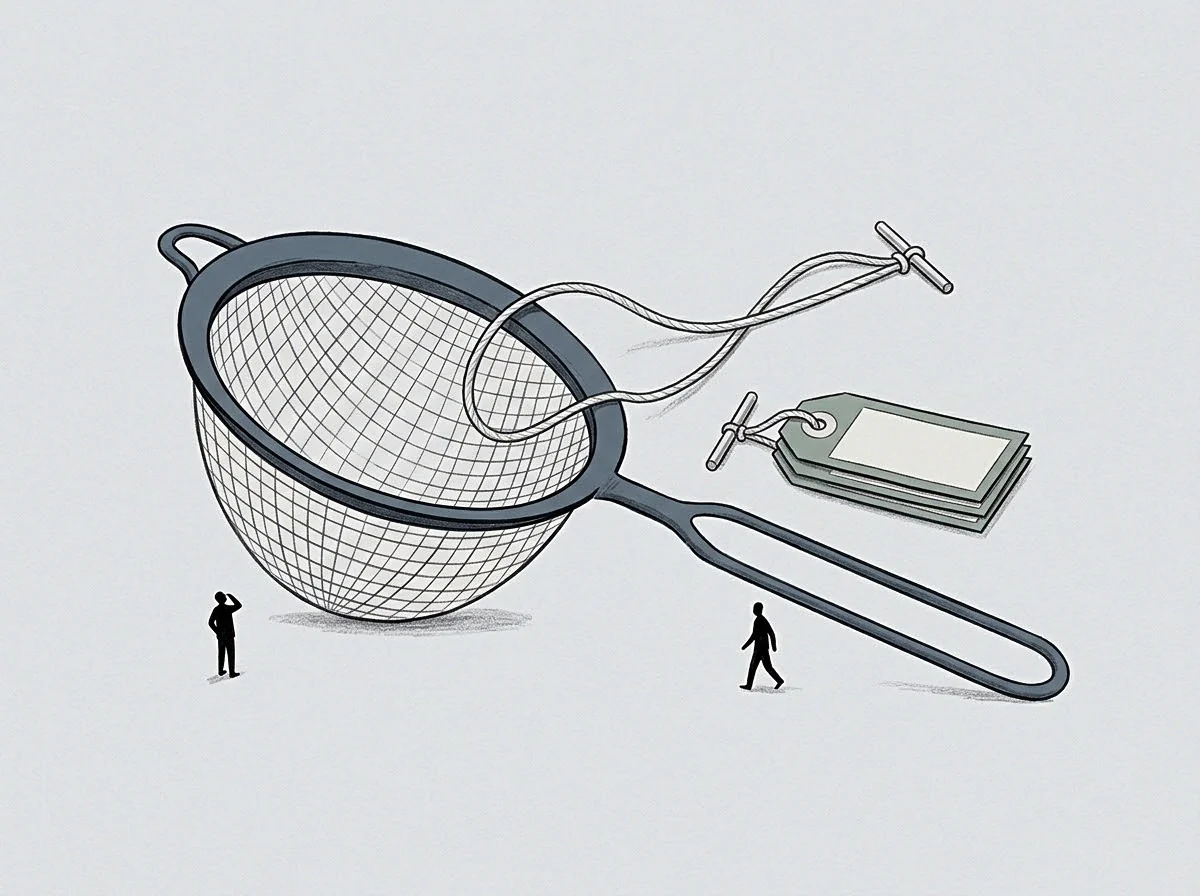
The cached answer offers an attractive escape from this attribution vacuum. When live statistical computation fails to resolve which change moved the needle, human operators default to cached interpretations, declaring that the newest feature drove conversion or that market seasonality explained a drop. The cached response never varies with incoming data, providing emotional certainty while live causal resolution remains completely uncalculated.
Structural Priors and Invariant baselines
Constraining credit assignment requires strict structural assumptions. By establishing invariant baselines across components untouched by the intervention, the observer subtracts background drift from the terminal signal. If account retention across unexposed legacy cohorts drops by eight percent while the treated cohort drops by two percent, the six percent delta provides an informative signal despite the negative nominal drift.
Live computation demands verifying that output changes when inputs shift. If an analytical model attributes every quarterly performance surge to marketing spend regardless of actual lead velocity, the attribution mechanism is invariant and structurally broken. Real attribution updates its probability distribution over causal drivers in response to negative findings, shrinking confidence bounds only when empirical separation occurs.
The operator sees the numbers rise and attributes the shift to the latest feature release.

Target
Early-stage ventures fail in optimization loops because they attempt to apply continuous gradient methods to environments that only support coarse directional filtering. High feedback latency, combined with low event counts and high environmental noise, places an absolute physical ceiling on the resolution of early-stage signals. Mathematical elegance cannot extract information from samples that have not yet occurred.
Stopping rules must reflect these resolution boundaries. Classical sequential analysis employs Wald tests to halt experimentation the moment evidence crosses boundary thresholds. In delayed feedback regimes, crossing boundaries prematurely produces catastrophic false discovery rates because late-arriving outcomes systematically reverse early apparent gains.
The distribution of early responders routinely differs from the distribution of late responders, biasing initial samples toward transient effects.
Patience in observation bounds the false discovery rate against early sample bias.
Addressing these constraints requires abandoning micro-optimizations in favor of macroscopic interventions that generate signal deltas capable of overpowering environmental variance. If the background noise standard deviation is twenty percent, pursuing a five percent conversion improvement across a six-month latency gap is mathematically irrational. The effect sits permanently beneath the noise floor of the system.

Operational Rules for High Latency Feedback
Managing optimization under delayed feedback requires enforcing mechanical constraints on how teams interpret signals:
- Intervention Magnitude must comfortably exceed three times the standard deviation of background environmental variance across the measurement window.
- Observation Cadence locks policy parameters until the minimum statistical delay threshold has fully elapsed across all active cohorts.
- Counterfactual Cohorting tracks untouched legacy segments continuously to subtract external macroeconomic drift from observed intervention deltas.
- Surrogate Auditing discards short-term operational proxies the moment correlation with long-term terminal outcomes begins to decay.
The boundary between disciplined empiricism and superstitious action remains defined by whether an operator acknowledges the resolution ceiling of their data. When feedback latency exceeds the operational lifespan of the firm, the optimization loop stops functioning as an empirical engine and transforms into an exercise in pure survival.
Whether any early-stage system can distinguish deliberate optimization from survivorship bias when observation latency exceeds the runway of the enterprise remains an open question.