
Evaluating Unresolved Operational Resource Exhaustion In Early Stage Venture Resource Allocation Models
Unresolved operational resource exhaustion occurs when venture allocation models treat bounded human capacity as an infinite linear variable convertible with cash.

Drain
Early-stage venture allocation models track cash burn with exact financial accounting while leaving human and technical capacity unmeasured. Operational resource exhaustion occurs when execution demands continuously exceed the sustainable throughput of the core team, degrading performance long before monetary reserves run out. Financial models record salary costs as fixed cardinal figures while treating operator working hours and attentional bandwidth as infinite resources.
Execution breaks when allocation logic ignores the physical limits of human capacity.
Cash can remain abundant even as operational capacity collapses. A venture operating with eighteen months of cash runway often experiences severe execution failure because the allocation model treats human effort as a linear input. When workload increases, internal friction expands non-linearly: technical systems accumulate unaddressed maintenance debt, communication channels clog with coordination overhead, and decision speed degrades.
The financial spreadsheet reflects full operational health while the underlying execution engine experiences structural decay.
A dashboard displaying six quarters of runway masks the complete exhaustion of execution capacity within thirty days.
Evaluating this exhaustion requires observing physical indicators of capacity depletion across daily operations. An allocation model must account for the specific mechanisms that accumulate operational drag within execution loops.
- Resource Vector Mismatch occurs when financial capital is assigned to new growth initiatives while existing core maintenance lacks adequate operational bandwidth.
- Attentional Saturation develops as coordination meetings and operational patchwork consume the focus required for strategic execution.
- Asymmetric Recovery Drag appears when short-term operational sprints destroy long-term capacity, requiring disproportionate time to restore historical output levels.
When operational resource exhaustion goes uncalculated in allocation models, capital deployment accelerates into decaying execution channels until structural collapse halts operations.

Room
Execution takes place within physical spaces and bounded human limits. A software platform or product workflow resides inside physical infrastructure, managed by individuals occupying specific seats. Financial capital functions as an abstract pooling mechanism, whereas operational capacity operates as a physical constraint tied to human biological setpoints, cognitive load limits, and working hours.
Managing resource allocation requires distinguishing between financial liquidity and operational availability. Monetary capital scales linearly through capital infusions, whereas human operational capacity encounters immediate physical ceilings. Adding headcount to an exhausted operational environment increases coordination complexity before expanding output.
The seat sits empty when cognitive fatigue forces an operator out of production, regardless of how much capital funds the payroll position.
| Evaluation Dimension | Financial Capital Allocation | Operational Capacity Allocation |
|---|---|---|
| Scale Type | Cardinal monetary units | Ordinal resource vector |
| Measurement Frequency | Continuous ledger tracking | Lagging behavioral signals |
| Depletion Trajectory | Linear cash outflow | Non-linear performance collapse |
| Recovery Mechanism | Capital injection or debt financing | System rest, scope reduction, structural repair |
Venture allocation models frequently fail by substituting financial metrics for operational health. Increasing budget allocations to an exhausted project team compounds internal friction. Execution demands focus, and when fatigue reduces attentional capacity, additional financial capital simply funds lower-quality decisions made at lower speeds.
Financial capital can be pooled and stored, while operational attention decays continuously whether utilized or held idle.
Observing operational limits requires tracking the human operator directly within their environment. When operational teams reach capacity limits, work quality drops and error rates climb sharply across all deployment pipelines.
An engineering team shows full allocation on paper while every deliverable arrives three weeks late without a change in scope.

Tally
Decomposing cost into a multi-attribute vector reveals the hidden expenditures that cash accounting misses. Cost operates on an ordinal scale representing a prioritized vector of inputs: hours spent, cash deployed, capability gained, capacity consumed, and attention taken. Price represents only the cardinal figure created when an ordinal cost converts into a transaction figure for external counterparties.
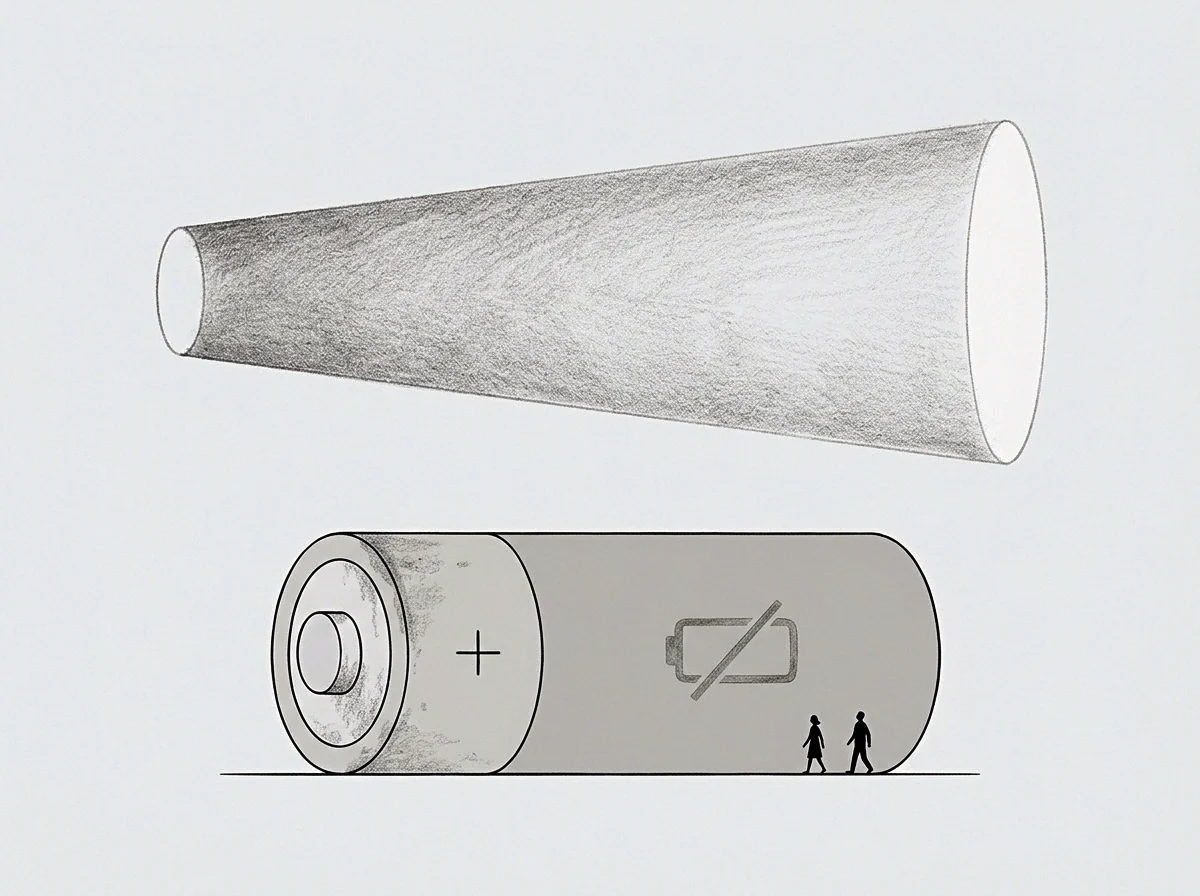
How Does Capacity Decay Shift Capital Allocation?
Capacity decay alters the true cost vector of every operational choice. When team members experience exhaustion, the capacity consumed component of the vector spikes dramatically while the capability gained component turns negative. A task that required ten hours of focus during nominal operations consumes forty hours of fragmented attention during prolonged exhaustion.
The venture pays an operational surcharge that never appears on a financial balance sheet.
Evaluating unresolved exhaustion requires tracking all five vector magnitudes simultaneously rather than monitoring cash alone. The vector turns downward when capacity consumption outpaces skill acquisition and product delivery.
Consider two venture-backed engineering teams building identical product features over a six-month window. The first team operates within sustainable workload limits, deploying cash steadily while building internal technical capability. The second team pushes past sustainable limits through continuous overtime, delivering the feature two weeks earlier.
The second team consumes operational capacity completely, leaving infrastructure fragile and core engineers disengaged. On a pure cash burn axis, the second team appears superior; on the full resource vector axis, the second team destroyed substantial enterprise value.
When capability gains fall below capacity consumption rate, project continuation reduces total venture reserves regardless of cash balance.
Financial accounting aggregates spent cash into clean columns, masking the reality that operational capacity was liquidated to meet an artificial deadline. Measuring this trade-off requires analyzing how resource exhaustion spreads across operational domains.
The remaining inquiry centers on whether an allocation model can dynamically discount capital deployment rates based on real-time measures of attention exhaustion before product milestones miss delivery windows.

Drift
Unresolved operational resource exhaustion forces systems toward the path of least resistance. When human operators reach full capacity limits, decision-making defaults to short-term risk avoidance and immediate convenience. Technical architecture choices made under systemic fatigue prioritize fast deployment over long-term stability, compounding technical debt and creating systemic operational drift.
This operational drift shifts capital allocation models off their intended trajectories. Exhausted teams lack the cognitive reserves required to evaluate strategic trade-offs accurately, causing them to execute familiar routines regardless of strategic alignment. The setpoint drifts silently as standards drop across product quality, customer support, and code maintainability.
- Operational pressure forces operators to bypass standard testing protocols to meet aggressive deployment schedules.
- Unresolved software bugs accumulate, increasing the baseline time required for basic system maintenance.
- Engineering focus shifts entirely from new feature development to continuous fire-fighting and emergency system patching.
- Core operators experience acute cognitive fatigue, leading to increased turnover and complete loss of institutional knowledge.
Structural failure follows operational drift. Capital deployment becomes ineffective when directed into an operational engine clogged with technical and systemic debt. Venture allocation models that ignore capacity drag inevitably over-allocate capital to failing initiatives, mistaking structural operational decay for simple execution delays.
Allowing technical debt to substitute for operational capacity converts fixed engineering overhead into escalating variable maintenance costs.
Correcting for drift requires embedding hard capacity limits into resource allocation agreements. Establishing operational boundaries protects the venture from self-reinforcing failure loops generated by unmeasured operator fatigue.
Under the explicit condition of a capacity reset clause in equity allocation agreements, founder vesting pauses when operational exhaustion metrics cross pre-agreed threshold bands.

Check
Evaluating operational resource exhaustion requires bringing unstated costs into explicit conversational space before systemic failure occurs. Stating operational costs early protects organizational health by making resource trade-offs explicit. Operators who state capacity limits during initial planning meetings prevent allocation models from defaulting to unsustainable execution assumptions.
Translating ordinal operational costs into cardinal prices enables accurate communication with external counterparties. Board members, investors, and external partners evaluate ventures using financial figures and explicit delivery timelines. When an internal operational vector shows capacity exhaustion, the founder converts that internal cost into explicit operational choices: extended delivery dates, scaled-back feature sets, or dedicated capacity recovery windows.
Unaddressed operational exhaustion compounds until team capacity breaks entirely. Regular evaluation of operational vectors ensures allocation models reflect physical reality rather than theoretical financial capacity. The founder measures the true cost vector continuously, adjusting deployment rates to match the real capacity of the human engine driving the venture.