

Measuring signal decay across intermediate management buffer layers
Signal decay across management buffer layers occurs through systematic entropy reduction, metric quantization, and threshold filtering across supervisory boundaries.
Signal decay across management buffer layers occurs through systematic entropy reduction, metric quantization, and threshold filtering across supervisory boundaries.

Closed loop feedback stability depends on isolating exogenous environmental white noise from structural setpoint drift before adjusting gain.

Synthetic baselines isolate true operational trajectory by establishing dynamic variance thresholds that separate structural delta from transient signal noise.
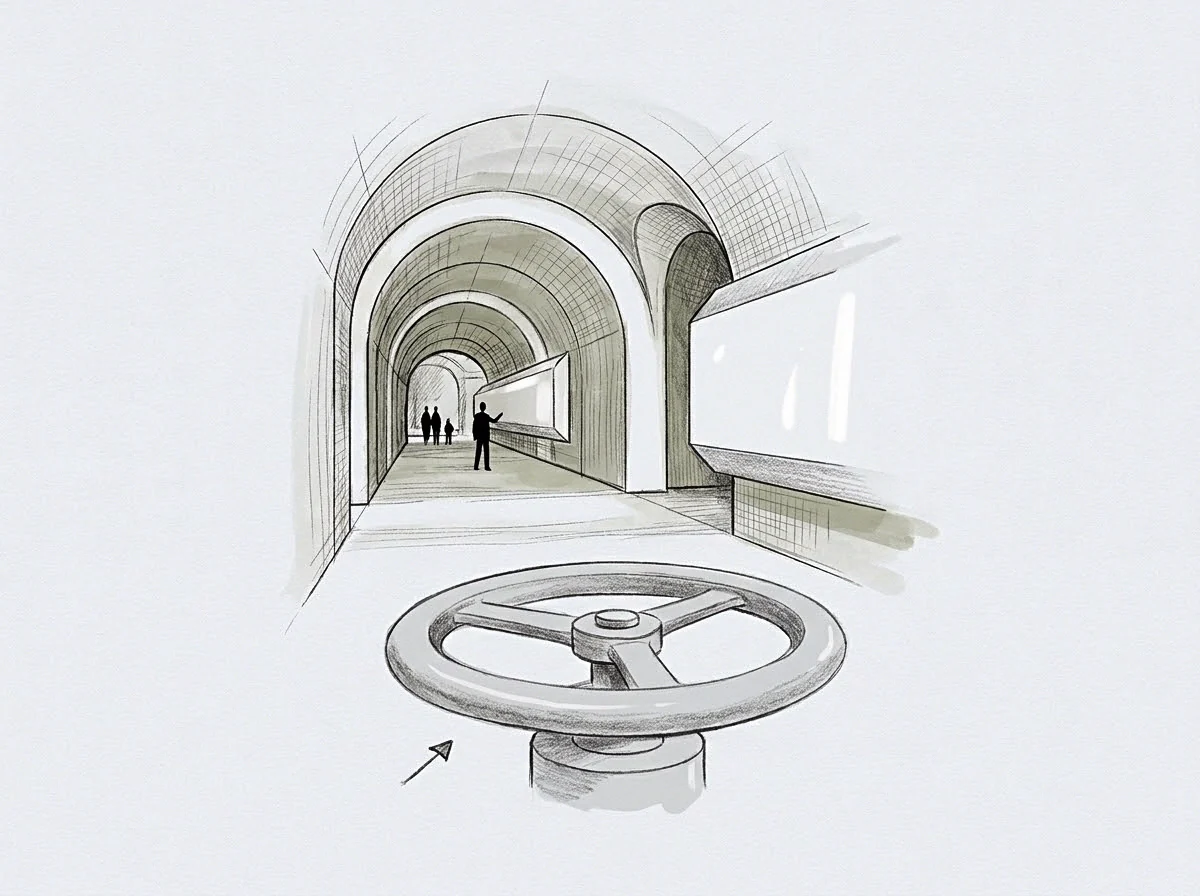
Calibrated telemetry baselines require bounded stationarity windows that isolate sensor drift from operational regime shifts through empirical validation.
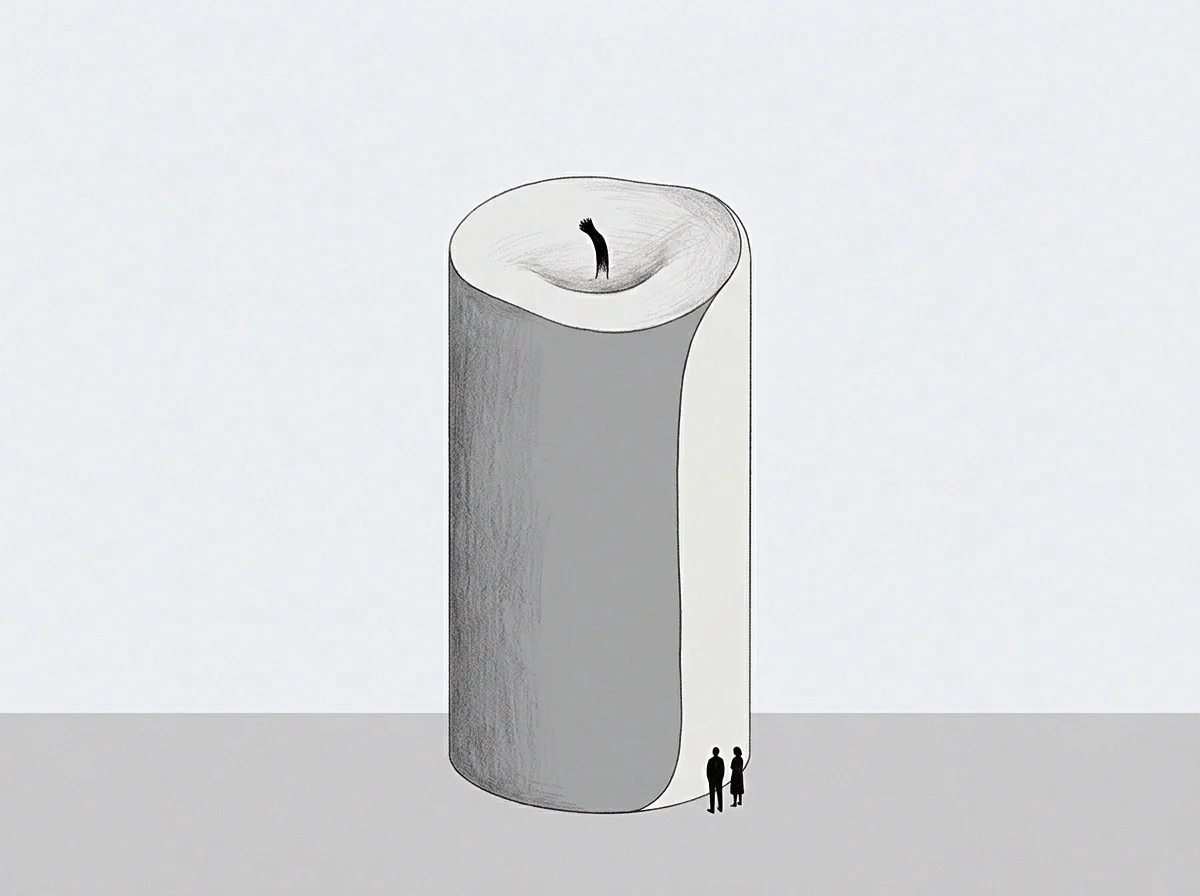
Dynamic observation windows expand time horizons when declining resource inputs bring signal magnitude down to background environmental noise levels.

Signal resolution drops when operators read performance deltas over windows shorter than the systemic lag of the underlying process.

A strategic shift is confirmed when operational outputs move beyond two standard deviations of a recorded baseline over a fixed window.
The engineering attention vector measures the directional distribution of cognitive capacity across architecture, maintenance, and delivery layers.

Decreasing resource allocations reduce absolute delta magnitude, requiring extended window durations to prevent ambient signal noise from obscuring true system movement.
The terms are written where they belong. Each field holds three desks, and every entry a desk writes raises the terms it uses, each term given a meaning, a mechanism and the places it appears. The record on these pages stays first person and hand made; the fields grow the nomenclature.