
Quantifying Long Delay Error Signal Degradation in Capital Allocation and Regulatory Approval Cycles
Feedback delays in regulatory capital cycles attenuate error signals, turning corrective adjustments into destabilizing structural noise.

Room
An investment committee sits before a board sheet showing forty million dollars deployed into a four-year clinical trial or a municipal grid upgrade. The initial baseline assumptions were logged forty-eight months earlier, yet no structural performance output has reached the ledger since sign-off. Capital remains committed while regulatory reviews grind on behind agency doors.
The error signal that should direct capital velocity surfaces only when the final statutory determination is issued. By then, team composition, macroeconomic baselines, and technical parameters have drifted away from the initial conditions.
In multi-year capital allocation, the primary failure mode stems from treating delayed feedback as equivalent to real-time feedback with a longer calendar window. Control systems operating under high feedback latency experience progressive information decay. When the error signal finally surfaces, it arrives stripped of operational relevance to the current state of the enterprise.

Memory Loss Across Capital Allocation Cycles
Organisations routinely overwrite initial parameters with intermediate narrative status updates. When a regulatory submission enters an administrative window spanning thirty-six months, internal monitoring shifts from outcome measurement to process compliance, and the original valuation gradient quietly dissolves.
The operational team reports progress based on procedural milestones (filings accepted, reviews scheduled, responses drafted), none of which carry direct evidentiary weight regarding final approval probability. As months accumulate, the variance between estimated asset value and actual realized regulatory assets expands without triggering operational alarms.
A capital allocator reviewing a portfolio after two years of regulatory silence faces a blank metric. Because no negative signal has cleared the agency threshold, the internal risk metric remains set at the baseline recorded on day one. The system reads the absence of definitive failure as confirmation of progress.
The governing committee will eventually discover that three consecutive quarterly updates carried identical asset valuations simply because the underlying feedback loop contained no live data points.

Lag
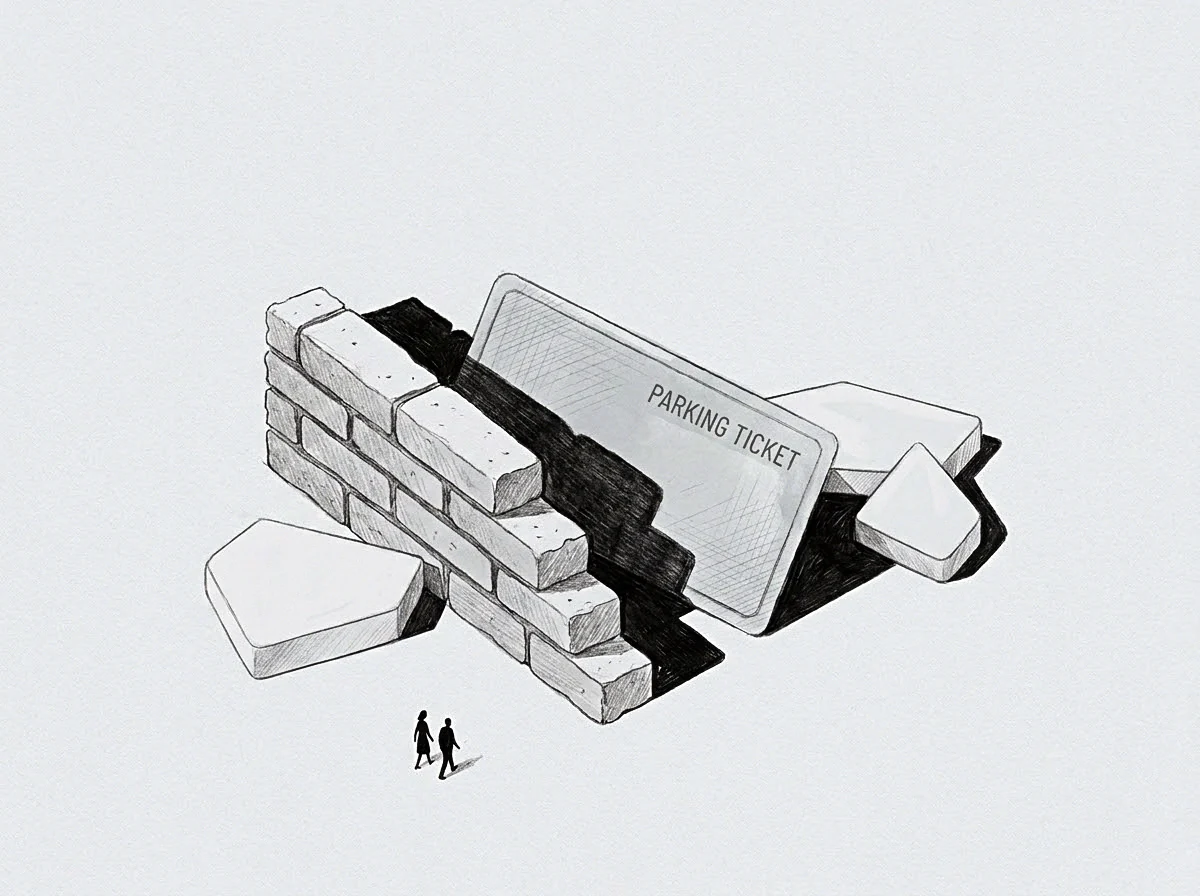
When feedback latency in a system exceeds the time constant of internal state changes, corrective mechanisms produce unintended oscillations. In physical control theory, delaying a feedback signal shifts its phase relative to current system dynamics. A corrective input applied out of phase amplifies system errors rather than dampening them.
Signal Degradation Mechanics in Delayed Control Loops
Capital deployment under regulatory oversight exhibits predictable degradation patterns as the temporal distance between capital commitment and approval increases. The feedback loop deteriorates across four distinct vector dimensions.
- Phase Inversion occurs when an error signal generated by past conditions is applied to a fundamentally altered operational state, causing capital adjustments to push the enterprise further from equilibrium.
- Amplitude Attenuation weakens the directional magnitude of corrective feedback through organizational layers, reducing a forty percent variance in projected regulatory asset base to a minor line-item note.
- Noise Contamination injects transient political, administrative, or media commentary into the feedback stream, masking true statutory compliance deltas with secondary institutional static.
- Context Drift alters the regulatory baseline itself during the evaluation window, rendering original compliance metrics obsolete before the agency delivers its formal ruling.
As capital deployment cycles stretch past twenty-four months, the ratio of structural signal to noise degrades sharply. The original allocation thesis loses predictive value as external market factors shift during regulatory reviews.

Where Phase Lag Converts Correction Into Instability?
Adjustments applied past the critical latency threshold destabilize capital structures. When an enterprise receives a regulatory rejection or conditional mandate after a four-year cycle, the capital reallocation move executed in response is typically scaled to the magnitude of the past failure rather than the needs of the current market window.
The system responds to four-year-old information with aggressive capital withdrawals or rapid pivot expenditures. This generates heavy systemic instability, as capital velocity swings between prolonged stagnation and sudden, uncalibrated reallocation. Phase lag converts deliberate risk management into chaotic capital churning.
The administrative clause governing rate-base inclusion specifies that capital expenditures incurred during regulatory delay remain uncompensated unless explicit statutory exemptions are invoked prior to final determination.

Distortion
Measuring signal quality across disparate feedback horizons requires tracking how valuation accuracy decays over operational time. Short deployment cycles deliver immediate validation, whereas long regulatory cycles accumulate latent error behind smooth accounting facades.

Comparative Analysis of Feedback Horizons
The contrast between short feedback environments and long regulatory deployment cycles highlights the operational risks inherent in delayed error signals. The table below outlines how feedback parameters behave across three distinct deployment models.
| Horizon Type | Feedback Latency | Signal-to-Noise Ratio | Dominant Degradation Mode | Corrective Action Cost |
|---|---|---|---|---|
| High-Frequency Digital Deployment | Hours to Days | High (0.85 to 0.95) | Transient Variance Spikes | Low (Ordinal adjustments within budget) |
| Mid-Horizon Commercial Expansion | 3 to 12 Months | Moderate (0.50 to 0.70) | Market Trend Obscuration | Moderate (Tranche restructuring) |
| Long-Delay Regulatory Approval | 24 to 60 Months | Low (0.10 to 0.30) | Phase Inversion and Baseline Drift | Severe (Impairment or capital forfeiture) |
Operational stability depends on aligning capital commitment horizons with signal resolution velocity. High-frequency environments correct assumptions before misallocation scales, while multi-year regulatory cycles hide structural deficits until capital is fully sunk.

Worked Case in Multi Year Regulatory Capital Allocation
Take an energy distribution firm allocating seventy-five million dollars to construct a transmission line subject to regional environmental approval. Assume the capital release schedule commits fifteen million dollars annually over five years, with rate-base inclusion contingent on final agency sign-off in year five.
Error signal attenuation scales exponentially with feedback delay, transforming corrective feedback loops into sources of organizational volatility.
In year two, an unobserved shift in agency environmental criteria lowers approval probability by thirty percent. Because formal hearings occur only in year four, the error signal remains ungenerated. The firm continues releasing fifteen million dollars annually based on the initial baseline.
By year four, forty-five million dollars has been expended under obsolete assumptions.
When the regulatory authority issues a conditional mandate in year four requiring route alteration, the cost to adjust exceeds thirty million dollars. The original error signal, delayed by thirty-six months, results in a total capital loss far exceeding the cost of early mitigation. Had an ordinal intermediate proxy signal been integrated into the allocation logic at month twelve, tranche releases would have paused at fifteen million dollars, limiting downside exposure.
Unpriced regulatory latency converts cardinal balance sheet valuations into ordinal speculative claims.
The organization absorbs severe financial damage because internal evaluation mechanisms treated the absence of formal agency feedback as an invariant positive validation signal throughout the initial thirty-six months.
The resulting capital loss forces a dilutive equity raise or debt restructuring, permanently shifting the firm’s capital cost structure.

Cache
When live external data is unavailable due to extended regulatory latency, decision-making bodies rely on internal approximations. The organisation retrieves past risk assessments, assumption models, and strategic justifications, treating them as live inputs. This dependency on stored logic creates structural blindness during long evaluation windows.

Invariance as an Indicator of Stale Feedback
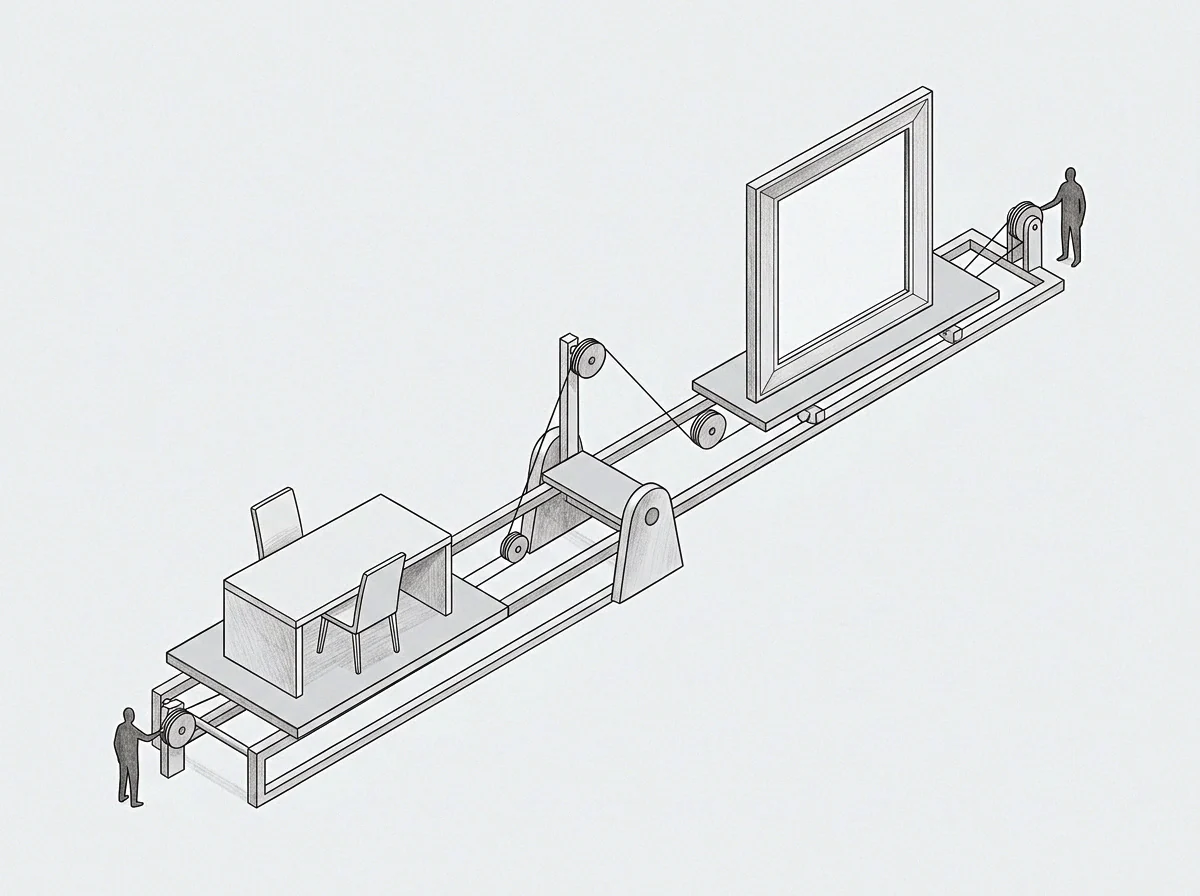
The primary symptom of feedback failure is decision invariance. When live computation occurs, changing market conditions produce variable outputs in capital allocation meetings. When systems rely on stored assumptions, the output remains identical regardless of underlying shifts.
A project committee reviewing a long-delay capital allocation project over eight consecutive quarters that yields identical approval probability estimates reveals an uncomputed risk profile. The system is retrieving an early answer rather than assessing current conditions.
The risk model produces rapid, highly confident outputs because reading stored data requires minimal computational or analytical friction. Allocators misinterpret this speed and stability as certainty, mistaking internal procedural coherence for empirical validation.
Rebuilding Reference Classes Without Live Signals
Restoring calibration in long-delay environments requires abandoning internal project narrative updates and constructing reference classes built from external historical analogs. When live signals are delayed, past regulatory outcomes across similar assets provide the baseline for risk estimation.
Invariance in long-term capital allocation metrics demonstrates the total substitution of stored assumptions for live market computation.
- Record the initial baseline expectation and variance bounds at investment sign-off without subsequent manual adjustments.
- Identify intermediate observable proxies that correlate with downstream regulatory outcomes, such as procedural inquiry density or staff turnover at regulatory bodies.
- Conduct mandatory invariance tests whenever regulatory submissions encounter unpredicted administrative delays exceeding ninety days.
- Recalibrate capital deployment rates against ordinal signal movements rather than calendar milestones.
Constructing a functional reference class requires aggregating at least twenty historical regulatory approval cycles in the same jurisdiction. The variance observed across that historic sample provides the operational bounds for capital commitment, neutralizing the optimism bias inherent in internal project updates.
Fast answers in complex regulatory environments reflect stored assumptions rather than live calculation.

Margin
Protecting capital against long-delay error signal degradation requires structural modifications to how allocation contracts are executed. Allocators must construct explicit absorption buffers inside capital deployment schedules, replacing continuous expenditure models with milestone-gated tranches.

Tranche Structuring and Ordinal Milestone Calibration
Connecting capital releases to calendar months exposes the enterprise to unhedged signal degradation. Instead, capital allocations should be bound strictly to ordinal regulatory milestones. A fifty-million-dollar commitment should be structured into distinct, non-time-bound tranches unlocked only when explicit regulatory conditions are validated.
Under an ordinal tranche model, if an agency delays a determination by twenty-four months, capital release halts automatically. The delay degrades time-to-return metrics, but it prevents additional capital from entering a potentially compromised allocation vector.
Capital commitment schedules governed by calendar time rather than validated regulatory signals guarantee maximum exposure to feedback degradation.
The table below compares the structural characteristics of conventional time-based capital commitment against ordinal milestone-gated allocation strategies.
An organisation that replaces calendar-based expenditure schedules with ordinal milestone triggers shifts the cost of regulatory delay from direct capital loss to opportunity cost. The firm preserves its cash balance while awaiting signal resolution.
Designing effective capital buffers requires establishing explicit exit criteria before initial deployment. If a regulatory proceeding exceeds its estimated timeline by more than fifty percent without reaching a defined ordinal checkpoint, the governing framework must mandate an immediate capital pause and asset re-evaluation.
Whether capital allocators can maintain institutional discipline when competing firms deploy unhedged capital into delayed regulatory cycles remains an open question for market participants.