
Quantifying Structural Variance Thresholds Between Domestic Revenue Velocity and Foreign Long Tail Conversions
Structural variance thresholds mark where international collection latency outpaces domestic cash velocity, turning delayed settlements into operational capital deficits.

Pulse
Domestic transactions cleared into the operating account every forty-eight hours, creating a predictable cash cadence that masked a widening deficit in overseas orders. The domestic ledger settled cleanly. Billing cycles on the home exchange operated on an average collection latency of three days, with a standard deviation hovering under six hours.
That reliable tempo encouraged treasury allocations predicated on immediate reinvestment. Capital was recycled into acquisition spend on the assumption that incoming cash velocity remained uniform across all buyer geographies.
Receipts originating from secondary international territories departed from this pattern. In those territories, the interval between marketing attribution and finalized currency clearing stretched across four to twelve weeks. The domestic cash curve moved like a metronome, while cross-border transactions accumulated along an extended decay function.
Operators watching top-line bookings assumed liquidity would follow at historical domestic speed. The incoming funds failed to arrive inside the reconciliation window.
A predictable settlement schedule in one territory creates the false expectation of uniform capital velocity across all buyer cohorts.
Domestic revenue velocity defines the rate at which committed purchase intent converts into unencumbered operating cash within the primary regulatory and banking zone. It relies on synchronized local clearance rails, uniform credit card processing tiers, and predictable fraud score gates. When these rails function, variance remains tightly bounded around the arithmetic mean.
Foreign long tail conversions occupy a different statistical regime. These conversions involve disparate domestic payment methods, manual anti-fraud escalations, multi-day cross-currency batching, and fragmented local authentication rules. The variance in settlement time ceases to follow a normal distribution, stretching into heavy-tailed patterns where outliers dictate working capital depletion.
When an operating team treats long-tail international demand as identical to the domestic core, inventory and operational overhead are funded against phantom liquidity, leaving the enterprise exposed to sudden bridge financing demands when local collection schedules stall.

Shelf
Disparate settlement timelines alter how liquidity sits in reserve before operational expenses drain the treasury. A domestic conversion functions on a near-zero collection shelf, moving rapidly from intent to deployment. The cross-border conversion rests on a prolonged shelf where payment settlement, exchange rate fluctuations, and chargeback dispute windows tie up working capital.
The discrepancy broke the model. Measuring the variance threshold between these two environments demands tracking both velocity and the tail dispersion of conversion events.
| Operational Dimension | Domestic Revenue Flow | Foreign Long Tail Flow | Observed Variance Multiple |
|---|---|---|---|
| Mean Settlement Window | 2.1 Calendar Days | 28.4 Calendar Days | 13.5x Temporal Drift |
| Coefficient of Variance | 0.14 Standardized | 0.89 Standardized | 6.3x Dispersion Expansion |
| Primary Distribution Profile | Gaussian Normal | Pareto Type II Lomax | Structural Tail Shift |
| Working Capital Allocation Ratio | 1.0x Base Capital | 3.8x Retained Capital | 3.8x Liquidity Commitment |
| Drop-Off Concentration Phase | Initial Payment Form Entry | Secondary Bank Redirection | Downstream Structural Fracture |
The statistical profile differences documented above explain why high conversion rates in distant territories frequently generate cash crises. Foreign checkouts follow Pareto dynamics. While domestic transactions cluster predictably near the average, international transactions distribute across extended schedules characterized by fat tails.
A fat-tailed distribution generates extreme values far more frequently than an exponential or Gaussian model predicts. An operator projecting cash reserves based on domestic variance assumptions systematically underestimates the funds required to support international fulfillment cycles.
- Settlement Latency Expansion occurs when local clearing houses and international intermediary banks introduce multi-day holding periods for foreign currency conversions.
- Localized Authentication Attrition reflects the loss of completed orders during mandated multi-factor verification hurdles unique to specific regional banking regulations.
- Dispute Horizon Elongation describes the prolonged calendar window granted to cross-border consumers to contest charges under distinct consumer protection treaties.
- Currency Settlement Volatility introduces unpredictable cash differentials caused by exchange rate movements between the checkout event and final merchant payout.
The operational shelf grows wider with every intermediary that touches the checkout pipeline. Speed masks underlying risk. In high-margin software sales, delayed settlement appears manageable because product delivery costs remain low.
In physical goods or service operations carrying direct fulfillment overhead, delayed clearing forces the operator to finance raw inputs weeks before customer cash arrives. The buffer depleted steadily. Evaluating whether an international expansion delivers value requires calculating the cost of capital tied up during this extended holding phase.
A product line that drains liquid capital faster than its tail can settle belongs on the shelf until regional settlement pipelines operate with domestic regularity.
Drift
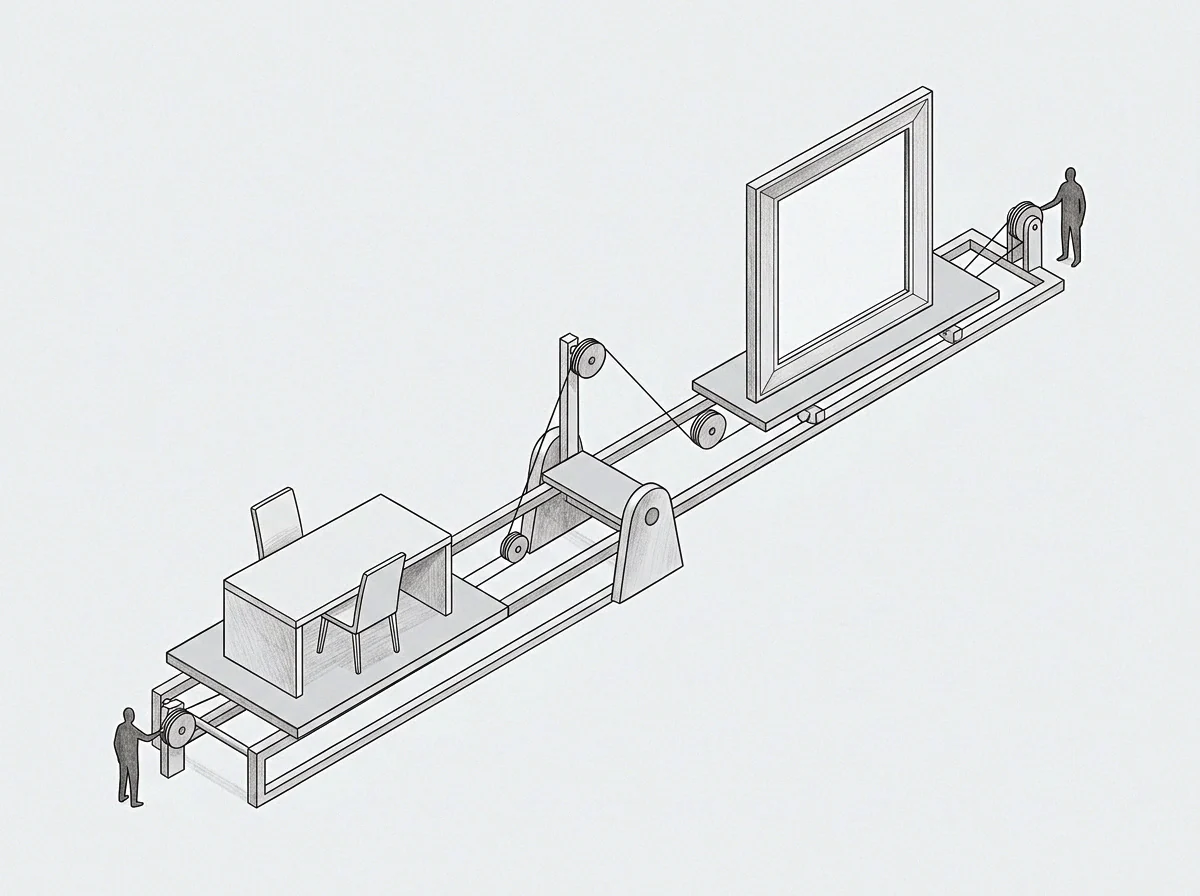
Discrepancies in checkout performance emerge quietly over successive financial quarters. As marketing campaigns scale beyond borders, traffic acquisition costs deduct immediately from domestic cash balances, while conversions from emerging territories wander through prolonged verification funnels. Capital absorbs the time difference.
The gap widens each quarter. The aggregate volume looks healthy on corporate dashboards, yet operational reserves trend downward because the capital velocity of foreign cohorts drifts away from domestic baselines.

Where Does Latency Convert Into Liquidity Drag?
Payment systems impose localized frictional points that degrade speed without completely terminating the transaction. Local rails dictate checkout completion. A user in a secondary market might place an order via an asynchronous voucher system, requiring a physical visit to a convenience outlet or domestic postal bank within seventy-two hours.
The purchase is logged as converted inside the analytics tool. Cash, however, remains uncollected until the physical deposit clears a regional aggregator, transfers to an international wire facility, and reconciles into the treasury ledger.
A transaction recorded on an attribution platform represents customer intent rather than spendable working capital.
The math permits no exceptions. When twenty percent of top-line revenue shifts into transactions with forty-day collection schedules, the business experiences a contraction in operating cash flow identical to a twenty percent reduction in domestic gross margin over that quarter. Variance accumulates at the border.
Treasury managers unaware of this distribution shift will issue vendor commitments based on ledger conversions, only to confront cash shortfalls when domestic receivables fail to cover the temporal gap created by foreign drift.
The merchant processing partner would state that their routing infrastructure performed exactly according to service level agreements, because every authorized payment eventually settled within standard cross-border parameters.

Bound
Operating safely under asymmetric cash velocity requires setting an explicit structural variance threshold. This threshold represents the mathematical boundary where international revenue variance exceeds domestic capital absorption limits. Once foreign tail latency crosses this boundary, managing the traffic as a single blended revenue stream becomes untenable.
The baseline shifted downward. Management must establish dedicated risk bounds that detach international fulfillment decisions from domestic cash dependencies.
- Baseline Velocity Calculation requires logging ninety consecutive days of domestic order-to-cash reconciliation times to compute the core standard deviation.
- Regional Tail Mapping separates transaction logs by destination geography to calculate individual coefficient of variance figures for every active foreign territory.
- Threshold Limit Definition identifies the exact variance multiple where the cost of carrying delayed receivables erodes the territory contribution margin.
- Dynamic Buffer Provisioning automatically ring-fences a liquidity reserve proportional to the tail dispersion of active international order volumes.
Silence replaces predicted cash flow. Currency controls delay foreign wires. When a company calculates its structural variance threshold, it isolates the tail conversion index from aggregate reporting.
The tail conversion index quantifies the percentage of completed orders that settle beyond three standard deviations of the domestic mean. If this index surpasses fifteen percent of total transactional volume, treating the revenue through conventional domestic velocity models introduces structural insolvency risk. The balance cleared late.
What remains unsettled in treasury modeling is determining whether automated regional discounting can accelerate long-tail settlement sufficiently to justify the underlying gross margin compression, or whether certain distant markets permanently resist velocity normalization.

Tether
Decoupling operational commitments from foreign checkout projections stabilizes the enterprise. Founders protect working capital by pegging international reinvestment rates directly to realized bank deposits rather than front-end attribution numbers. This tether ensures that acquisition budgets in irregular settlement zones expand only after the trailing cohort settles cleanly into liquid accounts.
When marketing spend is chained to verified deposits, cross-border expansion cannot cannibalize domestic payroll or development reserves.
Chaining regional ad spend directly to cleared bank settlements insulates the core business from cross-border conversion latency.
The discipline requires modifying partner contracts and vendor terms across operational units. Local payment providers frequently market their software by quoting gross checkout initiation figures while burying settlement latency tables in technical annexes. Securing a written contractual term mandating a rolling fourteen-day settlement guarantee with an automatic liquidity advance for cross-border transactions alters the risk profile, shifting variance absorption back to the payment processor where it belongs.