
Bounding The Non-Linear Rate Of Latent Structural Collapse In Highly Optimized Industrial Systems
Latent structural collapse rates accelerate non-linearly when operational optimization strips physical damping reserves and elevates cyclic stress near material limits.
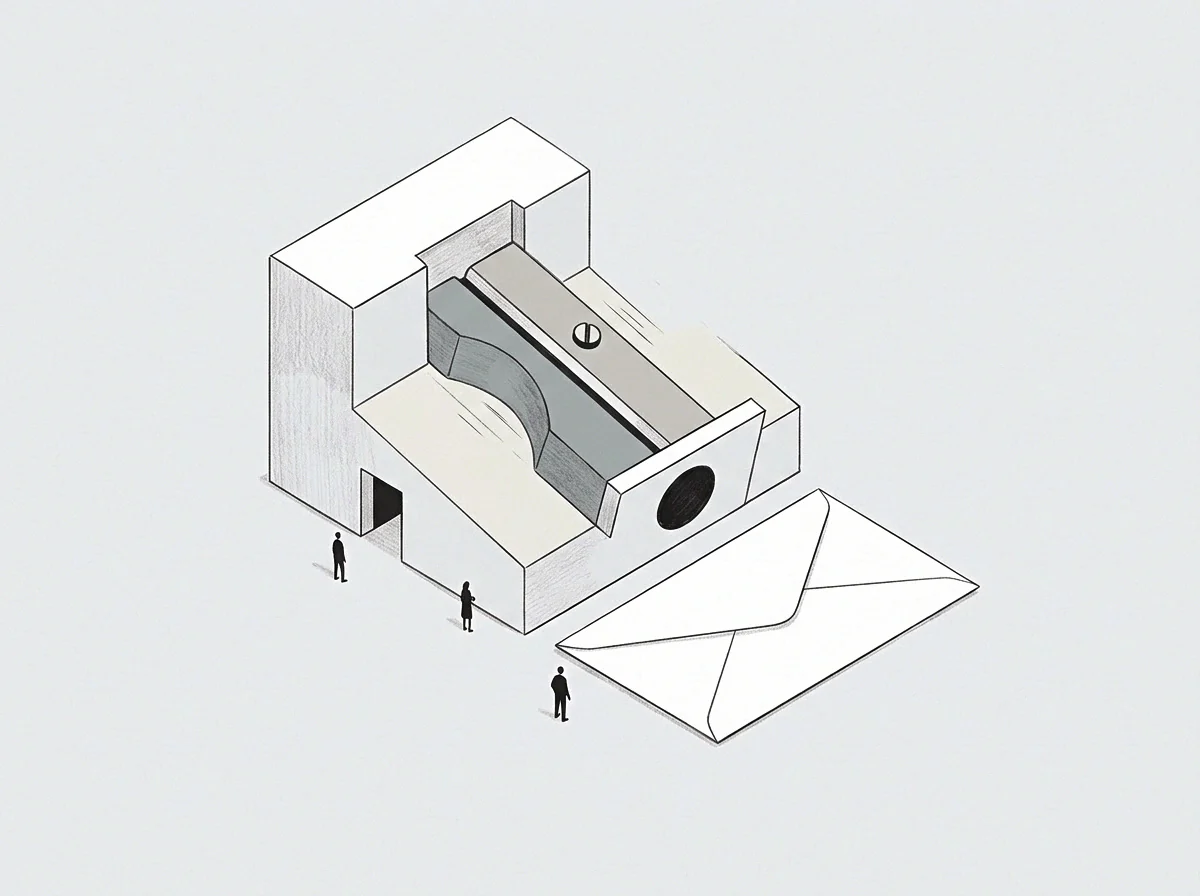
Threshold
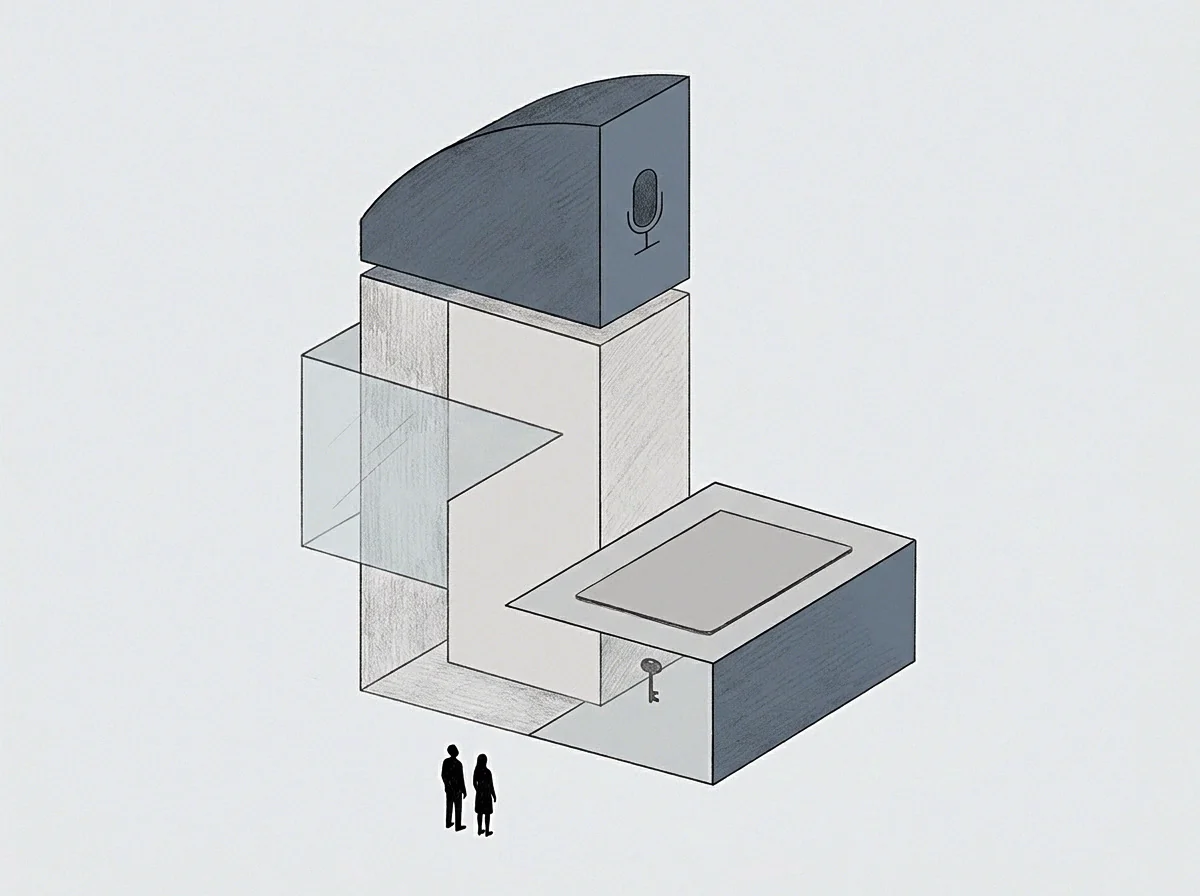
Operating Points Near Structural Depletion
Thermal power plants, high-throughput chemical refineries, and automated logistics networks run against operational envelopes established during initial commissioning. Capital efficiency increases as idle slack decreases. Equipment runs hotter, cycles faster, and turns over working capital on shorter cadences.
As throughput rises toward theoretical maximums, the physical margins that absorb transient shock compress. The system appears stable because control loops continuously adjust feed rates, temperatures, and dispatch schedules to mask underlying material degradation.
Optimization routines treat unspent tolerance as dead inventory. Plant engineers dial back safety margins to capture fractional gains in yield, converting mechanical buffering into measurable throughput. The plant registers steady output figures month after month.
Beneath the visible performance line, microscopic fatigue fractures accumulate across piping networks, turbine blading, and heat exchange surfaces. Control software increases gain values to counter mechanical sluggishness, preserving setpoint fidelity while demanding steeper restorative force from stressed components.
A system operating near capacity expends its restorative margin to preserve the appearance of steady state.
The rate of degradation accelerates because dampening capacity scales inversely with structural loading. When operating within moderate bands, steel alloys and composite joints deform elastically, dissipating kinetic energy through thermal dispersion. As stress concentrates near yield boundaries, deformations shift into plastic regimes.
Microscopic voids coalesce along grain interfaces without altering the gross geometry of the assembly. Ultrasonic inspections often record normal wall thicknesses because the defect density concentrates along internal shear planes rather than external surfaces.
Operational instrumentation reports cardinally quantifiable metrics like pressure, fluid velocity, and cycle count. These numbers conceal ordinal declines in systemic elasticity. A boiler tube with twenty percent wall thinning maintains identical internal fluid pressure until fracture initiation.
The sensor reads operational compliance right up to the millisecond of structural separation. Plant managers interpret flat pressure traces as proof of structural health. That interpretation mistakes active control compensation for passive material resilience.
When the control envelope reaches its physical saturation point, minor external perturbations trigger disproportionate structural rearrangements. A routine valve closure produces an ordinary pressure wave. In an unoptimized system, heavy pipe walls and oversized expansion loops absorb the surge.
In an optimized system stripped of structural reserves, the shock wave reflects off rigid boundaries, locating the latent micro-fissure cluster. Elastic storage gives way to catastrophic crack propagation across the entire manifold.
The boundary between stable operation and rapid mechanical unraveling narrows to an infinitesimal margin where safety margins are trimmed for return on invested capital.
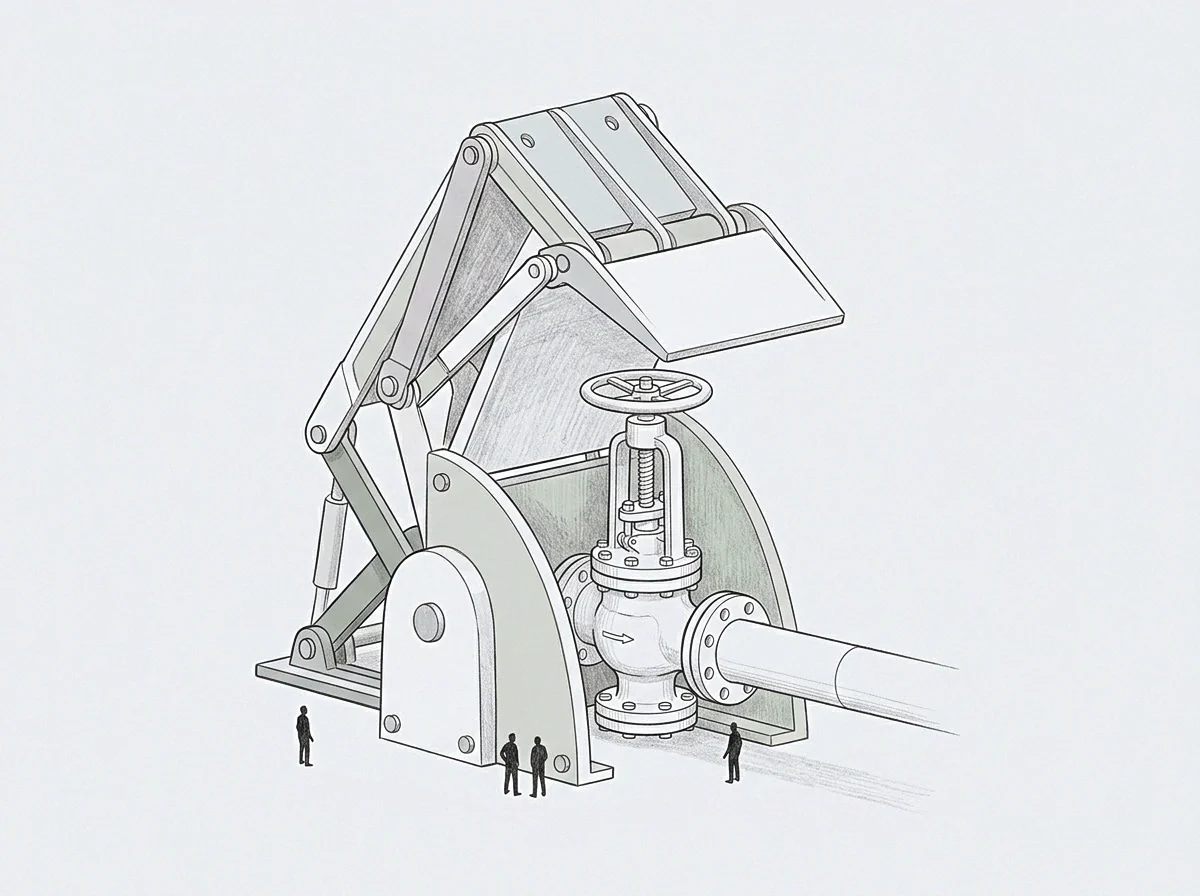
Truss
Mechanical Load Paths Under Redundancy Stripping
Industrial structural design traditionally incorporates determinate load paths backed by redundant secondary members. A bridge, offshore platform, or warehouse crane transfers vertical loads through diagonal braces to primary vertical columns. If a diagonal element fails under corrosion or cyclical loading, adjacent members accept deflected stresses.
The overall structure sags, manifesting visible deflection that alerts inspection crews before total loss of load-bearing integrity occurs.
Modern algorithmic optimization removes redundant load paths to minimize structural steel mass and foundation loads. Finite element modeling isolates inactive steel members, allowing engineers to strip away secondary bracing until every retained strut carries continuous, calculated tensile or compressive strain. The resulting indeterminate space truss achieves remarkable mass-to-load ratios.
The design operates with mathematical perfection under modeled conditions, distributing dynamic forces uniformly across slender cross-sections.
Load paths become strictly serial. Each strut functions as an irreplaceable transmission link. In an offshore drilling template stripped of auxiliary cross-bracing, the loss of one underwater member doubles bending moments on neighboring joints.
Because optimization sized those joints specifically for baseline axial compression, lateral deflection introduces severe secondary moments. The joints rupture along heat-affected weld lines without prior plastic necking.
Algorithmic mass reduction yields identical outcomes in high-bay automated retrieval warehouses. Stacking cranes run inside thirty-meter rack assemblies engineered with cold-formed sheet steel. Every column thickness matches projected pallet weights with single-digit percentage tolerances.
Deflection tolerances are tightened by tying structural uprights directly to concrete slab anchors rather than heavy perimeter frames. The rack skeleton functions as a monolithic load cell.
Redundancy removal converts distributed stress dissipation into brittle serial dependency.
Stress redistributions in these skeletal configurations obey power-law distributions. When an automatic automated guided vehicle strikes an aisle upright, the impact does not stay localized. Kinetic energy bypasses absent horizontal ties, driving directly into overhead tie-bars.
Overloaded tie-bars snap, dropping rack bays sequentially down the warehouse length like falling domino tiles. The initial impact accounts for five hundred joules of energy, yet it releases ten million joules of gravitational potential energy stored in suspended cargo.
The team that engineered the frame will maintain that the installation was designed to exact regulatory load standards and operated precisely as modeled until an uncertified vehicle breached the perimeter.
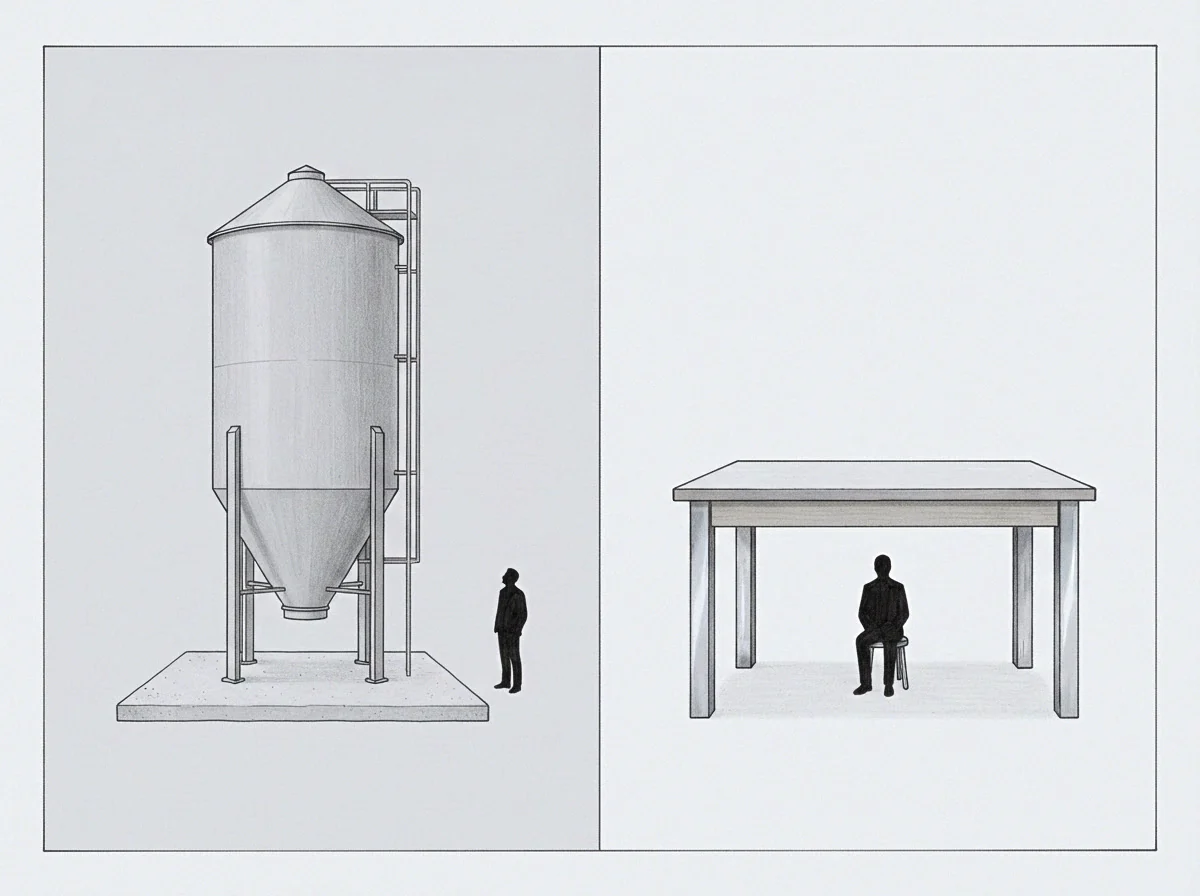
Decay

Hidden Wear Vectors Across Capital Equipment
Latent structural decline behaves fundamentally differently from visible surface wear. Surface wear manifests as abrasive erosion, pitting, or rust, presenting visual evidence during routine external walk-throughs. Latent degradation develops internally through chemical embrittlement, subterranean thermal cycling, and microscopic lattice slip.
The external profile remains pristine while the internal lattice structure loses cohesion.
Consider the comparative wear vectors across three standard industrial components subject to aggressive capacity optimization over extended runtimes.
| Component Category | Primary Latent Vector | Monitored Telemetry | Failure Rate Trajectory |
|---|---|---|---|
| High-Pressure Steam Header | Intergranular creep embrittlement | External surface temperature, internal line pressure | Polynomial latency transitioning to exponential crack opening |
| Heavy Reduction Gearbox | Sub-surface shear-stress spalling | Bearing casing vibration, oil particulate count | Linear wear signature followed by instantaneous tooth fracture |
| Continuous Chemical Reactor Vessel | Chloride stress corrosion cracking | Wall ultrasonic thickness, shell dilation sensors | Zero-signal plateau followed by sudden catastrophic brittle cleavage |
High-pressure steam headers in power generation facilities operate at five hundred and sixty degrees Celsius under intense internal pressures. Steels developed for this service undergo subtle microstructure transformations over fifty thousand operating hours. Carbides precipitate along grain boundaries, leaving adjacent metallic regions depleted of chromium.
The tube wall does not thin. Outer dimensions hold true within fractions of a millimeter. Yet the metal transitions from tough austenitic elasticity into a brittle crystalline matrix.
Vibration analysis on heavy reduction gearboxes provides another illustration of masked degradation. Gears machined from case-hardened alloy steels experience millions of meshing cycles under heavy torque. Micro-cracks initiate beneath the carburized surface case, at the junction between the hardened outer shell and the softer core metal.
Accelerometers mounted on outer bearing housings detect baseline frequencies because the outer tooth profile remains unbroken.
The subsurface cracks propagate laterally parallel to the tooth flank. Metal fragments break loose inside the core without breaking the exterior contact skin. When the fractured subsurface boundary reaches a critical length, the entire tooth shears off in a single operational rotation.
The sensor logs an instantaneous leap from nominal vibration to catastrophic gearbox seizure within three shaft revolutions.
Continuous chemical reactors show similar behavior under stress corrosion cracking. Halogen ions penetrate passive oxide films on stainless steel vessels operating under cyclic internal pressure. Fissures branch microscopically through metal grains, invisible to bulk ultrasonic thickness gauges that measure average reflection times.
Wall thickness reads nominal while hundreds of micro-fractures sever tensile load-carrying area. The vessel ruptures along its vertical weld seam under routine static hydrostatic loading.
Relying on gross operational measurements to track latent material exhaustion ensures that the intervention occurs after structural cohesion has departed, transforming planned refurbishment into total facility replacement.
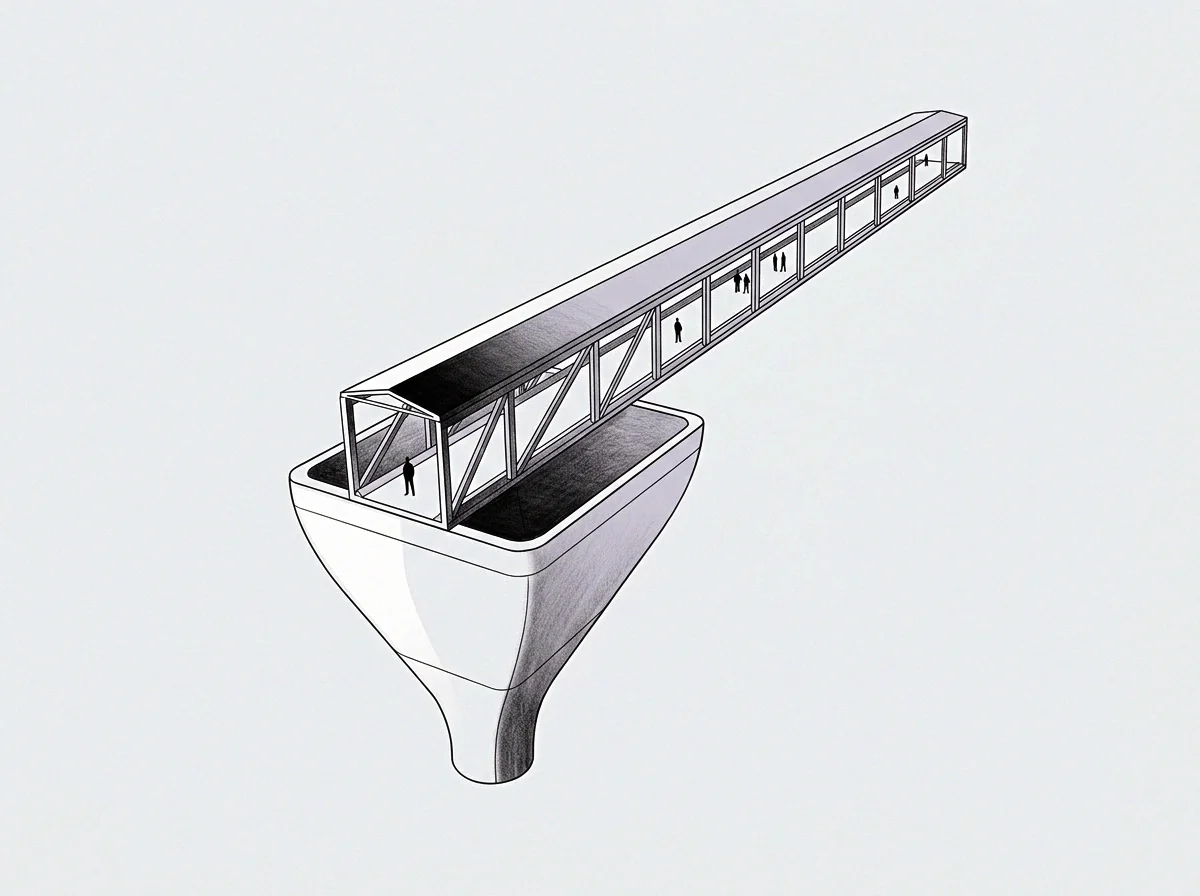
Coupling
Dynamic Interactions In Tightly Aligned Assemblies
Interconnected sub-assemblies exchange mechanical, electrical, and thermal fluxes continuously. In uncoupled architectures, physical buffers isolate individual machines. Surge tanks buffer fluid flows between distillation towers.
Accumulation conveyors hold work-in-progress inventory between stamping presses and assembly stations. Electrical microgrids incorporate intermediate battery banks to isolate motor starts from generation assets.
Optimization initiatives systematically dismantle these intermediate buffers. Surge tanks are bypassed to cut holding time and reduce volatile organic compound emissions. In-line manufacturing removes accumulator tables to minimize facility floor space footprints.
Factory power distribution feeds heavy variable-frequency drives directly from utility substations to bypass transformer losses. Each alteration tightens system coupling, forcing transients to propagate across sub-assemblies without attenuation.
Tight dynamic coupling alters the mathematical physics of structural failure. In decoupled environments, component breakdown produces an isolated maintenance stop. In tightly coupled facilities, an interruption in one subsystem reflects dynamic loads into adjacent hardware.
A sudden emergency shutdown of a feed pump sends a fluid hammer pulse upstream through heat exchangers, rattling internal tube bundles against baffle plates. The impact strips protective oxide coatings, exposing raw metal to rapid cavitation damage.
Interactions between automated control logic and structural physics generate unintended feedback oscillations. To maintain tight operational tolerances, digital governors adjust motor speeds within milliseconds. If an eccentric load develops on a heavy rolling mill stand, the electric drive modulates current to maintain rotational velocity.
This rapid current modulation matches the natural mechanical resonance frequency of the structural mill housing. The drive injects electrical power directly into structural vibration modes, accelerating fatigue accumulation in the mounting foundation bolts.
A closed control loop can destabilize a damaged chassis by interpreting mechanical slack as a process disturbance.
Technicians often identify these systemic vibrations as isolated software tracking errors or sensor noise. They increase digital filter damping to quiet the error alarm, leaving the physical excitation active. Foundation anchors stretch under unmeasured dynamic shear.
Cracks creep through concrete pedestals below floor level. The machine continues producing parts to dimensional specifications while its physical anchor point separates from the building bedrock.
The rate of latent collapse in these integrated environments accelerates non-linearly. The failure of one support element alters the stiffness matrix of the overall system, shifting natural frequencies into operational bands previously considered safe. Resonance amplification takes over, driving multi-axis fatigue across structural members that were never intended to experience cyclic deflection.
Whether structural telemetry can separate harmless process noise from the signature of impending resonance collapse remains an open empirical dilemma across heavy processing environments.

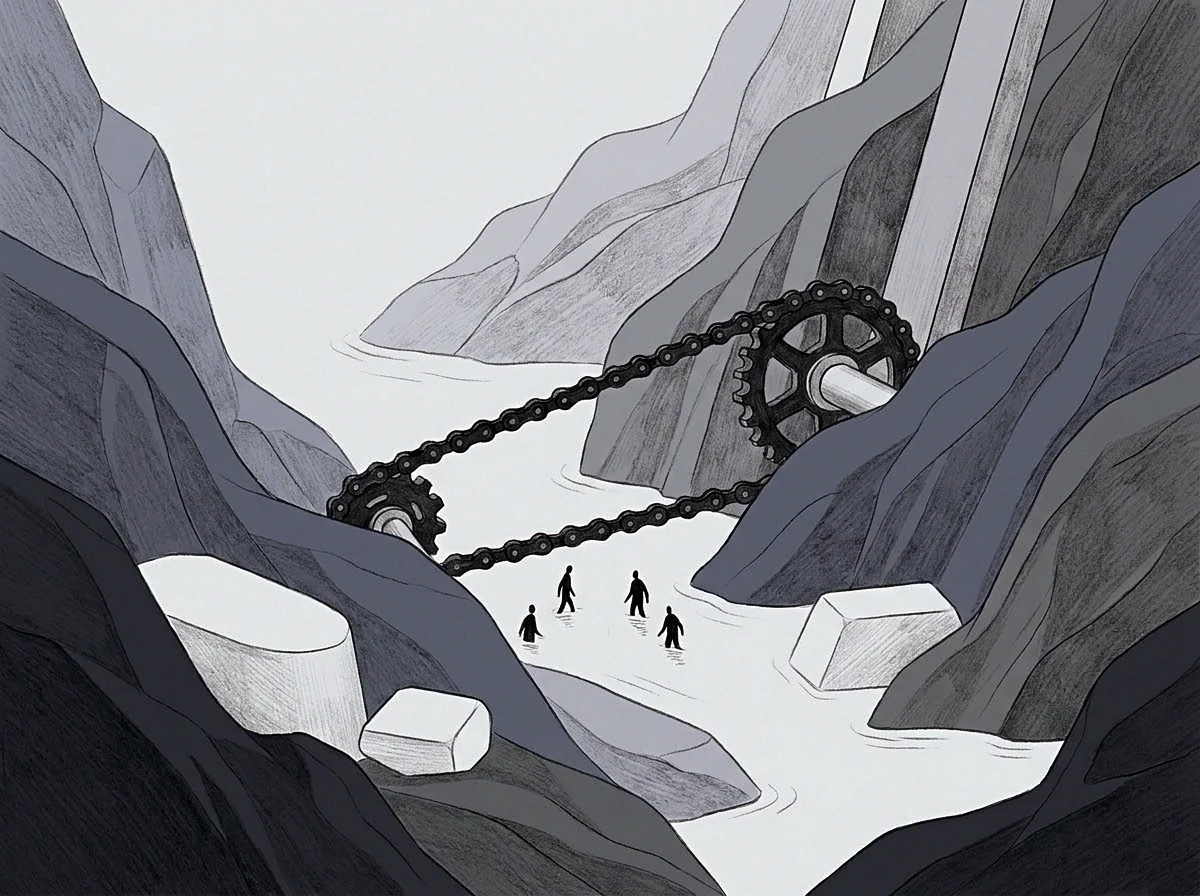
Limit
Mathematical Bounds On Critical Crack Growth
Linear elastic fracture mechanics establishes rigorous mathematical relationships governing structural rupture. The fundamental parameter remains stress intensity, denoted as K, which quantifies the local stress state near a crack tip as a function of nominal tensile stress and crack depth. When stress intensity matches the critical fracture toughness of the material, known as K-one-c, crack propagation transitions from sub-critical fatigue growth to dynamic cleavage running at the speed of sound in steel.
Fatigue crack progression before this critical transition obeys the Paris-Erdogan law. The rate of crack extension per operational cycle, written as d-a divided by d-N, scales with the cyclic change in stress intensity raised to an empirical power exponent, usually between two and four for industrial metals:
- Stress Intensity Delta governs the local mechanical driving force generated at the micro-crack tip during cyclic operational pressure swings.
- Paris Exponent reflects the material micro-structure sensitivity, determining how aggressively small increases in operational loading magnify crack advance rates.
- Critical Crack Dimension defines the threshold length at which spontaneous, unarrested brittle separation severs the remaining net load section.
In highly optimized industrial assets, operating stress levels run close to material yield points to maximize structural efficiency. Raising nominal cyclic stress by twenty percent does not simply accelerate crack progression by twenty percent. Because the stress range is raised to the power of three or four in the Paris relationship, the rate of crack extension per cycle doubles or triples.
The window of time between crack detection and catastrophic separation contracts from months to days.
Simultaneously, stripping physical material mass reduces critical crack dimensions. Thick pressure vessel walls tolerate internal flaws several centimeters long before the stress intensity exceeds critical fracture toughness. Slender, mass-optimized vessels possess smaller wall thicknesses, causing the critical crack length to shrink to fractions of a millimeter.
A defect of that size lies right near the resolution limit of standard non-destructive testing field equipment.
A vessel operated under these conditions exhibits no detectable flaw during annual ultrasonic inspections. Three months later, cyclic fatigue drives the sub-surface micro-fissure past its critical length, triggering catastrophic rupture at baseline operating pressure. The plant post-mortem attributes the failure to an unexpected metallurgical anomaly, avoiding the reality that aggressive structural optimization reduced the critical failure margin below the detection threshold of maintenance protocols.
When an operating permit mandates continuous acoustic emission logging alongside fracture mechanic limits, the operator must de-rate plant throughput to maintain mathematical containment margins or accept immediate asset retirement.