
Calculating Latent Organizational Capacity When Operational Management Suppresses Structural Auditing
Latent capacity is calculated by mapping passive system exhaust against reported output, exposing the volume of labor concealed behind defensive management buffers.

Screen
The operational layer maintains equilibrium by controlling information flow before senior leadership observes internal friction. Middle managers redirect inquiries regarding cycle times, staffing allocations, and software seat utility into curated summaries that present uniform stability. This deflection obscures whether a three-week delay stems from technical necessity or intentional buffer creation.
When formal reviews encounter resistance, direct examination stops and inference begins.
Line supervisors frequently treat administrative reviews as existential threats to departmental autonomy. They insulate their teams by filtering raw operational data, producing sanitized metrics that show steady throughput while concealing structural dependencies. The suppressed material accumulates behind these administrative barriers, creating an unmonitored reserve of time, budget, and labor.
Calculating this hidden capacity requires measuring the energy expended to deflect the inquiry rather than trusting the reported figures.
A team spending ten hours every week preparing status decks is buying immunity from structural examination.
Friction leaves a mark. The effort required to block an external auditor generates operational drag that shows up in secondary records. Calendar fragmentation, sudden shifts in project ticket ownership, and uncharacteristic delays in responding to procedural questionnaires provide quantitative markers of administrative deflection.
When managers refuse to grant direct visibility into team workflows, their protective posture exposes the approximate perimeter of the concealed slack.

Observable Artifacts of Audit Resistance
Managerial concealment relies on predictable procedural patterns that can be cataloged without direct access to production environments. Department heads deploy specific bureaucratic behaviors to neutralize outside inquiries:
- Calendar defensive padding blocks working schedules with recurring internal coordination meetings that produce no documentation, effectively removing available working hours from external audit visibility.
- Decentralized record maintenance scatters critical project documentation across private drives and unauthorized communication channels to prevent systematic tracking of execution velocity.
- Informal approval loops insert verbal signoffs between documented workflow phases, creating unrecorded dead time that inflates perceived task duration across every major delivery track.
- Metric substitution tactics replace raw throughput records with subjective satisfaction scores or blended health indicators designed to flatten variance and suppress inquiry.
These defensive patterns alter standard resource consumption. The discrepancy between official capacity and actual output grows proportionally to the administrative layer’s resistance. Measuring this discrepancy demands attention to the boundary where management stops sharing primary logs.
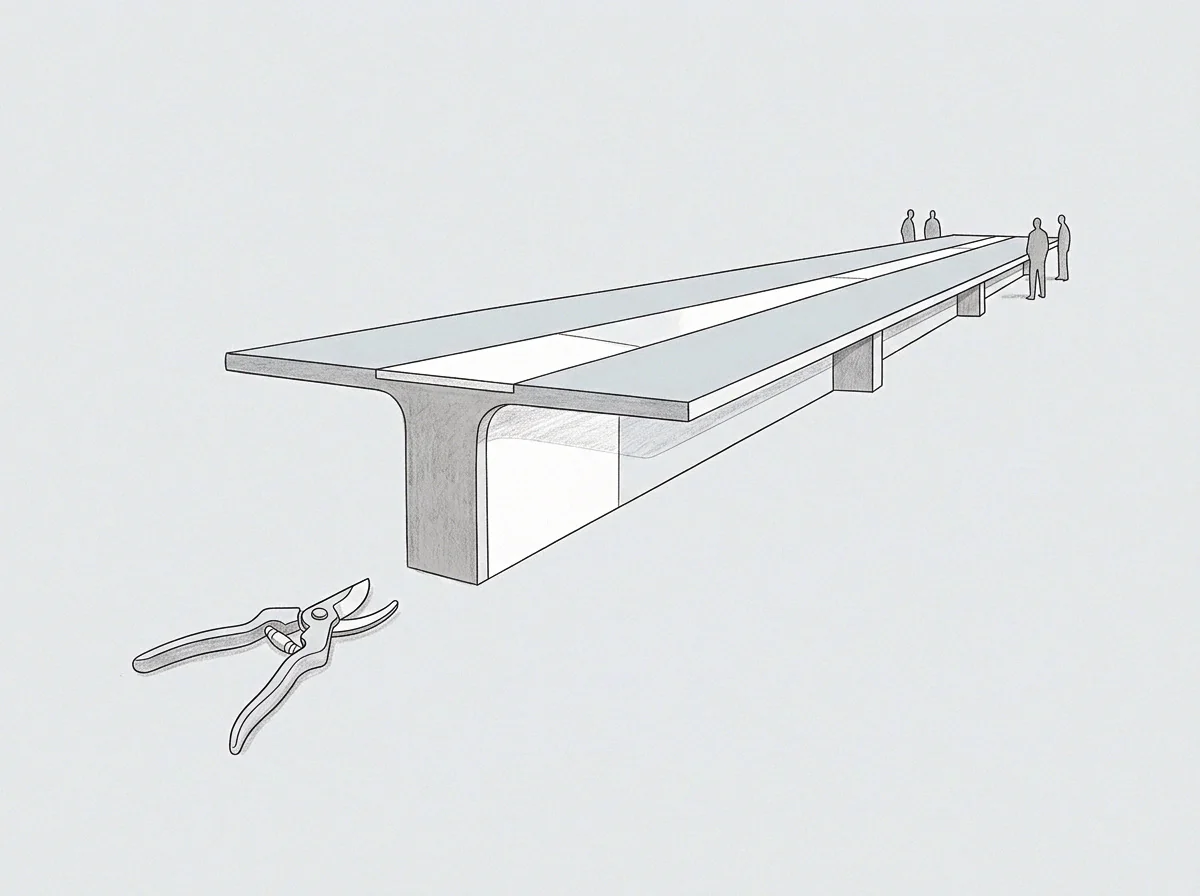
Signal Attenuation Across Operational Interfaces
Reporting chains degrade operational truth as updates move upward toward the executive suite. A task delayed by two days at the team level becomes a managed risk in the weekly review and an orderly timeline shift in the monthly steering report. This procedural dampening prevents executive leadership from identifying structural stagnation until delivery schedules suffer severe disruption.
The gap widens. Line managers exploit information asymmetry to protect their teams from headcount reductions or budget contractions. When structural audits are actively suppressed, the observer calculates capacity by tracking the decay rate of problem reports as they pass between operational tiers.
Everything runs on schedule when the board looks at summary slides.

Wall
Concealment constructs a barrier around team behaviors, defining what external analysts may inspect and what stays off limits. Department leaders justify this perimeter under the rationale of protecting team focus from bureaucratic disruption. The boundary marks the exact line where operational management shifts from reporting results to defending territory.
The barrier functions as an administrative constraint. Within this protected space, task estimation doubles and delivery pace drops to match historical averages rather than technical capacity. By refusing to permit standard time-and-motion studies, operating units establish a local monopoly over throughput norms.
Concealment flourishes wherever task duration estimates remain untethered from direct mechanical verification.
The wall stops inspection. Yet the perimeter itself reveals the scale of the enclosed reserves. A division defending its workflow with exceptional hostility indicates the presence of substantial operational slack, whereas an overburdened unit invites external analysis to substantiate requests for relief.
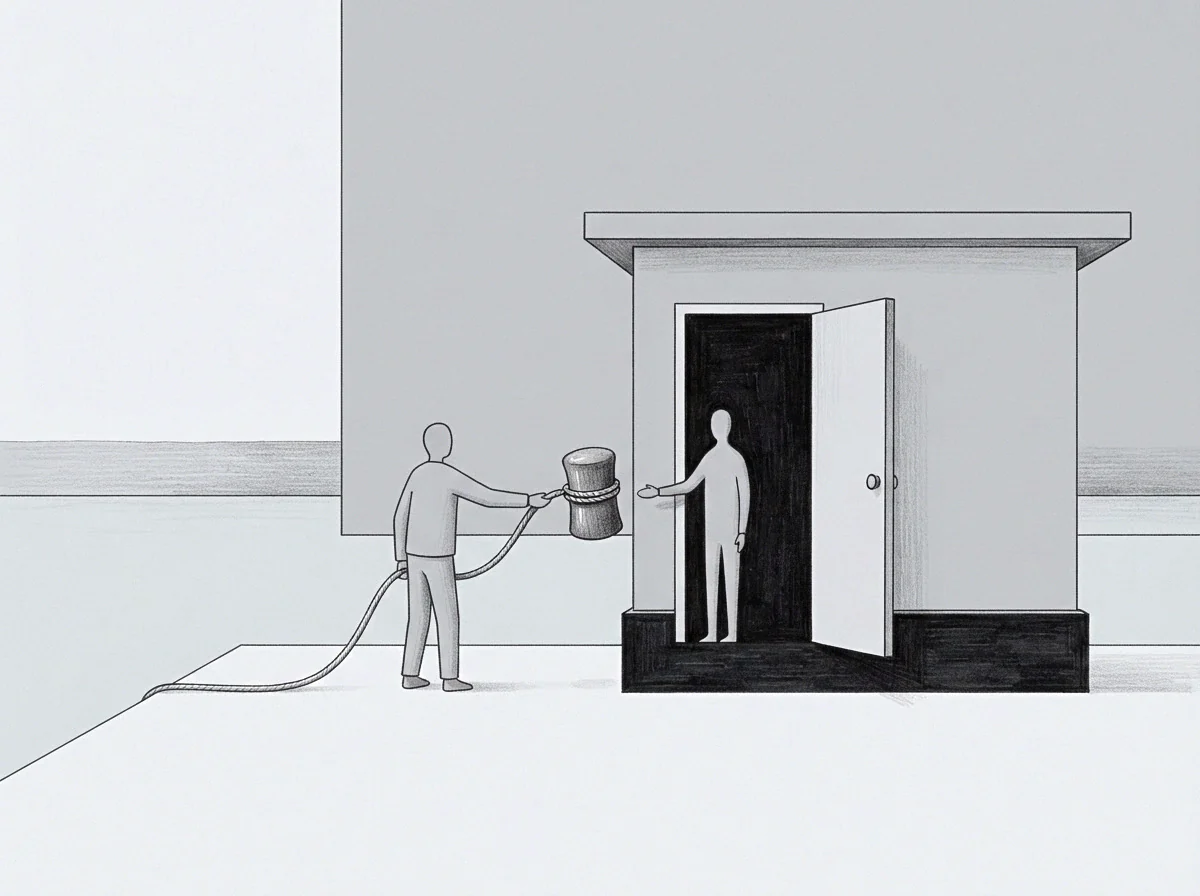
Boundary Inversion in Process Enclosures
Defensive barriers create an inverse relationship between reported difficulty and actual labor expenditure. Tasks reported as highly technical often contain extensive periods of waiting, during which staff members remain idle or execute routine maintenance beneath official monitoring thresholds. By excluding auditors, managers prevent anyone from calculating the true baseline cost of delivery.
- Establish baseline operational commitments using external engineering benchmarks rather than internally supplied estimates.
- Map every informal escalation channel that bypasses documented ticket ticketing systems.
- Isolate undocumented task handoffs between operational teams that consume calendar time without producing versioned artifacts.
- Cross-reference reported project duration against raw infrastructure utilization timestamps.
These operational enclosures trap labor that could otherwise execute organizational expansion. The trapped capacity represents an arbitrage asset for leadership, provided the calculation relies on empirical boundaries rather than managerial testimony.

Can Operational Slack Reveal Structural Concealment?
Sudden bursts of rapid execution during executive emergencies expose the artificial nature of standard operational baselines. When a client crisis strikes, a deliverable typically estimated at three weeks suddenly completes in forty-eight hours. This dramatic velocity acceleration proves that ordinary cycle times reflect managerial buffering rather than physical delivery limits.
Labor stays stationary. The persistence of emergency acceleration without immediate systemic breakdown demonstrates that operational reserves exist continuously beneath the protective managerial shield.
A unit that defends its calendar with fierce bureaucracy always possesses time it refuses to surrender.

Telemetry
Direct inspection failures require the deployment of indirect telemetry to reconstruct operational realities. Rather than attempting to force compliance through adversarial audits, an observer records passive exhaust data generated by ordinary corporate tooling. Cloud infrastructure logs, commit histories, authentication timestamps, and vendor expense records provide unalterable evidence of organizational movement.
These passive data trails circumvent managerial suppression entirely. An operational director can refuse to fill out a capacity questionnaire, but they cannot prevent identity provider systems from recording when their staff authenticate into corporate networks. Comparing active system utilization against reported task hours exposes the baseline volume of unspent capacity.
A persistent divergence between hardware utilization peaks and team timesheet submissions defines the lower bound of unacknowledged slack.
The discrepancy persists. By treating operational software as an array of distributed sensors, the executive bypasses the human filter and accesses physical realities.

Reconstructing Throughput from Peripheral Footprints
Digital exhaust provides precise coordinates for organizational calculation. Code commits, ticketing transitions, document edit histories, and communication volume follow distinct diurnal curves that correlate with real work. When operational management claims an engineering division operates at maximum bandwidth, yet repository pull requests decline thirty percent over two quarters, the claim disintegrates.
Administrative interference cannot clean every trace. Peripheral systems expose the hidden latency inside multi-step approvals. Measuring the timestamp delta between a request submission and its ultimate authorization reveals how much calendar time evaporates in managerial queues.

Comparative Observational Proxies
Validating latent throughput requires balancing multiple indirect data streams against reported managerial metrics. The following comparative matrix outlines how specific proxy vectors uncover operational capacity suppressed by line management:
| Telemetry Vector | Operational Data Source | Concealment Vulnerability | Capacity Indicator |
|---|---|---|---|
| System Access Duration | Single sign-on access logs and active sessions | Vulnerable to scripted background connections | Ratio of active session engagement to reported payroll hours |
| Artifact Modification Footprints | Version control, document edit timestamps, issue state shifts | Vulnerable to artificial batch updates before reporting periods | Mean interval between initial ticket checkout and final artifact check-in |
| Inter-Departmental Request Latency | Cross-functional communication tickets and shared service queues | Vulnerable to informal offline negotiations | Downtime spent waiting for internal managerial review gates |
| External Vendor Utilization | Third-party application activity and API consumption records | Vulnerable to pooled team accounts masking individual idle time | Variance between software license provisioning and actual query frequency |
The matrix demonstrates that while individual metrics can be manipulated, maintaining consistency across all peripheral vectors imposes an unsustainable administrative burden on concealing managers. The mathematical intersection of these indirect proxies establishes the factual baseline of team throughput.
The term stated in software licensing agreements regarding seat concurrent access exposes actual application demand regardless of managerial headcount defenses.

Volume
The calculation of latent organizational capacity produces a volumetric measurement of unspent labor and delayed output. By charting the negative gradient of operational velocity under normal conditions against the positive surge observed during operational crises, an analyst calculates the dormant reserve. This difference represents capacity deliberately suppressed to protect department stability.
This trapped labor is not nonexistent; it is merely directed toward self-preservation and buffer maintenance. Teams consume immense mental energy concealing their availability, calculating safe completion margins, and pacing deliverables to avoid raising future output expectations. Redirecting this momentum toward organizational goals requires recognizing its magnitude as an unspent asset.
Calculated capacity remains purely theoretical until leadership removes the institutional penalties associated with finishing assignments ahead of schedule.
Surplus hides in routine. Department managers maintain reserves as insurance against unexpected executive demands, creating a cycle of mutual distrust between leadership layers.

The Mirrored Vector Above Suppressed Baselines
Calculating the true capacity curve requires mirroring the suppression gradient across the horizontal axis of standard performance. If a department artificially constrains its velocity by forty percent to create an operational safety buffer, the removal of systemic friction yields an equivalent forty percent increase above historic baselines.
The calculation requires discipline. Analysts must discount reported historical milestones and substitute objective throughput ceilings observed in peer organizations possessing transparent structural governance.

Structural Hoarding and Unspent Labor
Resource hoarding manifests as chronic over-staffing paired with defensive task specialization. When managers prevent structural audits, they carve work into narrow, interdependent fiefdoms that require continuous cross-coordination. This manufactured complexity consumes thirty to fifty percent of all available working hours in frictional overhead.
The founder frequently mistakes this high-friction activity for productive effort. Personnel remain busy attending synchronization meetings, updating status trackers, and negotiating task handoffs. Yet the net yield of marketable product remains stagnant, proving that internal activity has decoupled from organizational throughput.
Persisting with unverified managerial capacity estimates guarantees that expanding businesses will over-hire by thirty percent while their underlying delivery velocity continues to decelerate.
Reckoning
Unlocking suppressed organizational reserves demands changes to structural incentives rather than disciplinary confrontation. Managers suppress auditing because corporate systems penalize transparency. When a department reveals excess capacity, leadership routinely responds by slashing its budget or loading it with unresolved technical debt from failing divisions.
The perimeter tightens. Changing this dynamic requires restructuring reward mechanisms so that operational units benefit directly from exposing and surrendering their administrative buffers. When efficiency leads to autonomy and resources rather than punitive downsizings, managerial resistance dissipates.
Silence carries weight. Reclaiming latent capacity is fundamentally an exercise in structural redesign. Leadership establishes clear output baselines derived from empirical telemetry, decouples advancement from team headcount, and eliminates the protective barriers that divide functional departments into isolated territories.

Extracting Locked Throughput Without Formal Consent
Executives can liberate trapped bandwidth without waiting for middle management to approve structural audits. By establishing cross-functional delivery pods that pull tasks directly from centralized queues, leadership bypasses departmental gatekeepers. This direct pull mechanism drains work from over-buffered departments, forcing hidden slack into open view.
Pressure changes coordinates. As tasks flow around administrative bottlenecks, the managers who previously suppressed auditing find themselves defending empty calendars. The artificial justification for excessive staffing collapses under the weight of empirical delivery realities.
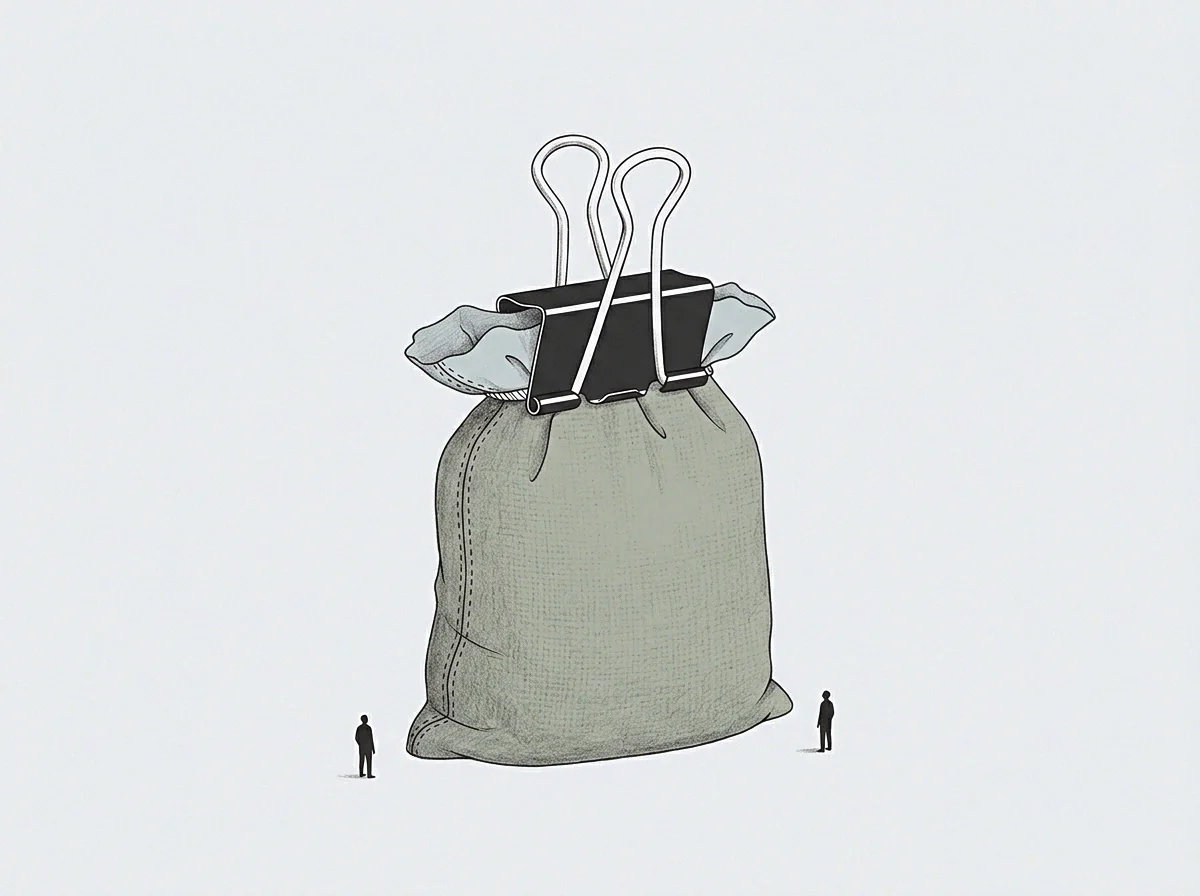
Realignment at the System Edge
Modern organizations achieve sustainable scaling by making operational data visible at all times. Passive telemetry integration, transparent queue monitoring, and objective velocity benchmarks replace the subjective status reports that facilitate structural concealment. The enterprise transitions from managerial negotiation to empirical throughput measurement.
The ledger remains silent. Once operational capacity is accurately computed from external exhaust trails, leadership reclaims command over organizational velocity. The latent volume transforms into measurable expansion, positioning the firm to execute its mandate without structural impediment.
Whether leadership possesses the political resolve to dissolve the comfortable managerial buffers that sustain corporate peace remains an open question.