
Calculating Structural Avoidance Gradients to Recover Latent Organizational Capacity
Structural avoidance gradients identify where organizational work deflects around friction nodes, revealing latent capacity by mirroring deflection vectors above operational baselines.
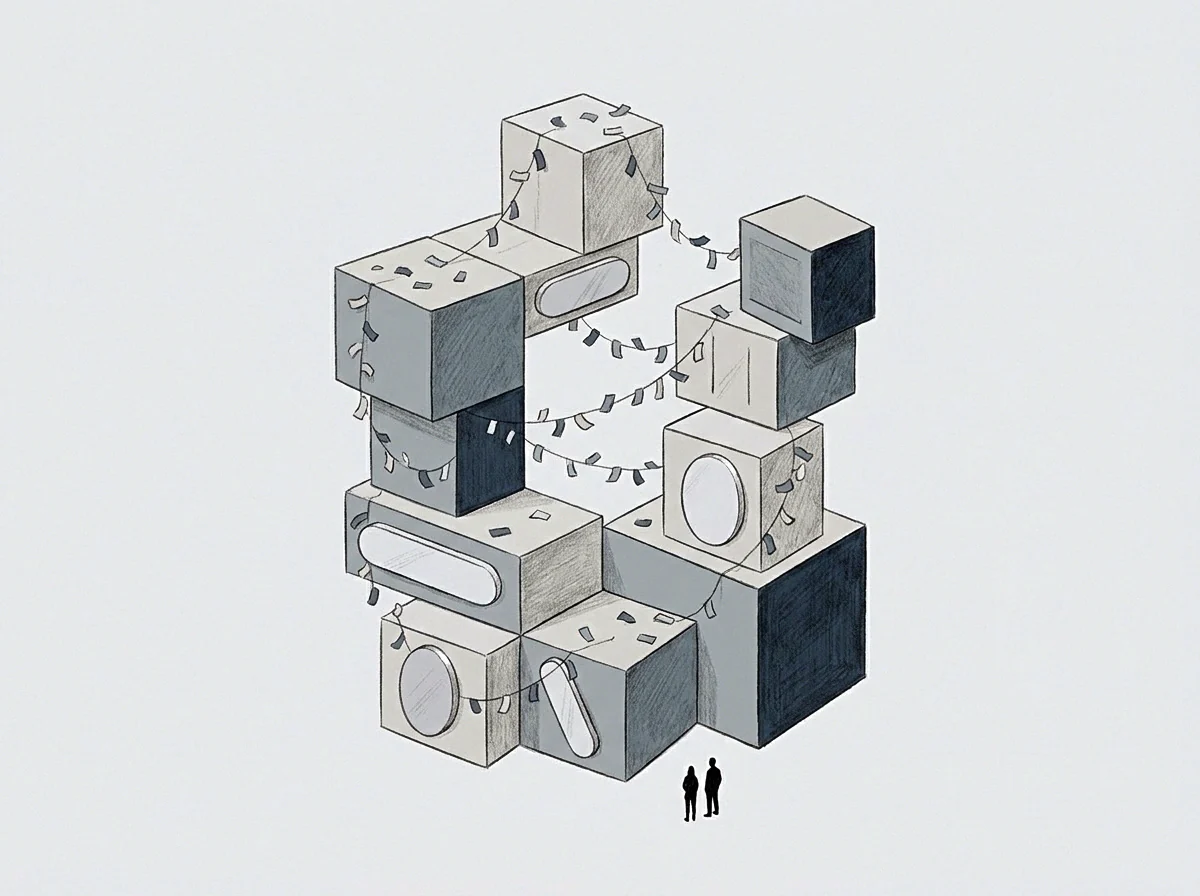
Axis
Operational failure and structural avoidance present identical outward symptoms while operating on opposite underlying mechanics. An operational failure occurs when a system lacks the technical, financial, or human capacity to execute a designated task. Structural avoidance occurs when an organization possesses redundant capacity yet systematically routes work around a specific node, function, or decision point.
The difference between these states lives on the value axis, where organizational effort follows a measurable slope toward immediate friction reduction.
Every formal process creates an expected trajectory for work. When the effort required to pass work through an assigned station exceeds the effort required to invent an informal workaround, the system bends. This deflection forms a measurable gradient.
Calculating the gradient requires mapping the path prescribed by governance against the physical path work travels across desks, chat threads, and informal approvals. The spatial divergence between planned throughput and actual movement identifies the precise location of organizational friction.
The measurement of systemic deflection under fixed operational parameters defines the structural gradient without requiring psychological assumptions about the actors.
Descent along this slope represents the path of least resistance. Organizations frequently mistake this descent for employee disengagement or administrative inefficiency. The descent is actually a rational structural adaptation to localized costs.
When an approval process requires six days and four sign-offs, teams routinely bypass the formal desk to secure informal alignment elsewhere. The workaround resolves the immediate task while leaving the formal node isolated, accumulating unprocessed governance obligations in the background.
The gradient carries no inherent moral assessment. It is a derived geometric measure of how an organization deflects energy when faced with localized friction. By treating the deflection as a spatial coordinate rather than a behavioral defect, leadership isolates the operational baseline from personal performance judgments.
The structural slope always directs work toward the point of lowest immediate friction regardless of administrative design.
Desk
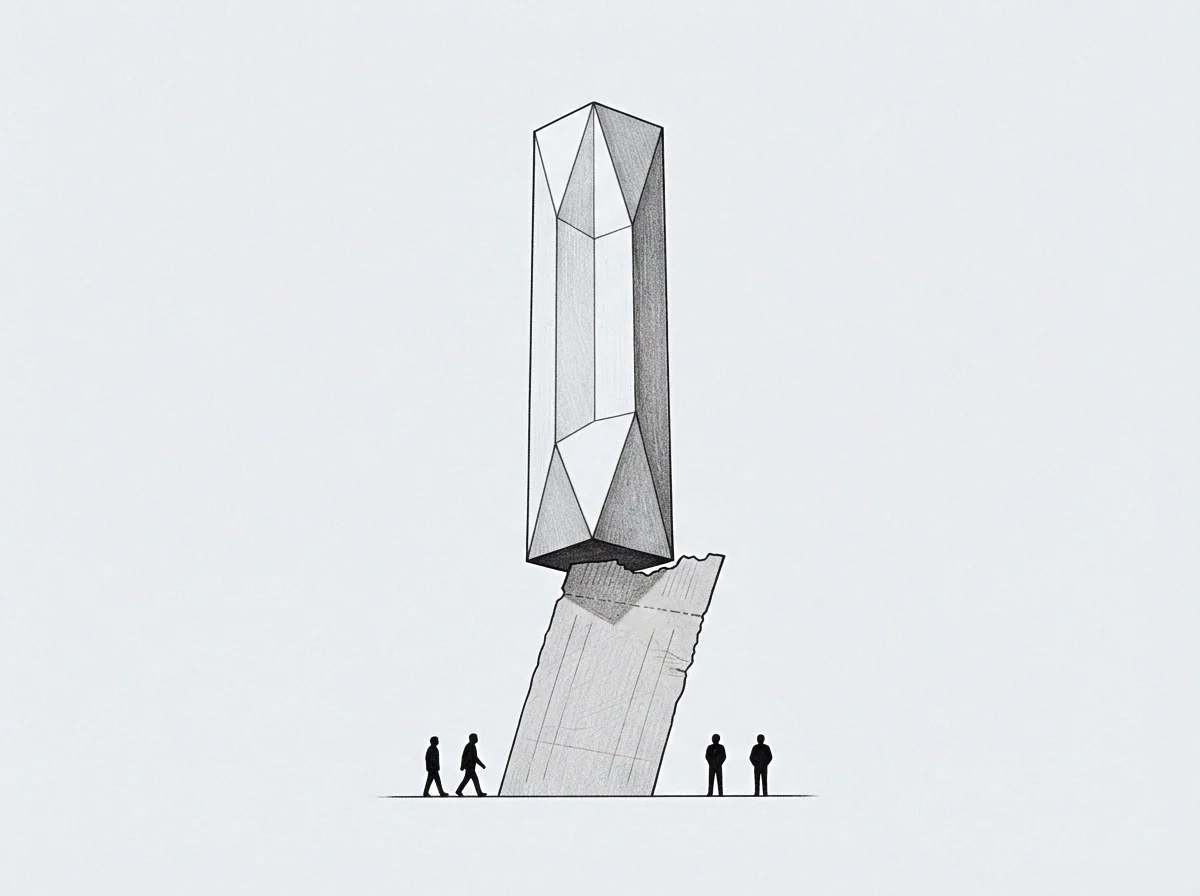
The physical or digital desk functions as the primary coordinate marker for structural avoidance. Work items aggregate at specific points in a network when the perceived cost of processing exceeds the cost of deferral. A project file sitting unexamined for three weeks, an unanswered approval request buried in a queue, or a mandatory audit step repeatedly postponed all mark the boundary of an unprocessed structural requirement.
Consider an enterprise software deployment where technical specifications pass cleanly through engineering but stop completely at the security review stage. The security review seat is fully staffed, yet files accumulate on that desk until escalation forces a manual override. The delay is rarely a function of individual capacity.
It indicates a structural mismatch between the risk threshold assigned to that seat and the velocity expected by the surrounding system.
- Accumulation Latency measures the duration an artifact remains static at a specific operational node before triggering an informal routing bypass.
- Bypass Frequency records the ratio of informal workarounds to formal process completions across a fixed operational window.
- Compensation Cost calculates the additional internal labor hours spent negotiating informal alignments outside the recorded system of record.
When tasks hit a high-friction node, work does not simply stop. It flows laterally. Teams schedule informal alignment meetings, generate redundant documentation, and seek preliminary pre-approvals to insulate themselves against expected friction at the primary node.
The energy spent creating these lateral pathways represents unspent latent capacity that has been diverted into defensive maneuvering.
Work systematically deflects away from nodes where accountability is concentrated without corresponding decision authority.
Tracking the volume of lateral movement reveals the hidden geometry of the organization. The baseline capacity of a team remains obscured as long as half its operational energy is consumed by navigating around internal blockages. Reclaiming that capacity requires mapping the precise points where work stalls on physical and digital desks.
The decision sat on that desk for three weeks because every option required an escalation no one was authorized to sign.

Lattice
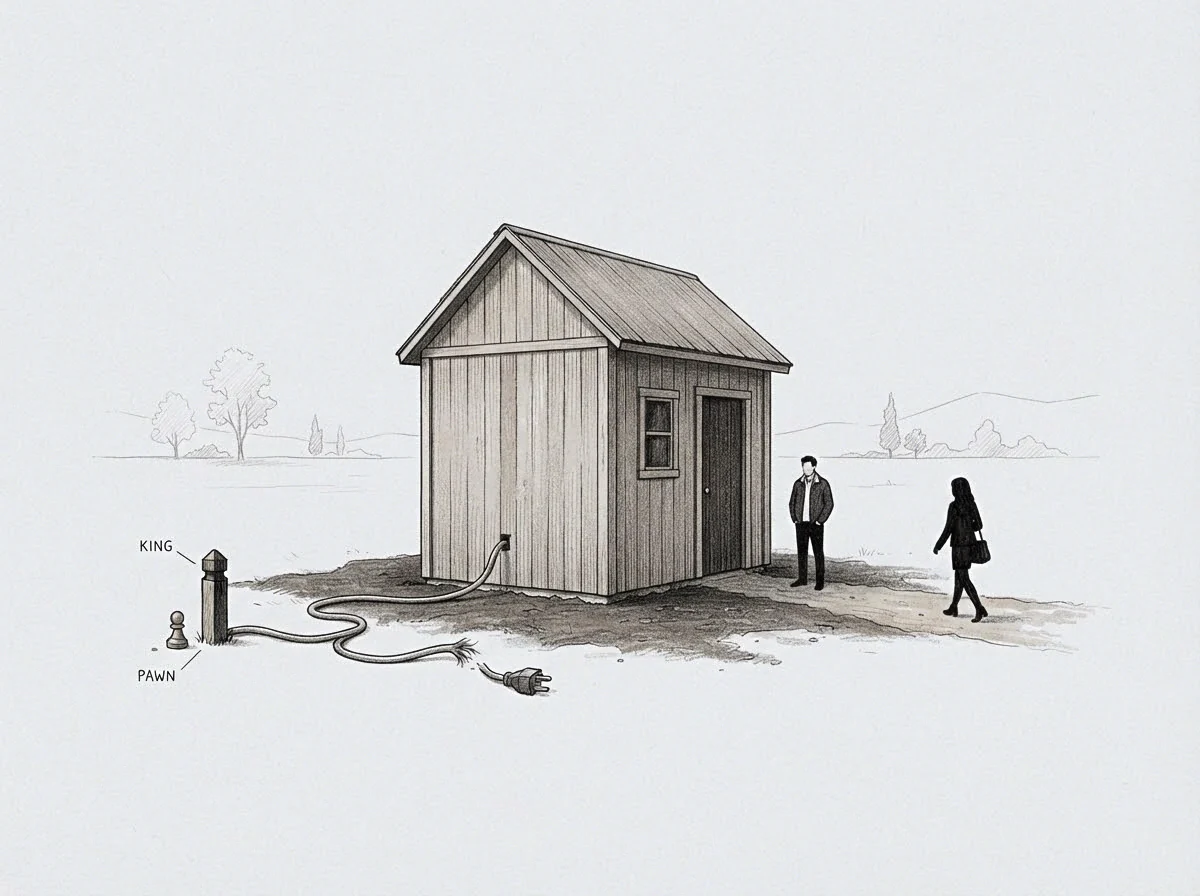
An organization operates as a complex lattice of decision nodes and resource channels. Mapping structural avoidance across this lattice requires identifying local minima, points where work settles because moving it in any direction requires an immediate expenditure of energy that the actor cannot justify. Calculating the gradient across the lattice provides a clear blueprint of latent organizational potential.
How Does Avoidance Reveal Latent Structural Capacity?
Latent potential is the mathematical mirror of the negative avoidance gradient, mapped above the operational baseline. Where a system demonstrates high avoidance, it reveals an equal and opposite volume of unspent capacity locked in defensive adaptation. Mirroring the negative gradient translates structural friction directly into recoverable capacity metrics.
| Structural Parameter | Linear Governance Model | Distributed Latent Model |
|---|---|---|
| Primary Avoidance Signal | Queue accumulation at central approval nodes | Lateral proliferation of committee reviews |
| Friction Gradient Measurement | Days elapsed per formal sign-off step | Hours spent in unofficial pre-alignment meetings |
| Latent Capacity Location | Locked in senior leadership review queues | Dispersed across mid-level mitigation tasks |
| Systemic Cost Profile | High cardinal delay, low ordinal variance | High ordinal labor waste, variable lead times |
When an organization measures friction solely through financial accounting, it captures cardinal prices while missing ordinal costs. A process may cost very little in direct expenditure while consuming immense energy in political negotiation and risk mitigation. The lattice model evaluates ordinal vectors, placing tasks in order of their structural resistance rather than their budget line items.
Systemic capacity increases when structural boundaries are adjusted to match actual execution pathways rather than forced compliance routes.
In a standard engineering organization, senior architects often become structural bottlenecks for code reviews. Teams adapt by breaking pull requests into tiny fragments or delaying submission until release deadlines force emergency approvals. The formal queue shows high utilization, but the underlying system suffers from massive latent delay.
Restructuring the lattice involves shifting validation criteria to automated pipelines or peer nodes, flattening the gradient and releasing latent capacity back into active development.
When the authorization threshold exceeds three functional layers, the gradient forces lateral delegation regardless of formal policy.
Calculus
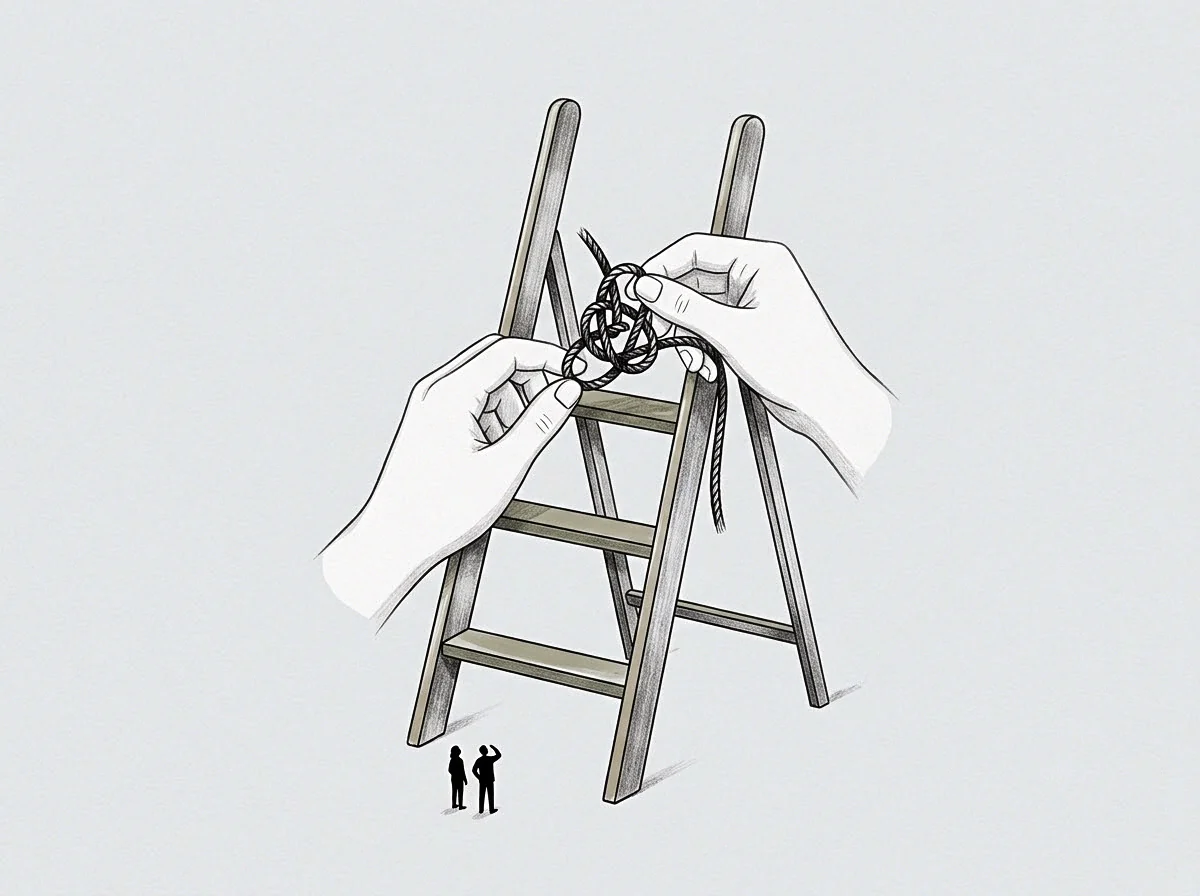
Deriving actionable avoidance gradients requires a step-by-step mathematical translation of operational delay into structural coordinates. The calculation shifts focus from individual productivity metrics to system-level flow dynamics.
- Define the baseline trajectory by recording the standard path, target duration, and resource allocation prescribed for a given operational output.
- Measure actual transit vectors by logging real-time movement, node dwell times, and informal routing interventions across a representative sample size of tasks.
- Compute the deflection angle between the prescribed path and the actual path to establish the direction of the avoidance vector.
- Calculate the magnitude of localized friction by multiplying queue duration by the fully loaded hourly cost of the waiting assets.
- Mirror the calculated negative vector above the operational baseline to establish the precise quantity of recoverable latent capacity.
A failure in gradient calculation occurs when management treats the deflection vector as an indicator of poor discipline. Imposing stricter compliance penalties on a high-friction node increases the steepness of the gradient. Staff invest greater effort in hiding workarounds or fabricating compliance artifacts, which further inflates the invisible operational tax.
Correct calculation uses the magnitude of avoidance to locate the exact structural constraint. If a legal compliance check deflects ninety percent of standard contract drafts into informal pre-reviews, the legal check is the structural constraint. The resolution involves redefining the decision boundary at that node rather than demanding faster manual reviews.
Miscalculating the slope leads directly to over-provisioning headcount in low-friction zones while leaving the primary bottleneck untouched.

Margin
Every operational system eventually encounters the wall, the absolute structural boundary of its current operating model. The wall consists of the activities the system refuses to perform because the computational or administrative cost exceeds its total available energy. Pushing against this boundary without changing the underlying architecture generates exponentially increasing friction for diminishing returns.
Discomfort at the structural margin acts as a precise analytical instrument. It marks the exact location where computation shifts from retrieval of established habits to active structural re-engineering. When an organization experiences severe friction at a specific operational margin, it has reached the limit of its current governance assumptions.
The structural boundary defines what an organization cannot execute under its current friction regime regardless of resource allocation.
Recovering latent organizational capacity requires altering the baseline constraints rather than demanding greater personal effort from individuals sitting in high-friction seats. Redesigning the boundary involves eliminating obsolete approval gates, decentralizing decision rights, and aligning structural authority directly with operational execution points. When the structural gradient flattens, work flows naturally along the intended path without requiring continuous management intervention.
The structural calculation leaves open whether an organization can deliberately maintain a non-zero avoidance gradient to preserve emergency capacity during operational surges.