
Deriving True Latent Capacity By Mirroring Negative Corporate Gradients
Mirroring negative corporate gradients derives latent capacity by converting measured avoidance overhead into an equal and opposite vector of unspent execution.

Drift
Corporate operations run downhill along paths of minimal energy expenditure. When an operational group encounters an escalating coordination friction, communication contracts into shorter loops, administrative tasks multiply to absorb ambiguity, and teams bypass contested decisions. This downhill path produces an observable trajectory on an axis of business value.
The resulting decline defines a negative corporate gradient: a measurable rate at which execution volume decays per unit of friction encountered. The slope carries no moral failure. It tracks where energy departed because structural obstacles made progress expensive.
An operator observes this descent inside weekly project handoffs. Documentation expands while actual delivery slows. The team meets daily to discuss dependencies yet refuses to renegotiate the broken interface between engineering and client intake.
Work reroutes around the friction. The diversion demands extra labor, requiring three coordinators to reconcile mismatched formats every Thursday afternoon. The diversion keeps things moving temporarily.
The underlying friction remains untouched.
The system settles into a local valley. Energy pools where resistance is lowest, generating bureaucratic routines that protect participants from direct confrontation with unaligned incentives. Every workaround marks an intentional deflection away from a structural wall.
Measuring the angle of that deflection exposes the exact magnitude of the tension the organization seeks to avoid.
A negative operational gradient reveals where energy drains along lines of unaddressed friction.
Calculating this descent establishes an empirical baseline. When three senior engineers spend fifteen weekly hours verifying manually exported data, that recurring expenditure registers a distinct operational vector. The vector points away from cross-system data integration.
The energy sinks into repetitive verification. That expenditure defines the slope.
When an operating group systematically misinterprets this vector as simple human fatigue, leadership adds administrative headcount to manage the symptoms. The structural friction compounds quietly until the delivery timeline breaks entirely.
Room

Spatial Allocation of Friction
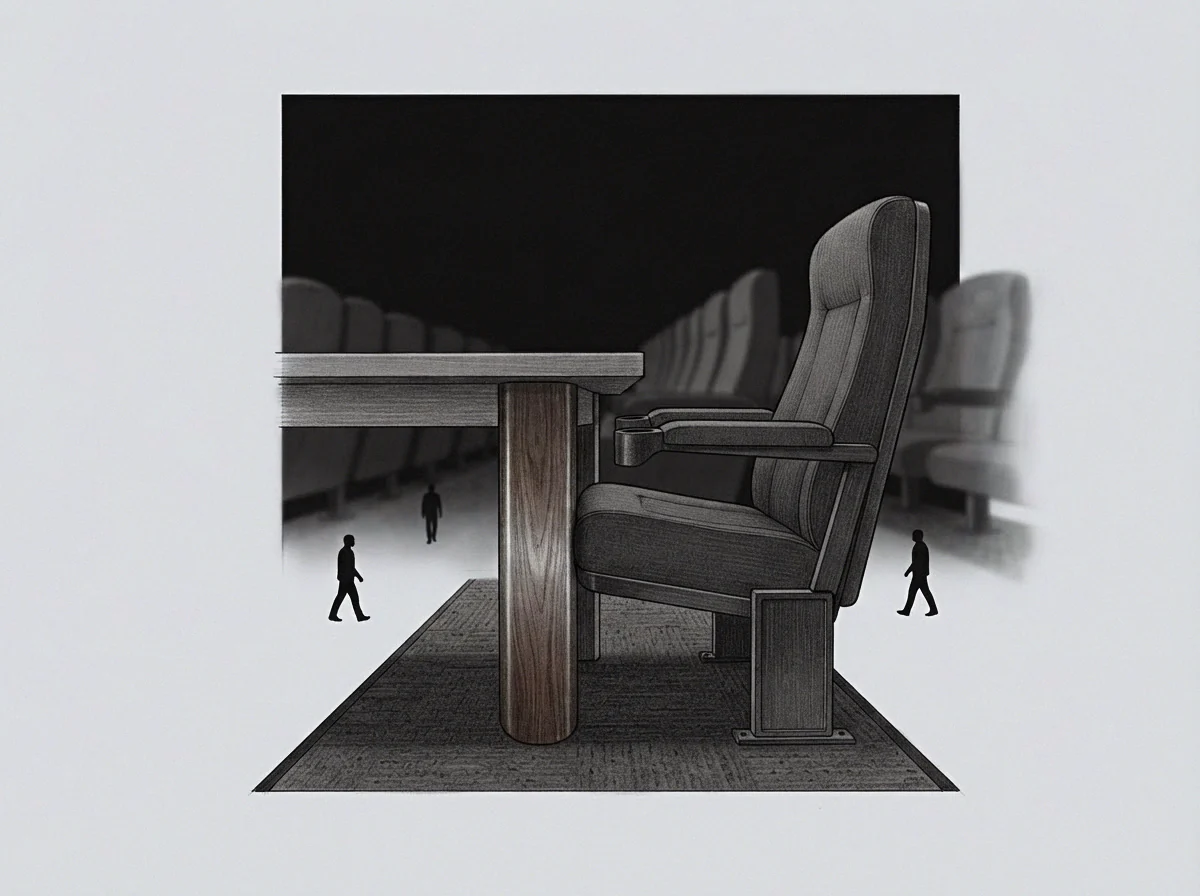
Physical environments reflect coordination strain with mathematical regularity. When two executive divisions develop competing definitions of delivery, their physical proximity contracts. Senior partners gather in private conference enclosures with closed blinds, scheduling bilateral alignments before entering the general operational floor.
Closed spaces multiply in direct proportion to unaddressed operational conflict.
Consider an operating firm of eighty employees occupying a single floor. Assume the product group and the sales group dispute whether custom enterprise features take priority over core reliability. The sales leads hold private meetings every morning in the perimeter boardroom.
The product leads cluster at the far corner benches. Floor space divides into defended territories. The square footage between them stands empty for long stretches of the afternoon.
People route physical movement through alternate hallways to avoid accidental collisions.
The empty hallway represents an avoidance corridor. Walking an extra forty paces to fetch coffee without passing a collaborator indicates a steep negative gradient. The avoidance consumes time and attention.
That spatial deflection carries a real operational cost. It protects the individual from having to negotiate an unresolved boundary in the open.
A team alters physical walking paths before it consciously registers an organizational division.
Tracking these physical contours yields a map of organizational resistance. The conference room board preserves unwashed diagrams from three weeks ago because wiping them requires acknowledging that the proposed integration died in committee. Two department heads sit six feet apart during quarterly reviews, addressing comments strictly through the presiding chief officer.
The structural tension occupies the physical air between their chairs.
We see the alignment slides, but nobody will sit together to verify the interface contracts.
Mirror
Inversion of Avoidance Vectors
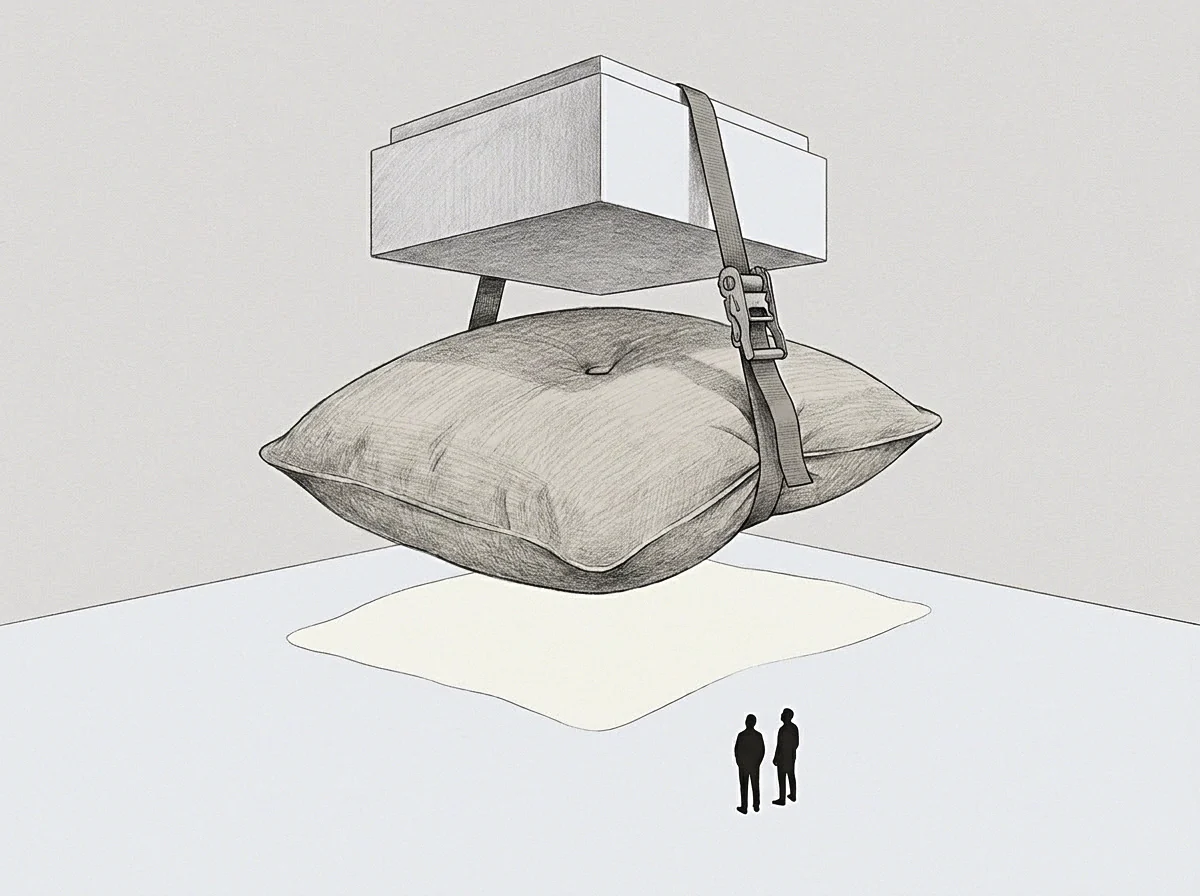
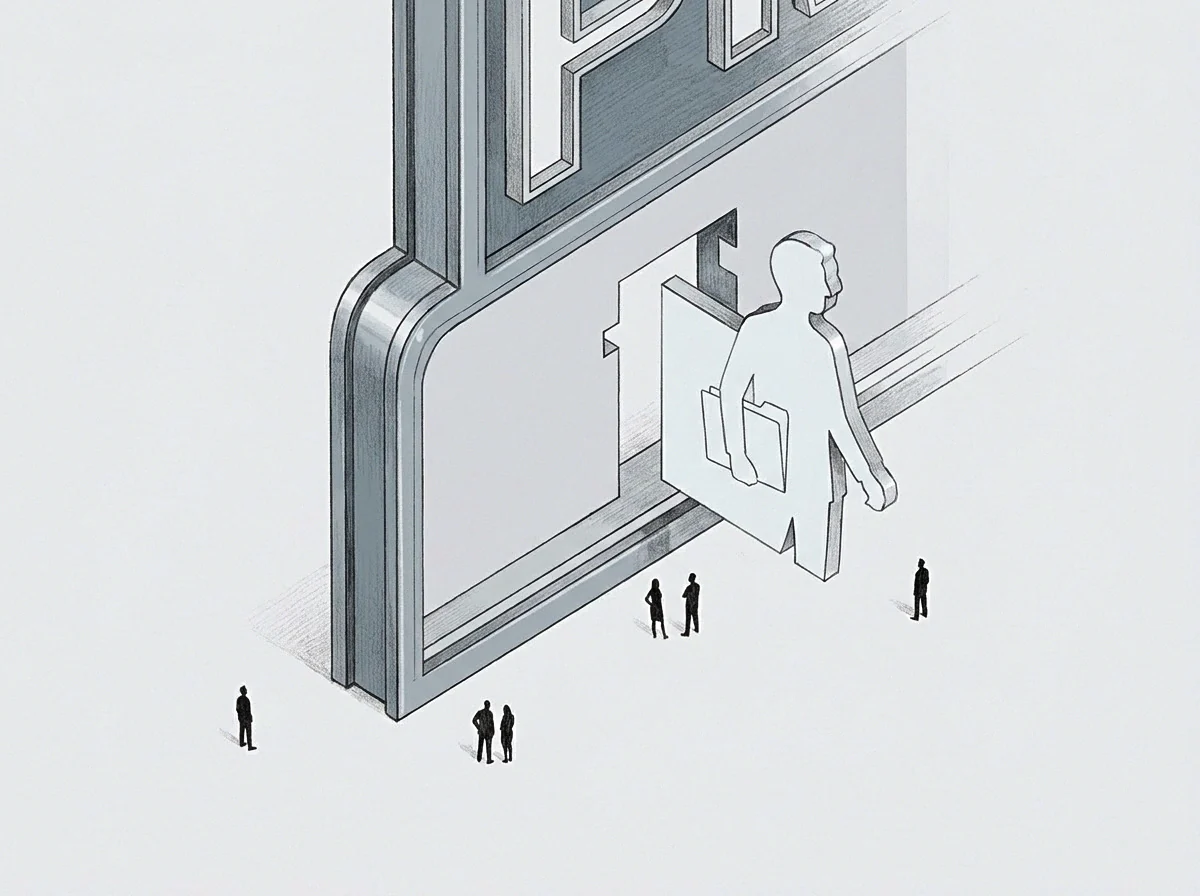
Deriving latent operational capacity proceeds by mathematical reflection. If a team descends along a slope of negative resistance, the exact inverted vector defines the ascent path toward dormant capability. The system expends twenty units of operational energy routing around an unresolved contract.
Mirroring that magnitude across the baseline reveals twenty units of unspent productive capacity held hostage by the avoidance pattern.
The descent vector and the latent capacity vector share identical magnitudes. They differ only in sign. Latent capacity is unspent volume rather than an imagined theoretical ceiling.
The enterprise already pays the operational cost in compensatory overhead, coordination friction, and manual reconciliation. Mirroring the vector reallocates that same volume from defensive rerouting to direct structural remediation.
The conversion requires identifying the precise coordinate where the system diverted. An operator isolates the diversion point, reads the angle of retreat, and projects an equal vector along the original axis of intention. The procedure is mechanical.
It strips emotional narrative from operational review.
Does Unspent Capacity Equal Avoidance Volume?
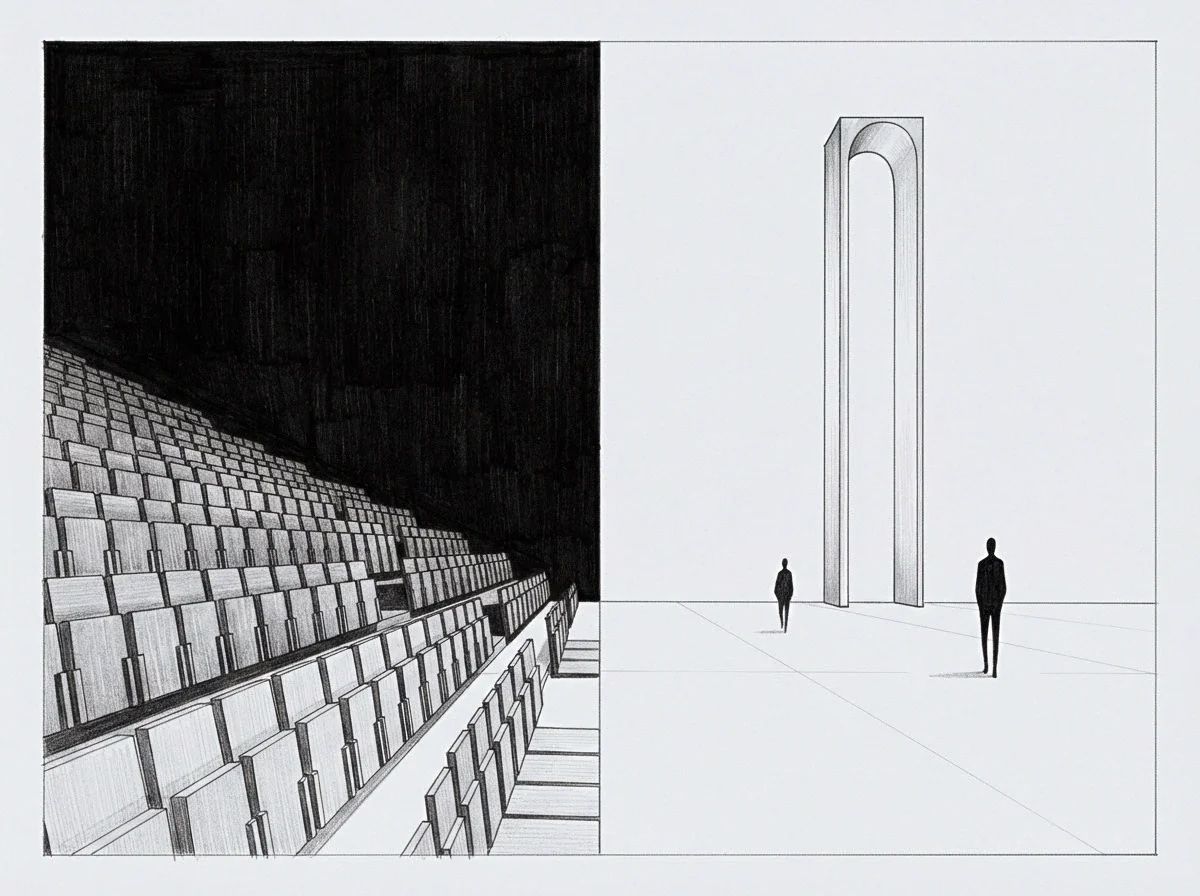
Measuring avoidance volume provides a bounded estimate rather than an exact cardinal figure. The field of organizational analysis disputes whether all diverted energy converts directly into productive output upon structural remediation. The dispute rests on two distinct positions:
- Conservative dissipation holds that a fraction of redirected energy leaks into structural inertia and personal friction during transition, leaving only sixty percent of the original volume recoverable for productive execution.
- Direct conversion assumes that rerouted energy functions like hydraulic pressure in an enclosed pipe, transferring completely to primary tasks once the blockage clears.
- Compensatory expansion demonstrates that removing the blockage releases secondary latent energy previously suppressed by demoralization, yielding operational output that exceeds the measured avoidance volume.
A prudent operator treats the avoidance volume as an upper limit for planning. Testing the conversion on small sub-assemblies bounds the actual recovery rate before restructuring major operating divisions.
Latent capacity mirrors the energy spent sustaining an operational diversion.
The remediation proceeds through a stated condition: when the operational agreement explicitly reallocates authority over interface schemas to a single lead, the fifteen weekly hours of manual export verification cease immediately.
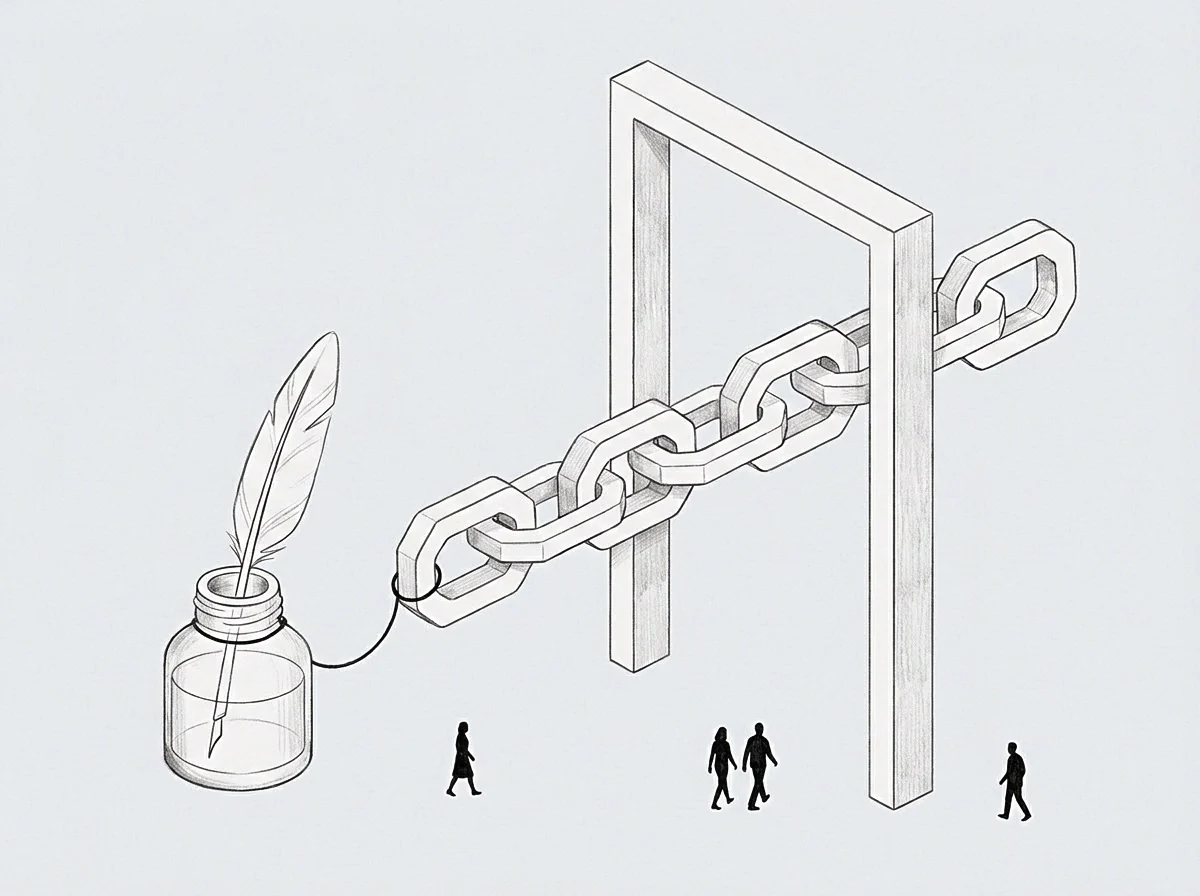
Load
Comparative Capacity Dynamics
Operational groups under sustained strain exhibit measurable divergence between observed output and theoretical limits. Examining paired teams operating under identical market pressures reveals how negative gradients depress observed capacity while inflating coordination overhead.
| Operational Function | Downhill Descent Route | Coordination Friction Cost | Mirrored Ascent Trajectory | Recoverable Latent Volume |
|---|---|---|---|---|
| Client Integration | Custom script patches per client | 18 weekly hours across senior staff | Unified ingestion protocol | Full automation of client onboarding |
| Release Management | Bilateral Slack approvals | 4 days idle release cycle latency | Automated testing gate checks | Twice-weekly continuous deployment |
| Resource Allocation | Shadow headcount borrowing | Unaccounted administrative friction | Transparent capacity reservation | Direct labor cost attribution |
| Product Direction | Feature bloat for vocal clients | Divergent code branches | Standardized module interfaces | Reclaimed engineering focus |
The table contrasts structural diversion against direct vector mirroring. The downhill path absorbs substantial staff capacity in coordination tasks designed to prevent overt disagreement. The mirrored ascent reallocates those exact hours into permanent infrastructural fixes.
The transition demands acute short-term attention. The team trades endless low-grade friction for brief, intense structural reconstruction.
The boundary surveyor maps this terrain by locating the corporate wall. The wall represents the perimeter of actions the group refuses to take because execution threatens established political settlements. Discomfort surfaces precisely when an operator approaches this boundary.
Discomfort functions as an instrument of spatial orientation. It signals that computation rather than rote behavioral retrieval is occurring.
The energy sunk into defending an operational workaround reliably exceeds the energy required to dismantle it.
Reserve
Activation of Dormant Operational Margins
Once negative gradients are mirrored, an organization recovers dormant operational reserves. These reserves sat in plain sight for quarters, disguised as necessary operational complexity. The recovery changes how an enterprise deploys capital and schedules delivery commitments.
Execution accelerates without adding headcount. By eliminating compensatory communication routines, staff members reclaim large blocks of uninterrupted attention. The organization builds an operational model compiled directly from previous errors.
Every structural barrier encountered during the descent phase becomes an exact navigational coordinate during the ascent phase.
The wall moves outward. The operating boundary expands to encompass decisions that previously triggered avoidance. The team confronts technical debt directly, negotiates interface contracts across department lines, and retires legacy shadow processes.
Capacity expands along the exact lines where it previously decayed.
Whether this mirrored capacity sustains itself permanently or gradually erodes under novel operational pressures remains a question each management layer must verify through its own longitudinal telemetry.