
Calibrating Mirrored Ascent Slopes When Avoidance Marks Structural Incapacity Rather Than Latent Friction
Avoidance indicates structural absence rather than latent friction whenever an operational system lacks load-bearing machinery to execute the mirrored climb.

Vector
Negative slopes in an operating system show where effort drains along the line of least resistance. In mathematical optimisation, following a gradient downhill maps the terrain, and reversing that vector gives a theoretical ascent path. Operators often treat bypassed work as stored potential, assuming that the scale of avoidance reflects the volume of unrealised return.
That assumption holds when the obstacle is purely friction. If an operator sidesteps cold calls, regulatory audits, or contract renegotiations because coordination takes heavy cognitive effort, the underlying geometry remains sound. The friction absorbs immediate attention, but the operational capability is still there.
A different problem produces the same outward evasion under opposite conditions. When an operator avoids expanding a balance sheet or undertaking a technical migration because the business lacks capital reserves and legal standing, the avoidance reflects an architectural absence. The downward vector does not mean the slope is slick; the floor simply ends.
Inverting an avoidance slope caused by missing foundations yields a fictional ascent. When an organisation mistakes an absence for friction, it projects capacity into space where there is no structure to bear weight.
Mirroring an avoidance gradient yields valid ascent paths only while the underlying functional machinery remains physically present to execute the reversal.
This distinction determines whether capital survives. Forcing progress along a mirrored path without load-bearing structure turns applied pressure directly into mechanical failure. An operator burns through cash trying to turn an engine that has no driveshaft, mistaking a lack of transmission for operational hesitation.

Table

Diagnostic Criteria Across Resistance States
Every operational block leaves marks in daily routines. Leadership teams often misread an unexecuted task as team hesitation, spending budget on alignment workshops instead of capital or equipment. Testing how the system responds under load reveals what the barrier actually is.
| Observable Dimension | Latent Friction Regime | Structural Incapacity Regime |
|---|---|---|
| Response to Added Labour | Throughput expands once coordination overhead spreads across additional staff. | Throughput stays flat while payroll costs increase and confusion spreads. |
| Behavior Under Stress Testing | Output drops, but core delivery and operating stability hold. | Core functions fail and error rates spike across primary deliverables. |
| Thermodynamic Heat Signature | Energy dissipates as administrative drag and procedural delays. | Energy burns into balance sheet losses and staff turnover. |
| Scaling Geometry | Unit costs drop over time as repetition removes process bottlenecks. | Unit costs compound until creditors step in to stop work. |
Watching these indicators prevents misallocated capital. Adding three engineers to a distributed architecture when the group lacks distributed systems expertise leaves velocity at zero while payroll burns. The failure stems from missing technical capability, not reluctance.
Decomposing the Avoidance Signal
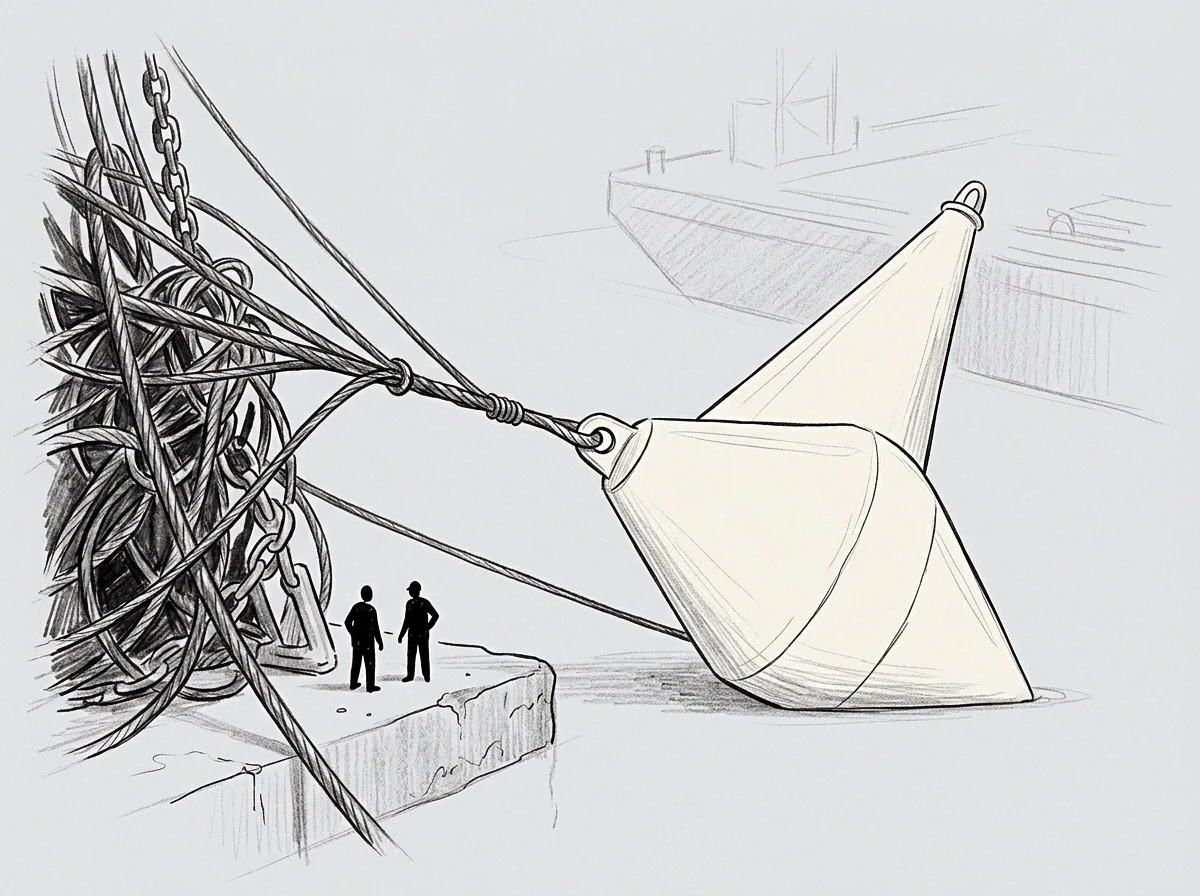
Operational debt builds up wherever an organisation routes around hard constraints. An unaddressed debt covenant, an unsigned employment contract, or a critical flaw in a data pipeline pushes attention away, forcing the operation to detour around the friction.
That detour traces a measurable line, where the angle of avoidance shows how steep the organisation perceives the obstacle to be. A slight delay suggests friction, while a total detour indicates an obstacle the current setup cannot survive. Tracking these deflection points maps the actual boundaries of the operating model.
An organisation routes energy around uncomputable reality to protect its existing operational equilibrium.
Boundary conditions dictate what an enterprise can actually absorb. An explicit reservation clause in a mezzanine indenture, for instance, cuts off equity participation when leverage ratios exceed coverage covenants, constraining management decisions well before any technical default.

Ceiling
The Boundary of Architectural Execution
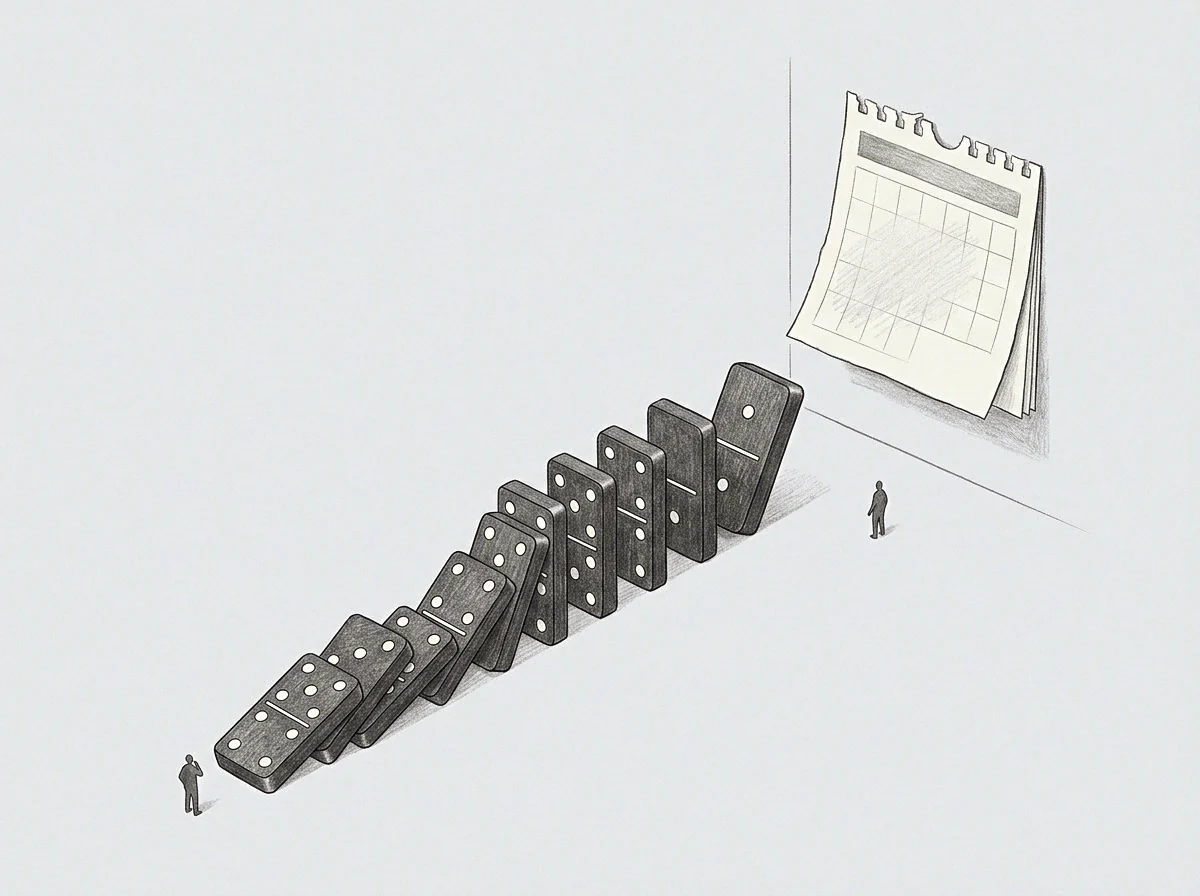
Friction functions as an operational diagnostic. When an operator feels severe resistance during contract reviews or distribution talks, the response reflects cognitive overload rather than simple hesitation. It signals that current working assumptions have hit their limit, where standard routine stops working and every step requires immediate calculation.
Testing that limit shows whether the obstacle is a compressible barrier or an outright edge. A compressible barrier gives way under steady investments of time and attention; a structural cliff breaks whatever moves past it. In a business run for three years without formal equity documentation, the tension around the topic is constant.
One founder assumes the avoidance simply delays routine legal paperwork for built-up value, while the other avoids the conversation because their growth strategy requires capital allocations that the business cannot survive. The avoidance reflects structural incompatibility between the models.
Pushing past a model boundary reveals whether the obstruction yields to pressure or breaks the enterprise under applied tension.
If the negotiation proceeds, the company fractures because no single legal framework can hold two contradictory commercial directions. Avoidance had simply kept the business functional by leaving the conflict unaddressed.
The partner was never going to sign the agreement because allocating equity would have exposed the depleted bank account.
Rupture

Calculated Ascent and Structural Collapse
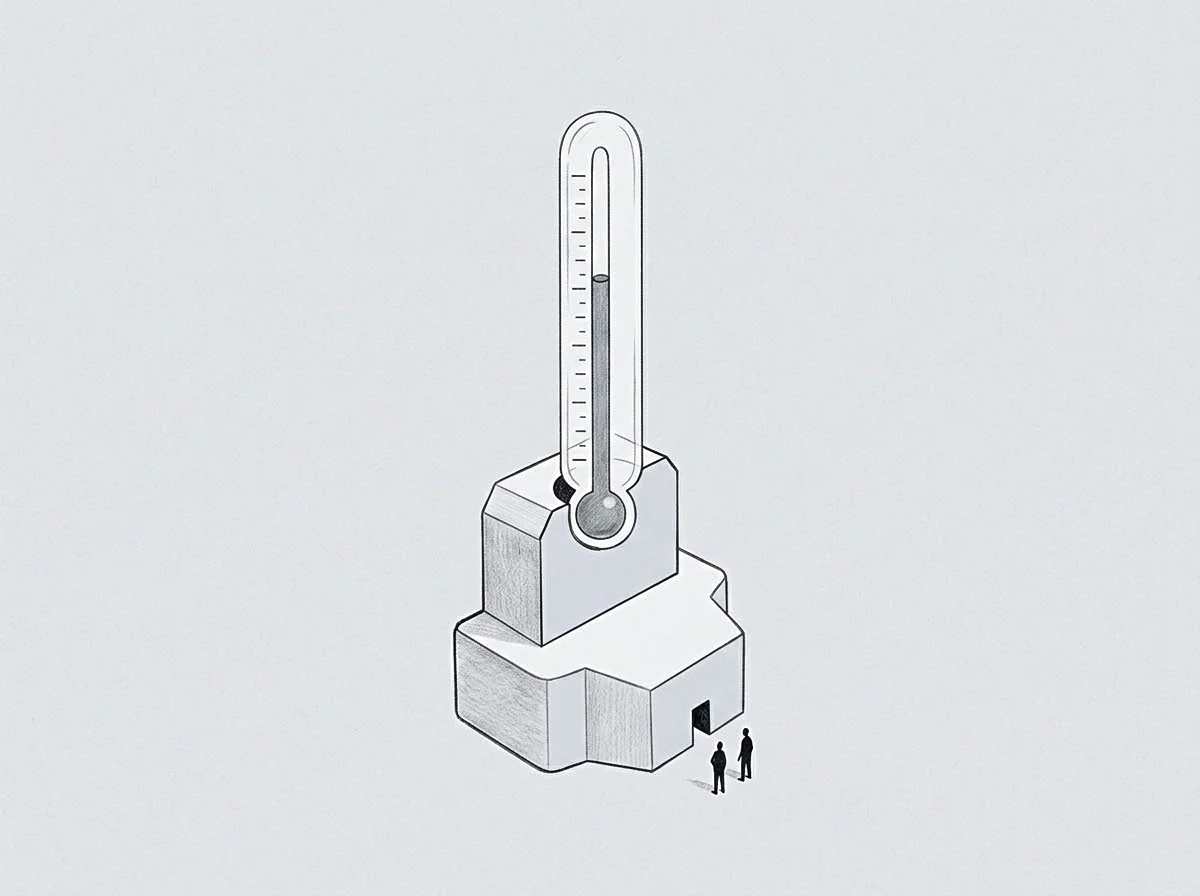
Calculations of recovery often assume physical symmetry. A ball rolling into a bowl converts downward momentum into an equivalent climb up the opposite wall, but that assumes both sides exist. In organisations, the downhill run often ends where no second wall was ever built.
The operator drifts along the path of least resistance into the trough, then applies throttle against a slope that is not there.
Take a consulting firm with modest cash flow looking to pivot toward software product revenue. Management avoids outbound enterprise sales calls, blaming the low volume on sales rep hesitation. The team builds a projection around that assumption: once the reps receive sales training, software revenue will follow.
The reasoning misses the mechanical problem. The consulting practice has no reusable code, no telemetry, and no intellectual property protection. Steering clear of enterprise sales was simply an operational adaptation to having no product to sell.
- Incapacity Verification Protocol requires running a cheap, isolated test that places real load on an avoided function before committing capital to it.
- Architectural Asset Mapping separates operational hesitation from missing legal, financial, or technical components needed to support growth.
- Vector Decoupling Mechanism treats the path of least operational resistance as an independent feature of the terrain rather than an inverted map of potential gains.
Forcing a team up a phantom slope exposes the gap immediately. Reps make the calls, prospective clients ask for product demonstrations, and the premise breaks against the lack of functioning code, draining working capital while reputation erodes across the market.
Load-bearing operations can only climb after the structural timbers have been tested directly.

Margin
Recalibrating the Value Axis
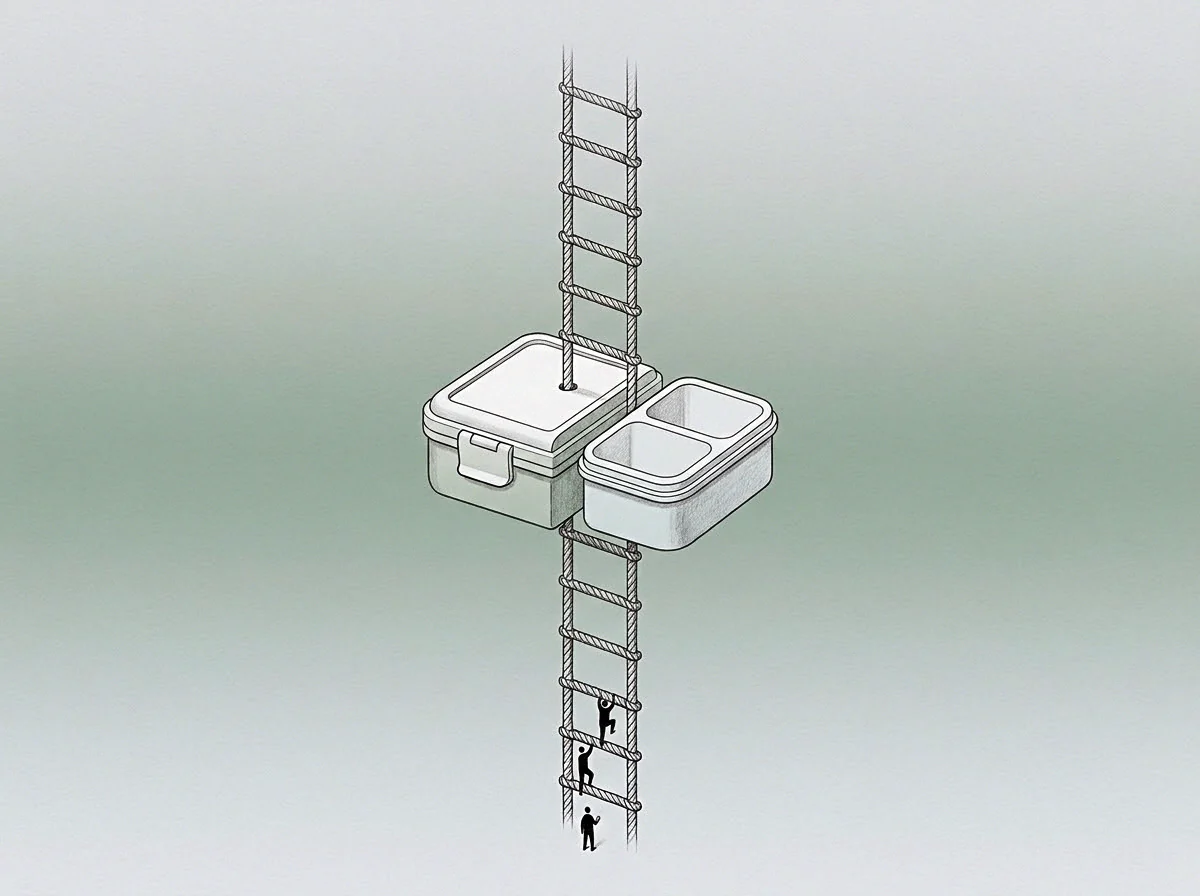
Planning an operational climb when avoidance stems from missing structure means setting aside the assumption of symmetry. Evasion cannot be treated as stored potential. The downward slope simply reflects absent capacity.
Value remains the metric, but progress shifts from projecting an easy rebound to the slow work of laying footings.
When a business lacks the machinery to climb, the only effective move is building base capacity. The operator leases balance sheet strength, secures regulatory compliance, or brings in external engineering to build missing components before applying load. The cost is definite: attention, time, and equity dilution.
It replaces the assumption of stored potential with deliberate construction.
The operator examines every point where avoidance occurred. Where hesitation hid a missing regulatory license, the application is submitted. Where it marked insufficient working capital, operations are cut back to match actual cash.
The negative gradient levels off as real capacity replaces the gap. Progress becomes a function of load capacity rather than an imagined rebound from operational drag.
Verifying that newly installed architecture can support full operating pressure requires controlled testing before market conditions force an unmanaged trial.