
Calibrating True Operational Elasticity Across Extended Service Loops Without Triggering Immediate Substrate Breakdown
Operational elasticity requires contraction cycles with identical resource priority to expansion cycles, preventing accumulated plastic strain in the substrate.

Floor
An operator stretches an execution loop to absorb sudden intake volume, watching the latency curve climb while the underlying compute and human layers appear calm. The surface indicators show compliance. Tickets close inside the stated window, batch transactions clear before midnight, and client telemetry reports unbroken uptime.
Below that calm waterline, the memory pool fails to reclaim allocated blocks between cycles, and personnel silence their internal error notifications to keep pace with throughput targets. The true operational elasticity of a service loop measures its capacity to expand under load and contract to baseline without retaining permanent deformation in its execution substrate. Most systems fail this return stroke.
They exhibit plastic yield instead of elastic deflection.
The mechanical baseline establishes the minimum energy expenditure required to sustain operational coherence when zero external load arrives. Every expanded cycle draws against this resting state. When an operational loop lengthens to process sustained spikes, the return path degrades if the reset duration drops below the recovery threshold of the underlying substrate.
In software services, this manifests as garbage collection thrashing, thread pool exhaustion, and unindexed database bloat. In organizational units, the degradation takes the form of unlogged procedural exceptions, deferred maintenance debt, and undocumented process overrides. The load clears, yet the substrate never regains its initial rigidity.
A service loop retains elasticity only when the contraction cycle receives identical resource priority to the expansion cycle.
Resting capacity defines the true limit of expansion. Operational teams routinely calculate elasticity as a cardinal multiplier of peak throughput, treating an intake rate of ten thousand events per second as evidence of tenfold capability over a one-thousand-event baseline. This calculation confuses nominal carrying capacity with operational elasticity.
Cardinal spikes ignore the ordinal accumulation of physical wear across compute nodes and operational personnel. Elasticity is an ordinal vector. It charts whether each sequential expansion degrades the substrate faster than the prior cycle, measuring the rate of structural decay rather than the gross volume pushed across an arbitrary interface.
When service loops stretch across extended cycles without calibrating the floor, the substrate sheds its restorative margins, ensuring that the next minor volume oscillation precipitates total systemic fracture.
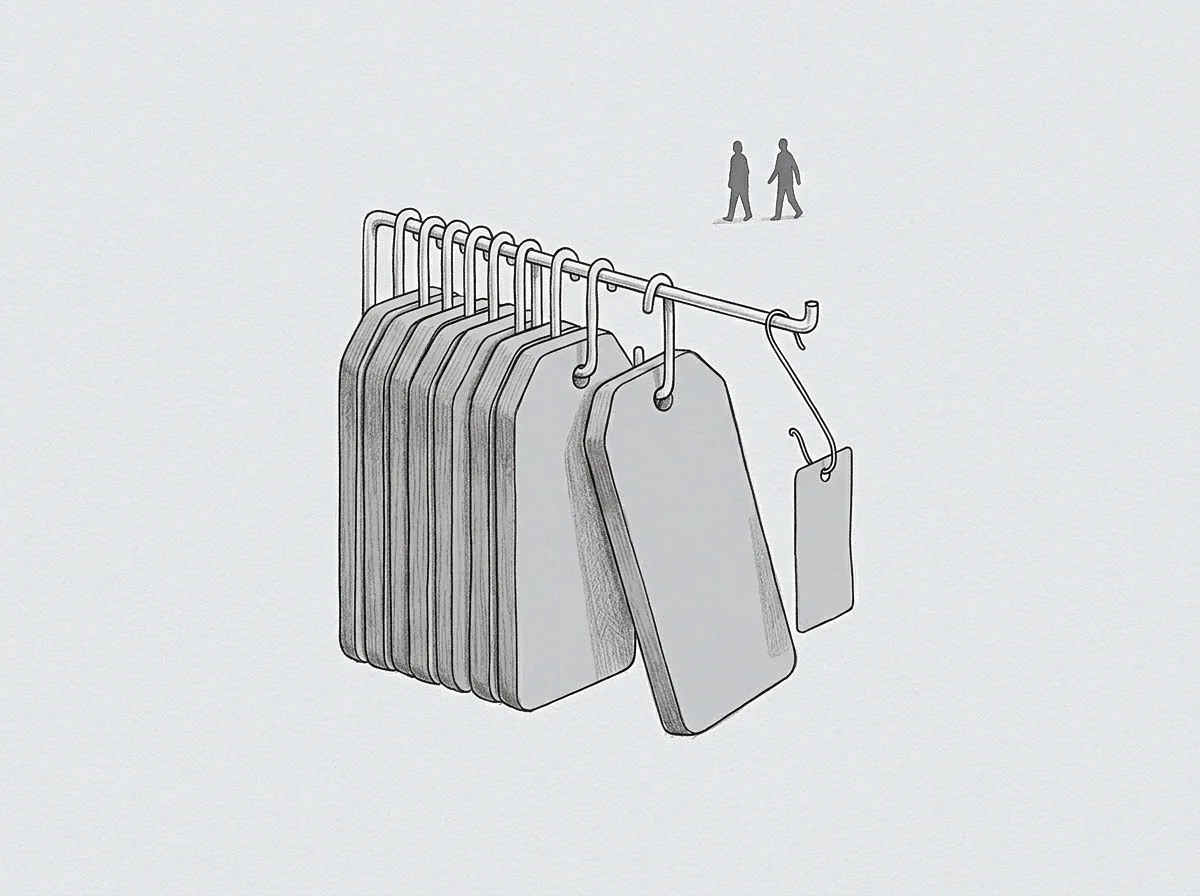
Tension
Every operational circuit maintains an internal balance between dynamic throughput demand and substrate rigidity. The gradient of resistance measures the mechanical cost of forcing an extended loop through an inflexible architectural layer. When execution volume rises, an elastic architecture adjusts internal resistance down, permitting temporary structural deflection along predetermined axes.
This deflection absorbs incoming shock without transmitting destructive sheer forces into the database schemas or the human team staffing the monitoring consoles. The system accepts bounded displacement to preserve core structural continuity.
True elasticity ends where substrate compromise begins. A service loop that dampens incoming volatility by burning through human endurance or unmonitored disk input-output queues executes an uncalibrated descent toward failure. The system routes around proper architectural dampening, substituting rapid substrate consumption for genuine flexibility.
The unspent volume of maintenance accumulates in dark corners of the system architecture. Avoidance acts as the primary coordinate marker here. Wherever operational teams refuse to inspect transaction logs during peak load, an architectural wall stands unmeasured.
A contract clause mandating full state reconciliations within thirty minutes of peak volume termination halts the accumulation of silent substrate fatigue.
Take an enterprise payments processor handling settlement windows across three contiguous banking regions as an operational instance. The system runs on sixty dedicated application hosts connected to a clustered relational database layer. Under normal conditions, nightly settlement batches take ninety minutes, consuming thirty percent of allocated memory overhead and forty percent of connection pool capacity.
Management introduces a new regional corridor, lengthening the settlement window from ninety minutes to five continuous hours of high-rate ledger reconciliation.
The engineering team observes zero immediate dropouts during the first twenty iterations. The intake queues clear without outward incident. Latency remains stable at forty milliseconds.
The loop appears elastic. The operational assumptions behind this configuration involve specific mechanics:
- Connection pool retention keeps database worker threads alive across consecutive settlement batches without recycling idle handles.
- Snapshot isolation overhead generates temporary storage version logs that consume solid-state drive write cycles during continuous five-hour operational windows.
- Manual error triage requires two senior infrastructure engineers to override stuck transactions every forty-five minutes using root credentials.
On the twenty-first run, the disk controller exhausts spare rewrite blocks, connection pools freeze due to lock contention on version tables, and the two infrastructure engineers miss a manual override while handling simultaneous production alerts. The database substrate collapses. The system did not break because twenty-one batches represented an impossible volume.
It broke because the twenty prior batches steadily consumed the physical write life of the storage hardware and the cognitive focus of the operators without permitting substrate recovery. The expansion was plastic deformation masquerading as operational elasticity.
Executing an operational loop under these uncalibrated conditions binds the operator to an unstated agreement where each cleared transaction bills its deferred recovery cost directly against the lifespan of the underlying infrastructure.

Span
Loop duration governs the survival of the substrate. An operational loop executing over seconds exposes its architecture to entirely different degradation modes than a loop running across weeks. The allostatic load of a long-running service loop represents the aggregate physical tax paid by the substrate to maintain homeostatic performance far from its resting state.
Short loops test mechanical throughput, whereas long loops test material fatigue across time.
Can Extended Service Loops Absorb Peak Deflection?
A loop stretched over long durations encounters operational drift. As time expands, state drift accumulates within storage backends, microservice dependencies diverge in version compatibility, and human operators lose contextual continuity across rolling handovers. The cost of climbing back to baseline increases as a power function of the time spent at maximum deflection.
The loss function is asymmetric. A ten percent increase in peak duration routinely extracts a fourfold increase in the recovery time necessary to purge substrate residue.
| Evaluation Dimension | Transient Micro-Loop | Extended Macro-Loop |
|---|---|---|
| Primary Failure Vector | Queue overflow and buffer saturation | Substrate fatigue and resource exhaustion |
| Recovery Velocity | Milliseconds following traffic decay | Multiple hours of offline maintenance |
| Human Intervention Factor | Automated throttling and rate shedding | Ad-hoc operational overrides and manual triage |
| State Accumulation Mode | Volatile in-memory queuing | Durable storage versioning and lock bloat |
| Cost Vector Scalability | Linear energy consumption per call | Compounding degradation of structural margins |
Transient micro-loops shed load cleanly through token-bucket algorithms and drop policies. Extended macro-loops carry state across shifts, days, and quarters, making clean drops impossible once execution crosses critical thresholds. When an extended loop stretches, the operational surface area exposed to environmental noise multiplies.
Unchecked noise becomes structural wear.
Substrate stability requires setting loop spans strictly inside the temporal window where automated self-healing mechanisms remain functional without manual intervention.

Yield
Structural yield occurs when operational deflection passes from recoverable displacement to irreversible degradation. The elastic limit marks the exact boundary where an architecture loses its ability to contract cleanly to its starting configuration. Identifying this coordinate requires tracking subtle distortion signals rather than blatant throughput declines.
Systems rarely give loud warnings before substrate failure. They simply run hotter, shed internal monitoring telemetry to conserve processing cycles, and widen acceptable operating tolerances until catastrophic fracture intervenes.
Monitoring frameworks routinely obscure the approach of this limit. When teams track mean response times, aggregate error rates, and average cluster utilization, the aggregation hides localized substrate failure. One database shard may experience ninety-nine percent lock exhaustion while the fleet-wide average sits comfortably at twelve percent.
A single operational specialist may absorb eighty percent of complex production escalations while team-wide utilization charts report healthy capacity across the roster. The substrate yields locally long before the system declares an outage.
Operational limits remain invisible when aggregate indicators smooth away localized mechanical strain.
Calibrating true operational elasticity demands instrumenting the boundaries of the architecture rather than its center. The operator measures the wall: the specific tasks the system cannot execute because execution is too expensive. A service loop that avoids cold-restarting worker pools because boot latencies cause cascade failures has hit a wall.
A team that refuses to rotate credentials during high-volume periods has hit a wall. These avoidances locate the current model boundary with exact precision. Documenting the coordinates of this boundary gives the operator the true map of elasticity.
Operators adjust internal telemetry away from vanity averages, focusing instead on structural fatigue indices that track irreversible substrate erosion:
- Substrate recovery lag records the duration required for background maintenance tasks to bring residual queue depths back to zero after volume returns to normal.
- Manual intervention density tallies the raw count of administrative terminal commands executed per operational shift to force transactions through blocked pipelines.
- Resource leak trajectories quantify persistent non-reclaimed allocation vectors across contiguous processing windows, pinpointing memory leaks, orphan storage files, and abandoned database locks.
The infrastructure performs normally until the moment it stops completely, and the metrics gave no indication of distress.
Rig
Constructing an operational rig capable of testing true elasticity requires subjecting the architecture to sustained deflection without permitting catastrophic structural collapse. A proper calibration harness applies intentional displacement to the service loop while continuously polling the substrate for signs of plastic deformation. If the substrate fails to return to baseline state within the designated reset window, the harness declares a boundary condition, halting the test before permanent mechanical damage settles into the foundations.
Testing must simulate operational drag. Simulating clean traffic bursts teaches an organization nothing about extended service loops. Real operational stress involves messy, discordant transactions that trigger edge cases, force unindexed disk reads, and require complex relational rollbacks.
Subjecting an architecture to clean load tests produces a false reading of elasticity, encouraging operators to approve extended loop schedules that the actual underlying substrate cannot sustain. Friction reveals whether elasticity is structural or fictional.
Rig calibration rests on three sequential steps designed to locate the exact point of substrate fatigue:
- Baseline isolation locks down background maintenance schedules, establishing an unpolluted baseline of operational resource consumption under zero artificial load.
- Progressive loop extension increments the duration of the operational loop by ten percent per cycle, holding peak throughput constant to isolate temporal fatigue from volume shock.
- Contraction verification halts intake entirely, logging the exact time elapsed before all internal queues, locks, and temporary files return completely to baseline specifications.
When this calibration reveals that contraction velocity slows with each progressive cycle, the operator has found the limit of the system. Pushing past this point substitutes hope for engineering. True elasticity is not an infinite resource bought with operational bravado.
It is a strictly bounded physical property determined by the mechanical stiffness of the execution substrate and the availability of uncompromised recovery intervals.
The unresolved tension centers on whether an operational architecture can ever achieve continuous self-calibration without human oversight, or whether all automated governance routines inevitably create their own silent, unmonitored substrate fatigue that only manual inspection can reveal.