
Dynamic Hurdle Rate Transmission Modeling Under Restrictive Corporate Liquidity Conditions
Dynamic hurdle rate transmission models balance sheet cash depletion by scaling project discount rates to match the non-linear shadow cost of corporate liquidity.
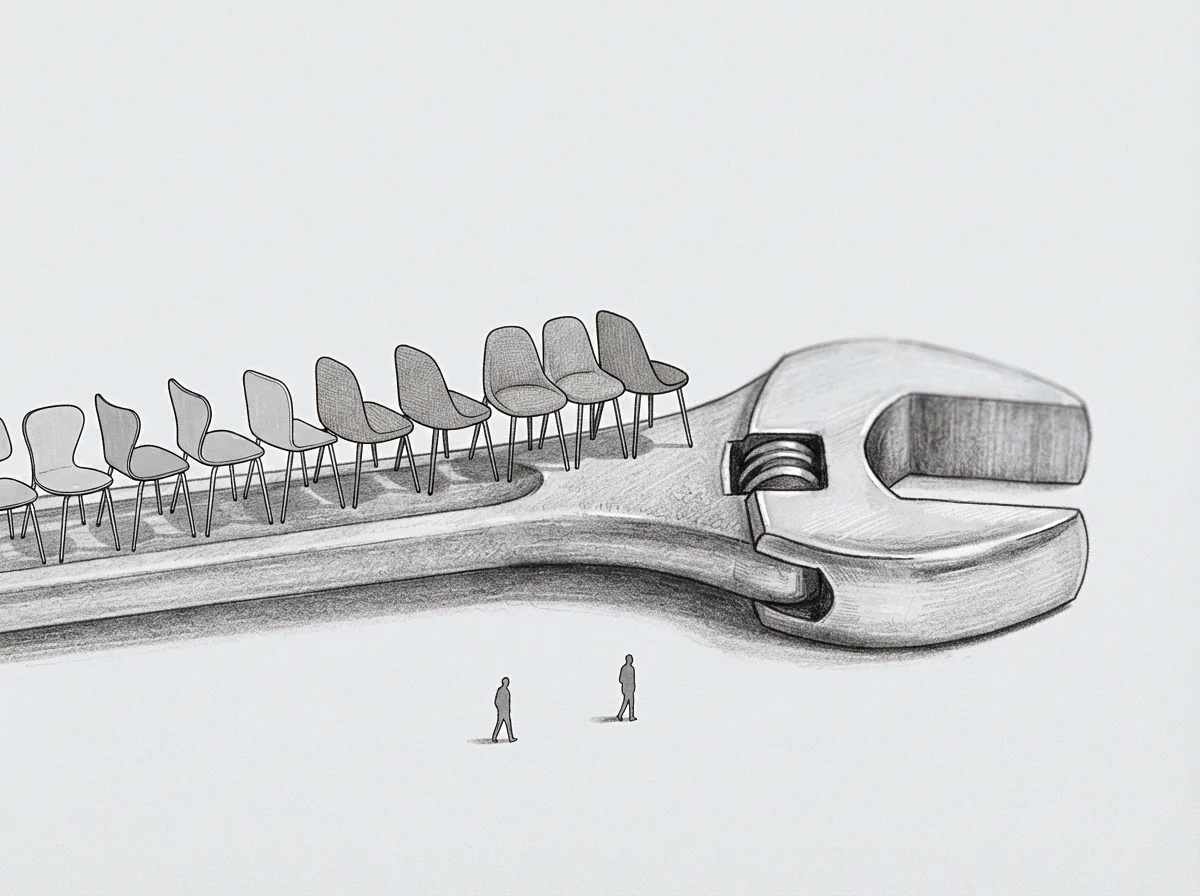
Shelf
A capital committee convenes with twelve months of cash runway and a corporate credit line frozen at sixty percent utilization. The weighted average cost of capital calculated six months prior sits in the model at nine percent. The treasurer knows that issuing debt today prices at fourteen percent, while equity markets demand a nineteen percent internal rate of return for distressed refinancings.
Evaluating an equipment renewal project against the static hurdle of nine percent guarantees cash exhaustion before the asset produces its first dollar of operational savings.
Liquidity constraints transform capital allocation from a simple ranking of positive net present value assets into an inventory preservation challenge. The corporate balance sheet acts as a physical shelf: cash reserves and undrawn revolving credit lines represent finite capacity. Allocating capital to an irreversible capital investment reduces the available volume on that shelf, exposing the firm to systemic insolvency if an operational cash flow shock arrives before recovery.
Dynamic hurdle rate transmission reflects this balance sheet reality by translating liquidity scarcity directly into the discount rate. Static hurdles assume frictionless access to capital markets at the prevailing marginal cost of capital. Under liquidity rationing, the cost of deployment equals the project’s standalone risk premium plus the opportunity cost of depleted liquidity buffers.
Dynamic hurdle rate adjustments reflect the balance sheet inventory cost of unhedged liquidity depletion during constrained refinancing windows.
Traditional corporate finance accounts for project risk while treating the institutional balance sheet as an infinitely elastic reservoir. When external debt markets lock or covenant ratios tighten toward technical default, internal liquidity acquires a non-linear shadow cost. An enterprise with fifty million dollars in cash facing a possible forty-million-dollar inventory draw cannot treat a ten-million-dollar plant expansion as a standard marginal investment.
Treasury desks that fail to incorporate these liquidity factors allocate funds to long-duration illiquid projects, leaving shorter-term obligations unhedged. The dynamic transmission model continuously adjusts the required rate of return across internal business units based on the marginal shadow price of corporate cash reserves.
Gauge
Mapping the Liquidity Gradient Across Cash Regimes
The transmission mechanism relies on computing the dynamic rate by establishing an axis of balance sheet health. This axis measures unencumbered cash, immediate accounts receivable run-off, and accessible credit facilities against committed fixed costs and debt maturities over a rolling twelve-month horizon.
The operational gradient measures the marginal rate of cash depletion against enterprise solvency. In an unconstrained liquidity environment, the gradient remains nearly flat, as internal hurdle rates mirror the weighted average cost of capital with a modest project-specific risk factor. As liquid reserves drop below safety buffers, the slope steepens sharply, forcing hurdle rates upward to ration available cash.
The hurdle rate formula under liquidity restrictions adds a dynamic transmission premium to the traditional cost of capital baseline:
Dynamic Hurdle Rate = Baseline Cost of Capital + Risk Factor + Liquidity Shadow Multiplier
The liquidity shadow multiplier derives from the marginal utility of liquid inventory. When liquidity buffers match two years of downside operations, this multiplier approaches zero. When reserves drop toward minimum operating cash requirements, the multiplier increases exponentially, driving hurdle rates above thirty percent for non-essential capital expenditures.
Allocating capital under these conditions shifts the decision threshold from accounting return to survival duration. The system routes investment toward short-cycle projects that accelerate cash conversion rather than long-term capacity expansion.

Transmission Sensitivities Under Capital Rationing
Consider three corporate operating environments facing identical external cost-of-capital baselines of ten percent. The transmission mechanism alters effective project approval thresholds according to underlying balance sheet exposure.
| Liquidity Regime | Runway Coverage Ratio | Dynamic Hurdle Premium | Effective Hurdle Rate | Capital Allocation Focus |
|---|---|---|---|---|
| Unconstrained | Above 2.5x committed costs | 0.00% to 1.50% | 10.00% to 11.50% | Long-duration structural assets |
| Constrained | 1.2x to 1.8x committed costs | 3.50% to 6.00% | 13.50% to 16.00% | Working capital optimization |
| Distressed | Below 1.0x committed costs | 9.00% to 15.00% | 19.00% to 25.00% | Immediate cash generating assets |
In distressed conditions, the baseline discount rate becomes almost irrelevant compared to the liquidity premium. The transmission mechanism enforces a steep penalty against any capital outlay that fails to return immediate liquidity to the enterprise balance sheet.
Operating divisions submitting project proposals must demonstrate cash payback velocity. Long-term net present value metrics fail to secure executive sign-off when the dynamic hurdle rate demands full capital restoration inside four operating quarters.
Wall

The Boundary of Project Irreversibility
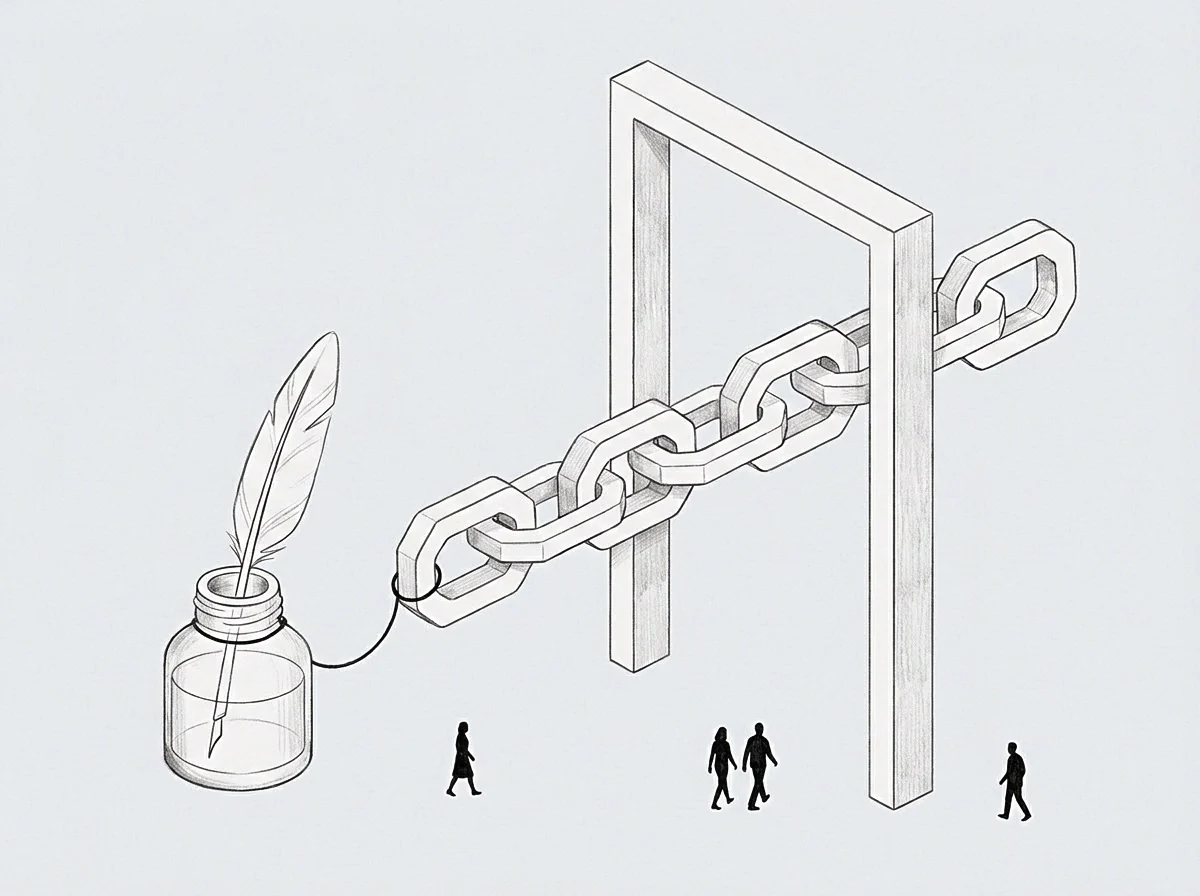
Investment decisions encounter a structural barrier when projects require substantial up-front outlays that cannot be liquidated in secondary markets. The liquidity shadow multiplier rises to extreme levels when a project commits non-recoverable cash in an environment of scarce operational funding.
Standard discounted cash flow modeling treats disinvestment options symmetrically with capital deployment. Under restrictive liquidity, an abandoned capital project yields fractional scrap value, destroying working capital that cannot be replenished through credit markets. The dynamic transmission model addresses this asymmetry by attaching an irreversibility penalty directly to fixed-asset allocations.
Corporate management recognizes this barrier as the project termination threshold. Once committed, capital trapped in plant modifications, customized tooling, or unhedged software development cannot serve debt obligations during a revenue contraction.
Irreversible capital allocation permanently subtracts from corporate survival runway when balance sheet access closes.
Engineers design pressure vessels with rupture discs calibrated to relieve strain before the hull compromises. A treasury department deploys the dynamic hurdle rate as a financial rupture disc: elevating capital costs to prevent operating managers from committing funds the firm cannot safely spare.
The organizational wall exists where project deployment eliminates remaining unencumbered collateral. Passing this boundary shifts the corporation into technical vulnerability, where single-customer defaults or delayed invoice settlements trigger operational shutdowns.
Behavioral Responses to Hurdle Adjustments
Business unit heads adapt to elevated dynamic hurdle rates through specific operational modifications:
- Staged project commitments reduce initial capital exposure by dividing long-duration programs into sequential milestones that require independent capital re-authorization.
- Equipment lease substitution exchanges heavy upfront cash drains for predictable operational expenses, shifting project costs from balance sheet capital reserves into monthly cost of goods sold.
- Working capital reclamation focuses management attention on accelerated invoicing collection and compressed inventory cycles, converting latent internal value directly into liquid reserves.
These responses alter the capital structure of individual programs without requiring external debt renegotiations. The dynamic rate forces operational teams to substitute managerial ingenuity and commercial renegotiation for pure capital outlays.
Project managers encounter significant friction during this transmission. Operational plans built over multi-year cycles must compress their execution schedules or forfeit project approval entirely.

Seat
The chief financial officer sits between operational demands for growth capital and board mandates for balance sheet preservation. From this position, dynamic hurdle rate transmission acts as a protective governor, enforcing capital discipline without requiring arbitrary executive intervention.
Operational leaders frequently argue that raising internal discount rates during economic contractions damages long-term competitive positioning. The transmission model reframes this tension as a survival condition: long-term strategic projects generate zero value for an enterprise that fails to survive near-term debt maturity cliffs.
When the finance seat communicates capital decisions using static weighted average cost of capital measures, operational heads perceive project rejections as political favoritism. Implementing an explicit, transparent dynamic transmission model links hurdle rates directly to published enterprise liquidity reserves, turning project filtering into a shared mathematical reality.
Management teams operating under this discipline stop disputing discount rate assumptions. Attention shifts toward identifying projects with negative working capital requirements or rapid payback profiles that satisfy the elevated liquidity hurdle.
Project teams discover that projects improving enterprise liquidity profiles qualify for dynamic hurdle rate reductions. A facility retrofitting program that frees warehouse space and releases trapped inventory carries a lower dynamic hurdle than an identical-cost program that increases fixed operational overhead.
Liquidity-based hurdle transmission therefore decentralizes cash preservation throughout the organization, embedding balance sheet survival parameters into grassroots project design.

Pivot
Calibrating Transmission Speed to Debt Refinancing Windows
The speed at which liquidity stress translates into elevated internal hurdle rates determines enterprise resilience during credit market contractions. Treasury models that update discount rates annually fail to protect cash reserves during rapid macro dislocations.
Effective dynamic transmission requires continuous integration between cash flow forecasting, debt covenant headroom, and internal capital allocation models. Hurdle rate recalculations must occur monthly or trigger automatically upon crossing specified balance sheet liquidity thresholds.
Transmission modeling measures the velocity of cash consumption across three operational vectors:
- Fixed debt amortization commitments and revolving credit interest expense drains
- Committed capital expenditures for in-flight projects past the point of economical cancellation
- Baseline operational burn rates adjusted for stressed customer payment defaults and invoice delays
Tracking these vectors allows the corporate finance committee to adjust the hurdle premium before liquidity buffers breach critical covenant levels. Early transmission prevents the abrupt cessation of all capital expenditure by applying measured, progressive rationing over successive operating cycles.
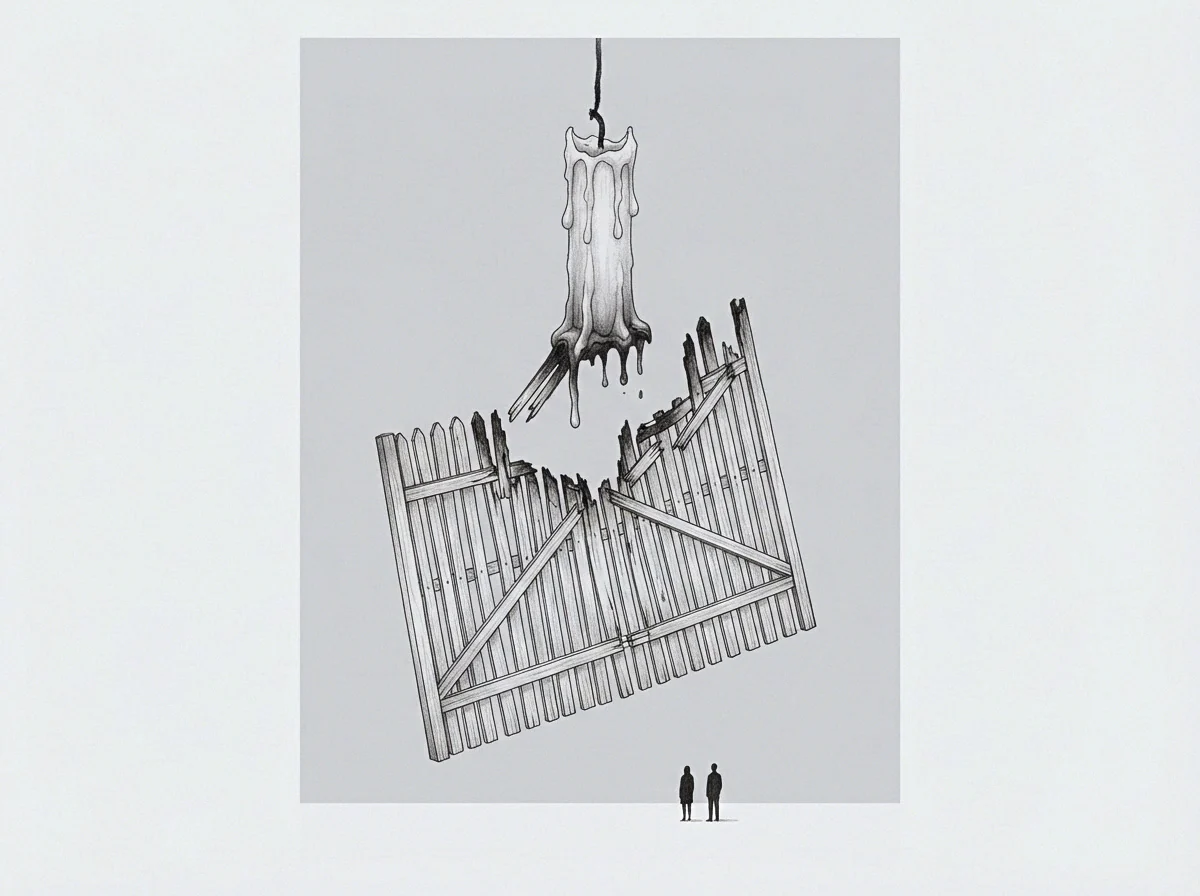
Delays in transmission create catastrophic allocation errors. Organizations that maintain flat hurdle rates during the initial phases of liquidity distress commit unhedged reserves to multi-year investments, forcing draconian project cancellations when external credit facilities freeze.

Where Do Capital Allocation Priorities Shift Under Severe Refinancing Friction?
When credit facilities close completely and public debt yields double, dynamic hurdle rates climb beyond operational rates of return. Under these specific conditions, internal capital allocation decouples entirely from theoretical asset profitability.
The transmission model pivots capital priorities toward assets that act as direct liquidity substitutes. Projects that unlock unencumbered real estate value, generate salable emissions credits, or permit immediate sale-leaseback monetization receive substantial hurdle rate discounts.
Severe capital constraints invert allocation logic by valuing balance sheet preservation above incremental operational margin.
Operational teams unable to monetize project assets find their proposals completely blocked by the dynamic rate. Internal corporate financing operates as an unyielding market: only proposals that return liquid assets directly to the treasury desk achieve corporate authorization during credit freeze events.
The organization survives restricted market environments by turning inward, using elevated hurdle rates to enforce strict asset velocity and balance sheet contraction until external financing windows reopen.
Dynamic hurdle rate transmission modeling thereby bridges the structural divide between short-term liquidity maintenance and long-term capital deployment under restrictive financial conditions.