
Resolving Structural Deflection When Performance Coordinates Diverge Across Unmeasured Operational Axes
Resolving structural deflection requires isolating unmeasured friction vectors and anchoring primary metrics directly to derived operational baselines.
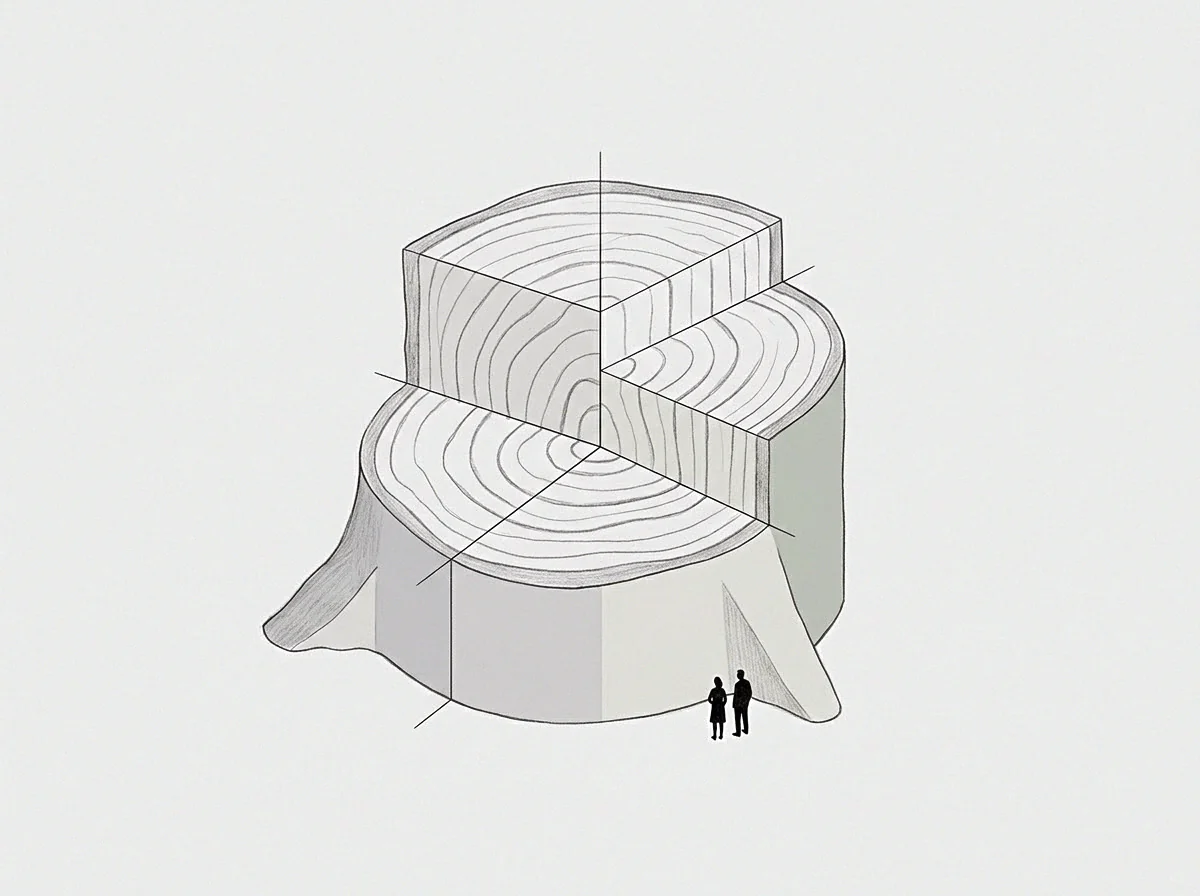
Shear
A corporate enterprise dashboard displays twelve consecutive weeks of meeting delivery dates while technical infrastructure debt climbs forty percent in unmonitored queues. Primary output metrics show steady progress, yet the team requires twice as many manual interventions to execute standard releases. The divergence between measured target completion and actual operational strain creates structural deflection within the organization.
When reporting systems track velocity, revenue, or feature output while ignoring capacity friction, lateral rework, and coordination drag, the operational trajectory shears away from true system health.
The mechanism of coordinate divergence operates through selective visibility. Management teams select primary coordinates because they are visible, countable, and directly tied to strategic commitments. Operational axes such as codebase maintenance, cross-departmental alignment cost, and emotional fatigue remain unmeasured because recording them demands continuous measurement across fluid workflows.
When a primary metric stays artificially stable while underlying operational conditions deteriorate, the system stores potential energy in the form of latent organizational strain.
Structural deflection expands whenever explicit targets isolate primary metrics while absorbing unpriced stress along unmonitored workflows.
Deconstruction of Coordinate Divergence
The distance between reported progress and actual operational cost expands along specific structural vectors. Consider an engineering division tracking feature deployment speed as its main operational metric. If cross-team dependencies create thirty hours of unrecorded negotiation per sprint, the deployment speed metric remains high only because senior engineers absorb the friction during unrecorded extra hours.
The system appears efficient on the measured axis while undergoing severe lateral shear along the unmeasured axis of human capacity.
Over extended periods, the divergence alters the physical behavior of the organization. Personnel adjust their working patterns to optimize for measured coordinates, actively routing around unrecorded operational problems. This path conceals accumulating operational deficits until a critical system component fails under stress.
Ignoring latent operational drag converts manageable maintenance backlogs into permanent capacity losses across core operations.
Notch
Structural physical limits become visible when operational strain concentrated at key handover joints exceeds the material capacity of the team. In physical engineering, a notch concentrates stress along a single boundary line, accelerating structural fatigue long before the surrounding beam shows visible bending. Organizational structures manifest identical concentration patterns when unmeasured operational demands pile up at structural boundaries between business units.
When primary performance coordinates fail to measure lateral coordination costs, the boundary between teams becomes an unmonitored stress zone. Product managers submit technical specifications on schedule, sales teams sign enterprise agreements with custom clauses, and customer success teams absorb the custom integration work without dedicated resource allocations. The primary coordinates of all three departments show compliance with organizational targets, while the integration layer fractures under unpriced operational friction.
Operational Boundaries Under Lateral Force
Mapping unmeasured operational axes requires identifying where teams spend effort without explicit accounting. Structural deflection leaves recognizable coordinate markers across organizational workflows:
- Unpriced Rework Queues accumulate rapidly in downstream teams when upstream primary targets prioritize immediate completion speed over input precision.
- Informal Escalate Paths multiply across departmental boundaries to bypass rigid formal targets that no longer match physical delivery constraints.
- Shadow Coordination Meetings consume executive working hours to resolve operational friction that primary dashboards fail to capture.
- Capacity Depletion Spikes occur without warning in operational units that consistently absorb unmonitored maintenance loads for adjacent groups.
Recognizing these operational patterns shifts the task from evaluating personal performance to measuring structural strain. Avoidance behavior in teams does not signify lack of engagement; it marks the presence of an unmeasured operational axis where effort produces no recorded progress on primary coordinates. Systemic friction accumulates wherever performance evaluation metrics neglect underlying execution costs.
Unpriced coordination drag creates silent deflection long before performance output registers a drop.
The target was met on schedule every quarter, yet the codebase now requires three senior engineers to execute a single standard release.
Stator
Establishing a fixed point of observation allows the system operator to isolate lateral movements that standard performance monitors miss. In rotational machinery, the stator remains stationary to measure the forces generated by the spinning rotor. Organizational measurement systems require a similar stationary operational baseline.
Without a fixed reference point, internal performance coordinates shift alongside operational deflection, rendering structural drift invisible to internal audits.
Defining an unmeasured operational axis involves establishing a derived measurement baseline constructed from secondary system inputs. When primary metrics measure output quantity, the derived baseline tracks the volume of inputs required to sustain that single unit of output over time. If input volume grows while output stays constant, the gradient of that ratio reveals the exact magnitude of lateral operational deflection.
When Does Operational Friction Exceed Primary Coordinates?
Evaluating the point where operational friction overwhelms reported performance requires systematic diagnostic steps. Tracking coordinate divergence systematically isolates latent structural decay before operational failure occurs:
- Audit primary performance dashboards against total logged operational hours across all participating departments.
- Map unpriced cross-departmental request volumes against explicit service level agreements.
- Compute the operational gradient by dividing secondary friction inputs by primary coordinate output units.
- Identify structural deflection nodes where input costs grow while primary performance coordinates remain flat.
The mathematical gradient computed from secondary operational inputs carries no emotional valuation; it reflects exact physical direction and magnitude. When the gradient shows steepening friction costs, the system is executing an unrecorded descent into operational debt.
Establishing a clear baseline reveals unmeasured capacity strain before system structural deflection becomes irreversible.
A mandatory baseline auditing clause forces quarterly recalibration of performance targets against measured internal friction metrics.

Sieve
Filtering structural load requires isolating measured delivery speeds from the invisible manual corrections that preserve outward stability. Without structured filtering, management interventions target superficial symptoms, altering performance coordinates without addressing underlying operational deflection. Take a software development group with forty engineers divided across five delivery channels.
Assume sixty percent of senior engineering capacity shifts into unlogged cross-team troubleshooting over two quarters. Primary feature release velocity stays constant, but core product stability decays because architectural maintenance is completely abandoned.
Restructuring operational measurement demands evaluating structural intervention models. Organizations must select protocols that explicitly integrate unmeasured operational axes into core performance tracking.
| Intervention Model | Primary Coordinate Adjustment | Unmeasured Axis Integration | Capacity Allocation Friction | Long-term Structural Impact |
|---|---|---|---|---|
| Target Scale Reduction | Reduces primary speed targets by fixed percentage | Leaves lateral operational axes unmonitored | Low initial friction, high residual risk | Temporary stress relief followed by recurrent deflection |
| Explicit Metric Expansion | Adds secondary operational metrics to dashboard | Tracks friction without altering resource flow | Moderate measurement overhead | Improved visibility with delayed structural correction |
| Derived Baseline Integration | Anchors output targets directly to operational input capacity | Internalizes lateral shear vectors into main control loop | High initial recalibration friction | Permanent elimination of structural coordinate divergence |
Comparing these structural realignment models shows that simply adding new secondary metrics to an existing enterprise dashboard fails to correct structural deflection. True realignment occurs only when primary targets dynamically adjust based on the friction gradient measured along secondary operational axes.
System capacity collapses when primary coordinates dictate speed while unmeasured axes absorb the resulting heat.

Comparative Assessment of Realignment Mechanisms
When organizations implement target scale reduction alone, operational teams absorb the lower targets without altering their work patterns. Unpriced coordination drag continues to consume background capacity because the underlying workflows remain unaddressed. Derived baseline integration forces the control system to acknowledge unmeasured operational costs immediately, adjusting primary targets automatically as lateral friction increases.
Whether an organization can deliberately slow primary output to re-measure latent operational strain remains dependent on investor tolerance during low-growth cycles.

Anchor
Re-establishing system stability demands fixing primary performance metrics directly to actual derived operational limits. Fixing targets to theoretical capacity guarantees recurrent deflection whenever operational realities deviate from planning assumptions. Systemic alignment requires locking performance metrics directly into actual measured execution thresholds.
The final operational move requires re-anchoring organizational feedback loops to derived operational baselines. When a system re-anchors its performance coordinates, primary metrics no longer operate in isolation. Delivery timelines, production goals, and growth targets scale dynamically alongside measured internal friction.
If unpriced rework surges, primary delivery expectations adjust downward automatically, forcing immediate structural resolution of the underlying operational defect.

Systemic Integration of Operational Baselines
Eliminating coordinate divergence transforms latent structural risk into manageable operational maintenance. Organizations that establish derived baseline control loops operate with clear structural visibility, preventing silent capacity depletion across unmeasured axes. Resolving structural deflection preserves institutional capacity, ensuring that reported performance coordinates match physical operational reality under all working conditions.
A performance metric that ignores underlying operational friction guarantees eventual structural breakdown.