
Measuring Capital Deflection Across Early Scaling Teams
Early scaling teams deflect capital when surplus liquidity flows down the path of least resistance into coordination overhead rather than direct customer validation.

Toll
Bank balances rose fivefold after the Series A round closed, yet customer conversion stalled across three successive cohorts. The technical lead brought on four infrastructure engineers while the core purchase flow dropped fifteen percent of prospective buyers at billing. Cash reserves functioned as an acoustic baffle, muffling the market feedback that leaner months had made obvious.
When reserves expand faster than customer demand, spending drifts away from basic validation into organizational comfort.
Direct customer contact carries immediate commercial risk. Founders routinely sidestep the arithmetic of drop-off rates, turning instead to administrative software, rebrands, and extra operational tiers. Capital simply follows the easiest path.
Surplus capital accelerates expenditure along paths of minimal resistance while leaving commercial validation unaddressed.
This pattern marks capital deflection: routing liquid assets away from fundamental product risk and into secondary organizational machinery. The resulting hiring and internal activity create an illusion of momentum while market traction flattens. An expanding operational perimeter gets confused with economic validation, compounding the burn rate without improving conversion economics.
Treasury outlays buy insulation from market feedback.
Pipe
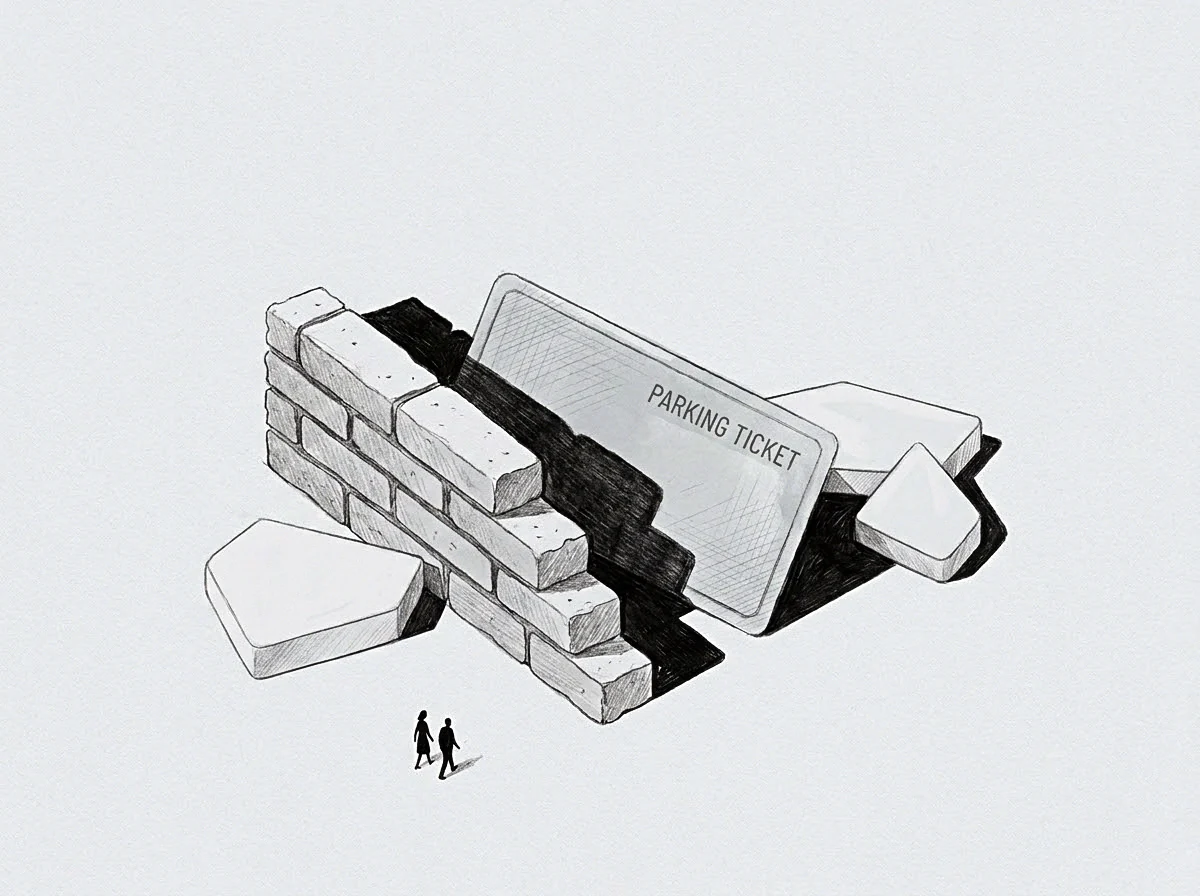
Capital enters through the capitalization table and moves into payroll, vendors, and servers. Without strict constraints on those conduits, funds seek tasks with minimal friction. Writing internal tools meets far less resistance than closing ten skeptical enterprise buyers, just as hiring operational coordinators takes only an offer letter while unproven distribution channels demand slow, uncertain testing.

Mechanical Conduits of Capital Absorption
Deflection operates through specific expenditure channels that mimic productive growth while insulating the team from commercial discovery.
- Coordination Layer Dilution introduces project managers and operational liaisons who spend their weeks arbitrating schedules between departments rather than accelerating direct customer value delivery.
- Premature Infrastructure Overbuilding absorbs senior engineering capacity into distributed microservices and redundant container architectures long before real transactional volume stresses the initial monolith.
- Vendor Stack Proliferation commits monthly operational expenditure to overlapping software subscriptions that individual team leads purchase to avoid negotiating cross-functional compromises.
When three hundred thousand dollars leave the treasury each month through these channels, the primary technical bottlenecks remain untouched. The deployment rate conceals the diversion, building an administrative shell around an unverified product.
A rapid injection of liquidity into an unvalidated operational structure converts urgent product discoveries into delayed administrative reconciliations.
Engineering backlogs fill with internal tooling while cross-department coordination generates its own ongoing friction. Meetings multiply to negotiate handoffs between groups hired before product-market fit was established. Activity looks intense from the top, yet customer retention numbers stay flat across every reporting interval.
Allowing capital conduits to flow into low-friction activity drains cash while core commercial assumptions go untested, leading to sudden insolvency once the buffer runs out.

Wedge
A wedge forms between capital spent and value generated once operating expenses disconnect from direct customer response. In the earliest stages, every dollar spent connects with buyers through marketing tests, technical delivery, or support calls. As headcount grows, management places administrative tiers between the treasury and the buyer, widening the distance between cash outlay and feedback.

Which Outlays Represent True Value Formation?
Distinguishing value formation from deflected capital requires isolating the commercial feedback loop behind each outlay. The test is whether an expenditure exposes the company to market rejection or protects staff from learning about it.
| Operational Category | Direct Value Formation | Deflected Capital Allocation |
|---|---|---|
| Engineering Hiring | Contractors hired to patch critical conversion drop-offs identified by users | Full platform architecture team hired to rewrite internal tooling |
| Software Tooling | Analytics software measuring precise drop-off points in buyer checkout | Enterprise governance and project tracking suites with multi-year commitments |
| Go-To-Market Operations | Commissioned sales representatives conducting live customer qualification calls | Brand advisory agencies producing corporate identity playbooks |
| Management Structure | Founders directly resolving cross-functional roadblocks on shipping dates | Hierarchical program managers filing weekly cross-departmental status decks |
New hires quickly require administrative oversight; payroll expanded by nine seats during the second quarter, yet total output matched the previous winter.
The treasury routinely purchases organizational insulation whenever a team avoids measuring product rejection.
Production velocity dropped across two successive quarters while operational spending shielded initial design flaws. Bringing on three brand strategists instead of running cold outbound calls keeps commercial risk hidden behind presentation decks. The company burns through its balance sheet without finding out whether buyers actually want the software.
Headcount scaled up rapidly while the underlying product metrics stayed where they were during the seed stage.

Trace
Tracing deflection requires looking at where time and money go when external friction hits. When an enterprise account declines a proposal, an attentive team examines product shortcomings and contract terms. A team drifting into deflection shifts attention to strategy decks, office design, or internal retreats.
The expenditure trace always shows the path of least resistance across departments.

Quantifying the Divergence Vector
Founders measure deflection by tracking the ratio between capital deployed on direct value discovery and capital absorbed by internal coordination. A rising ratio shows that the business is spending liquidity to avoid market contact rather than establish it.
- Direct Customer Surface Ratio compares payroll hours spent talking directly to active clients against total paid employee hours across the entire company.
- Friction Avoidance Index isolates total capital committed to secondary software and middle coordination relative to capital committed to primary product development.
- Cohort Learning Efficiency measures the total burn rate sustained between major product release cycles divided by the number of validated customer feedback iterations.
The baseline burn rate quadrupled within six months of closing the institutional round while customer verification stalled. Without governance covenants tied to commercial unit economics, early balance-sheet cash defaults to organizational overhead.
A covenant tying subsequent funding tranches directly to verified unit economics prevents management from routing capital into administrative insulation.

Sieve
Expense filtering has to happen at the point of origin, not during year-end reviews. When every purchase request gets evaluated on its proximity to customer value, protective projects fail to pass. Refusing to finance insulation forces a team to confront commercial resistance directly, saving liquidity for actual milestones.
Enforcing strict expense filters shifts working habits. Without extra hands to absorb architectural complexity, engineers must simplify systems and ship what users need. Commercial teams denied branding retainers have to prospect directly through outbound calls.
Administrative weight drops away as attention returns to the core product.
A strict limit on non-customer expenditure preserves treasury runway while exposing unaddressed product defects.
Restricting capital to verified customer channels creates the operational pressure needed to surface real product limits. The difficulty lies in keeping that discipline intact when outside investors push to accelerate hiring and operations before the market validates the offering.