
Measuring Enterprise Capacity Baselines Through Internal Capital Throughput
Enterprise capacity baselines are determined by measuring the velocity and absorption rate of internal capital throughput across operational conduits.

Conduit
A software infrastructure firm allocates six hundred thousand dollars across four engineering groups for quarterly compute resources. Three divisions exhaust their grants within forty days, converting their allocations into stable query latencies, while the fourth group holds forty-five percent of its cash through week eleven. Accounting departments register the fourth division as disciplined.
Operational throughput reveals an opposing reality: the fourth division cannot consume its allocation because its deployment pipeline blocks release candidates, trapping money behind unresolved technical debt. The capital halts at an internal partition.
Enterprise capacity emerges from movement rather than paper allocation. Balance sheets report stationary balances, whereas operational measurement tracks the rate at which deployed liquidity converts into productive output. When money enters a system, it encounters pathways of variable friction.
Capital throughput defines this velocity: the volume of liquid resources an internal team absorbs, applies, and discharges into completed operational cycles per unit of time. Tracking this movement provides an empirical reading of organisational scale that headcounts cannot match.
The distinction between nominal budget and working liquidity establishes the measurement field. A division receives a credit line, yet its physical architecture governs how much of that line can activate simultaneously. When internal friction exceeds the conversion rate of capital, capital pools at the bottleneck.
This accumulation exposes systemic limitations without subjective evaluation. The gradient of throughput reflects operational reality.
Internal liquidity accumulates at points of operational friction where local structures refuse the expenditure of work.
Observing throughput demands separating capital as an ordinal vector from capital as an accounting figure. Cardinal figures state the cash transferred into an account. The ordinal vector measures whether the operational line accepts the transmission, moves it through functional stages, and converts it into durable system state.
When teams request additional funding while current throughput remains static, enterprise planners mistake lack of progress for under-capitalisation.

Nominal Allocations Against Mechanical Transit
Capital acts as a tracer fluid inside operational systems. Liquid reserves routed into a functioning line immediately expose where permissions stall, where architectural dependencies choke deployment, and where coordination overhead drains momentum. High-capacity units convert capital into work cleanly.
Low-capacity units generate heat: meetings multiply, design committees expand, and budget lines remain unspent or dissolve into defensive administrative padding.
A founder who looks only at ledger depletion misinterprets organizational health. Cash burn rates can rise while actual work velocity drops to zero if the capital disperses into holding patterns. When internal throughput stops, adding resources exacerbates the stoppage by increasing the coordination surface.
The result of misreading this metric is the persistent overfunding of frozen departments while starved functional lines lose their baseline execution rate.
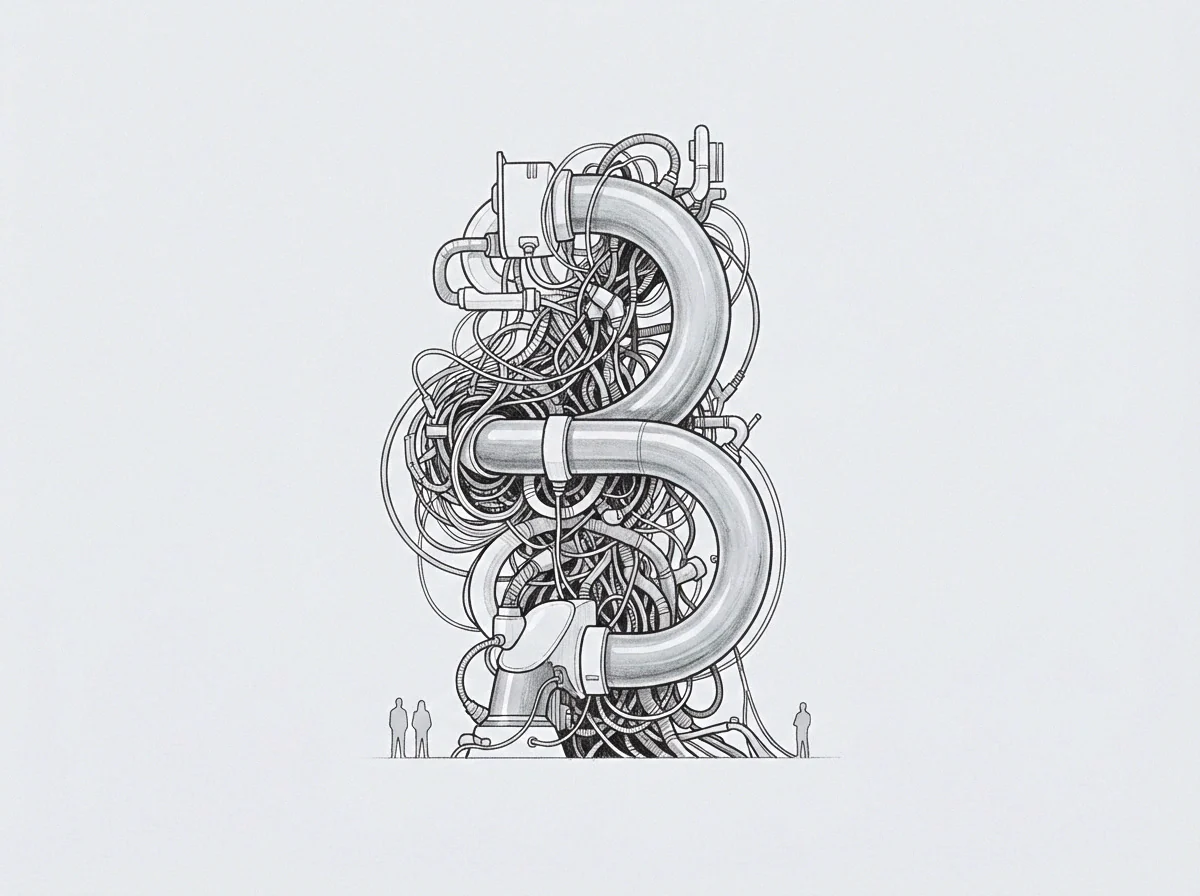
Velocity
Transit speed dictates the upper boundary of productive work. When capital takes ninety days to clear internal legal, compliance, and procurement gates before reaching an operational unit, the systemic cost outstrips the monetary outlay. Operational velocity measures the calendar duration between capital commitment and functional deployment.
Shortening this transit cycle exposes true departmental demand, distinguishing genuine production limits from bureaucratic resistance.
Consider an enterprise evaluating two operating units that perform distributed database maintenance under identical budget assignments. The following data details their capital absorption, cycle duration, and operational returns over one fiscal quarter.
| Unit Designation | Mean Transit Time Days | Capital Absorption Rate | Conversion Output Ratio | Observed Bottleneck State |
|---|---|---|---|---|
| Platform Infrastructure | 12 | 0.94 | 3.8x | Hardware provision latency |
| Integration Services | 46 | 0.41 | 0.9x | Inter-departmental approval cycle |
| Reliability Engineering | 18 | 0.88 | 2.9x | Telemetry data ingress volume |
| Legacy Systems Maintenance | 58 | 0.33 | 0.4x | Manual regression sign-off |
Platform Infrastructure absorbs capital rapidly because its deployment conduits operate with minimal manual intervention. Its capital absorption rate approaches unity, meaning allocated funds translate into operational compute immediately. The operational baseline for this unit sits high, allowing planners to reliably project output from capital inputs.
In contrast, Integration Services demonstrates severe deceleration. Funds linger unspent, waiting for cross-functional dependencies that generate zero enterprise yield.
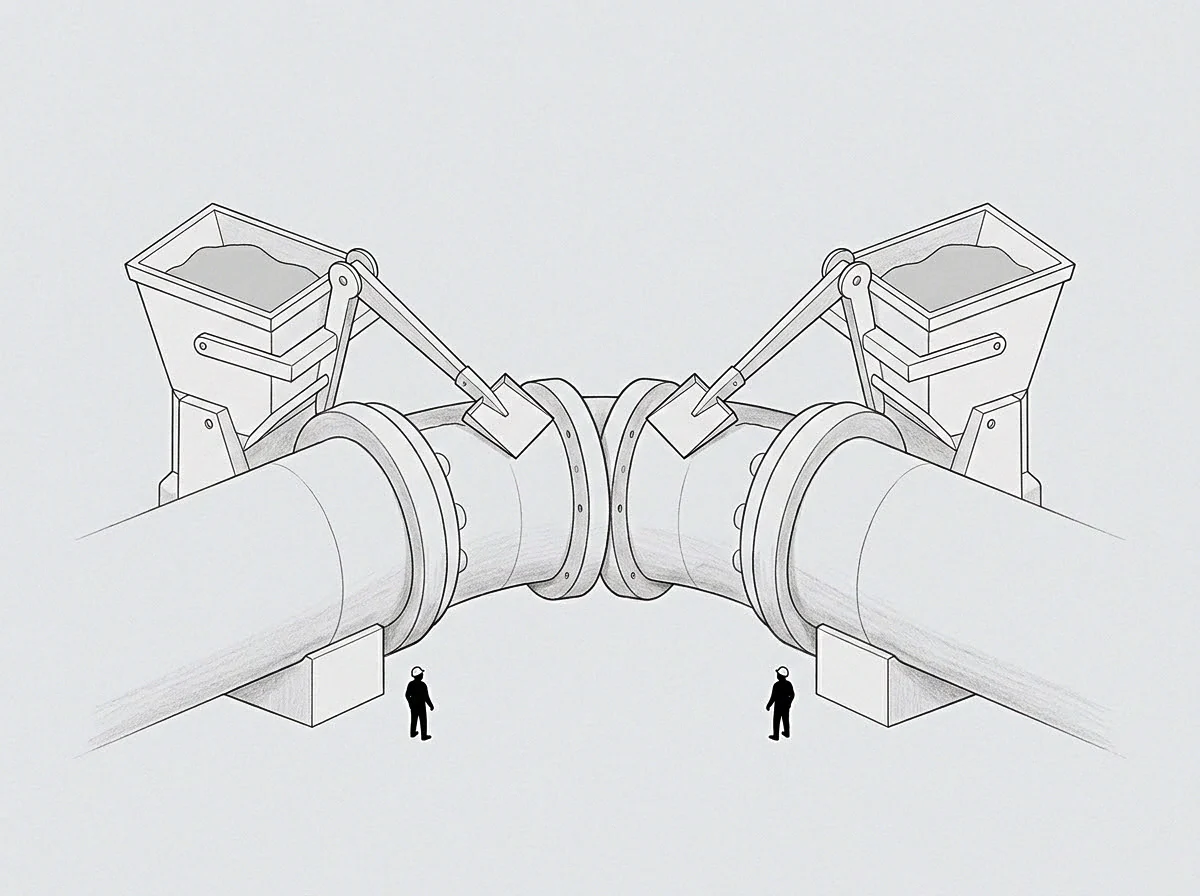
Transit Latency and Operational Friction
Measurement theory indicates that throughput functions as a rate variable rather than a stock variable. A team holding five hundred thousand dollars in uncommitted budget possesses zero operational baseline until that capital enters an active transit cycle. When management evaluates capacity through cash reserves, they inspect a stationary reservoir.
Inspecting the flow rate reveals the diameter of the operational pipe.
The duration required to convert authorized funding into deployed assets exposes the true operational diameter of an enterprise division.
Friction manifests as latency along the transit pathway. Every handoff between corporate units imposes an administrative tariff, consuming operational time. If an infrastructure purchase requires eight sequential signatures, the financial capital remains locked in transit, producing negative operational returns until clearance.
Systems with prolonged transit phases demonstrate lower baseline capacity regardless of nominal team size.

Whose Allocation Reflects Actual Operating Friction?
Resource requests reflect political positioning when unanchored from throughput measurements. A department head asks for more budget because asking for capital signals team importance within the corporate hierarchy. Tracking capital throughput removes this noise.
If an engineering group absorbs only forty percent of its current allocation over ninety days, approving an expanded line accomplishes nothing beyond inflating balance sheet reserves.
Real operating capacity equals the volume of capital a unit can process before degradation occurs. When throughput exceeds this baseline, error rates increase, infrastructure crashes, and coordination debt accumulates. Knowing this boundary allows an enterprise to calibrate capital flows to match actual physical limits.
The operational unit simply states that the current system cannot process more resources until the internal structural blocks clear.

Floor
The capacity baseline represents the minimum operational velocity an organization maintains during periods of resource equilibrium. It is the unforced operational rate: the volume of work produced when no external emergency accelerates activity and no administrative gridlock impedes execution. Establishing this operational baseline demands observing throughput during steady-state intervals, stripping out temporary quarterly rushes and seasonal anomalies.
Capacity baselines stay invisible when enterprise measurement focuses on human attendance or calendar utilization. Engineers logging forty hours per week reveal nothing about systemic output if thirty of those hours dissolve into status meetings and ticket triage. Capital throughput isolates the structural baseline.
By tracking how continuously a unit processes its operating budget into finished releases, planners measure systemic throughput independent of individual exertion.
The operational baseline serves three structural functions:
- Resource calibration anchors future capital deployments to proven throughput limits rather than executive aspirations.
- Bottleneck identification isolates functional segments where capital transit decelerates below the historical operating average, highlighting architectural decay.
- Stress testing models how internal systems absorb acute funding expansions without fracturing operational stability.
A stable enterprise maintains its baseline without depleting operating reserves. When an organization runs its capacity baseline above sustainable limits, human capital atrophies and machine reliability degrades. Maintaining the baseline requires respecting the slope of systemic efficiency.
Pushing capital into a line beyond its baseline throughput produces exponential declines in operational yield.
Sustainable throughput remains stable across fiscal quarters only when baseline expenditure equals actual mechanical output.
Systemic capacity degrades when leaders treat peak emergency throughput as the normal baseline. An acute operational surge consumes unspent reserves, stretches personnel, and postpones necessary maintenance. If planners adopt that temporary spike as the standard operating baseline, subsequent allocations fail to achieve projected returns.
Long-term measurement demands identifying the calm baseline where operations continue indefinitely without structural breakdown.
Let capital throughput dictate the expansion rate rather than executive projections.

Siphon
Unprocessed capital does not simply remain inert within an enterprise; it actively creates distortion. When funding reaches an internal unit that lacks the structural throughput to convert it into operational output, that liquidity pools into unproductive administrative overhead. This phenomenon constitutes a systemic siphon: capital routed around operational bottlenecks drains into artificial coordination layers that simulate productive work.
A software organisation provides a clear example of this dynamic. Assume an infrastructure department receives a three-million-dollar annual budget expansion to modernize legacy storage architecture. The technical team lacks the deployment automation required to introduce new hardware without extensive manual validation.
Because the capital cannot move down the technical pipeline, the department manager allocates the surplus to external consultants, additional management layers, and weekly coordination steering committees. The capital is spent entirely, yet the storage architecture remains unchanged.

Avoidance as an Operational Marker
Systemic avoidance reveals the precise location of structural boundaries. What an organization routes around marks the point where its internal architecture fails. If capital repeatedly flows to exterior vendor contracts rather than core platform refactoring, that movement is not an arbitrary preference; it is a measurement of internal incapacity.
The organization expends substantial financial capital specifically to avoid touching fragile internal dependencies.
This evasive routing has direct operational consequences:
- The primary technical constraint remains unaddressed, accumulating architectural fragility over extended fiscal cycles.
- Administrative overhead expands to justify the diverted capital, creating entrenched internal constituencies dependent on the continuation of the detour.
- Systemic visibility decreases as real operational throughput metrics become obscured by fabricated reporting layers designed to show progress.
Observing where capital diverts provides an accurate map of enterprise limitations. When a team avoids deploying capital directly into a problem area, the volume of that diverted expenditure matches the magnitude of the underlying technical deficit. The diversion acts as an exact financial mirror of unaddressed structural debt.
When capital diverts into administrative holding patterns, the diverted sum measures the magnitude of the unresolved operational debt.
Throughput diagnostics measure these diversionary currents. Tracking internal capital movements allows operators to separate legitimate operational expenditures from defensive diversions. If a business unit continually consumes funds while its functional delivery baseline remains flat, that unit functions as a siphon, pulling enterprise resources away from high-throughput conduits.
Under formal governance agreements, an unspent capital clawback clause automatically revokes non-converting liquidity allocations at day sixty, which re-establishes budgetary discipline across peripheral divisions.

Terminal
Enterprise capacity measurement ultimately resolves into thermodynamic calibration. Organizations function as energy conversion systems where financial capital represents fuel and operational output represents work. Treating capacity as a static balance sheet figure ignores the physical reality of throughput.
A company with twenty million dollars in cash and a sixty-day internal procurement latency possesses far less actual operating capacity than a lean operation that converts fifty thousand dollars into deployed assets every seventy-two hours.
Calculating the true capacity baseline demands rigorous tracking of throughput velocity, absorption friction, and diversion ratios. When these three variables are monitored continuously, enterprise planners construct an accurate model of organisational potential. They stop funding frozen pipelines and cease demanding impossible output surges from structurally constrained units.
Capital allocation transforms from a political negotiation into an empirical engineering discipline.
The limit of this measurement model appears when evaluating exploratory research units where operational output cannot be quantified on short horizons. A discovery division may absorb capital for twelve consecutive months without producing measurable functional conversions, only to deliver a platform advance that shifts the enterprise baseline by orders of magnitude. Planners who apply uniform short-cycle throughput constraints risk starving speculative initiatives that require patient, unmetered transit.
The question remains how an enterprise can cleanly distinguish between a speculative research unit quietly building high-order future capacity and an administrative siphon consuming capital to sustain operational inertia.