
Modeling Non Linear Downstream Volumetric Headroom Collapse Across Concurrent Multi Upstream Node Queues
Non-linear downstream headroom collapse occurs when concurrent upstream queues clear simultaneously, triggering multiplicative contention that destroys processing throughput.
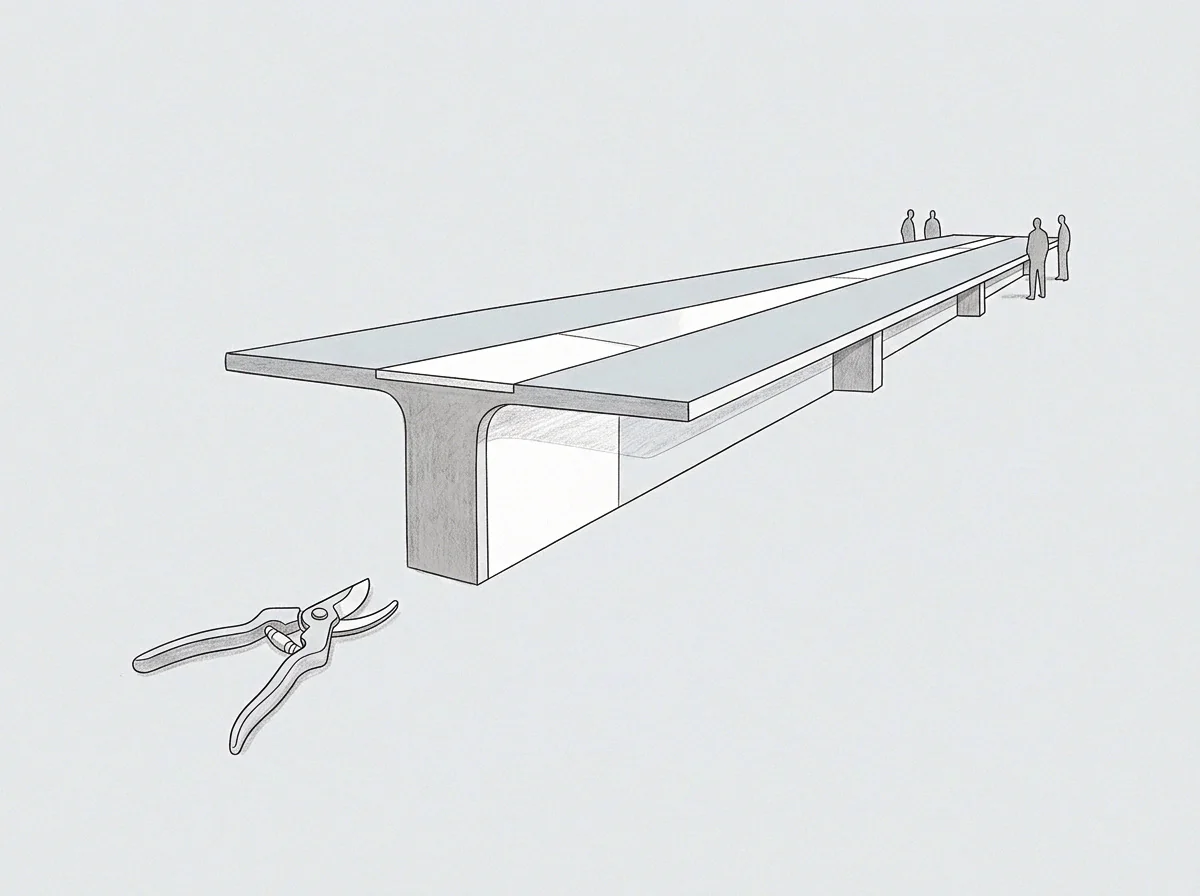
Volume
A downstream processing system running at seventy percent utilization appears healthy on a five-minute moving average. Latency sits inside acceptable bands, thread pools show nominal worker availability, and error counts remain flat. When concurrent upstream queues clear their backlogs simultaneously, this nominal capacity vanishes within milliseconds.
The downstream sink enters saturation without warning because queued upstream workloads do not combine in a linear additive sum. They generate cross-queue interference, lock contention, context switching overhead, and memory bus saturation that degrade processing throughput at the exact moment incoming request rates spike.
The operational headroom of a shared downstream node behaves as a diminishing non-linear volume. Engineers often model capacity by subtracting aggregate upstream arrival rates from downstream service rates. This calculation assumes that downstream throughput remains constant across different arrival distributions.
In real systems, downstream processing capacity is a function of concurrent input states. When multiple upstream workers submit independent write transactions or batch updates concurrently, shared downstream resources spend increasing slices of execution time resolving mutual exclusion primitives, cleaning garbage pools, and managing buffer evictions rather than processing payload units.
A downstream processing sink experiences accelerated volumetric depletion whenever concurrent upstream arrival vectors trigger non-linear internal coordination overhead.
Assume three upstream queues feeding a singular persistent datastore through an asynchronous broker. Each queue operates at fifteen percent of its rated egress capacity throughout the morning. The shared database operates with eighty percent uncommitted execution headroom.
At midday, an upstream ingestion job completes across all three workers at once, causing each queue to discharge its retained load at maximum line speed. The aggregate arrival rate matches forty-five percent of the downstream node’s theoretical maximum bandwidth. Downstream queue depth does not climb gradually; it blows past safety thresholds in seconds.
The downstream node stalls because connection pooling locks, shared buffer serialization, and log write synchronization scale exponentially with concurrency rather than linearly with arrival rate.
This dynamic creates a sudden evaporation of processing margin. When an operator tracks only average egress metrics from individual upstream workers, the downstream node appears protected. The true available volume is an unspent potential that shrinks as upstream synchronization increases.
Mapping this loss requires identifying the hidden coordination costs that remain invisible during low-concurrency testing.
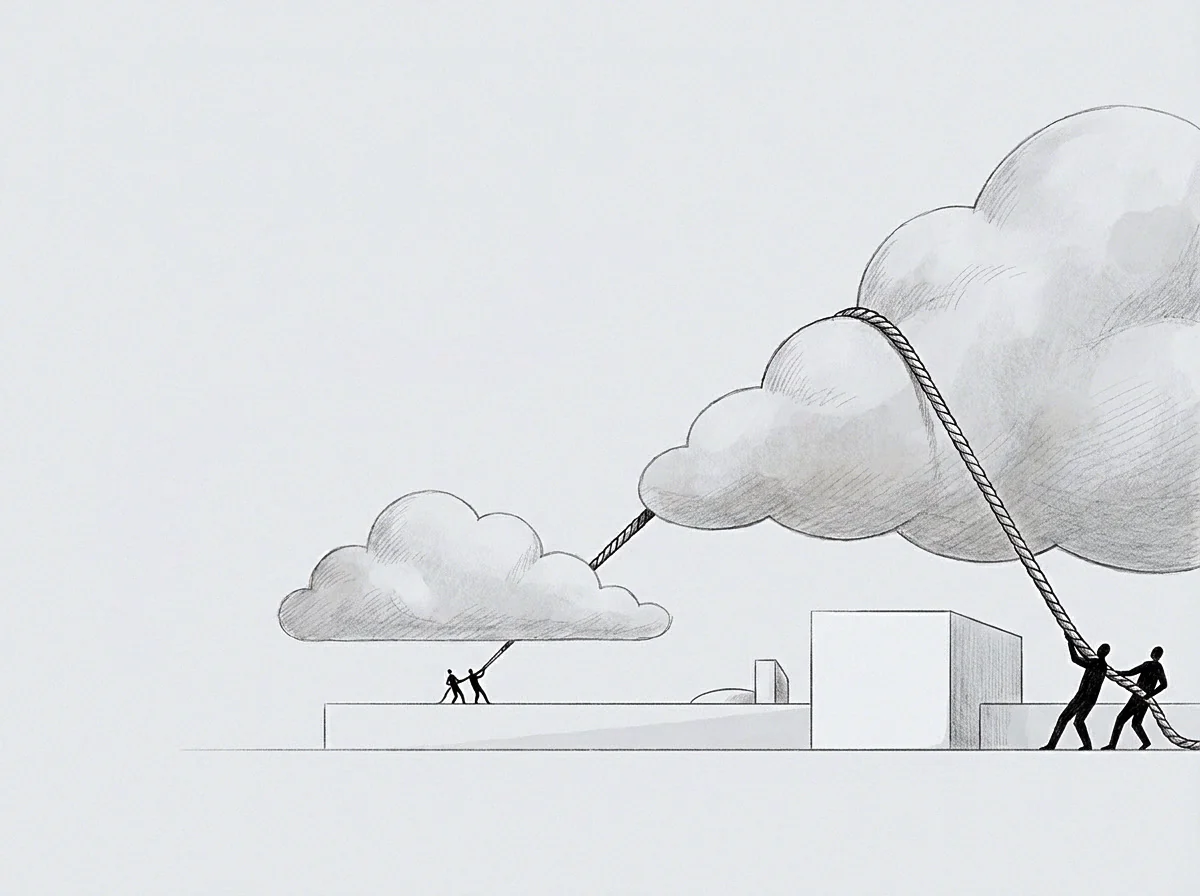
Slope

Contention Trajectories Under Parallel Egress
The rate of downstream degradation traces a steep mathematical descent once upstream concurrency crosses specific operational thresholds. System response curves do not follow a gentle upward angle during load spikes. The mathematical relationship between concurrency and useful system throughput follows the Universal Scalability Law, which accounts for both serialization penalties and cross-worker coherency overhead.
When multiple upstream queues flush data concurrently, serialization delays force tasks into serial execution, while coherency costs force nodes to spend cycles broadcasting state updates across worker boundaries.
Consider an upstream architecture configured with N concurrent worker queues dispatching updates into a relational store with row-level locking. When N equals one, downstream service time comprises pure computation and disk writing. As N increases, service time per unit expands according to a quadratic factor derived from cache invalidation and row-lock disputes.
The effective downstream processing capacity ceases to remain constant; it bends downward along a distinct negative gradient.
This negative gradient defines how quickly headroom collapses. Upstream queues continue to pump messages under the assumption of stable downstream acceptance rates. Because the sink’s processing velocity is actively deteriorating, the discrepancy between incoming volume and outgoing throughput widens exponentially.
The resulting queue accumulation at the downstream interface accelerates at an order of magnitude faster than a traditional additive queuing model predicts.
Mathematical Formulations of Queuing Amplification
Classical M/M/1 queuing equations assume Poisson arrivals and exponential service distributions. In multi-queue upstream architectures, arrivals during backlog clearance are highly correlated and bursty. Downstream queue length expands according to Kingman’s approximation formula, where the mean wait time is heavily amplified by both the variance of arrival times and the variance of service times.
When multiple upstream nodes release batches concurrently, arrival variance spikes drastically. Simultaneously, down-tier lock contention introduces severe jitter into service times, elevating downstream service variance. These two variance drivers act multiplicatively on Kingman’s wait-time numerator.
Headroom evaporates before telemetry dashboards register a change in ingress averages.
The system enters a state of negative feedback decay. Downstream workers spend their capacity managing queue metadata, allocating memory pages for incoming payloads, and context-switching between competing ingress handlers. The unallocated execution volume drops toward zero, driving the system into complete stalling.
An operator observing this descent typically sees worker utilization hit one hundred percent while actual record settlement rates drop toward zero.

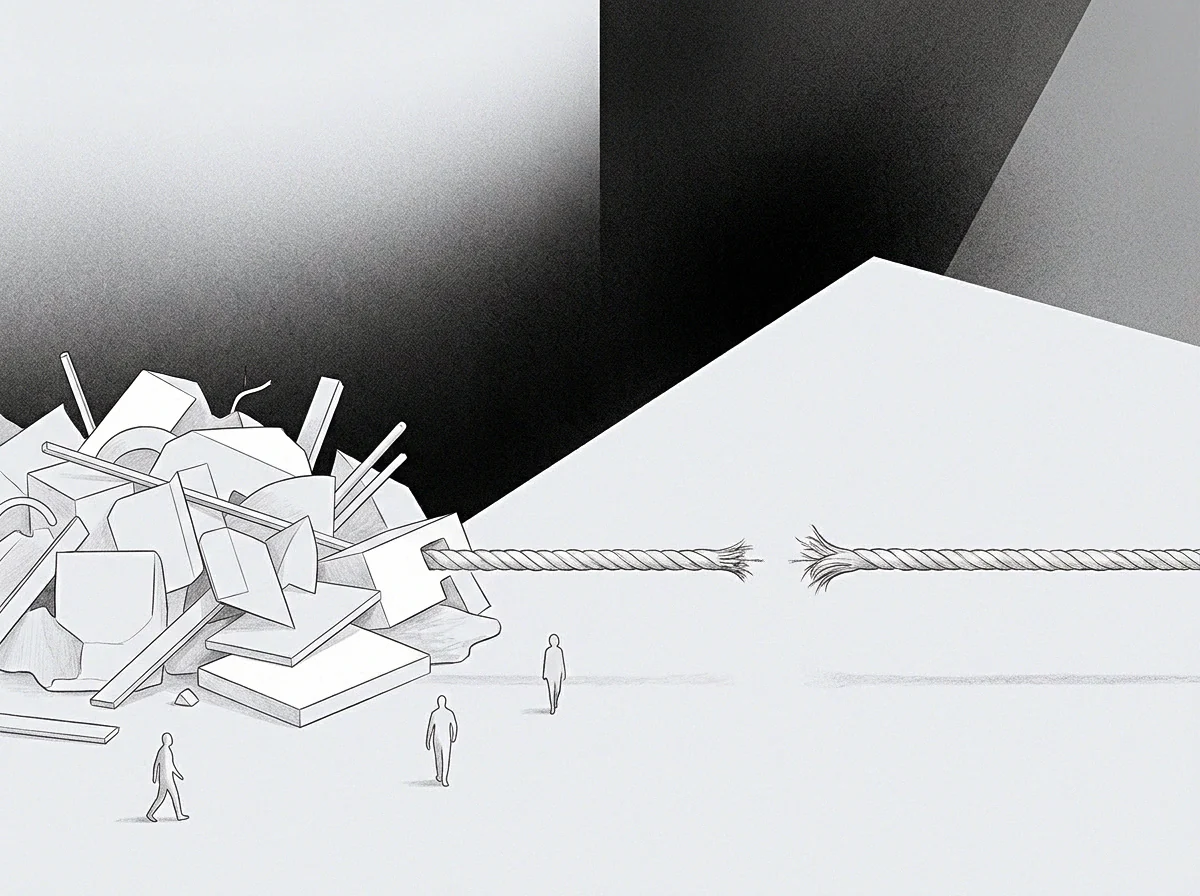
Choke

Internal Mechanics of Shared Sink Failure
Inside the downstream architecture, distinct physical boundaries enforce the transition from processing work to sustaining gridlock. The first internal point of failure is typically connection thread saturation. As requests arrive concurrently from distinct queues, the receiver spawns or allocates threads from a fixed execution pool.
Each allocated thread claims stack memory, socket buffers, and transactional session state. When concurrency outpaces worker completion, the system transitions from CPU-bound payload processing to memory-bound socket management.
The second choke mechanism sits within data tier indexing structures. Many multi-queue architectures write to unified tables or indices. Concurrent writes across separate queues require updates to identical database index branches.
B-tree balance operations or log-structured merge-tree compaction cycles seize exclusive read-write locks across entire memory segments. While one upstream queue holds an index latch, all other upstream workers sit idle in memory wait queues. Incoming network sockets remain open, buffers fill, and downstream kernel memory pools deplete.
Downstream throughput drops to zero precisely when uncoordinated upstream concurrency forces shared transactional systems to spend all computational energy arbitrating lock contention.
The third physical limit involves garbage collection and storage allocation pressure. High-frequency parallel enqueueing generates transient allocations at rates exceeding memory reclamation thresholds. When memory allocation rate exceeds garbage collector sweeping velocity, runtime engines initiate stop-the-world pauses.
During these pauses, no downstream requests process, yet upstream queues continue their outbound transit, driving packet drops and connection resets.
Comparative Dynamics of Degradation States
Understanding where a downstream node sits requires monitoring structural metrics rather than simple ingress volumes. The following comparison illustrates system behavior across four operational regimes under concurrent upstream pressure.
| Operational State | Downstream Thread State | Lock Wait Ratio | Throughput Degradation Mode |
|---|---|---|---|
| Isolated Egress | Active computation | Under five percent | Linear proportional to arrival load |
| Staggered Concurrency | Mixed computation and waiting | Ten to twenty-five percent | Mild sub-linear capacity shrinkage |
| Synchronized Burst | Dominant lock arbitration | Forty to seventy percent | Super-linear exponential headroom loss |
| Coherence Saturation | Total thread blockage | Above eighty-five percent | Complete operational collapse to zero useful throughput |
In the final regime, downstream nodes cannot execute read or write commands because all threads sit parked on synchronization latches. The system acts as a hard boundary against incoming data flow. The upstream nodes interpret downstream timeouts as dropped connections and initiate automatic retry loops, compounding the volume of transactions arriving at an already suffocated target.
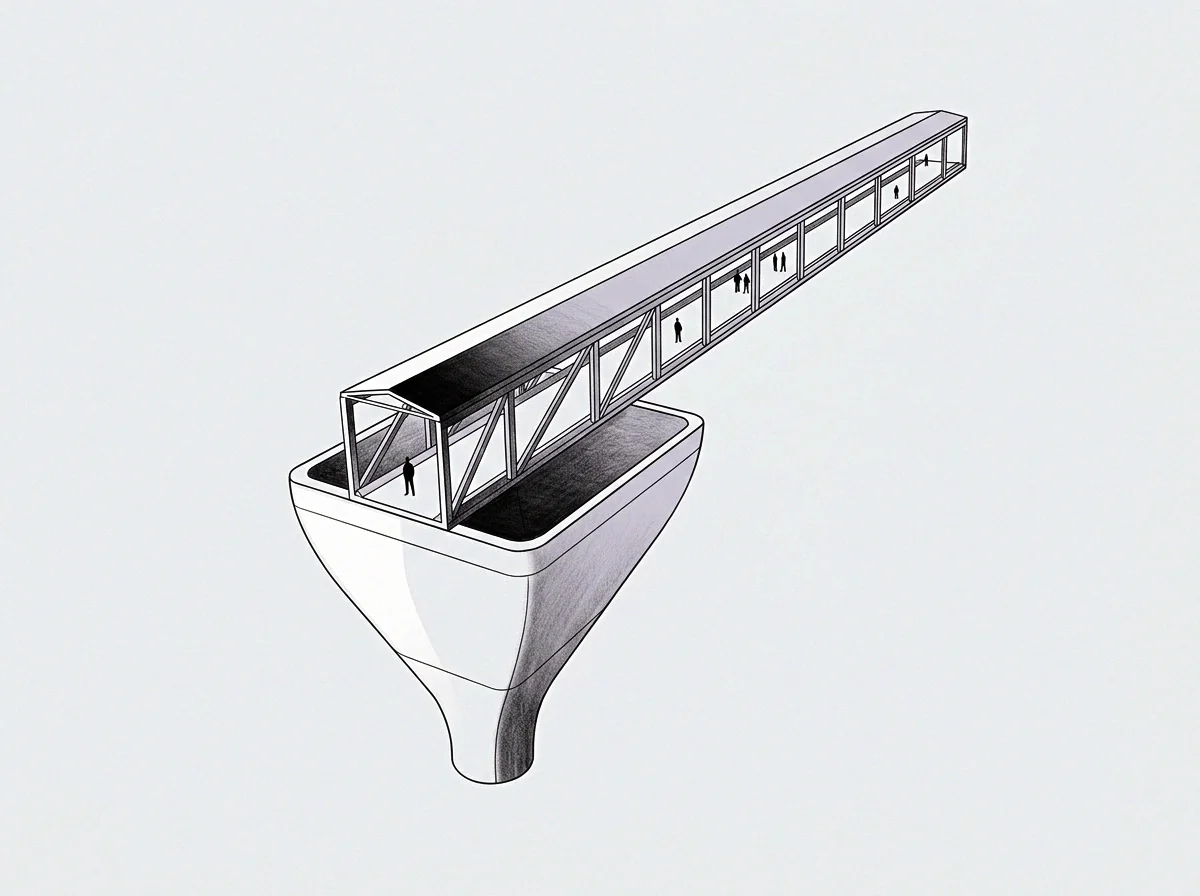
Drift
Decoupling of Upstream Awareness
A central contributor to downstream collapse is the architectural blindness inherent in distributed upstream queues. Upstream nodes maintain local state machines. A single queue worker tracks its local queue length, its private consumer lag, and its immediate network round-trip time.
It lacks visibility into sibling workers running in parallel containers. When four independent worker processes each compute an acceptable rate limit based on their private telemetry, they act rationally in isolation while executing an aggregate flood against the downstream sink.
This operational blind spot leads directly to uncoordinated bursts. Upstream queues experience consumer backoff during normal minor network disruptions. When connectivity clears, each queue worker attempts to clear its accumulated internal backlog by opening additional outbound channels.
Because each worker sees nominal local conditions, all upstream queues dump their accumulated backlog at maximum configured concurrency at the exact same moment. The aggregate volume lands upon the downstream node with zero prior coordination.
Downstream telemetry typically flows back to upstream brokers through periodic health checks or circuit breaker status packets. In high-throughput architectures, polling frequencies sit between one and ten seconds. In that intervening time window, millions of records enter the pipeline.
The downstream node transitions from healthy to catatonic long before an upstream backoff signal activates. The lag in downstream feedback propagation ensures that by the time upstream queues throttle their output, the downstream node has already crashed.

Can Dynamic Flow Control Avert Sudden Collapse?
Mitigating this failure profile requires shifting from static rate limits to adaptive rate propagation protocols. In systems relying on static thresholds, operators set safety limits based on average downstream throughput. These limits remain permanently mismatched during burst states.
If operators set limits low enough to survive maximum synchronized concurrency, the system operates at a fraction of its true capacity during normal staggered operations. If limits allow full utilization during normal periods, the system collapses whenever upstream queues clear backlogs simultaneously.
Adaptive backpressure mechanisms address this vulnerability by monitoring downstream telemetry vectors directly at the ingestion boundary. Instead of relying on static rate configurations, downstream nodes publish real-time congestion markers using explicit congestion notification schemes or adaptive additive-increase multiplicative-decrease credit loops. When downstream lock contention rises above baseline thresholds, available egress tokens issued to upstream nodes drop instantly, forcing queue clearance to pause before downstream headroom evaporates.
A distributed rate limiter that evaluates only local node egress guarantees eventual downstream saturation during synchronized recovery phases.
Backoff coordination requires specific structural disciplines across upstream pipelines:
- Coordinated Egress Scheduling uses central coordination tokens to ensure that only a specific subset of upstream queues can flush accumulated backlogs at peak line rates.
- Adaptive Credit Distribution allocates downstream processing leases to upstream nodes based on total downstream queue residency time rather than upstream backlog size.
- Jittered Drainage Delays introduce randomized exponential distribution intervals into upstream consumer retries, preventing simultaneous batch execution across worker groups.
Without these coordination layers, upstream queues operate on divergent assumptions about downstream capacity. The result is chronic instability during recovery phases, where systems oscillate between complete worker starvation and immediate downstream collapse.
Counter
Preventing non-linear headroom collapse demands that system architects abandon simplistic static capacity sizing. Sizing calculations must factor upstream concurrency correlation directly into downstream resource provisioning. A resilient multi-queue architecture computes its downstream processing margin using the worst-case coherency penalty derived from maximum potential upstream parallelism.
System designers assume that every upstream queue will attempt to dump its maximum burst simultaneously, sizing downstream connection buffers and thread pools to withstand the resulting coordination load.
Architects must also implement hard downstream isolation through queue prioritization and partition routing. By dedicating independent downstream worker thread pools and execution lanes to distinct upstream queues, a failure in one worker pipeline remains contained within its dedicated processing lane. When one upstream queue experiences an uncoordinated burst, its processing lane saturates without exhausting the execution volume or database connections required by sibling queues.
Downstream systems require proactive load shedding based on queue dwell time rather than queue depth alone. A downstream worker tracking internal queue latency drops excess uncommitted work before allocating expensive compute threads to execute payload processing. Shedding work at the earliest point of downstream ingress preserves execution capacity for in-flight transactions, allowing the node to clear existing locks and recover baseline service velocity without entering catatonic lockup states.
Systems built with these controls acknowledge the physics of shared resources. Headroom is not an empty bucket to be filled with unconstrained multi-source inputs. It is an active processing equilibrium that deteriorates whenever concurrent demands cross internal synchronization thresholds.
By measuring this degradation directly and bounding upstream concurrency through explicit global flow control, operators preserve downstream stability regardless of upstream backlog volatility.
When engineering teams omit concurrency penalties from downstream capacity plans, recovery procedures during outages trigger immediate second-order system failures.