
Capital Allocation Mechanics in Non-Linear Operational Environments
Capital allocation in non-linear operational environments follows directional gradient metrics where returns depend on step-function capacity thresholds.

Ledge
A capital infusion of four hundred thousand dollars into a software engineering department sits idle for three quarters because the build infrastructure queue reaches capacity at ninety percent utilization. Linear budgeting frameworks treat cash deployment as a continuous input that drives steady capacity gains. In complex production environments, liquidity absorption exhibits long dead bands where operational output remains entirely unchanged despite substantial cash inputs.
Deploying funds before reaching a critical throughput threshold yields zero incremental gain. Systemic friction absorbs capital without moving operational metrics until physical capacity boundaries expand. Linear projections ignore step functions.
Capital remains trapped in unproductive work-in-progress inventory, expanding queue times rather than output velocity.

Non Convex Return Curves in Early Allocation
Traditional corporate treasury methods assume linear liquidity distribution where each dollar yields proportional operational throughput. Non-convex operational environments alter this dynamic through scale-dependent resource bottlenecks. Queue depth dictates allocation timing.
Capital allocated below an operational threshold vanishes into systemic queue management without expanding ultimate capability.
- Dead Band Absorption Capital deployed prior to reaching operational throughput thresholds produces zero measurable yield across production metrics.
- Convex Step Functions Capacity expands in discrete operational blocks where partial capital funding fails to unlock incremental capability.
- Asymmetrical Decay Thresholds System throughput degrades rapidly when resource contention crosses structural limits, accelerating liquidity consumption.
When an operator pushes financial capital into an engineering ramp without clearing underlying queue bottlenecks, the marginal return stays zero. The expenditure registers on balance sheets immediately while operational throughput remains pinned to historical baselines. The allocation mechanism fails because capital density exceeds the system’s structural processing limit.
Capital deployed below operational scale thresholds produces zero incremental output while increasing systemic holding friction.
Whether capital allocators can isolate pre-threshold dead bands before committing liquid reserves remains an open empirical challenge.

Gradient
Operational environments measure capital efficiency through static return figures, ignoring directional slope changes across variable throughput volumes. Measuring liquidity performance at a single operational snapshot conceals whether marginal capital yields increasing or diminishing capability. Capital density shifts operational risk.
The rate of change in operational output relative to incremental capital input defines the operational slope.
A positive operational gradient indicates that each deployed dollar accelerates throughput at an increasing rate. Once system congestion sets in, this vector turns negative, causing incremental funding to degrade operational performance. Unpriced debt compounds capital loss.
Allocation mechanisms must account for this directional slope to avoid flooding congested channels with liquid cash.

What Signal Marks Operational Scale Non Linearity?
Queue depth monitoring provides the earliest directional indicator that operational surface returns are decoupling from capital inputs. When internal queues grow faster than finished throughput, the marginal return on allocated funds turns downward. Friction expands with capital volume.
Allocation schedules that ignore queue latency compound operational drag, locking funds into stalled processes.
| Operational Condition | Linear Framework Expectation | Non Linear Mechanics Reality | Capital Loss Vector |
|---|---|---|---|
| Infrastructure Queue Saturation | Proportional linear delay per transaction | Exponential latency spikes beyond capacity floor | Unproductive capital tied up in stalled cycles |
| Team Scale Expansion | Direct headcount to output ratio increment | Coordination overhead degrades net throughput | Negative marginal return per capital unit |
| Inventory Buffer Expansion | Linear safety stock cost scaling | Non-linear holding friction and write-down risk | Capital trapped in zero-velocity assets |
| Data reflects operational threshold mechanics across high-variance production environments. | |||
Operating beyond maximum efficiency thresholds converts productive investment into structural overhead. The rate at which capital converts into capability depends on internal processing capacity rather than the sheer volume of cash injected. System latency delays baseline feedback.
Tracking the slope of operational yield prevents allocators from overfunding bottlenecked operations.
When capital density exceeds queue depth boundaries, incremental liquidity generates negative operational yield without triggering explicit ledger errors.
Failing to account for directional slope changes converts available liquidity into permanent operational debt without generating additional capacity.
Tether
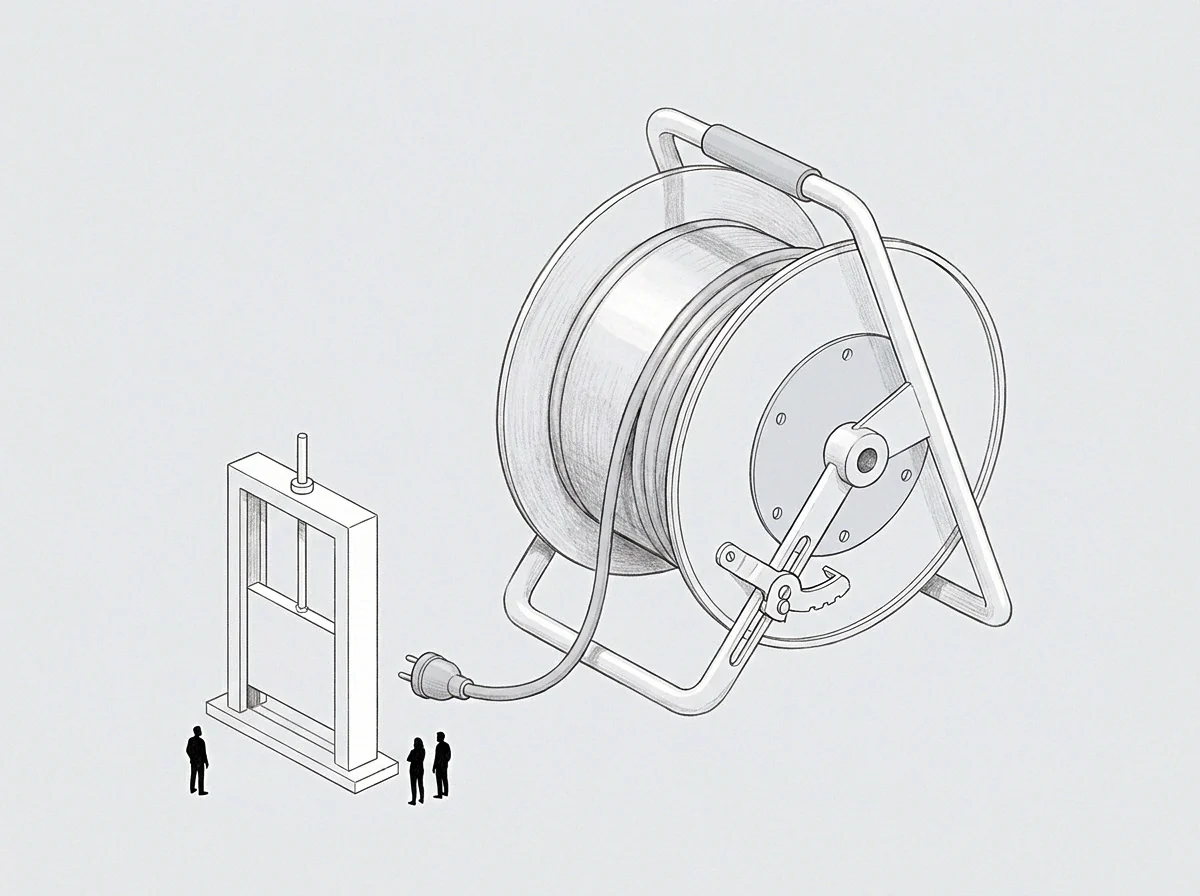
Capital committed to non-linear systems remains linked to the baseline capacity of the narrowest operational constraint. Injecting liquid funds into secondary or tertiary processes fails to increase total system velocity while the primary constraint remains bound. The bottleneck sets allocation limits.
Deployed assets accumulate behind the bottleneck, creating holding costs and operational turbulence.
Effective capital allocation anchors disbursement schedules directly to constraint resolution metrics. Funding dedicated to non-critical operations increases internal system noise without expanding total throughput. Capacity walls alter allocation vectors.
Capital management in non-convex settings demands mapping operational dependencies prior to authorizing funds.
Operational Coupling and Friction Vectors
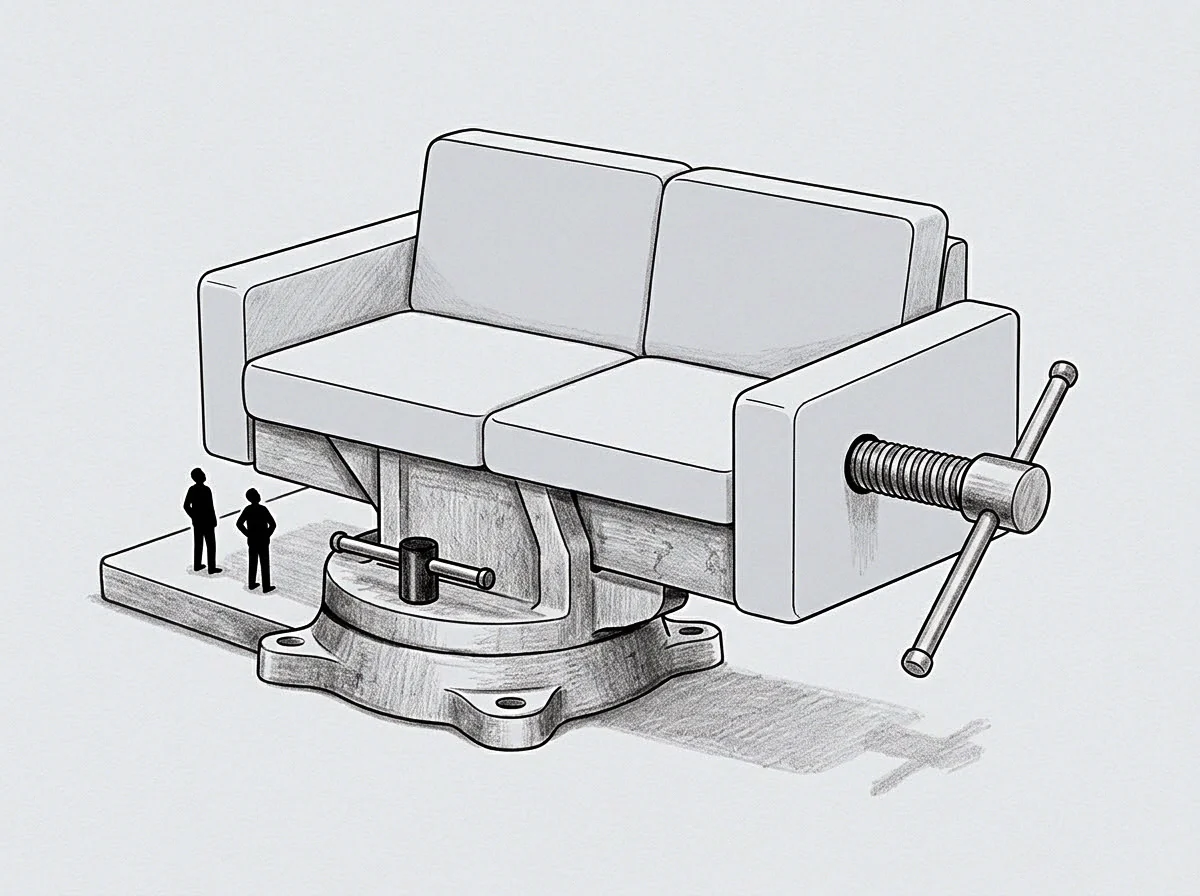
System bottlenecks exert continuous drag on deployed resources, preventing capital velocity from matching balance sheet commitments. High operational coupling amplifies resource contention across interconnected departments. Capital disbursed into tightly coupled systems without local safety buffers stalls operational progress.
- Systemic queues clear before incremental liquidity generates measurable operational output.
- Resource allocation schedules synchronize with actual capacity accretion rather than arbitrary calendar quarters.
- Operational feedback loops supply real-time velocity data to prevent premature liquidity deployment.
A capital commitment made without evaluating operational coupling forces teams to manage excess inventory rather than execution. Financial resources sit on balance sheets as commitments, but the operational system lacks the processing clearance to absorb them productively.
Unpriced queue capacity creates silent capital impairment across non-convex operational surfaces.
Additional funding creates build queue bottlenecks without increasing shipping frequency.

Drift
Disbursement schedules operating on linear calendar cadence disconnect from operational capacity accretion cycles. Corporate treasury protocols often mandate quarterly liquidity releases, assuming operational readiness follows fiscal calendars. Physical and operational capabilities scale through irregular feedback loops, creating variance between cash availability and processing readiness.
This timing variance causes capital accumulation ahead of operational clearance. When liquidity arrives faster than an organization can expand processing capacity, teams allocate resources inefficiently to absorb budgeted funds. The resulting operational drift obscures genuine production costs and misaligns governance metrics.

Feedback Latency and Variance Accumulation
Time delays between capital injection and measurable capacity expansion introduce structural noise into corporate governance metrics. Longer feedback loops increase the risk of over-allocating capital to under-performing operational units. System latency expands capital consumption.
Without rapid operational feedback, management mistakes delayed capacity accretion for capital insufficiency, prompting further wasteful injections.
Operational variance accumulates when financial reporting cycles run faster than production feedback cycles. Liquidity deployment baseline metrics become distorted, leading allocators to adjust capital timing based on stale operational data. Aligning disbursement cadences with real operational throughput milestones eliminates timing variance.
System latency expands capital consumption faster than operational throughput scales.
Capital deployed into unbuffered operational queues accelerates systemic friction.

Anchor
Fixing a capital allocation protocol inside non-convex environments demands a baseline defined by physical constraint boundaries. Establishing operational setpoints based on maximum sustainable throughput prevents liquidity overload. Capital deployment models locked to operational realities protect corporate balance sheets from non-linear cost escalation.
Defining concrete operational boundaries ensures that capital flows only when internal queues possess sufficient processing headroom. High-variance environments require dynamic allocation switches that halt cash disbursements automatically when queue latency spikes. Systemic stability relies on enforcing explicit capital absorption limits.

Structural Boundary Calibration
Operators define operational limits by measuring system breakdown thresholds rather than relying on theoretical capacity models. Stressing operational surfaces surfaces hidden friction vectors before significant capital commitments occur. Calibration protocols establish clear boundary markers where marginal returns begin to slope downward.
Boundaries set around operational bottlenecks force organizations to address structural constraints before expanding general liquidity allocations. Clearing primary constraints releases latent system capability, restoring positive return slopes across operational units. Non-linear allocation mechanics depend on maintaining explicit operational thresholds across all deployment channels.
Capital holds zero operational leverage until system bottlenecks clear.
Enforcing a queue depth allocation clause stops liquidity deployment whenever system utilization exceeds eighty percent, preserving capital reserves for constraint resolution.