
Operational Intent Isolated Through Value Axis Mapping Above Latent Baseline Bounds
Operational intent is isolated by mapping directional displacement along an ordinal value axis, distinguishing real upward progress from ambient baseline churn.

Signal
A software team spent fourteen months burning capital while its internal engagement metrics climbed. Jira tickets cleared on schedule, code review throughput stayed high, and weekly retrospectives produced steady praise across engineering squads. The project still lost money.
Activity is not trajectory; work only alters an enterprise when labor produces displacement along an explicit line of return.
Most organizational movement sits in an ambient operating state. Administrative routines, maintenance pull requests, and standard customer responses cycle continuously, running up payroll without shifting the company posture. When a founder mistakes that volume for progression, operational energy dissipates into circular process work.
Every system maintains an ambient level of motion that burns fuel without changing coordinates.
Decoupling directional displacement from ambient noise requires isolating a dedicated value axis. The calculation treats value as an ordinal vector rather than a bank balance, tracking whether an effort forces an ascent or simply circulates within existing limits.
That separation shows what standard velocity metrics hide. An engineering department can ship eighty features in a quarter while remaining stationary relative to enterprise distribution channels. The work satisfies an internal demand for industry, leaving the structural position untouched.
Plate
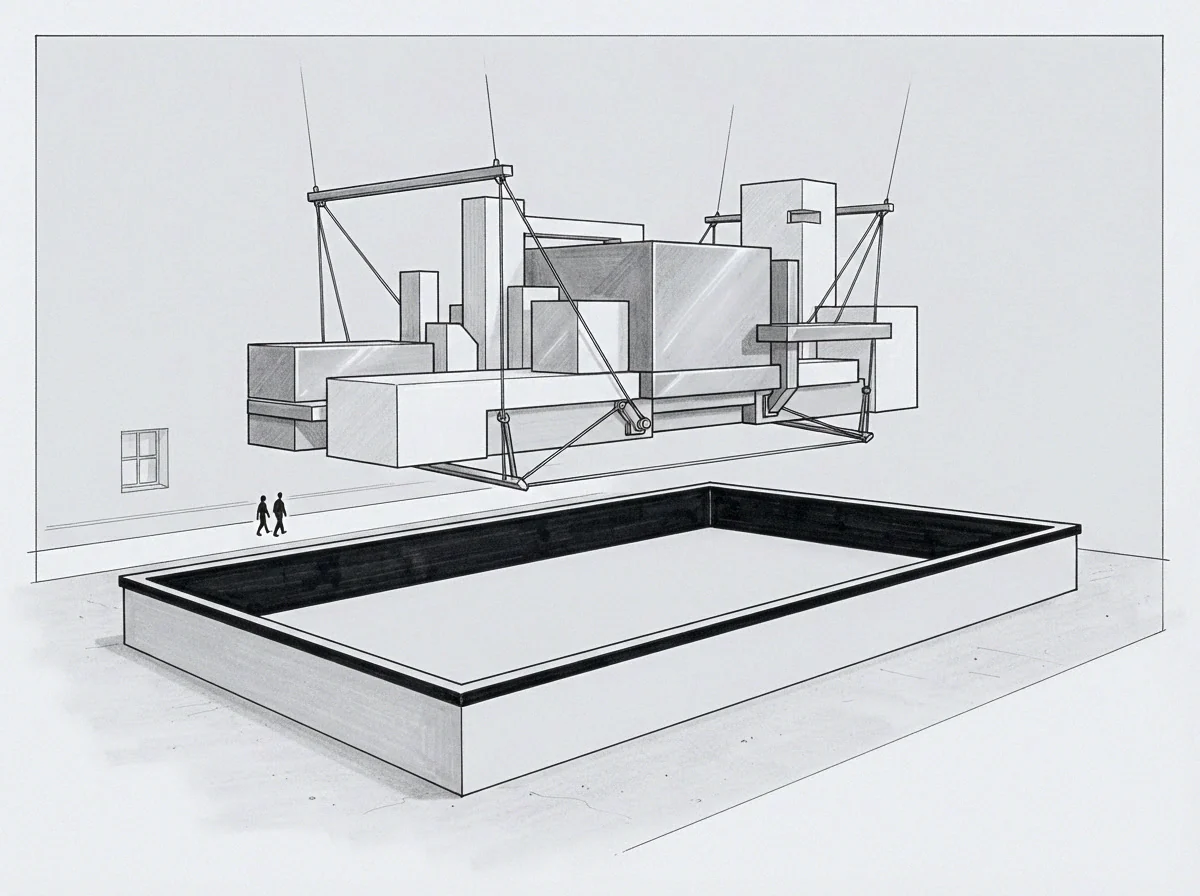
Separation of Directed Motion
The baseline operates as a resting surface. Teams settle onto this horizontal plane out of convenience, repeating existing operational rhythms because repetition costs little attention. The system routes effort along the path of least resistance, defending its equilibrium against the friction of real directional shifts.
Operational intent only shows when an initiative climbs above that resting ground, which demands continuous force. The moment an effort loses active thrust, it drops back toward the floor and gets reabsorbed into maintenance routines.
Ascent above the dormant floor ceases the moment active thrust stops.
Comparative Operational Regimes
| Operational State | Energy Trajectory | System Output | Primary Failure Mode |
|---|---|---|---|
| Ambient Baseline | Circular dissipation along established paths | Ticket resolution and internal process maintenance | Stationary survival under rising fixed overhead |
| Intentional Ascent | Continuous vertical thrust above resting ground | Structural displacement toward distribution scale | Exhaustion from uncompensated friction forces |
| Divergent Avoidance | Lateral deflection around difficult coordination gates | Elaborate tool customization and procedural churn | Accumulation of unprocessed developmental debt |
Conflating motion with advancement is routinely fatal to early-stage companies. When leadership reads maintenance as deliberate forward momentum, payroll liabilities compound while the business drifts toward insolvency.

Tilt
Angular Displacement of Effort
Measuring direction comes down to slope. Once an enterprise defines a value axis, every operational routine shows an angle relative to the floor. A flat slope marks routine preservation.
A steep upward grade marks an effort breaking away from historical habits to shift commercial realities.
The gradient exposes system preferences as a plain mechanical observation. Mathematical optimization models show that systems seek downhill paths unless an external constraint forces a climb. In companies, that downward drift takes the form of internal meetings, reorganizations, and perpetual re-platforming.
Such efforts feel productive and consume long days, yet they skirt the structural friction of market confrontation.
Take an enterprise software startup where twelve engineers spend six months rewriting an internal administrative console. The task consumes two hundred thousand dollars in direct payroll. The rollout generates zero commercial expansion, zero customer acquisition, and zero contractual durability.
The gradient registers zero vertical progress despite substantial expenditure.
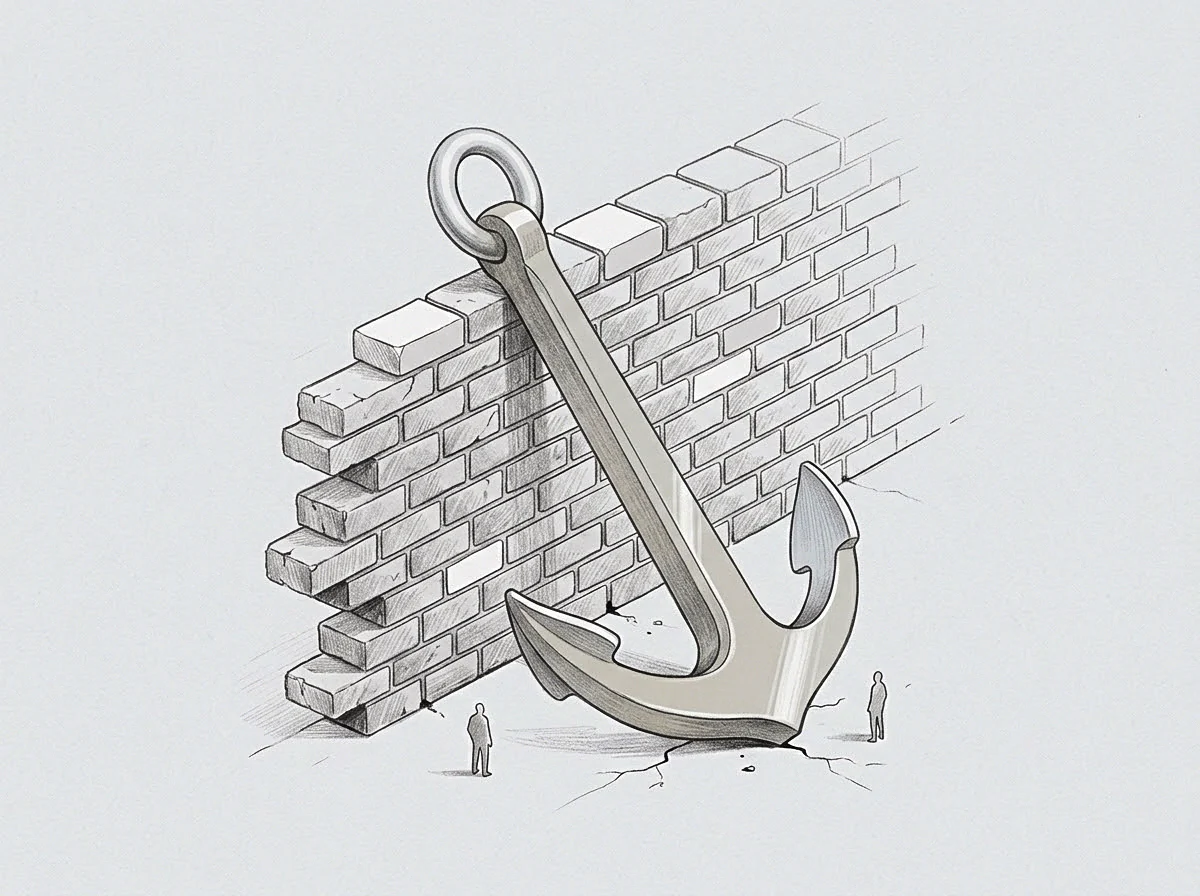
Is Direction Distinguishable From Ambient Motion?
Displacement has to be tested against explicit markers. A team tests directional intent by observing whether an initiative survives once administrative protection gets pulled. Initiatives driven by real intent alter outward posture, locking in irreversible dependencies with external counterparties.
- Targeted Counterparty Commitments turn vague ambitions into rigid external schedules that penalize procedural delay.
- Irreversible Infrastructure Sunsets eliminate fallback paths, stopping operational units from sliding back into familiar legacy workflows.
- Ordinal Metric Ranking subordinates routine maintenance quotas to a singular outward vector, exposing defensive internal work.
A stated ambition gains directional validity only when an operational unit dismantles its own escape routes.
That operational transition is enforced by the irrevocable deployment covenant, which strips secondary support teams of discretionary budgets whenever an initiative fails to produce external verification within ninety days.

Void
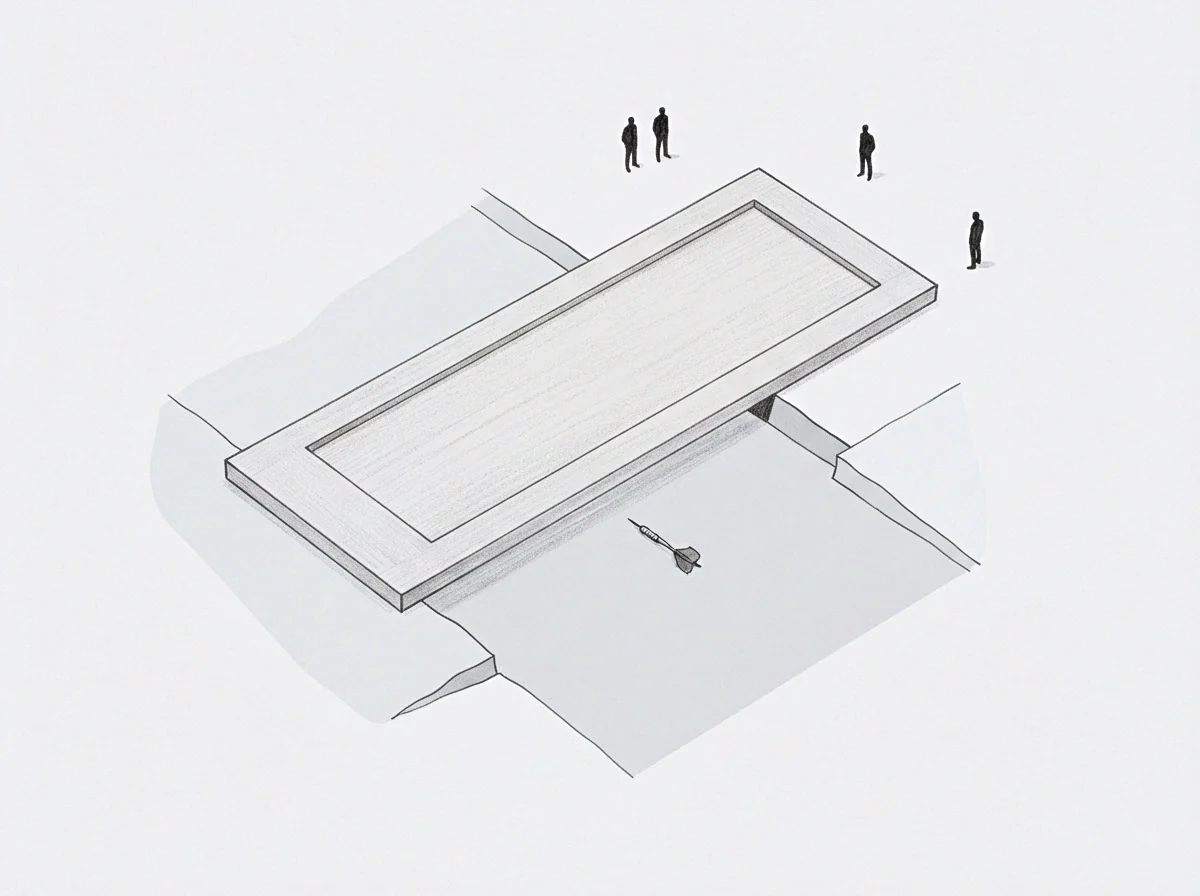
Unspent Latent Capacity
Organizations build perimeters around difficult tasks. The spread between observed trajectory and theoretical maximum displacement reveals a wide field of unspent latent capacity. What a team sidesteps defines its actual operational limits.
Evasion acts as a coordinate marker: when an executive team spends forty executive hours debating typography for a pitch deck, that scrutiny marks a reluctance to make enterprise sales calls. The scale of the detour reflects the difficulty of the task being deferred.
Work sits undisturbed inside this organizational gap. Technical founders rebuild database layers for the third time because pursuing enterprise contracts would force them to renegotiate how they spend their hours. The code editor offers safety where direct outreach demands exposure.
A manufacturing plant showed the same pattern during a tooling transition. Operators kept polishing secondary staging benches while the primary assembly line sat idle waiting for parts. The floor arrangement showed how teams will spend their energy on low-stakes duties to delay working with unfamiliar machinery.
The team stays late every evening to refine internal tracking dashboards, yet no one picks up the phone to confront a churned account.

Toll
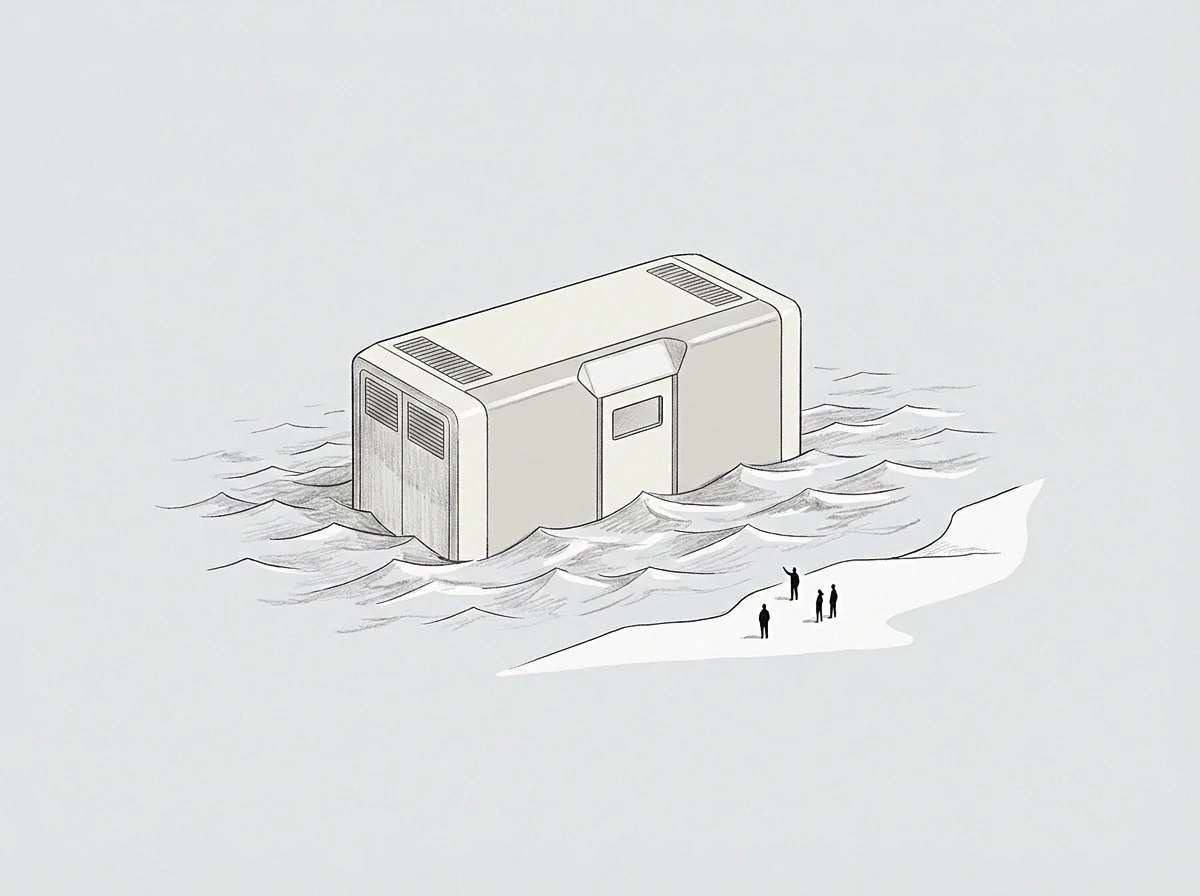
The Cost of Sustained Elevation
Ascent requires relentless expenditure. Moving past the baseline demands an ordinal tax paid in operational stamina, organizational friction, and structural discomfort. The person in the operational seat absorbs that drain on attention and energy directly.
Fatigue sets in quickly when founders press beyond the familiar baseline, triggering sharp organizational pushback. Middle managers demand clarity, engineers request frozen specifications, and partners raise concerns over schedule changes. That friction is simply the natural signature of real coordination taking place within a human system.
A founder cannot talk away this operational toll with motivational speeches. Every unit of displacement above the baseline extracts an equivalent quantum of attention and capacity. When that cost outstrips personal reserves, the initiative drops straight back to the floor.
The limits of an operating model show up only when the company attempts a maneuver it cannot pull off. That barrier is built from unmastered skills, deferred conversations, and brittle technical dependencies. Striking it creates disorientation, which founders often interpret as personal deficiency rather than direct structural feedback.
Sustainable upward progress comes from raising the baseline itself, not from solitary heroics above an immovable floor.