
Quantifying Operational Friction Baselines in Complex Technical Teams
Operational friction baselines emerge by calculating the energetic distance between documented clearance paths and the undocumented workarounds teams deploy.

Axis
Task completion time easily separates from operational delay. A ticket logged at three hours of focused work frequently takes two weeks to pass deployment checks, because delivery dates reflect administrative detours rather than engineering effort. Teams regularly report higher velocity even as internal friction builds up.
The calendar tracks passage of time across a deployment boundary; the actual overhead comes from steering around manual consensus checks, broken deployment paths, and administrative dead ends.
Every technical organization accumulates workarounds. Engineers quickly learn to bypass unmaintained repositories, unstable staging environments, and slow approval gates. As everyday practices diverge from documented procedures, the organization spends time and effort maintaining the appearance of process compliance.
A baseline becomes realistic only when it accounts for the effort spent bypassing official procedures.
Friction rarely scales linearly. Standard time-tracking tallies hours against feature tickets, creating the illusion that costs increase predictably with labor. In practice, adding a seventh cross-team dependency introduces far worse delays than adding a third, turning manageable overhead into a complete standstill.
This drag accumulates wherever separate engineering divisions interface.
- Documented Path Divergence measures the spatial offset between the mandated clearance procedure and the actual code execution sequence engineers use to deliver updates.
- Approval Cycle Latency records the hours a production candidate rests idle in queues awaiting signatures from stakeholders detached from implementation details.
- Environmental Drift Drag captures the unallocated engineering hours absorbed reconciling local development state against fragmented remote staging clusters.
Measuring this gap exposes what standard sprint reviews conceal. Tracking velocity alone encourages contributors to institutionalize workarounds and avoid complex refactoring to protect short-term numbers. When engineering leadership mistakes workaround speed for genuine efficiency, the underlying baseline degrades until minor infrastructure updates cause multi-system outages.
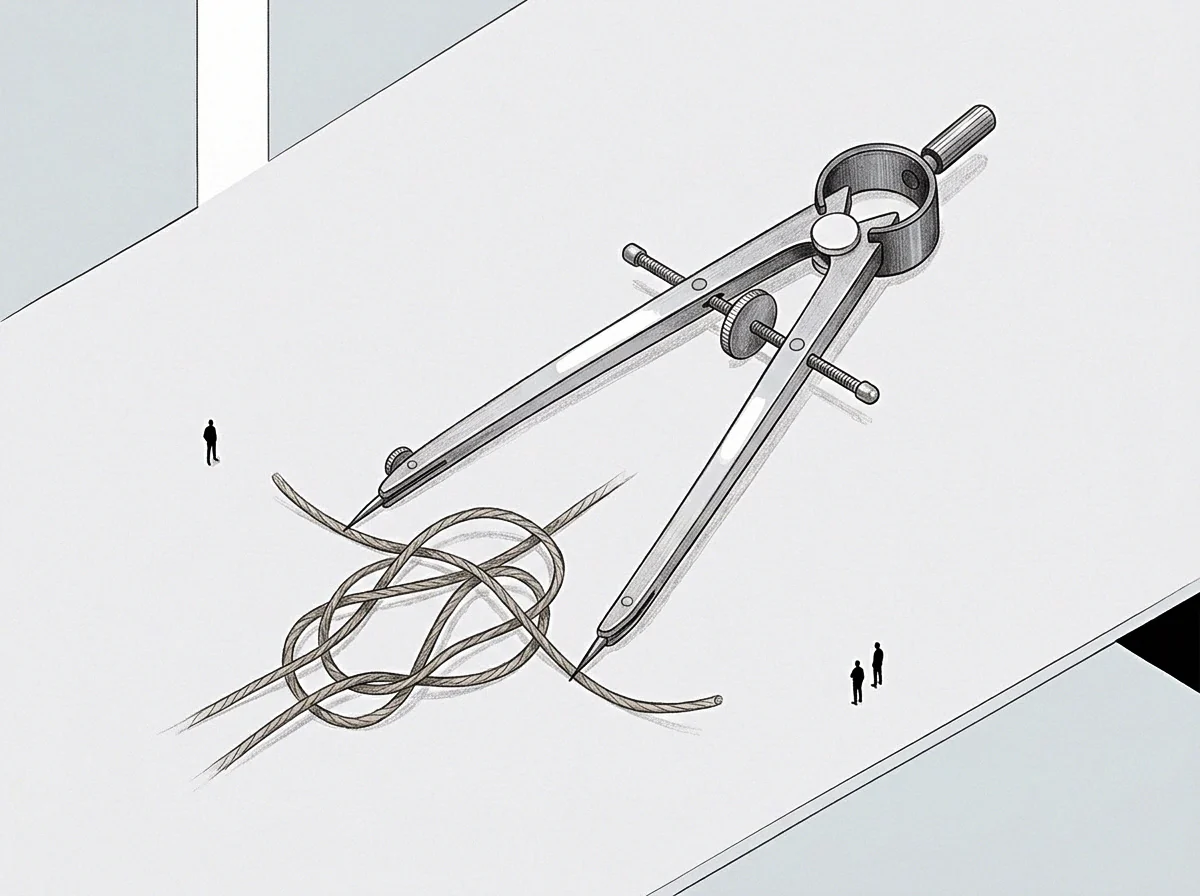
Valve
Production releases act as central pressure points in software systems. When verification layers turn brittle, clearance rates drop while upstream backlog increases without formal documentation. The queue at the deployment boundary turns into an administrative bottleneck, diverting engineering effort into negotiations rather than functional updates.
Consider two technical organizations operating with identical headcounts and shared cloud architecture. The first runs forty independent microservices governed by an automated, policy-based verification gate; continuous releases clear within fifteen minutes of branch merge. The second operates thirty services behind a cross-department change review committee that meets twice weekly.
In the second setting, developers spend twelve hours drafting compliance summaries and orchestrating dry-run migrations for every hour spent modifying production logic. The operational drag remains entirely absent from feature estimation tickets.
Drag consumes all surplus.
Engineers adapt to bureaucratic restrictions through calculated avoidance. They aggregate distinct changes into massive quarterly releases, creating catastrophic failure modes during deployment windows. The operational valve becomes a source of system failure rather than a protection against instability.
- Pre-clearance documentation demands outstrip implementation hours, prompting teams to bundle speculative features into single release manifests.
- Manual approval queues stall pipeline throughput, generating backpressure that forces engineering attention away from codebase maintenance into queue triage.
- Failed branch reconciliations multiply across delayed integration targets, producing cascading rollback routines during production updates.
The operational cost shifts onto maintenance windows. Teams come to accept protracted coordination rituals as a normal property of scale, eventually asking for two weeks of quiet time to clear stuck tickets.

Shear
Frictional interfaces generate operational turbulence wherever technical ownership divides between teams. When platform squads build delivery pipelines without consulting implementation teams, the resulting divergence produces friction at every handoff. Two distinct groups move at different velocities across a shared technical surface, losing momentum to constant coordination.
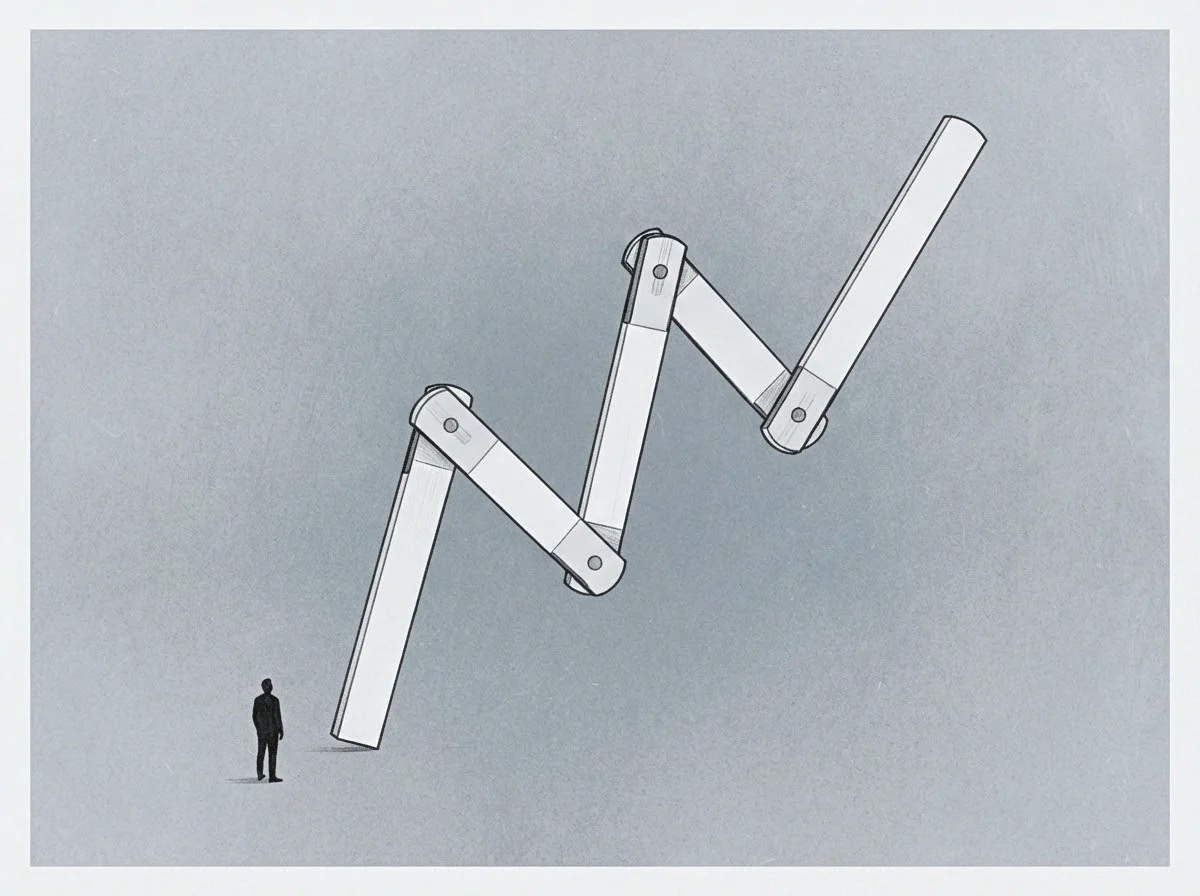
Does Lateral Coordination Mask Throughput Loss?
Teams attempt to resolve surface friction through supplemental meetings, shared chat channels, and joint steering committees. These lateral coordination efforts create the illusion of alignment while consuming the cognitive capacity needed to eliminate technical bottlenecks. The coordination tax expands quietly, eroding deep engineering focus.
Coordination extracts silent energy whenever technical boundaries separate authority from execution.
The table below compares three observable coordination regimes across typical infrastructure interfaces, tracking the diagnostic divergence between administrative perception and engineering drag.
| Governance Regime | Interface Topology | Measured Clearance Time | Latent Bypass Volume |
|---|---|---|---|
| Decoupled Automated Governance | Self-service programmatic APIs with automated policy validation | Minutes per deployment event | Negligible shadow tooling |
| Centralized Manual Review | External change review gate requiring sign-off from shared services | Days per deployment event | High internal proxy branching |
| Fragmented Team Silos | Ad-hoc lateral handoffs mediated via tickets and direct messaging | Weeks per cross-cutting initiative | Severe configuration divergency |
A high volume of bypass activity directly mirrors systemic failure within the primary delivery architecture. When engineers construct shadow deployment scripts or local mocking frameworks, they map the boundaries of what the official platform refuses to handle. Avoidance serves as an exact coordinate marker of accumulated technical friction.
In physical transport, fluid piping systems shed pressure whenever interior walls grow rough from scale buildup, demanding greater pumping force to maintain nominal volume. Technical organizations experience identical dynamics: as operational surfaces accumulate procedural calcification, leadership expends ever-greater salary and management intervention simply to keep shipment rates level. The unspent volume sits locked behind systemic avoidance.
A team bound by a mandatory seven-day ticket review policy will rewrite core system components to avoid touching monitored modules.
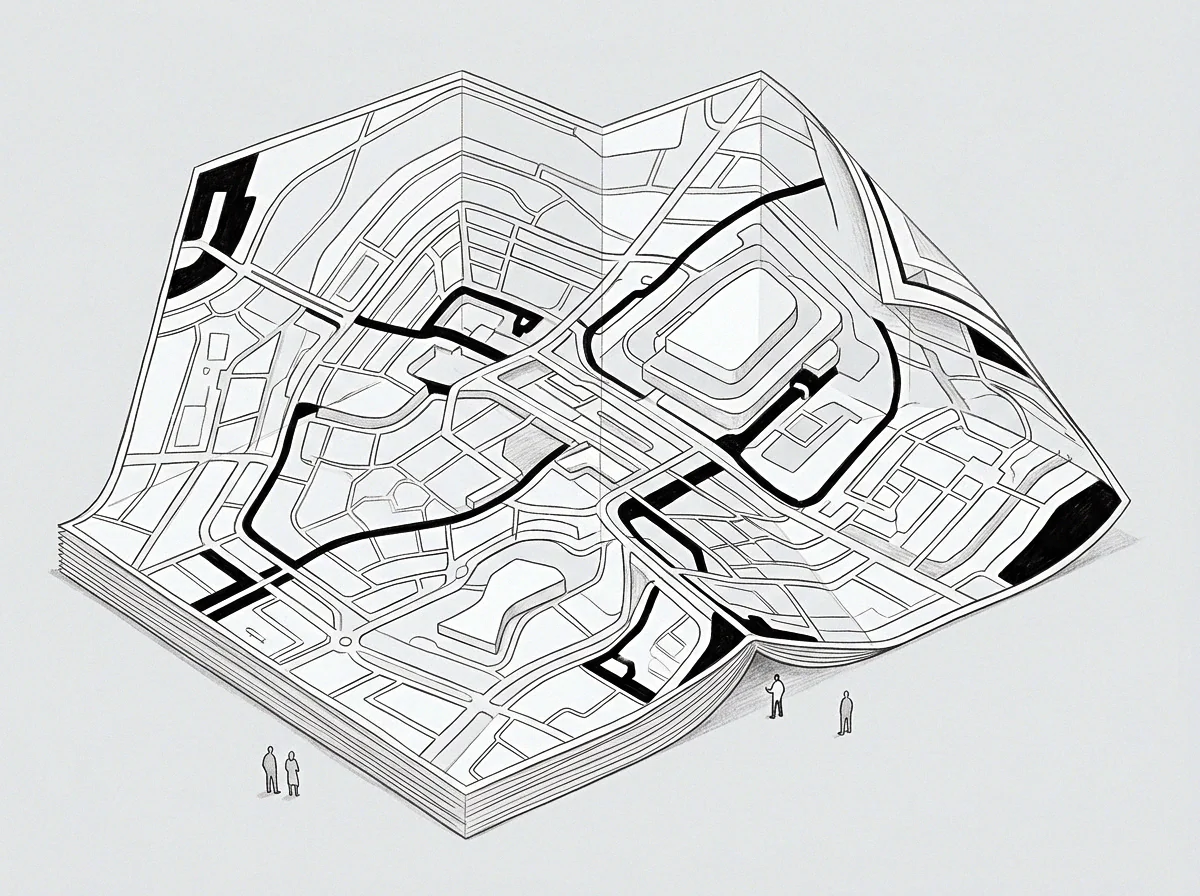
Sink
Energy diverted into overcoming system friction never recirculates back into product development. It dissipates as organizational fatigue, continuous context switching, and talent attrition. Technical leaders often mistake this exhaustion for lack of domain competence, diagnosing execution problems when the underlying issue is an unquantified friction baseline.
Establishing an accurate baseline demands measuring the delta between the theoretical minimum path and actual operational execution. The theoretical minimum represents the code adjustments, testing procedures, and deployment routines stripped of all manual sign-offs and retry loops. Subtracting this minimum path from the actual recorded calendar and cognitive load reveals the operational sink.
Velocity metrics disguise accumulation.
A baseline shifts toward permanent decay when operators treat workaround latency as standard operating cost.
The resulting drag establishes a false ceiling on engineering throughput, blinding leadership to the latent capacity trapped beneath obsolete administrative practices.
A baseline holds authority only so long as workers stop inventing undocumented bridges around it.