
Quantifying the Limit of Operational Restructuring in Self Reinforcing Organizational Deflection Networks
Operational restructuring in deflection networks reaches its limit when administrative coordination costs exceed total system capacity.

Baseline
An executive team reassigns reporting lines across three divisions while product shipment dates slip for the fourth consecutive quarter. Board meetings focus on committee structures, approval chains, and regional coordination protocols. Direct technical constraints in the underlying delivery pipeline remain unaddressed because resolving them demands capital expenditure and structural exposure.
Daily work routes around the primary friction point, creating secondary processes that consume capacity while producing zero upward movement on core delivery figures. This behavior defines a self-reinforcing organizational deflection network.

Friction Routing Across Operational Boundaries
Operational pressure moves along the path of least resistance within any enterprise system. When direct structural correction presents high political or capital expense, execution vectors divert into governance routines, compliance loops, and reporting realignments. Administrative expansion absorbs engineering hours before product delivery dates update.
Deflection accumulates unprocessed friction. Each diverted operational initiative creates its own reporting artifacts, steering committees, and key performance markers. These secondary markers generate an artificial validation signal, masking the total lack of throughput progress while system capacity drains steadily into managing the deflection architecture itself.
When structural friction exceeds the execution threshold, operational throughput declines in direct proportion to administrative reallocation.

Deflection Vector Accumulation
Work shifts into secondary channels whenever primary objectives encounter unaddressed structural walls. The magnitude of this deflection vector measures the precise volume of unprocessed operational friction. Systems that reward process completion over output delivery systematically amplify these deflection vectors over time.
Subordinating core technical debt to governance realignment drains operational reserves, causing silent collapse during market contractions.

Rung
Operational boundaries mark the absolute limits of current execution capacity. When a division encounters a structural wall, administrative activity accelerates to compensate for lost momentum, leaving the primary constraint untouched while local activity masks structural stagnation.

Structural Coordinates of Systemic Avoidance
Mapping organizational limits demands tracking where real execution stops and administrative narrative begins. Deflection networks exhibit distinct operational failure modes when capacity bounds are reached:
- Administrative Siphon redirecting technical labor into compliance monitoring and internal reporting protocols.
- Governance Oscillation shifting decision authority continuously between centralized steering committees and regional operational leads.
- Metric Decoupling evaluating throughput using internal milestone counts rather than market delivery figures.
Unprocessed operational debt forces execution vectors into self-referential validation loops.
An organization that measures operational progress by internal restructuring velocity has substituted motion for throughput.

Drain
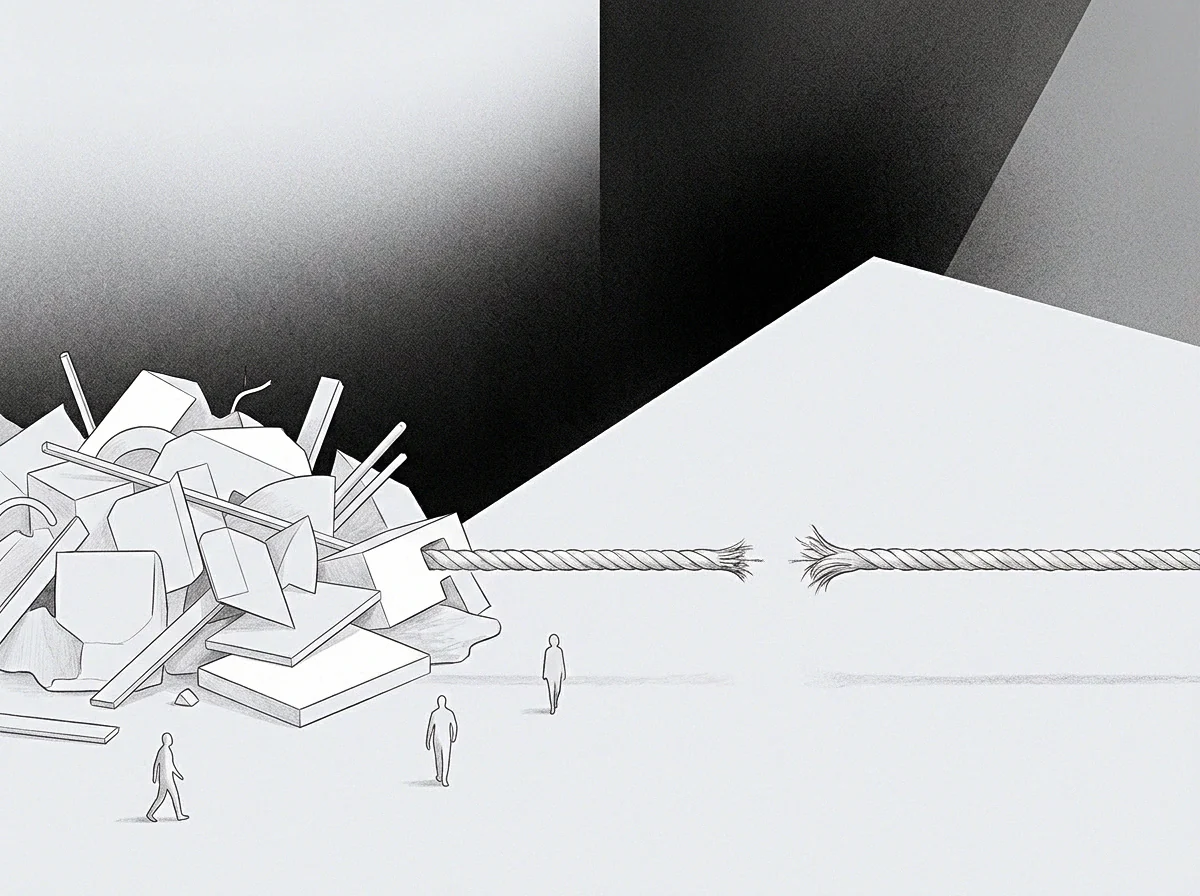
Comparing two engineering divisions operating under identical capital budgets clarifies how deflection networks consume surplus capacity. Division A allocates resources directly to resolving core software architecture bottlenecks, while Division B re-architects its operational matrix and reporting hierarchies every six months to manage delivery delays. Division A accepts temporary throughput declines during structural repair, whereas Division B maintains continuous administrative activity while net throughput drops toward zero.
Mathematical Limits of Administrative Reallocation
Quantifying structural capacity requires measuring the ratio of direct production hours to administrative coordination overhead, as coordination cost absorbs surplus energy and shifts friction to operational margins. Over successive restructuring cycles, Division B increases governance headcounts while product output stagnates. The structural capacity of Division B contracts until all incoming capital funds administrative self-maintenance.
Restructuring total capacity without altering the core constraint guarantees equal deflection at higher coordination cost.

Comparative Analysis of Operational Restructuring Outcomes
Divisions operating within self-reinforcing deflection networks exhibit measurable divergence across critical operational metrics compared to divisions addressing primary structural bottlenecks directly.
| Evaluation Metric | Direct Bottleneck Resolution | Deflected Matrix Restructuring |
|---|---|---|
| Capacity Loss Rate | Initial 15% reduction during repair, stabilizing to 0% | Continuous 8% compounding loss per restructuring cycle |
| Latent Friction Volume | Bounded and decaying over 6-month window | Unbounded and accumulating across secondary committees |
| Recovery Horizon | Predictable 2-quarter realignment window | Indefinite oscillation without recovery point |
| Structural Efficiency Index | 0.82 production ratio post-resolution | 0.24 production ratio at terminal network boundary |
The realignment plan addressed every governance issue raised in the audit while maintaining existing shipping commitments.

Ceiling
Operational throughput hits an impenetrable threshold when administrative overhead consumes all available bandwidth. At this point, additional restructuring initiatives yield zero net friction reduction, capacity drops below recovery threshold, and the error signal increases continuously as the network absorbs external feedback.

What Capacity Remains After Structural Reallocation?
Administrative load absorbs residual engineering energy long before leadership identifies structural stagnation. Reversing deflection network expansion involves strict operational containment protocols:
- Isolation of primary friction coordinates through direct performance trace analysis.
- Establishment of strict boundary conditions on governance expansion protocols.
- Reallocation of engineering capacity directly to bottleneck resolution tasks.
Imposing an operational freeze on role creation caps deflection network growth, forcing execution teams to confront existing system constraints directly.

Silt
Unprocessed friction settles at the base of every deflection network, creating structural inertia that resists operational adjustment. As unspent volume holds at the boundary and execution stalls, restructuring creates secondary administrative loops. When leadership misinterprets deflection velocity as operational progress, the enterprise enters a self-reinforcing decline phase where administrative realignment costs consume all remaining capital.
Boundary Dynamics and Latent Potential
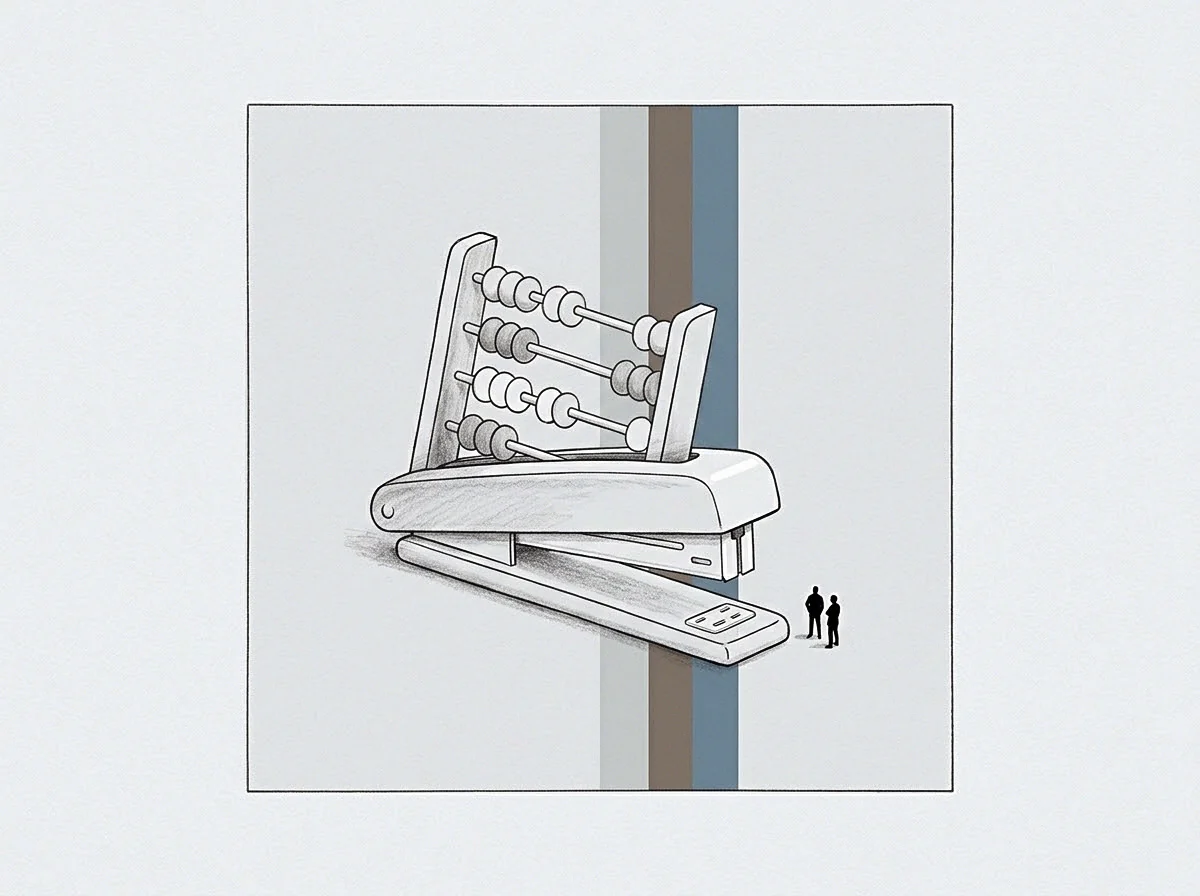
System boundaries define the limits of current operational models. Pushing against these boundaries generates severe administrative discomfort, signalling true structural computation rather than routine retrieval. Reclaiming operational capacity requires halting the deflection siphon, identifying the unspent technical volume above the baseline, and committing resources directly to primary constraints regardless of short-term organizational disruption.