
Reading Daily Operational Deflections To Locate Uncomputed Value
Operational deflections mark the precise coordinates where an enterprise evades steep computational friction, trapping latent value behind procedural routines.

Flinch
A spreadsheet cell sits empty at five in the afternoon because calculating customer acquisition costs would reveal a negative margin on every delivery run. The operator closes the tab and answers thirty routine support tickets instead. Those thirty tickets register as completed tasks on the company dashboard, showing steady operational velocity while keeping the loss off the financial statements.
Operational deflection occurs whenever activity moves away from a hard calculation toward an accessible routine.
Every organization operates on two parallel planes of measurement: cardinal quantities recorded in ledgers, and ordinal vectors of effort expended across the working day. When standard metrics register steady operational output while strategic initiatives stall, the gap marks the presence of uncomputed value. This figure represents latent capacity trapped behind procedural evasion.
The person in the operational seat feels the weight of this unresolved work through persistent fatigue, even as standard reporting systems classify the time as productive.
A diversion into trivial operational tasks marks the precise coordinate where formal measurement halts.
Two partners run an enterprise logistics service with the stated objective of securing ten enterprise contracts requiring customized compliance audits. Over three consecutive months, the operating partner logs eighty hours each week refining internal routing algorithms while the audit documents sit untouched in a shared desktop folder. Operational velocity appears high, yet the enterprise client roster remains empty.
Algorithm tuning substitutes for the commercial push required to close an audit.
The system routes around hard calculation because confronting an unpriced risk carries immediate friction. Tracing the path taken away from an uncomputed problem reveals the magnitude of the underlying difficulty and pinpoints the location of the dormant asset.
Trench
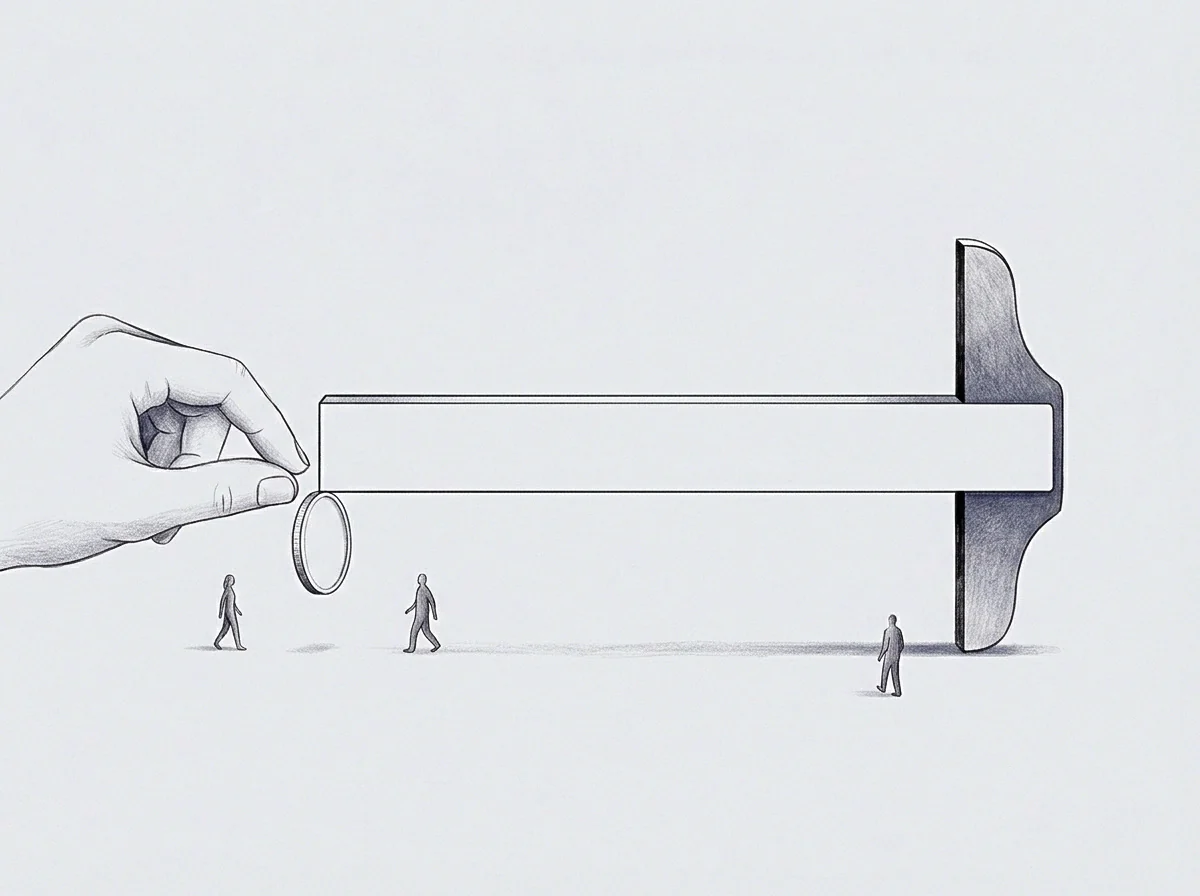
Repeated operational deflections carve permanent channels across an organization. A workaround established to bypass a difficult calculation solidifies into standard company policy within six months. Over time, teams stop noticing the detour, treating the lengthened route as necessary friction rather than an intentional diversion.

The Geometry of Least Resistance
Optimization theory treats descent along a mathematical slope as an unguided search for local minima. A physical system moves toward lower energy states without exercising conscious selection. Within an enterprise, administrative work operates as an equivalent sink.
Resolving minor software defects, reorganizing product catalogs, and drafting internal status updates require low activation energy. These tasks provide predictable satisfaction while consuming the working hours of senior personnel.
Ascent demands continuous energy expenditure. Confronting a commercial partner regarding an unpaid licensing fee brings interpersonal friction and commercial vulnerability. Resolving a broken balance sheet requires acknowledging past capital allocation errors.
When confronted with these demands, an operating team naturally descends into administrative maintenance.
| Operational Domain | Observed Deflection Task | Avoided Steep Computation | Structural Consequence |
|---|---|---|---|
| Product Engineering | Refactoring legacy code libraries | Deprecating an obsolete core feature | Technical debt compounds silently |
| Enterprise Sales | Formatting internal presentation decks | Cold outreach to enterprise procurement | Pipeline velocity drops to zero |
| Executive Governance | Editing public marketing copy | Terminating an unproductive vendor contract | Capital reserves deplete unchecked |
| Customer Operations | Resolving identical manual bug tickets | Auditing systematic data pipeline failures | Labor capacity remains exhausted |
In each domain, the time committed to the deflection provides an alibi against facing the structural calculation. An engineer refactoring code feels virtuous, yet the obsolete product feature continues to alienate commercial clients. The deflection consumes finite cognitive capacity while preserving the illusion of progress.
Behavioral decision theory identifies this phenomenon as task substitution. When a system confronts an intractable problem, it swaps an accessible surrogate into the computational slot without alerting the conscious operator. The substitution conceals the underlying shortfall.

Stratum
Beneath daily operational evasions lies a stratified deposit of structural data. Each time an operator avoids a direct calculation, the deferred decision leaves an administrative fossil. These fossils accumulate in distinct organizational layers, mapping exactly what the business model refuses to compute.

Latent Potential as an Inverted Profile
When an operator descends along the path of least administrative resistance, the avoided path forms a negative profile. Mirroring this negative profile above the operational baseline exposes the latent potential of the enterprise. The magnitude of the avoidance matches the magnitude of the trapped value.
If an engineering team spends forty engineering hours weekly patching broken data imports manually, that unspent volume represents a complete programmatic interface waiting for construction.
Mirroring the avoided operational slope above the baseline reveals the exact volume of unspent organizational capacity.
Reading these operational deflections requires isolating the specific categories of work that trigger administrative flight. These categories group into four identifiable deposits:
- Pricing recalculation deferred because confronting historical client agreements threatens existing commercial arrangements.
- Contractual renegotiation avoided through the issuance of discretionary manual billing credits each quarter.
- Architectural migration bypassed by hiring supplemental temporary support personnel to reconcile database records by hand.
- Personnel reassignments delayed by creating artificial management tiers that duplicate reporting functions.
The uncomputed value sits inside these deposits. A founder examining a company balance sheet sees only historic costs recorded in cardinal currency. The operator studying daily deflections sees where the machine expends energy to maintain an artificial equilibrium.
The energy spent defending that equilibrium reveals the magnitude of the latent asset.
Wall
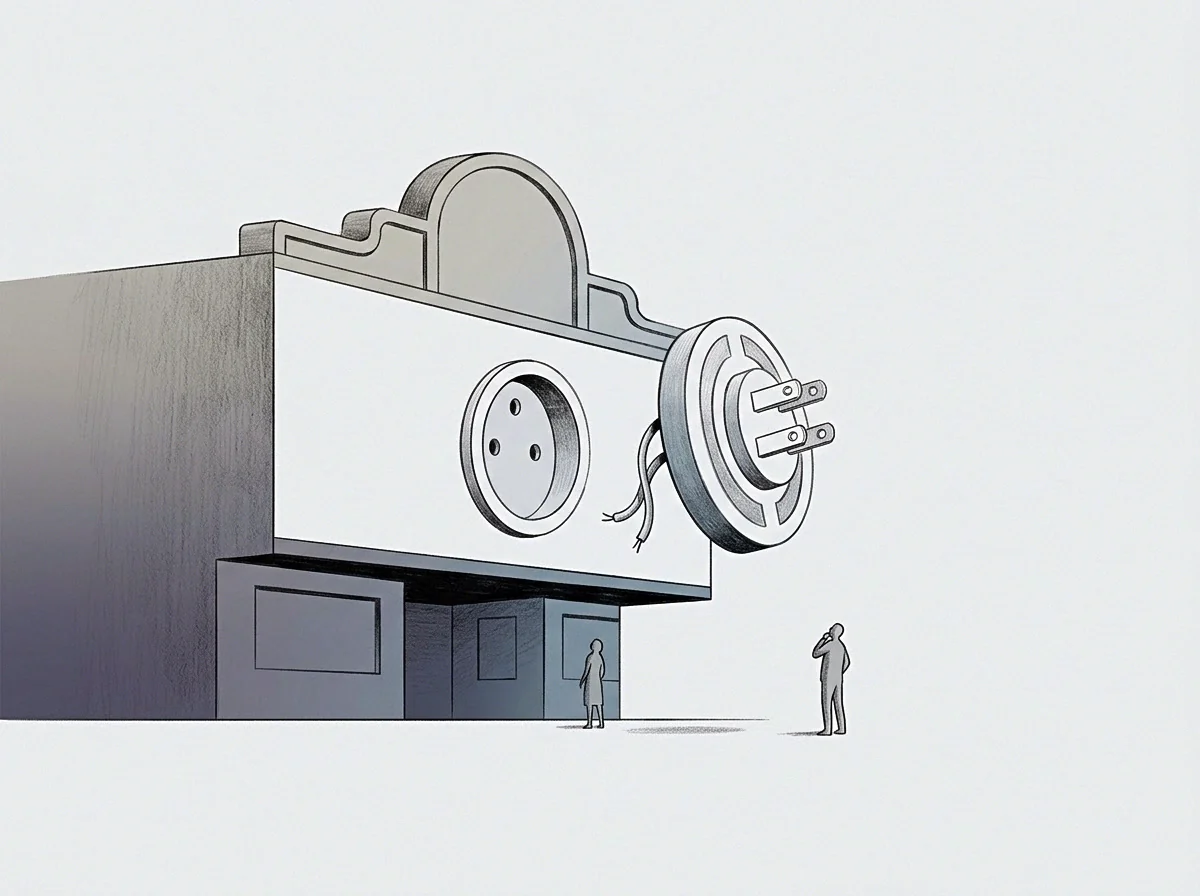
Every operational system possesses a perimeter defined by tasks the organization refuses to perform. This perimeter constitutes the wall. The wall is not an external constraint imposed by regulatory authorities or market conditions; it represents the internal limit of what the current operating model will compute.
Discomfort as an Analytic Instrument
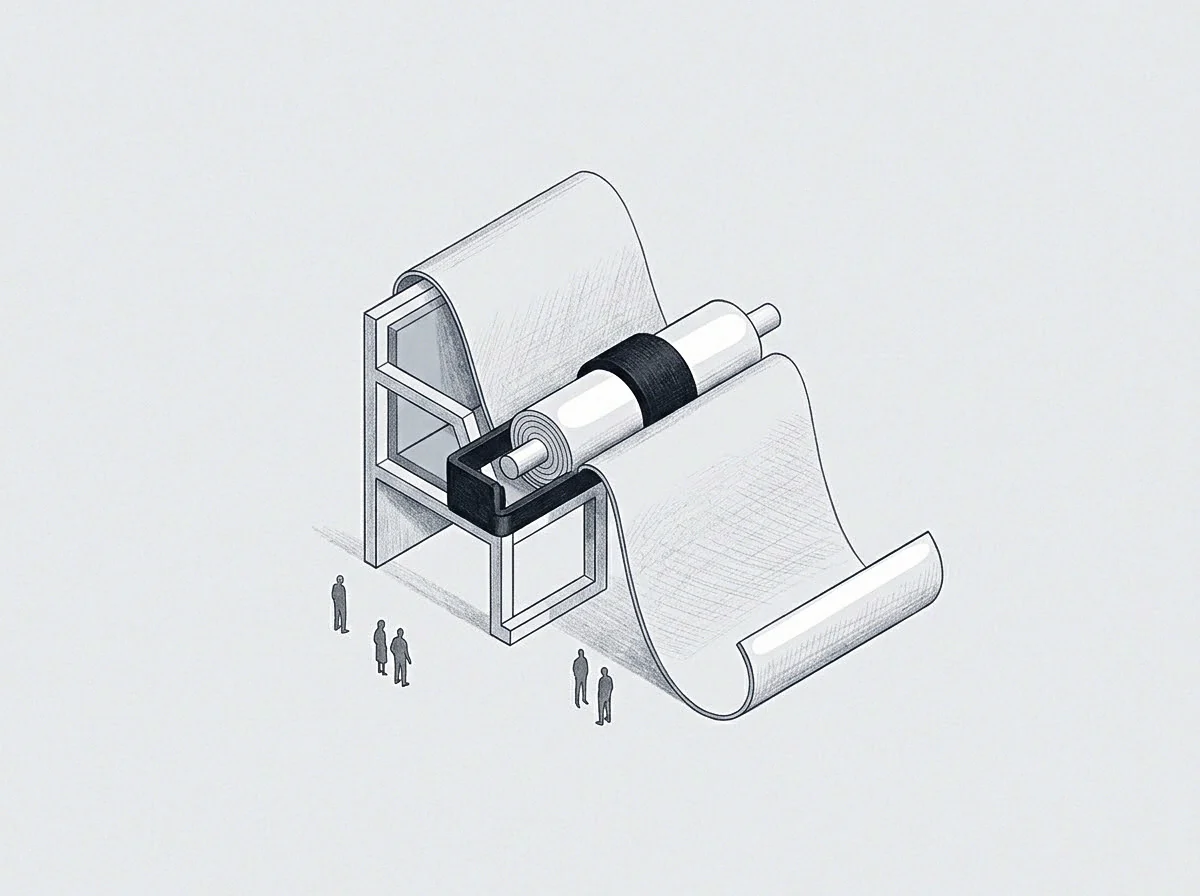
Approaching the wall produces sharp operational discomfort. A product lead tasked with killing a flagship software feature experiences immediate administrative friction: customer success leads file complaints, sales personnel warn of pipeline disruptions, and executive sponsors question the team’s direction. This friction functions as an instrument of spatial measurement.
The intensity of the discomfort indicates that actual computational work is occurring rather than mere administrative retrieval.
Retrieval work feels calm. Executing a standard customer onboarding workflow follows established cognitive grooves, requiring minimal computational energy. Approaching the wall demands new operational arithmetic.
The operator must calculate trade-offs that alter the structural balance of the firm. The friction generated by this calculation causes the team to flinch, bouncing back toward familiar administrative maintenance.
An enterprise software firm with eighty employees provides a clear example. The business development team expends five hundred hours each month responding to public tenders with single-digit win probabilities. The firm avoids pitching private negotiated contracts where the pricing structure requires transparent labor disclosure.
The public tender process provides a comfortable wall. Bidding on public requests shields the partners from defending their margin profile directly to an informed commercial counterparty. Deflection toward low-yield public tenders preserves organizational comfort while hiding the uncomputed pricing power of the core product.
The operational edge marks the boundary of the existing model. Growth occurs only when the operating team forces computation directly at the perimeter, absorbing the friction of the calculation rather than retreating into routine maintenance.
Confrontation
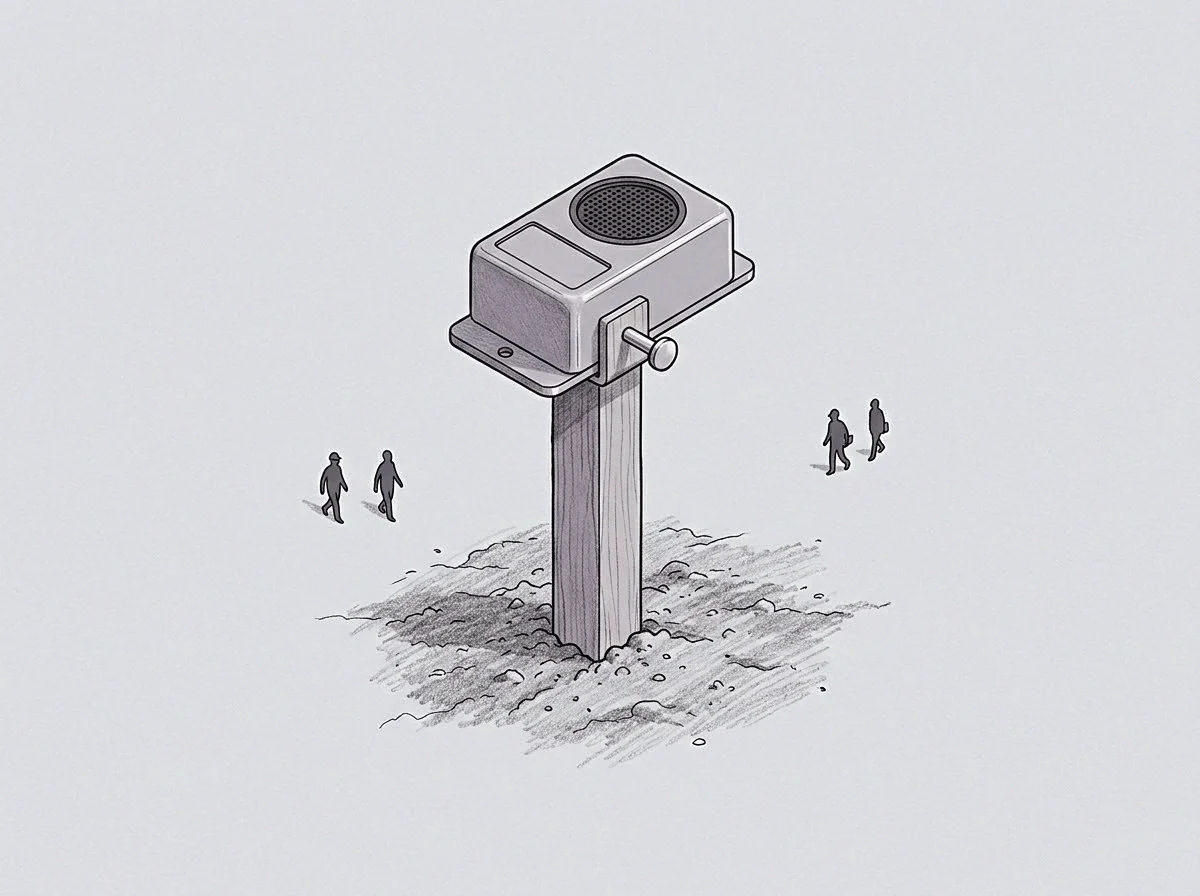
Locating uncomputed value requires terminating the deflection cycle through systematic confrontation. This intervention demands structural redesign rather than increased discipline. An operator cannot overcome structural avoidance through willpower; the incentives governing operational flow require explicit reconfiguration.
Why Do Teams Resist Direct Structural Calculation?
A team avoids direct calculation because computation introduces terminal risk. An uncalculated market assumption permits multiple conflicting narratives to coexist peacefully within an executive committee. The sales director maintains that enterprise demand remains high while pricing is slightly misaligned.
The product architect asserts that the product satisfies technical requirements while enterprise clients lack sophisticated procurement teams. Leaving the unit economics uncomputed preserves both narratives, protecting internal alliances from political disruption.
Resolving the evasion requires an operational forcing function. The operator introduces structural limits that block the path of least resistance:
- Quota limits on surrogate tasks capping the number of hours an operational team may commit to routine maintenance during a strategic cycle.
- Mandatory reconciliation gates freezing code deployments or marketing releases until unit economic equations balance explicitly.
- Unilateral contract retirements terminating legacy commercial agreements that absorb excessive administrative bandwidth through manual exceptions.
These forcing functions dismantle the detour. The team finds itself stripped of administrative surrogates, standing directly before the uncomputed object. At this coordinate, the operating model either computes the underlying reality or grinds to an absolute halt.
A structural limit blocks the administrative detour, compelling the enterprise to calculate its actual operational costs.
Consider a physical manufacturing plant losing twelve thousand dollars weekly due to component misalignments on a legacy assembly line. Rather than halting the line to re-tool the stamping machinery, the shift supervisor positions four manual quality inspectors at the end of the belt to catch flawed parts. The inspectors cost fifteen thousand dollars weekly in aggregate wages and overtime.
The deflection keeps the factory floor visibly humming, reporting full operational uptime to executive leadership while the monetary loss runs continuously. Halting the line requires acknowledging an engineering defect that implicates plant management. The four inspectors serve as human shields against an institutional calculation.
Terminating the contract of the temporary inspectors forces the engineering confrontation. The plant either repairs the stamping machinery within forty-eight hours or halts production entirely. The friction transfers from the ongoing wage bill to the primary mechanical defect, computing the value immediately.

Ledger
Capturing uncomputed value transforms operational vectors into durable equity. When an enterprise ceases routing around structural obstacles, the capacity once consumed by avoidance converts into direct operational force. The ledger begins recording the genuine physics of the business.
This conversion alters organizational economics. Labor capacity previously absorbed by manual reconciliations, defensive reporting, and surrogate task execution returns to the primary operational axis. The firm does not hire additional personnel; the existing team produces outsized structural results because their energy no longer dissipates across complex administrative bypasses.
The unspent volume becomes realized output.
The true cost of operational deflection is paid in operational longevity. A company can survive negative cash flows for extended intervals when supported by patient capital reserves. An enterprise cannot survive the permanent diversion of its intellectual capacity into administrative sinks.
As daily routines absorb capacity, the balance sheet gradually detaches from physical reality, leaving uncomputed value permanently trapped behind procedural detours.
When an operator ceases deflecting and forces computation at the boundary, the structural reality of the enterprise becomes legible. The empty spreadsheet cell fills with real numbers. The difficult conversation concludes.
The machine ceases defending its comfort and begins measuring its actual terrain.
The cost of this clarity is the immediate destruction of every comfortable internal narrative.