
Operational Signal Verification Protocols In High Velocity System Design
High velocity verification isolates operational drift by evaluating live computations against calibrated baselines within tight latency windows.

Seat
A wall display showed ninety thousand requests per second while the error counter remained at zero. The operator watched throughput figures climb without any corresponding rise in processor temperature or egress bandwidth. On the primary dashboard everything looked calm, but downstream settlement queues had stalled three minutes earlier.
The ingestion cluster accepted incoming packets, acknowledged them instantly, and dumped payloads into unallocated memory addresses. Speed masked the underlying failure because the monitoring harness tracked acknowledgment latency instead of state transition completion.
The dial registers zero.
Fast architectures create an illusion of system health by separating receipt confirmation from transactional commitment. When throughput pushes past twenty thousand events per second per node, synchronous inspection generates backpressure that cuts into ingress capacity. Systems decouple intake from validation to protect headline velocity numbers, leaving an unmonitored window between signal capture and reality verification.
At ten gigabits per second, a system accumulates millions of unverified states within a single five-second evaluation window.
The operator reads fifty milliseconds of dead air as a confirmed execution when the receiving terminal never answers.
Silence registers as operational success.

Telemetry In The Control Room
Telemetry streams in high-throughput environments rely on lossy aggregation protocols. Node daemons increment counters locally before flushing them to central observation sinks every ten seconds. If a burst of dropped packets occurs between seconds two and four, the ten-second window averages the loss, obscuring the transient packet exhaustion.
An operator checking the moving median sees a smooth line that conceals localized systemic failure. Latency spikes lasting four hundred milliseconds vanish inside ten-second rolling windows.
Speed conceals missing confirmation.
Reliable observation requires measuring the delta between intended state alterations and verified storage commits. Tracking throughput figures without persistence confirmation tracks activity, not functional progress. When an execution engine reports successful dispatch, that signal is ungrounded until a secondary verification routine reads the committed block back from independent disk storage.
Without that check, operational metrics reflect internal assertion rather than actual state change.

The Baseline Recorded At Start
Establishing a reliable operational baseline requires recording system behavior under clean conditions before introducing load spikes. Engineers measure five specific values across a thirty-day calibration window: network round-trip time, disk write duration, serialization overhead, memory allocation latency, and serialization error rate. This initial baseline anchors all subsequent drift calculations during peak operations.
Without a clear starting measurement, performance degradation is easily mistaken for routine network variance.
A contract clause mandating synchronous round-trip verification revokes throughput guarantees whenever transaction confirmation latency climbs above twelve milliseconds.

Loop
Control systems depend on continuous comparisons between observed states and target thresholds. In a high-velocity cluster, the feedback circuit has to run faster than the state decay rate of the underlying workload. If data mutates every five microseconds while feedback evaluation runs on a fifty-millisecond schedule, thousands of unmonitored cycles pass between corrective adjustments.
The system drifts into instability long before monitoring agents trigger an alarm.
Latency destroys telemetry value.
How Velocity Compresses The Inspection Window?
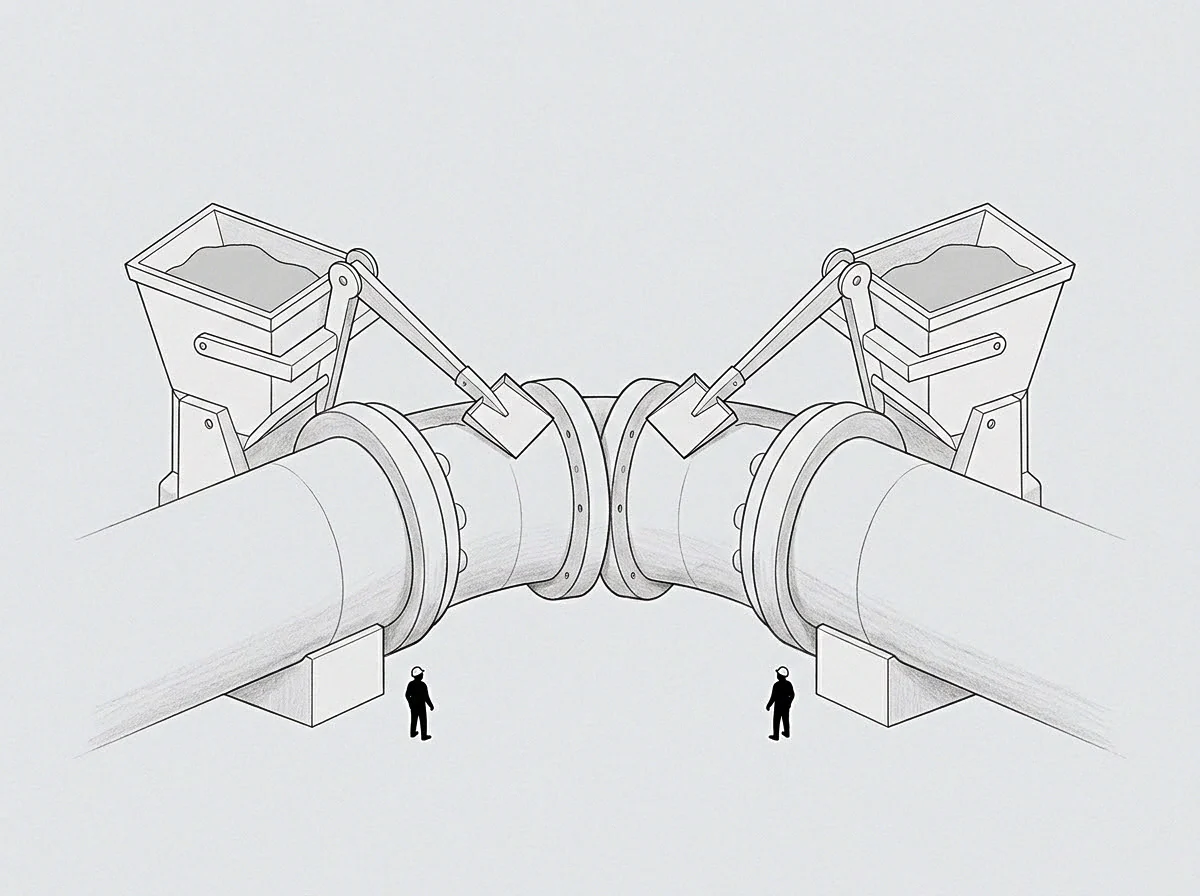
Accelerating pipeline throughput compresses the available inspection window. At low processing rates, a monitoring worker can inspect payload contents, parse cryptographic signatures, and validate schema constraints without exhausting CPU capacity. At one hundred thousand transactions per second, comprehensive verification takes more computing power than transaction processing itself.
Systems routinely drop full validation in favor of superficial header checks, leaving internal payload corruption undetected.
The baseline tracks forty events.
Operational drift accumulates during periods of sustained load compression. When a worker thread falls three milliseconds behind schedule, it drops secondary validation probes to keep pace with the primary ingestion buffer. As adjacent nodes repeat this omission, an unmonitored operational corridor forms.
The system continues to report nominal operation simply because dropped probes generate no explicit errors on operator screens.
A feedback cycle without an external reference point drifts into self-confirming noise after three iterations.
Every signal carries measurable decay.
Engineers manage verification failure modes across rapid data pipelines through explicit sequence boundaries:
- Threshold Saturation occurs when telemetry pipelines drop incoming metrics under heavy operational volume, blinding monitoring layers to state corruption.
- Sample Rate Inversion develops when telemetry agents reduce sampling density during traffic surges, degrading signal fidelity precisely when systemic volatility reaches peak severity.
- Asynchronous Divergence appears when downstream consumers process stale operational snapshots while upstream ingest components mutate state rapidly without waiting for replication acknowledgments.
Telemetry pipelines relying on uncalibrated monitoring loops cannot distinguish real progression from systemic stalling. When an unmonitored node exhausts its worker thread pool, it returns cached positive confirmations to keep ingress queues moving. Downstream components treat these synthetic acknowledgments as real execution signals, spreading data inconsistency across the system.
Unchecked drift across asynchronous feedback channels produces downstream state corruption, filling buffer memory and eventually forcing a cold restart.

Cache
Stored answers offer a convenient but dangerous shortcut in operational verification. Under heavy load, verification daemons reuse earlier validation results rather than running live checks against active data buffers. This caching cuts processing overhead from four milliseconds to twenty microseconds.
The system logs high verification throughput, but the verified data reflects historical state rather than current reality.
Static returns mimic valid responses.
The defining sign of a cached verification check is invariance across varying inputs. A live verification check fluctuates in duration, CPU usage, and output based on current parameters and system conditions. A cached verification routine returns identical confirmations whether the underlying state is valid, corrupted, or missing altogether.
Speed and certainty in verification routines often point to cached shortcuts rather than active computational proof.
Fresh input alters active outputs.
Consider an execution pipeline processing forty thousand operations per second where thirty percent of output values rely on precomputed answers. If upstream memory corruption alters state variables, live verification threads spot the error within fifteen milliseconds. Cached routines keep returning positive acknowledgments for forty-five seconds until TTL expiration forces a live recomputation.
Across that forty-five-second window, millions of invalid transactions receive authoritative operational clearance.
Stale caches return identical bytes.
| Protocol Class | Verification Mechanism | Signal Latency Window | Drift Detection Limit |
|---|---|---|---|
| Cached Shortcut | Static Memory Retrieval | 0.02 milliseconds | 45000 milliseconds |
| Live Invariant Computation | Active Arithmetic Proof | 3.80 milliseconds | 12 milliseconds |
| Dual-Rail Synthetic Probe | Independent Out-of-Band Audit | 1.20 milliseconds | 25 milliseconds |
| Asynchronous Digest Check | Periodic Cryptographic Hash | 15.40 milliseconds | 500 milliseconds |
A static answer returned in three milliseconds carries no evidence of current operational integrity.
An invariant response to variable operational pressure indicates retrieval rather than active execution.

Audit
Independent inspection protocols verify telemetry fidelity by bypassing operational observation paths entirely. An audit routine avoids consulting local node agents or centralized dashboards. Instead, it injects synthetic probes with known payloads directly into ingestion ingress and samples the final persistence layer to confirm complete end-to-end execution.
This practice exposes discrepancies between internal telemetry assertions and physical system transformations.
The operator logs the drift.

Reference Class Construction Across Telemetry
A single telemetry trace offers no context without a comparable reference class. If an engineer observes a twelve-millisecond processing latency during a database write, that figure cannot be judged healthy or anomalous on its own. The engineer builds a reference class from ten thousand prior write operations under identical network topology, queue saturation, and disk contention.
Operational anomalies show up clearly only against this historical distribution.
Fast routines bypass inspection cycles.
Building reference classes in distributed systems requires disciplined metric normalization. Hardware configurations differ across cluster instances: a nine-millisecond response on an older compute node might represent normal operation, while that same latency on modern hardware points to severe thread contention. Teams normalize observed operational signals against hardware tiers before setting baseline thresholds.
Raw, unadjusted measurements blur the line between hardware limitations and software defects.

Calibration Over The Six Month Window
Measurement fidelity degrades over time as code deployments and topology updates change the architecture. A verification protocol calibrated in January yields misleading anomaly signals by June if the software workload profile has shifted. Operators run systematic calibration routines across a continuous six-month window, matching telemetry predictions against verified transaction settlement outcomes.
This ongoing alignment maintains measurement accuracy through ongoing structural changes to underlying pipelines.
The system log records the delay.
Rigorous verification routines monitor three distinct execution states across the processing mesh:
- Transient Divergence indicates temporary latency separation between ingress acknowledgment and storage confirmation that resolves within acceptable buffer limits.
- Structural Corruption marks unrecoverable payload discrepancies where physical storage data does not match the ingress schema specification.
- Silent Starvation describes conditions where monitoring nodes accept incoming metric packets while worker execution threads remain completely blocked on database locks.
Throughput figures without independent proof of transaction settlement indicate empty traffic.

Wire
Physical communication media enforce strict mathematical limits on verification velocity. Electrical and optical signals travel through copper and fiber conduits at roughly two hundred thousand kilometers per second. A distributed system spanning two data centers separated by four hundred kilometers requires at least four milliseconds of round-trip time solely for signal propagation, before factoring in packet serialization or hardware switching.
No algorithmic tweak can bypass this physical transit time.
Telemetry demands continuous validation.
Engineers attempting sub-millisecond verification across geographically separated infrastructure inevitably resort to local predictive approximations. The local node estimates remote confirmation using past performance statistics, acknowledging requests before physical confirmations cross the network path. This compromise trades physical verification certainty for artificial transaction throughput.
Verification expires within fifty milliseconds.
Synthetic Probes Along The Physical Path
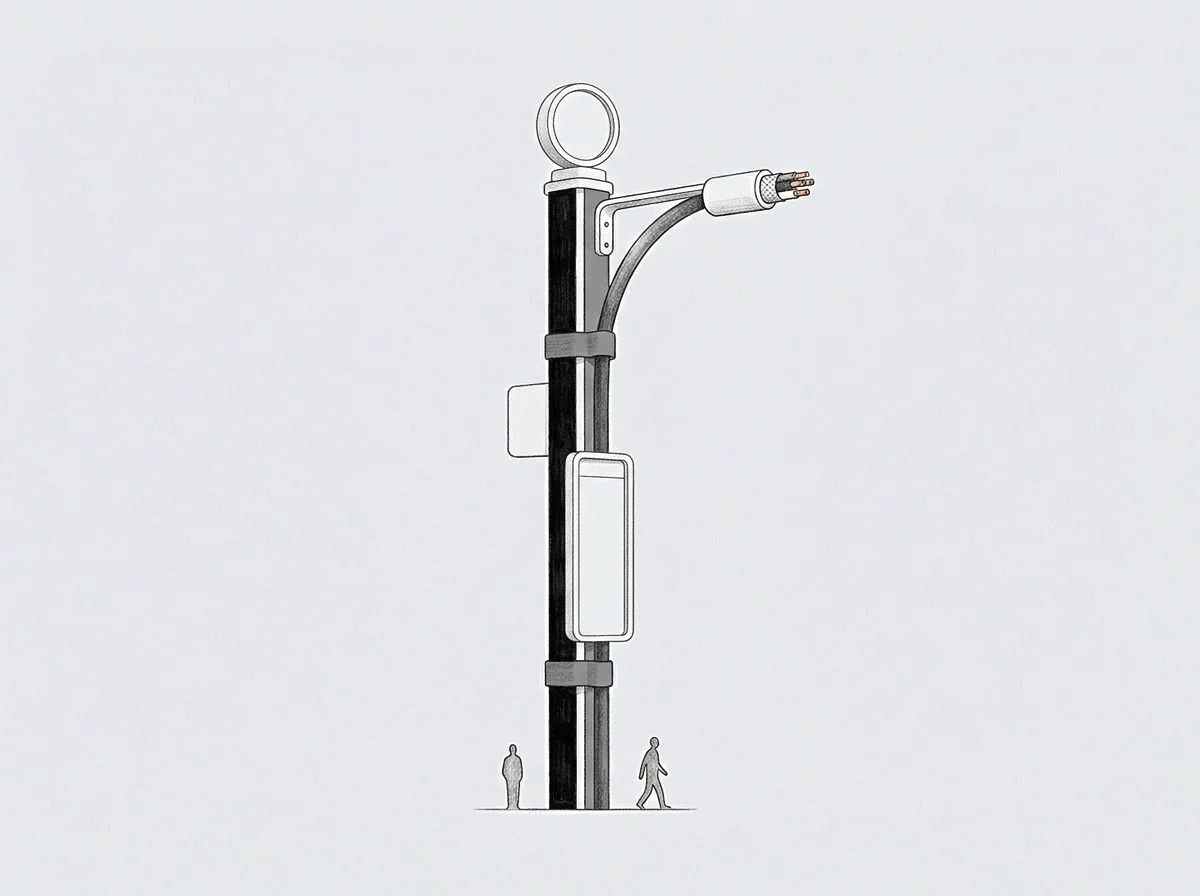
Municipal water delivery systems position acoustic sensors along pressurized pipelines to pinpoint leaks. These listening devices detect micro-pressure fluctuations caused by pipe fractures without interrupting fluid delivery. Digital infrastructure verification follows the same principle, placing out-of-band monitoring taps on physical switch interfaces.
These network taps mirror packet streams for independent validation without adding latency to the primary transaction path.
Stored replies simulate living execution.
Physical validation probes read raw packet data directly from switch interfaces to compute cryptographic checksums in dedicated hardware. This out-of-band verification loop operates entirely separate from application compute nodes. If application memory becomes corrupted or worker threads stall, the hardware probe detects missing packet flows instantly.
Telemetry signals remain tied to physical reality rather than software self-reporting.

The Residual Uncertainty In High Velocity Pipelines
Every calculation carries an energy cost.
Absolute operational verification in distributed architectures remains physically unattainable at extreme transaction volumes. Verification requires reading, storing, comparing, and acknowledging state, operations that consume finite CPU cycles, memory bandwidth, and electrical energy. As processing frequencies push toward hardware limits, system capacity spent on signal verification must be weighed directly against capacity allocated to actual transaction execution.
Whether distributed architectures can sustain sub-millisecond execution verification without doubling hardware expenditure remains unanswered across current system design.