
Resolving Structural Capital Hoarding Within Decentralized Business Units During Sustained Monetary Tightening Regimes
Dynamic internal transfer pricing and guaranteed drawing rights resolve divisional capital hoarding during sustained monetary contraction regimes.

Sump
A divisional manager signs a multi-year vendor contract early to trap operating surplus inside local working capital accounts while the group treasurer borrows at seven percent to fund overnight clearing obligations. The cash sits idle as raw materials inventory in three regional warehouses. When borrowing was nearly free, headquarters allowed decentralized units to build these reserves without inspection.
Divisional leaders treated localized liquidity as insurance against supply chain delays and corporate budget cuts. Once central banks raised policy rates across several quarters, that unmonitored cushion began extracting a punishing corporate price. Capital remains immobilized in operating subsidiaries that refuse to declare their true liquidity needs.
Every decentralized unit faces an asymmetrical penalty structure during monetary contraction. When a business unit runs out of operational cash, the unit director faces immediate scrutiny, delivery interruptions, and career stagnation. When that same business unit hoards ten million dollars in redundant liquid reserves, group treasury bears the interest carrying charge on equivalent market borrowings.
Local managers protect their operational autonomy by treating cash as a physical shield. The local incentive drives liquidity downward into regional vaults where centralized monitors cannot verify its velocity.
Corporate cash pools drain rapidly whenever peripheral subsidiaries hoard unassigned balances against localized operational variance.
Money behaves according to a steepening gradient during monetary contraction regimes. The value axis measures the corporate yield spread against external commercial debt. When capital carries an opportunity charge of six or eight percent, unallocated subsidiary reserves cease being harmless redundancy.
Local managers continue minimizing their own variance by refusing corporate sweeps. They defend excessive inventory, advance billings, and prepayments to external suppliers. The path of least resistance for subsidiary leadership remains complete defensive retention.
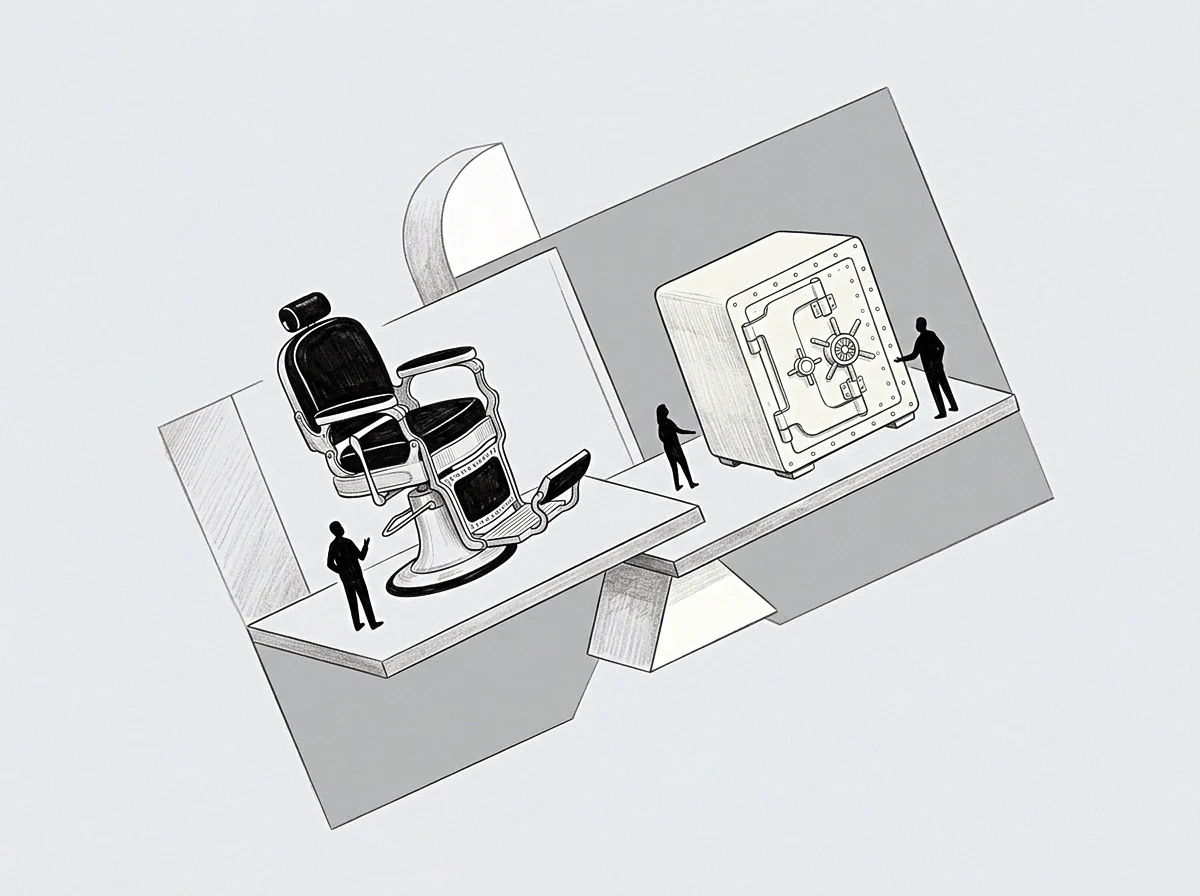
Defensive Buffers and Regional Autonomy
Operating subsidiaries protect their execution speed by constructing internal safety margins. In a distributed engineering or manufacturing company, local directors allocate surplus earnings into vendor credits and advance purchases of durable materials. Corporate oversight functions routinely overlook these balance sheet expansions because subsidiary reporting focuses on operating margin rather than cash conversion velocity.
The local balance sheet becomes an insulated redoubt. Operating units survive regional shocks without petitioning headquarters for emergency allocations.
Autonomous divisions prioritize localized continuity over enterprise balance sheet optimization. The corporate center requires cash to service consolidated floating debt, yet the division treats every dollar surrendered as a permanent loss of operational freedom. Decentralization distributes operational accountability without synchronizing balance sheet incentives.
Divisions build balance sheet sumps that quietly absorb liquidity from enterprise cash flows.
Sustained capital sequestration produces persistent corporate debt expansion, uncoordinated external credit draws, and severe balance sheet degradation across the wider enterprise.
Toll
Decentralized operating units resist centralized cash pooling because capital extraction carries an asymmetric extraction charge. Local leadership views capital remitted to the corporate pool as permanently lost resource access. The corporate treasury views subsidiary reserves as shared property backing enterprise solvent operations.
When internal transfer pricing mechanisms fail to credit business units for their surplus balances at market yields, divisional executives conceal their balances. Internal hoarding intensifies when capital charges stay artificially low while market borrowing rates climb.
The structural friction originates in the spread between internal hurdle rates and external refinancing realities. During prolonged zero-interest regimes, internal corporate hurdle rates drifted toward uniform baseline numbers that ignored capital scarcity. When central banks tighten monetary policy, enterprise weighted average capital costs increase immediately.
Most decentralized planning systems adjust those hurdle rates with a two-year lag. Divisional operators evaluate internal capital as if it were still free, while treasury pays market rates to finance enterprise debt facilities.
A internal transfer rate set below external market yields accelerates defensive subsidiary capital retention.
Internal capital allocation models break down when capital pricing diverges between corporate treasury and autonomous operating groups. Decentralized managers discover that holding excess working capital creates zero visible charge on their local profit calculations. Surrendering that cash to corporate treasury yields neither interest income nor guaranteed credit during future revenue shortfalls.
Operating units route around formal capital sweeps through accounting deferrals and accelerated supplier settlements.
| Operating Dimension | Autonomous Buffer Model | Centralized Liquidity Sweeping | Dynamic Transfer Toll Model |
|---|---|---|---|
| Working Capital Velocity | Stagnant reserves held locally inside extended vendor receivables | Rapid central collection through automated multi-currency zero-balance pools | Calibrated subsidiary deposits compensated at prevailing sovereign policy rates |
| Hurdle Rate Transmission | Static divisional targets decoupled from monetary contraction pressures | Top-down administrative investment curbs applied indiscriminately across all units | Real-time adjustment matching enterprise marginal borrowing spreads |
| Agency Resistance | High covert balance sheet inflation and pre-funded project buffers | Overt divisional rebellion and operational supply disruptions | Low resistance via guaranteed internal liquidity drawing rights |
| Enterprise Solvency Impact | Inflated corporate debt service to cover regional funding vacuums | Reduced overall debt expense with elevated regional operational friction | Minimized consolidated gross debt with preserved business unit execution |
The table establishes how capital controls reshape operational incentives during tight monetary conditions. Autonomous buffers preserve regional execution while imposing enterprise financing penalties. Top-down administrative sweeping reclaims corporate liquidity while causing divisional resentment and operational delays.
The toll model uses real-time market transfer pricing to make local retention financially visible on divisional scorecards.
If headquarters takes this working capital away now, the division cannot fulfill customer contracts when shipping rates rise next quarter.

Mesh
Treasury teams construct visibility networks to monitor distributed balance sheet behavior across distant subsidiaries. Real-time cash visibility platforms and Enterprise Resource Planning connections reveal where balances accumulate. Visibility alone resolves nothing.
A regional general manager holding four million dollars in operational checking accounts can easily convert those funds into non-perishable inventory or prepaid vendor service agreements. Balance sheet visibility measures current resting positions without altering managerial motives. The corporate core observes liquidity stagnation without possessing the structural levers to reverse it.
A functional capital allocation mesh links monitoring systems to explicit incentive architecture. Decentralized operators hoard reserves when the perceived probability of future capital denial exceeds their risk tolerance. They view corporate treasury as an unpredictable counterparty that confiscates liquidity during crises and fails to return it when markets stabilize.
Resolving this behavioral logjam requires establishing symmetrical capital return guarantees alongside strict idle cash penalties.

What Alters Divisional Payoff Calculations?
Business unit heads alter their capital retention patterns when the financial return of remitting excess liquidity exceeds the operational safety value of holding physical buffers. An effective corporate structure assigns transparent internal interest yields to every dollar swept into central treasury accounts. If a division deposits idle reserves into the corporate cash concentration system, the division receives credit at the prevailing central bank overnight rate.
That internal credit appears directly on the division’s operating statement as net interest income.
Simultaneously, the center applies an imputed carrying charge to excess working capital balances that exceed agreed operating baselines. If a business unit extends supplier terms or expands inventory cycles without commercial justification, corporate treasury bills the unit for the carrying value of that trapped cash. The financial drain hits the divisional operating margin directly.
Holding unnecessary liquidity shifts from a comfortable operational cushion to an acute drag on divisional performance metrics.
A structural guarantee of rapid liquidity repatriation dismantles the operational motive for defensive cash hoarding.
The shift transforms the internal gradient. Divisional leaders discover that optimizing enterprise liquidity improves their own measured results. They calculate trade-offs using identical economic parameters to corporate treasury.
The structural boundary shifts from administrative confrontation to aligned balance sheet velocity.
Consider two parallel enterprise configurations operating across eight business divisions during three years of monetary contraction. Assume both organizations encounter identical seven percent sovereign interest rates. The first organization applies mandatory cash sweeps by central fiat without compensating divisional statements.
Divisional directors immediately hide surplus capital inside long-term project advances, reducing enterprise liquidity turnover by thirty percent. The second organization institutes a liquidity mesh that credits business units at sixty basis points below policy rates for surplus cash and guarantees automatic line-of-credit drawdowns within twenty-four hours. Divisional operating reserves drop by forty percent within two quarters as local managers release idle capital into central corporate pools.
Uncompensated balance sheet sweeps generate covert capital shelters inside operating subsidiaries.

Sweep
Automated zero-balance concentration mechanisms eliminate idle cash pools across distributed banking architectures. Banking platforms link subsidiary checking accounts to parent treasury headers through daily mathematical sweeps. Every evening, surplus balances move upstream into consolidated enterprise vaults.
Every morning, target working balances move downstream to fund verified accounts payable. The physical mechanics of zero-balance sweeping operate smoothly across domestic and international banking jurisdictions.
The behavioral challenge occurs within discretionary operational spending. Divisional directors anticipate overnight physical sweeps by accelerating disbursements to regional suppliers or slowing invoicing cycles to delay liquidity recognition. The operational team routes capital around the automated treasury sweep by altering transactional timing.
Physical banking rails cannot sweep capital that has been converted into operational pre-commitments.
Organizational remedies require clear structural policies governing capital velocity and working capital limits:
- Target Working Capital Baselines establish strict thirty-day operational liquidity ceilings for every business unit based on trailing twelve-month cash expenditure volatility.
- Dynamic Repatriation Guarantees ensure subsidiaries retain irrevocable drawing rights on centralized treasury facilities to cover verified supplier payment surges within two business days.
- Imputed Inventory Holding Charges assign the enterprise marginal borrowing rate to all regional stocks exceeding ninety days of scheduled production requirements.
- Symmetrical Transfer Pricing Credits post monthly internal cash interest credits directly to divisional profit accounts for balances swept to group treasury.
Implementing these four structural parameters eliminates the hidden sanctuaries where business units sequester liquidity. The operational team no longer fears unannounced capital starvation during regional supply shocks. The division holds contractual drawing rights that replace physical cash reserves.
Corporate treasury reclaims complete control over enterprise cash velocity while minimizing consolidated debt exposure.
Local operating directors surrender physical cash reserves only when corporate credit access operates faster than supply chain disruptions.
The operational policy specifies that any subsidiary balance exceeding median weekly operational expenditure by twenty percent triggers an automated overnight concentration sweep into the parent treasury facility.

Gate
Long-term monetary contraction regimes expose the hidden structural fragility of decentralized corporate hierarchies. When debt remains expensive for multiple fiscal cycles, capital allocation efficiency determines corporate survival. Business units that developed during periods of monetary expansion acquired structural habits that treat capital as a boundless corporate resource.
Eliminating those habits requires restructuring the jurisdictional authority that governs subsidiary balance sheets.
Treasury functions cannot manage enterprise solvency through polite persuasion. The corporate core sets firm boundaries on working capital duration, inventory depth, and customer credit extensions. General managers who violate these boundaries forfeit their balance sheet autonomy.
The organization re-centralizes capital allocation authority until monetary conditions stabilize and internal capital pricing models mature.
Capital hoarding represents an institutional avoidance behavior. Business unit leaders avoid the discomfort of precise inventory control and rigorous vendor negotiation by maintaining oversized cash balances. Mirroring that avoidance behavior reveals enormous unspent volume across the corporate balance sheet.
Millions of trapped dollars sit inside dormant subsidiary ledgers. Reclaiming that capital allows the enterprise to pay down floating-rate debt, invest in high-yield capacity, and survive prolonged credit crunches without diluting equity.
The structural transition from localized hoarding to integrated velocity requires persistent administrative discipline. The organization replaces emotional friction with transparent internal interest spreads and enforceable capital return rights. Operating managers learn that balance sheet velocity creates operational resilience.
Capital flows freely across the enterprise boundary, matching marginal cost to genuine commercial opportunity.
Does prolonged capital centralization during tight monetary regimes permanently degrade the regional autonomy necessary for decentralized business innovation?