
Structural Friction Vectors and Latent Value Recovery in Distressed Allocation Models
Distressed allocation models recover latent value by treating contractual friction as a directional vector rather than an unallocated accounting write-down.
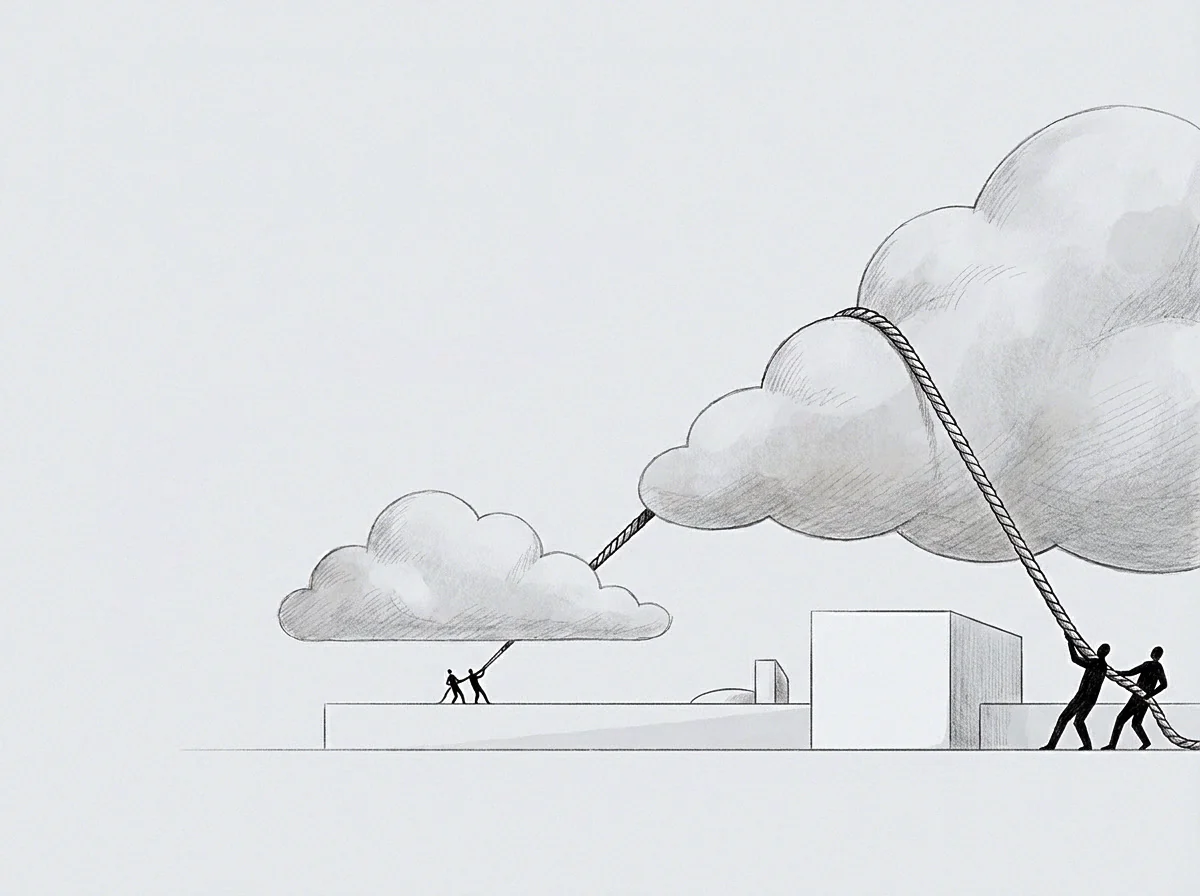
Drag
A spreadsheet open at midnight displays forty million dollars in nominal receivables while collection operations consume eight thousand dollars a day to recover nothing. The asset column looks whole on paper, yet every attempt to extract liquidity encounters compounding resistance. In distressed capital distribution, friction is far more than an administrative delay.
It acts as a directional force generated by structural barriers in creditor contracts, regulatory freezes, and unresolved claim hierarchies. When an enterprise enters impairment, value stops flowing along normal corporate channels and moves down the path of least resistance toward insolvency.
Traditional accounting models measure distress through cardinal impairments, subtracting discrete writedowns from historic book values until an arbitrary equity threshold breaks. This approach overlooks the active forces straining the balance sheet. Structural friction arises when competing claimants exert opposing pressures on a shrinking asset pool, freezing operations right when capital deployment is most critical.
Capital freezes first. Senior secured creditors push for immediate liquidation to protect collateral, junior holders hold out for forbearance to preserve option value, and operators consume working capital on overhead. The interaction of these conflicting interests points straight toward value destruction.
When contractual claims exert opposing directional demands on impaired collateral, the resulting friction accelerates capital dissipation along the steepest descent toward liquidation.
Every allocation system operating under distress holds economic value trapped behind contractual and institutional barriers. While the baseline of solvent performance drops, that latent potential does not disappear. It remains bounded by what the corporate structure cannot execute without threatening the established priority order.
Delay across renegotiation tables reflects the volume of value locked behind stalled negotiations. Resolving these dynamics requires mapping exact points of resistance rather than applying uniform haircuts to impaired asset tranches.
Loss distribution in financial mechanics resembles physical systems. Just as friction drains energy, unaligned contractual obligations drain liquidity through legal expenses, carry costs, and operational stagnation. Stalled decisions carry compounding penalties.
When leadership models distress as a simple arithmetic deficit rather than an active set of conflicting pressures, interventions fail to stop the decline.
The resistance encountered when moving an impaired asset reveals the exact boundary of its realisable recovery.

The Topology of Balance Sheet Freezes
Creditors often confuse absolute asset value with recoverable yield under stress. An illiquid manufacturing plant, a disputed patent portfolio, or a distressed real estate parcel carries theoretical worth, but actual recovery depends entirely on the path required to monetize it. Where legal injunctions and priority disputes create heavy friction during a transfer, net realizable value drops quickly toward zero.
Asset erosion accelerates the longer claimants remain deadlocked.
Observing how an operating entity responds to distressed debt triggers offers clear evidence of institutional resistance. When an organization pays punitive default interest rather than consenting to a debt-for-equity conversion, that decision marks an internal boundary. Equity holders view dilution as a complete loss, choosing an operational drain over an equity transfer that could salvage the core business.
This operational preference provides a direct measure of shareholder alignment.

Seat
The restructuring officer occupies a chair at the head of a conference table where every counterparty wants someone else to take the first haircut. The main constraint in the room is not a total lack of funds, but the rigid positioning of each constituency within the legal stack. Secured lenders rely on absolute priority rights, trade vendors threaten to cut off supplies unless paid in full, and management teams demand retention bonuses before executing turnaround plans.
The person in this seat must navigate these competing demands without letting the operating business run out of cash.
Distressed allocation models operate on the leverage inherent in specific institutional positions. Senior debt buys time. Secured lenders hold the legal right to enforce collateral sales, giving them asymmetrical bargaining power over unsecured creditors who lack a collateral floor.
To calculate recoverable value, the allocation officer evaluates the gap between immediate liquidation pricing and orderly reorganization proceeds. That gap represents the value structural friction threatens to destroy.
A secured creditor will accept structural compromises only when liquidation returns fall below the cost of enforcement delay.
When claims conflict, structural friction manifests as specific operational and legal barriers, falling into distinct categories:
- Absolute priority holdouts occur when senior tranches block operational restructuring to enforce premature asset firesales, capturing immediate liquidity while destroying junior enterprise value.
- Administrative cash drain accelerates when professional advisory fees and legal retainers consume operating margins during protracted creditor committee negotiations.
- Informational opacity barriers emerge when distressed operators withhold granular unit economics from prospective capital providers, fearing immediate operational liquidation.
- Regulatory intervention freezes lock essential operating licenses or cross-border assets in bureaucratic review during jurisdictional restructuring proceedings.
Creditors evaluate proposed allocation plans through contract enforcement risk rather than abstract corporate recovery. An operator who recognizes this focuses recovery efforts on resolving specific friction points rather than appealing for consensus across the creditor pool. Every concession granted to a senior claimant alters recovery prospects for junior classes, shifting the burden down the liability stack.
A plan failing to offer equity participation asks junior creditors to fund senior recoveries out of their own loss.
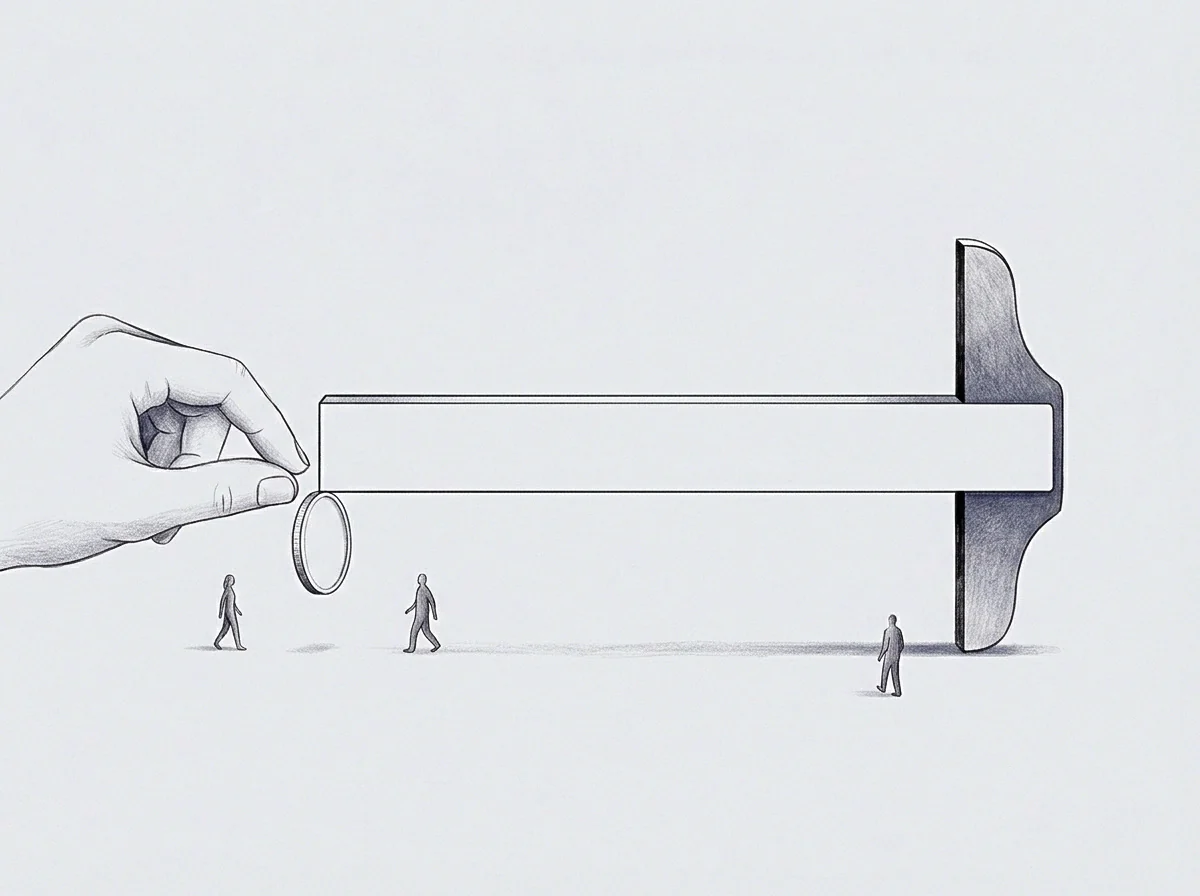
Fault
Fault lines inside an impaired capital structure remain hidden until solvency pressures force a reallocation. When liquidity falls below debt service obligations, contractual covenants strain along preexisting seams. Subordinated notes, intercreditor agreements, and cross-default clauses that worked smoothly during profitable years begin pulling against each other.
These structural fault lines cause steep recovery deficits for stakeholders who relied on paper protections instead of enforceable collateral.
Financial claims represent ordinal rankings rather than cardinal guarantees. A contract establishing a one-hundred-million-dollar claim secures seniority in line, not an absolute guarantee of one hundred million dollars in cash. As assets degrade, recovery moves down the ordinal hierarchy until the liquidation pool is exhausted.
Value bleeds into delay, and claimants who overlook this hierarchy spend months litigating theoretical entitlements while the underlying business deteriorates.
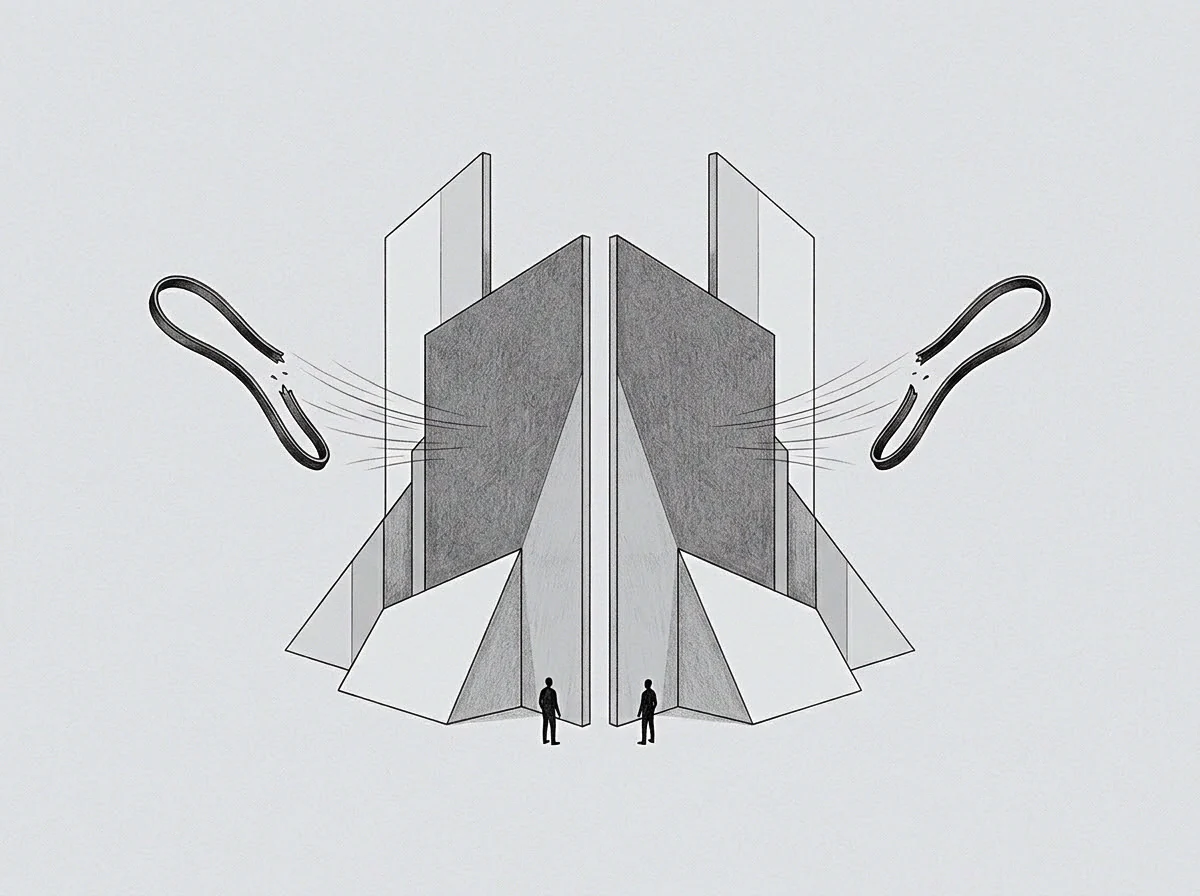
Where Do Stalled Balance Sheets Hide Value?
Unrealized value in distressed entities rarely appears in standard cash flow projections or audited book reserves. It sits inside operational assets that the current capital structure cannot effectively use due to debt covenants and structural friction. An over-leveraged division generating positive gross margins but negative net operating income from legacy debt service represents a clear reservoir of potential.
Removing legacy liabilities unlocks that production capacity and restores the operating asset to baseline performance.
Evaluating recovery potential requires separating the friction created by legacy overhead from the productivity of core operations. When operational units maintain positive unit contribution margins, distress stems from balance sheet structure rather than fundamental operational failure. Salvaging that value requires isolating the operating assets from the distressed holding entity before liquidity runs out entirely.
| Model Mechanism | Friction Vector Orientation | Latent Volume Extraction | Capital Recovery Velocity | Junior Claim Impairment |
|---|---|---|---|---|
| Pro Rata Liquidation | Downward toward immediate cash conversion | Minimal extraction of enterprise potential | Rapid realization under auction conditions | Complete loss across subordinated tranches |
| Staged Tranche Reconstitution | Horizontal across existing debt maturities | Moderate capture through operational runway | Extended duration with execution drag | Partial preservation via equity warrants |
| Gradient Debt Partitioning | Upward against structural priority holdouts | Substantial recovery of unspent operating value | Measured velocity matched to cash generation | Restructured participation in unencumbered cash flows |
Selecting an unsuitable allocation model under distress accelerates balance sheet decay, draining viable operating assets into legal fees and administrative overhead while wiping out recoveries across the liability structure.
Salvage
Extracting economic value from a stalled enterprise requires an active counter-strategy. Rather than accepting the path of immediate liquidation, a recovery specialist maps friction points, isolates unencumbered assets, and builds a restructured claim vehicle that bypasses stalled litigation. This approach counters the downward pull of distress, turning trapped operational capacity into renewed capital productivity.
Recovering latent value depends on identifying where internal delay has compounded operational drag. Distressed management teams often hesitate to terminate unprofitable supplier agreements or close legacy facilities because contract penalties look prohibitive on paper. This delay creates substantial operational drag.
The restructuring process uses the insolvency window to reject burdensome executory contracts, clearing away structural friction and restoring cash generation.
Rejecting burdensome executory contracts under statutory insolvency protection eliminates legacy structural drag and restores operational cash generation.
Distressed recovery math requires precise balance sheet restructuring. Consider a distressed logistics enterprise holding ninety million dollars in debt across two tranches: sixty million in senior asset-backed debt and thirty million in unsecured debentures. Core operations generate six million dollars in annual cash flow against eight million dollars in debt service.
The business burns two million dollars annually, creating a decline that threatens total collapse.
In a pro rata liquidation, assets bring forty-five million dollars at auction. The senior lender absorbs a fifteen-million-dollar loss, junior lenders receive nothing, and the enterprise closes. Under a gradient partitioning approach, senior debt is restructured into a forty-million-dollar term loan matched to actual cash flows, while remaining claims convert into ninety percent of reorganized equity.
The enterprise eliminates two million dollars of annual cash burn, maintains operations, and unlocks thirty million dollars of equity value over five operating cycles.
Recovery succeeds when the restructuring plan sets an unalterable debt service threshold calibrated to minimum trailing twelve-month cash flows, preventing legacy obligations from causing a secondary insolvency.

Strut
Long-term balance sheet stability requires structural bracing that prevents debilitating friction from re-emerging. An enterprise coming out of restructuring cannot simply return to standard capital structures. It needs structural struts: protective debt covenants, dynamic liquidity buffers, and explicit priority terms that adjust to operating pressures before covenants break.
These mechanisms ensure future downturns trigger orderly operational adjustments rather than cash freezes.
A post-distress operating model must treat capital allocation as an ongoing assessment rather than a static annual exercise. When market conditions weaken, capital should automatically shift toward high-margin, low-friction activities without requiring prolonged inter-creditor approvals. Every dollar deployed ought to extend operational runway and reduce exposure to external debt markets.
Establishing this posture requires recognizing where current corporate architecture meets its limits. When an enterprise reaches that point, continuing along historic operational paths generates severe friction. A disciplined operator recognizes the boundary early, using reorganization tools to reset the capital stack before equity value vanishes entirely.
Resolving distress comes down to navigating forces: identifying downward pressures, measuring value trapped behind institutional barriers, and executing the specific contractual changes needed to restore upward momentum.