
Deriving System Avoidance Gradients From Latent Work Routing Friction
System avoidance gradients calculate structural friction by measuring the vector divergence between formal operational protocols and empirical employee workarounds.
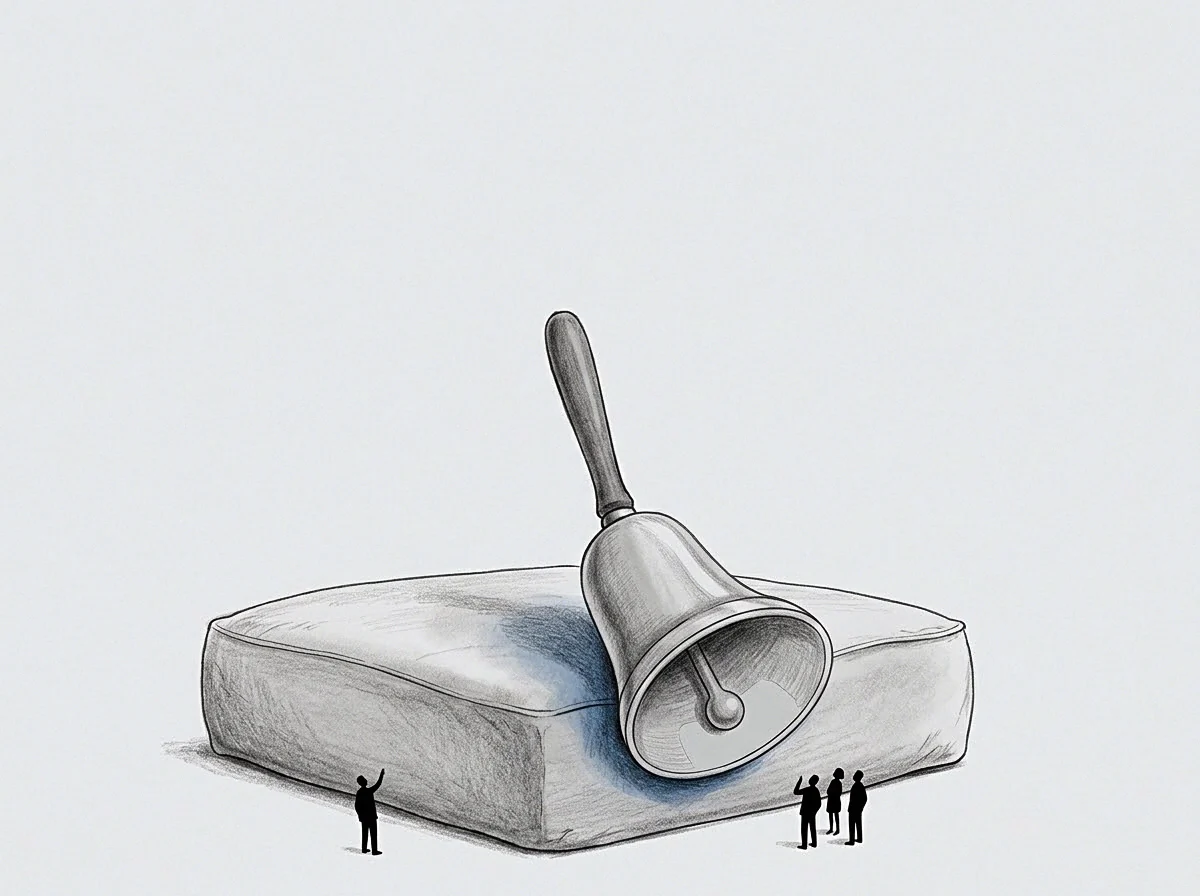
Deflection
An operator reroutes three consecutive customer escalation tickets to external contractors while an internal documentation update sits untouched on a branch for ninety days. The contractor invoices arrive monthly, clear accounts payable, and get approved within four business hours because payment moves cleanly through established banking rails. The stalled branch requires four cross-functional approvals, two synchronous calendar reservations across twelve time zones, and an ambiguous ownership debate between two peers reporting to separate executives.
Work follows the slope of minimal resistance.
This preference reveals an underlying geometry. When a system repeatedly directs effort away from a formal procedure toward an informal, high-expenditure substitute, the diversion marks the presence of routing friction. Latent friction accumulates where procedure imposes unmeasured coordination drag, ambiguous accountability, or social risk on the actor assigned to complete the transaction.
The visible path carries cardinal monetary expenses. The avoided path carries unpriced ordinal friction. Measuring the divergence between the formal route and the evasive trajectory computes an exact avoidance gradient.
A system pays cardinal currency to escape unpriced ordinal drag whenever procedural friction exceeds budgetary friction.
The gradient expresses the direction and steepness of behavioral evasion across an operational plane without carrying moral weight. In physical mechanics, an object rolls down a gravitational slope because potential energy converts to kinetic energy along the steepest descent. In administrative and operational systems, human labor rolls down an effort-conservation slope toward the local minimum of immediate personal friction.
Calculating the slope requires mapping two coordinates: the baseline protocol and the operational displacement point where work actually terminates.
Labor tracks the path of least operational resistance. When administrative protocol demands forty minutes of multi-party alignment to release a minor feature flag, an engineer pushes the parameter change inside an unrelated database migration. The formal protocol remains intact on the company intranet as the official standard operating procedure.
The real operation has migrated elsewhere, carving a bypass channel around the standard procedure. The bypass operates until an auditor catches the missing logs, at which point the workaround is documented as an unauthorized exception rather than the actual operating equilibrium of the team.
The contract states that documentation follows delivery, yet the invoice clears regardless of the missing files.

Bench
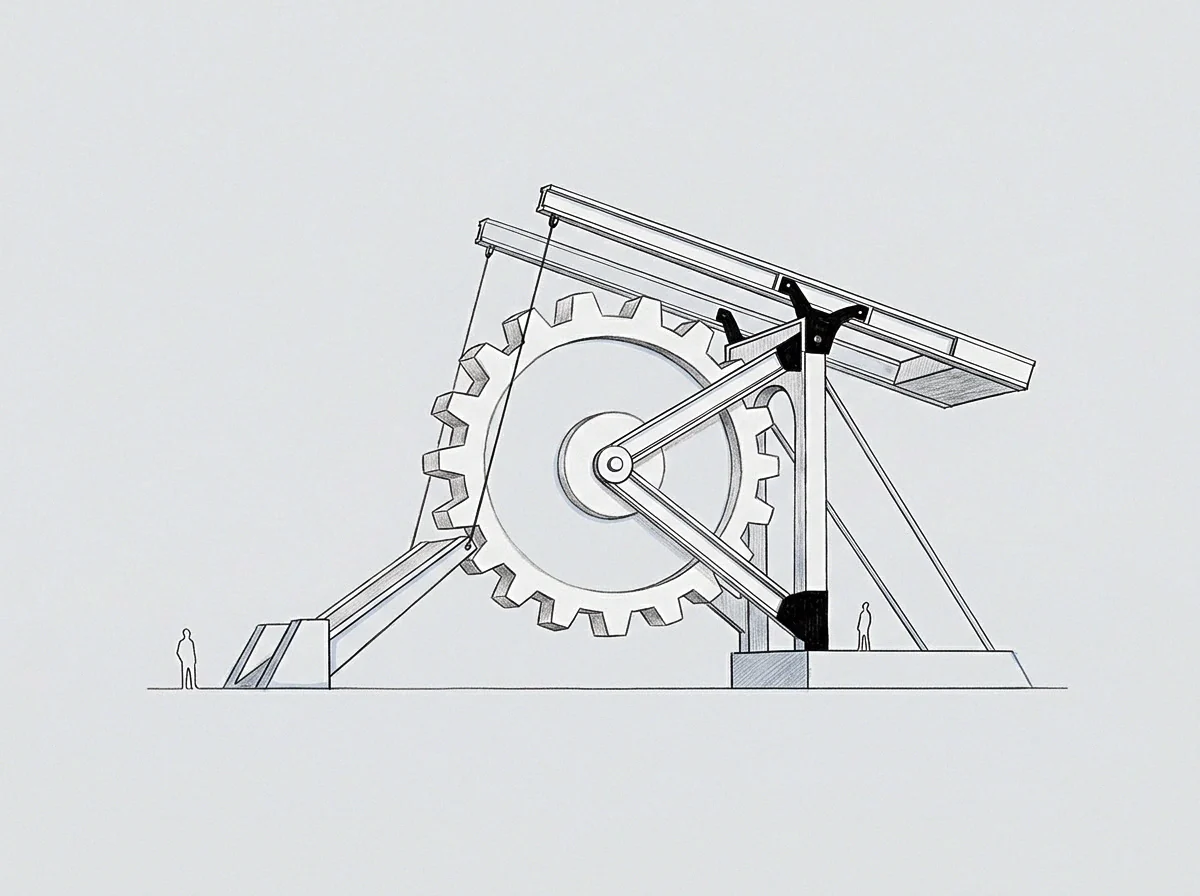
Mechanical Drag in Task Routing
Evaluating evasion requires a structured diagnostic instrument. In mechanical engineering, a test bench isolates drag across moving components by applying calibrated torque and measuring thermal dissipation. In organizational architectures, task routing creates measurable dissipation through delays, communication overhead, and peripheral delegation.
Consider an operational unit tasked with resolving enterprise data compliance requests. The formal workflow outlines three deterministic steps: intake verification, legal review, and database anonymization. In practice, requests sit inside the legal queue for an average duration of fourteen business days, during which the intake specialist sends six follow-up electronic messages.
The intake specialist eventually creates an internal synthetic script that bypasses legal review by truncating customer records prior to formal archival. The script costs twelve hours of illicit technical labor, avoids two uncomfortable interpersonal confrontations, and exposes the firm to contractual liability.
The diagnostic reveals distinct friction signatures across routing behaviors:
- Peripheral delegation routes standard administrative obligations to junior staff or external vendors to bypass unstandardized intake procedures.
- Procedural truncation eliminates mandatory verification checkpoints when cross-departmental coordination imposes unpredictable delays on the person accountable for delivery.
- Informal backchanneling uses unlogged direct messaging to secure approvals outside recorded audit workflows because official forms demand unanswerable inputs.
- Premature archival marks tickets as resolved before real integration occurs to prevent internal workflow tracking metrics from flagging prolonged queue latency.
A procedural checkpoint that requires undefined consensus becomes an invisible barrier that turns production pipelines sideways.
When leadership misinterprets these avoidance channels, the standard reaction introduces additional supervisory oversight. New validation gates, status calls, and governance boards stack directly on top of the original blockage. Each incremental barrier raises the local friction value, steepening the negative slope and forcing labor into deeper, more opaque workarounds.
The evasion deepens while formal reports show complete administrative compliance.
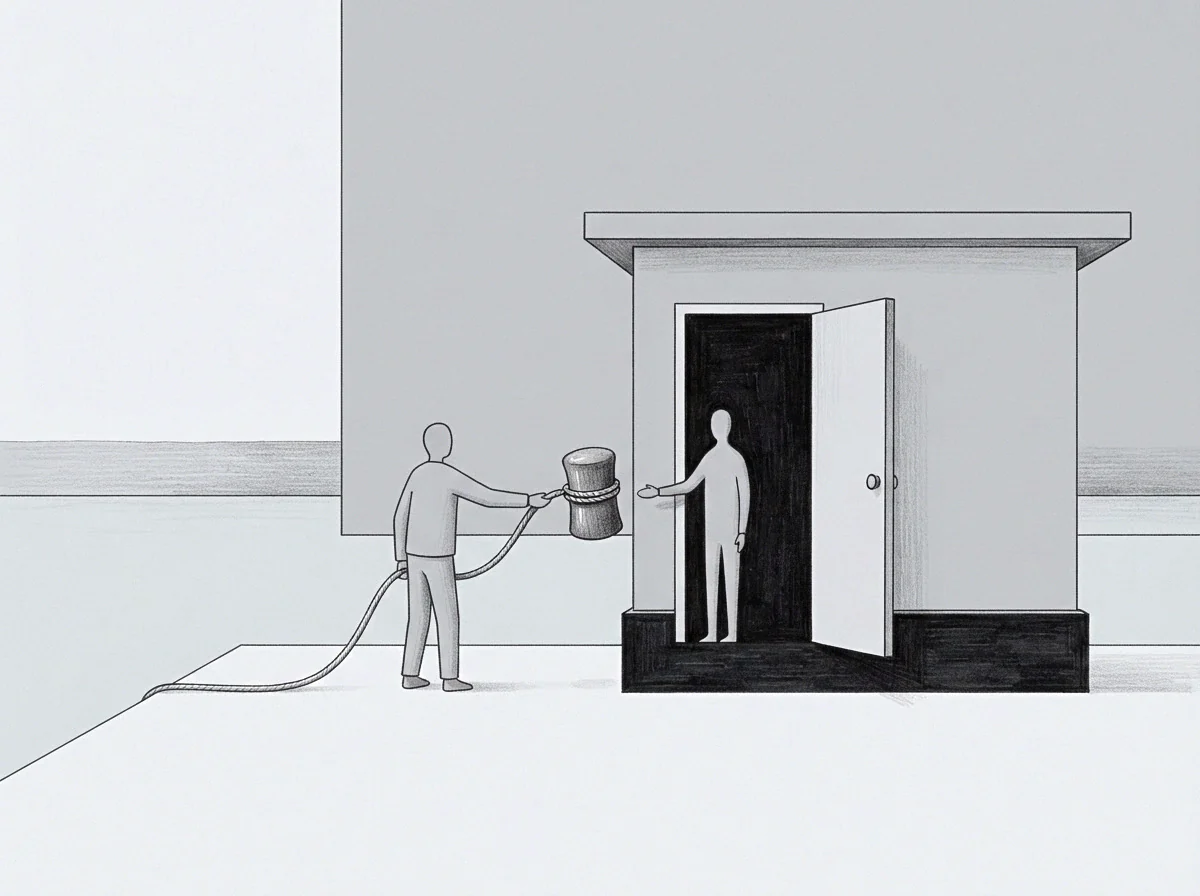
Contour

Deriving Slopes Across Cost Landscapes
Every operational system contains an invisible topography defined by its coordinate surfaces. One axis tracks the nominal protocol value, defined as the alignment of a task with organizational survival and technical durability. An orthogonal axis registers the actor coordinate, tracking the immediate expenditure of cognitive, relational, and temporal capital experienced by the person in the seat.
The avoidance vector points away from steep personal energy expenditures toward low-resistance sinks.
Deriving the gradient requires contrasting the nominal path with the empirical workaround. The mathematical slope quantifies the difference between the planned cost and the realized cost across specific organizational dimensions. By treating operational topography as a vector field, system architects quantify how far the actual flow of work deviates from formal specifications.
| Operational Domain | Prescribed Route | Empirical Route | Latent Friction Source | Derived Gradient Magnitude |
|---|---|---|---|---|
| Software Deployment | Full security review and architectural audit | Shadow cloud infrastructure deployment | Review calendar backlog spanning three weeks | High lateral deflection |
| Vendor Procurement | Central enterprise sourcing workflow | Split expense reports on corporate cards | Nineteen-page supplier intake questionnaire | Extreme vertical avoidance |
| Strategic Alignment | Synchronous board executive briefing | Informal one-on-one hallway commitments | Public reputational exposure during open challenge | Moderate diagonal drift |
| Customer Dispute | Formal contract renegotiation queue | Unrecorded manual service credits | Ambiguous commercial authorization limits | Severe lateral divergence |
| Observations derived from paired workflow audits across mid-market enterprise systems. | ||||
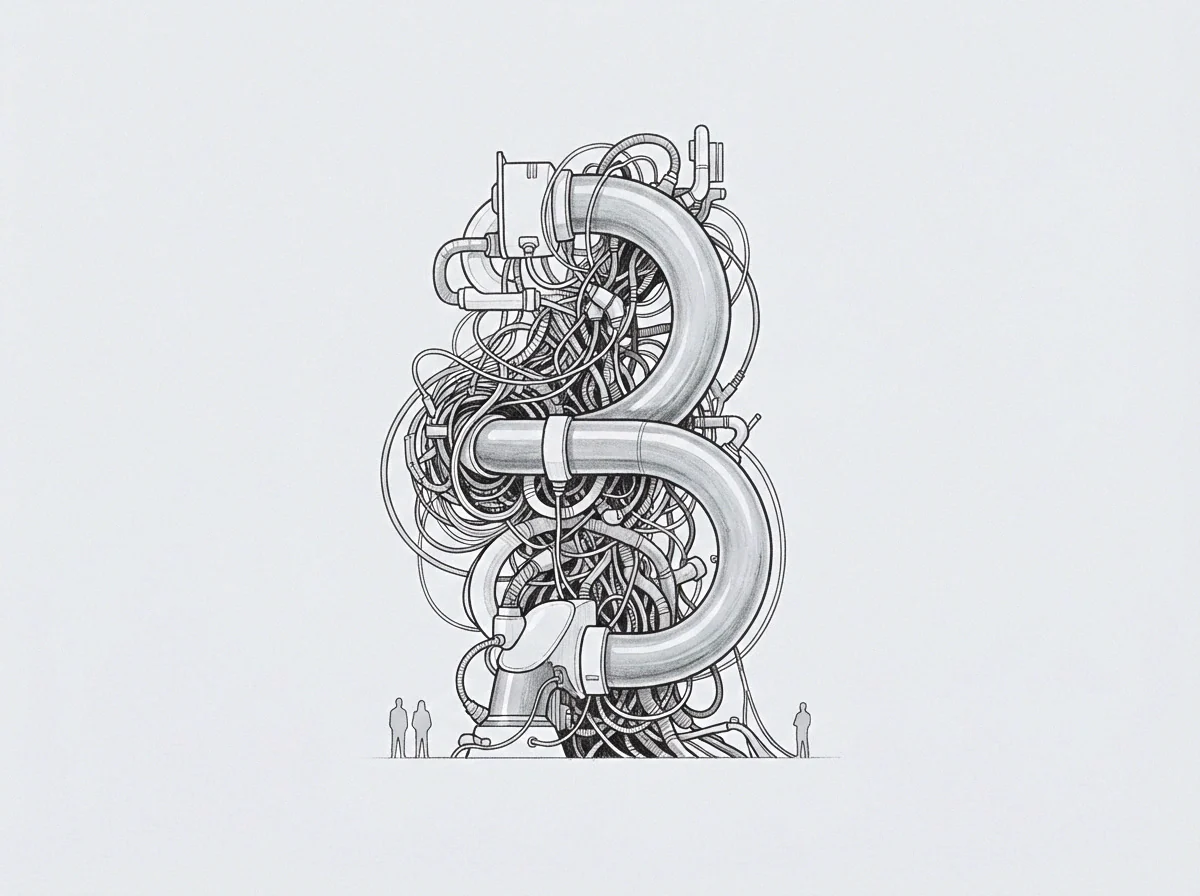
How Latent Routing Reconfigures Team Capacity?
Friction alters system geometry. When an operator avoids a designated system touchpoint, the unexecuted work generates latent operational debt that accumulates directly behind the avoidance coordinate. The volume of this latent debt matches the intensity of the friction that repels the operator.
Empirical evidence in human factors research demonstrates that task switching and backchannel navigation consume between twenty and forty percent of baseline cognitive capacity. This expenditure produces no commercial value. It merely maintains the appearance of compliance while routing around operational blockages.
An operator managing ten daily transactions absorbs seventy minutes of coordination drag navigating around a single broken approval form. Over an operating quarter, that drag compounds into weeks of lost productive volume. The friction remains latent because accounting software records wages and software licenses, not the silent hours spent drafting diplomatic emails to unlock frozen database credentials.
Section four of the service agreement requires explicit technical sign-off prior to invoice generation, altering the timing of cash collection whenever legal teams defer contract reviews.
Surplus
Behind every avoidance gradient sits an equal and opposite volume of unspent capacity. In classical mechanics, an object raised against a force field stores potential energy proportional to the height of the lift. In operational architectures, the work a team consistently avoids marks the precise location of latent potential.
Consider a sales team that systematically avoids logging prospect interactions into a commercial database. Traditional management interprets the behavior as employee recalcitrance or a deficit in discipline. A gradient analysis reveals a different mechanism: the intake interface requires eight mandatory text inputs that provide zero immediate feedback or deal acceleration to the salesperson.
The team routes around the database by maintaining personal text documents and offline spreadsheets, indicating exactly where system energy concentrates.
Mirroring the avoidance gradient above the baseline reveals the unspent organizational capacity trapped by broken tooling.
The negative gradient records the magnitude of avoidance. Mirroring that vector across the horizontal operational baseline yields the latent volume waiting to be recovered. If an engineering group expends twenty percent of its weekly momentum dodging an unstable deployment pipeline, stabilizing that pipeline releases that identical twenty percent into functional production.
The unspent volume is real. Teams expend immense stamina climbing over administrative barriers designed to protect obsolete organizational structures. The presence of avoidance provides an objective compass: follow the direction of maximal avoidance to locate the highest-return structural simplification, where recovered latent surplus can convert directly into productive output rather than dissipating into fresh secondary avoidance loops.
Brake

The Model Boundary
A system reaches its operational wall when work routing friction becomes so intense that production freezes entirely. The wall defines the boundary of the existing operational model. Beyond this edge, the system halts because the local human energy cost surpasses the available capacity of the actors inside the seat.
Systems rarely fail by exploding; they fail through gradual hydraulic stall. As hidden routing friction multiplies across intersecting workflows, the avoidance paths begin to tangle. The backchannels develop their own informal queues, personal spreadsheets diverge from reality, and contractors hired to evade internal red tape require their own managerial oversight.
The system grinds to a halt under the combined weight of its official bureaucracy and its unauthorized evasions.
Engaging the brake requires removing the friction source rather than penalizing the evasion. When operators step around a broken process, the workaround maps the exact contours of the problem. Designing an intervention requires treating the avoidance pattern as precise measurement data.
Removing the broken gate, eliminating the multi-party sign-off that produces no decisions, and collapsing the fourteen-day approval window into a single deterministic threshold causes the avoidance gradient to flatten instantly, pulling the empirical workflow back into alignment with the formal structural baseline.
Fix the road and the path across the grass empties naturally.