
Structural Path of Least Resistance in Core Operational Refactoring
Operational refactoring alters workflow topology so structural descent aligns with delivery outcomes without relying on continuous executive exertion.
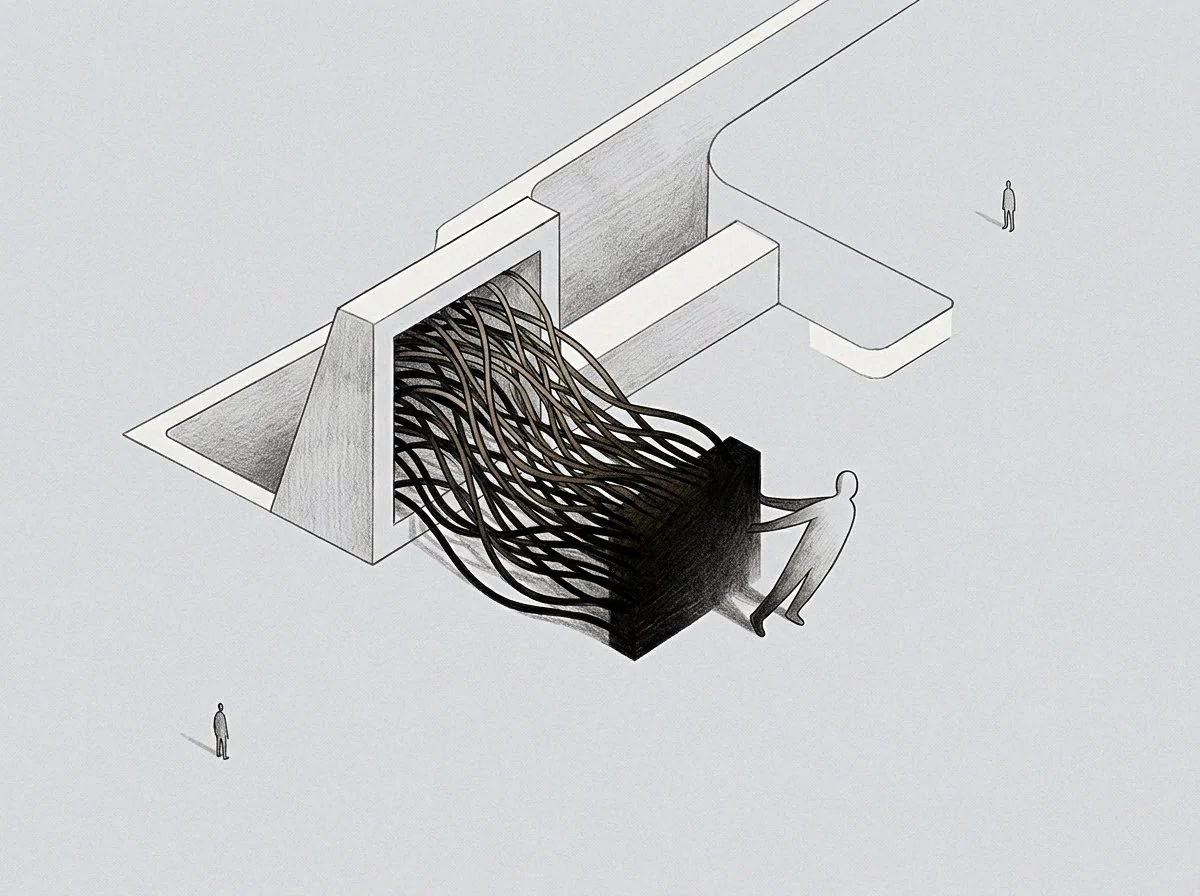
Slope
The morning review logged zero failed tickets while twenty clients waited past their contractual response hour. Three operators kept identical spreadsheets on local drives to patch data dropped by the primary pipeline. Seven hours of each shift went to transcribing records between two unlinked database schemas while the intake queue sat empty.
Work follows energy expenditure rather than written policy. When leadership reorganizes a department through procedural manuals, execution settles back toward whatever path demands the least immediate effort from staff. Operators route inputs through undocumented chat channels because working through eight validation steps in an enterprise database imposes an immediate operational toll.
The volume of unrecorded work indicates where the formal process runs counter to operating reality.
Operations settle along the lowest energetic gradient available to frontline personnel whenever structural procedures impose higher transaction costs than informal workarounds.
Policy defines where leadership expects work to go, but the underlying gradient determines where it actually runs. When a founder sees staff skipping quality verifications, the standard assumption points to poor discipline. In practice, a verification tool that adds eighty seconds of latency creates a steep operational penalty during peak throughput windows.
Staff bypass the check to protect daily volume. Redesigning the workflow requires treating that bypass as an empirical measurement of how the system is shaped.
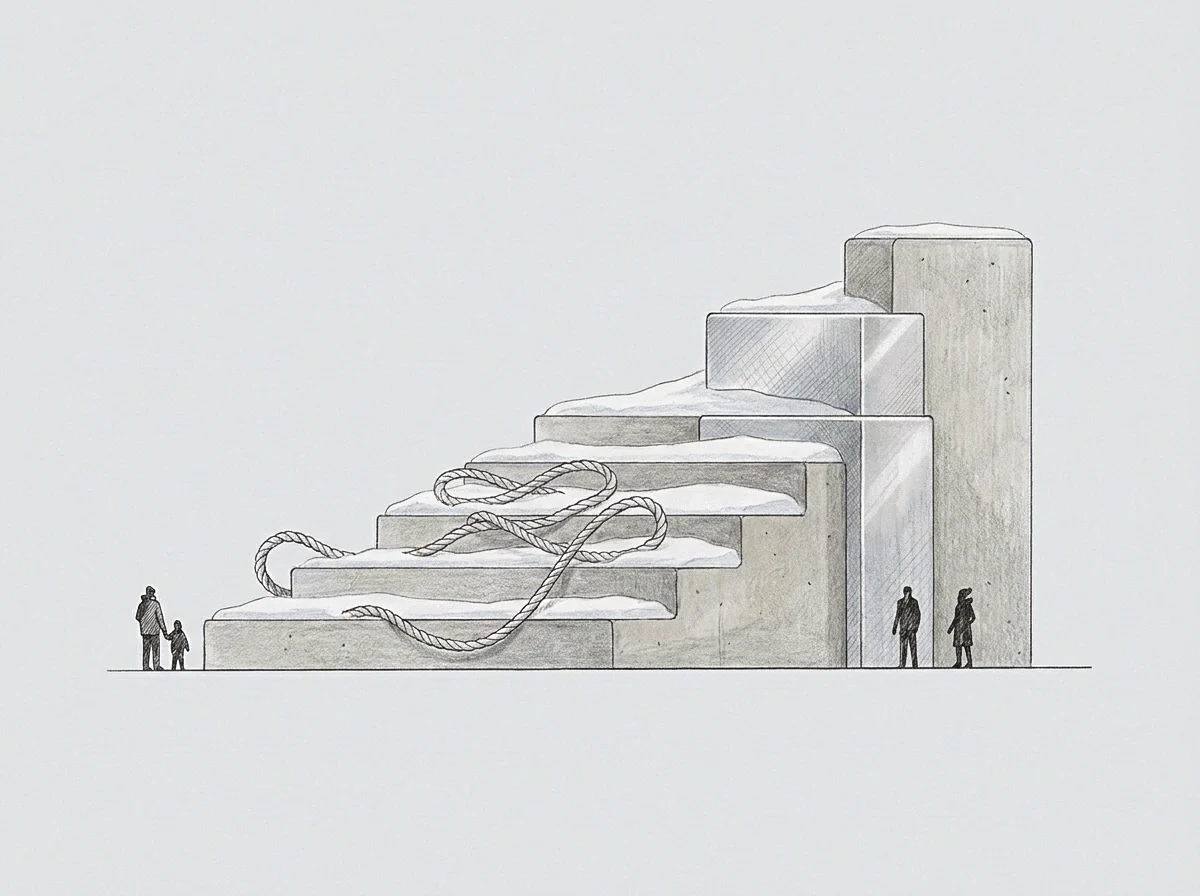
Mathematical Properties of Operational Descent
A workflow operates as a friction landscape. Frontline staff reduce that friction through local, practical choices, taking whatever route clears an incoming ticket fastest regardless of downstream reporting purity. Management counters this drift with mandates, audits, and performance reviews, but these measures only apply temporary pressure.
The moment oversight loosens, execution falls straight back into the established minimum.
Pulling an organization out of an inefficient routine requires steady managerial attention and capital. Because that attention is finite, supervision alone cannot sustain the change. Refactoring works only when engineering alters the underlying operating surface.
Once handoffs disappear, schemas align, and validation sits directly inside primary tooling, the engineered route becomes the actual slope of least resistance.
Structural changes to workflow geometry eliminate the need for ongoing supervisory enforcement.
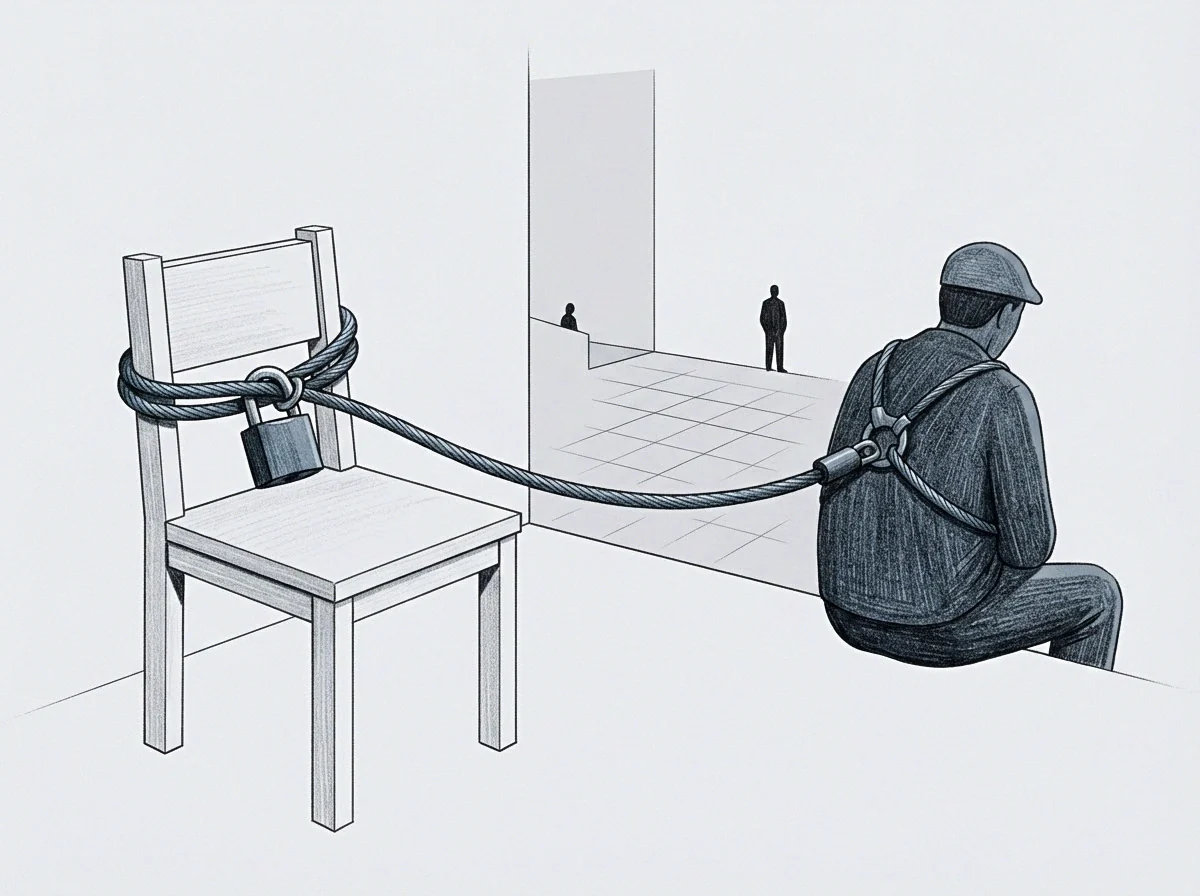
Trench
Decades of improvisation cut deep channels through an organization, directing work long after the software limitations that caused them have been resolved. A founder finds that order exceptions take forty-eight hours to clear despite reconciliation software installed twelve months earlier. An audit uncovers five senior specialists still running exceptions on printed manifests.
The habit persists because past inventory imbalances produced an informal approval chain that outlasted the original problem.
Informal workarounds harden into company habits. New staff pick them up from peers within their first ninety days. While the employee manual outlines a clean sequence from order receipt to warehouse dispatch, actual orders move across four private chat channels, two unindexed spreadsheets, and a morning standup held to sort out competing department priorities.
When leadership updates systems without accounting for these entrenched habits, the new tools go unused. Staff sign into the new software to satisfy management metrics, then immediately switch back to legacy tools to get the work done. They avoid the replacement because its strict validation rules reject the messy, ambiguous inputs common in day-to-day operations.
- Structural sediment forms through years of unmonitored local patches created to bypass rigid tooling constraints.
- Informal verification chains lengthen cycle times while providing false psychological safety to middle managers.
- Schema divergence occurs between central databases and locally maintained operational records, destroying metric integrity across departments.
- Shadow prioritization redirects organizational throughput toward urgent departmental emergencies at the expense of enterprise delivery schedules.
Manual overrides conceal structural problems. Every undocumented patch prevents an immediate stoppage while hiding the coordination cost from leadership. When an operator intercepts an invalid data file and corrects it by hand every Tuesday morning, the central platform logs zero processing errors.
Dashboards show green across every pipeline, even as forty hours of engineering capacity each month vanish into recurring, invisible maintenance.
Fixing core operations requires surfacing the full volume of manual patching. Measuring the gap between documented procedure and actual daily execution gives engineers the exact coordinates for system redesign. The underlying structural gaps must be closed before staff will rely on a new workflow.
Overlooking informal communication channels during a redesign doubles operational labor costs and leaves management with unreliable metrics.

Splice
Refactoring operational mechanics during live production is like working on energized high-voltage lines. Current must keep flowing while technicians splice out damaged sections and install balanced conductors. A company cannot halt client deliveries for six months to rebuild internal logistics.
The shift relies on steady, incremental cutovers along tested structural boundaries.
Engineers maintain continuity by running parallel workflows. Legacy systems continue processing normal volume while a single customer cohort moves to the refactored pipeline, following the strangler pattern common in software architecture. Instead of swapping out an enterprise workflow in one disruptive change, teams gradually route peripheral tasks into automated services.
Over several quarters, reliance on the legacy setup fades until the remaining dependencies can be severed without operational interruption.
Structural changes take hold when parallel routing demonstrates lower cognitive drag than legacy workarounds.
Friction during a cutover shows the true operational tolerances of a team. When customer support shifts from free-form email threads to structured event queues, agents experience sharp friction during the first thirty days. That resistance is an operational signal: it measures the mental effort required to drop established routines.
When leadership misreads that adjustment strain as a system failure, they often cancel the rollout just as the team approaches structural adaptation.
True stability arrives when navigating the new path requires less mental effort than maintaining the old workaround. At that threshold, team behavior shifts without executive intervention. Staff abandon manual spreadsheets because the automated pipeline provides reliable outputs with fewer keystrokes.
The team reverted to manual spreadsheets the minute transaction volume doubled during peak hours.

Rail
Operational architecture requires physical constraints that channel work like steel rails. Policy documents fall short because they depend on voluntary compliance, whereas structural constraints make deviation difficult or costly in time and effort. When a system uses physical controls, it directs behavior through its interface design.
If an invoice requires client verification before issuing, the software simply locks invoice generation until the cryptographic confirmation arrives from the portal.
Take order configuration errors in enterprise software sales. In an unconstrained setup, account representatives write custom delivery promises into free-text fields. Fulfillment teams interpret those notes manually, resulting in a twenty-four percent error rate across multi-product contracts.
Leadership typically responds with mandatory weekly compliance training. Errors fall for three weeks after the sessions, then climb right back to baseline as quarter-end deadlines approach.
| Evaluation Metric | Procedural Enforcement Strategy | Structural Rail Topology |
|---|---|---|
| Operational Latency | Five days for cross-departmental approval review | Two seconds through schema-enforced input boundaries |
| Executive Energy Cost | Recurring compliance meetings and retrospective audits | Zero supervisory overhead following tool configuration |
| Error Recurrence Rate | Twenty-two percent within sixty days of training | Under one percent across all customer cohorts |
| Frontline Cognitive Load | High due to constant manual validation requirements | Low because structural guards eliminate edge cases |
System topology governs daily execution speed by replacing narrative guidance with hard boundary constraints. The configuration tool uses structured menus that only allow valid product combinations. Representatives cannot submit an unfulfillable order because the interface blocks invalid entries before invoicing begins, freeing capacity previously lost to cross-department disputes.
A boundary that permits error relies on human vigilance while a structural rail makes failure mechanically impossible.
Designing effective structural constraints requires precise diagnostic discipline. Over-constraining a process creates fresh workarounds. When validation rules block legitimate, unusual orders that buyers request, sales teams set up shadow channels to hit their quotas.
The technical boundaries have to match the actual commercial variance of the business.
- Boundary alignment matches structural constraints directly to real commercial operating limits rather than idealized policies.
- Automated feedback circuits return immediate diagnostic errors to the task owner instead of delegating verification to external audit teams.
- Friction equalization ensures that entering verified operational data demands fewer keystrokes than inventing an undocumented bypass.
As workarounds compound over successive quarters, structural constraints that mirror physical reality turn compliance from an administrative demand into the path of least resistance. Staff stay on the track because leaving it requires clearing administrative hurdles for no operational gain.
Terms in a master service agreement hold up only when software validations actively block unauthorized specification changes.
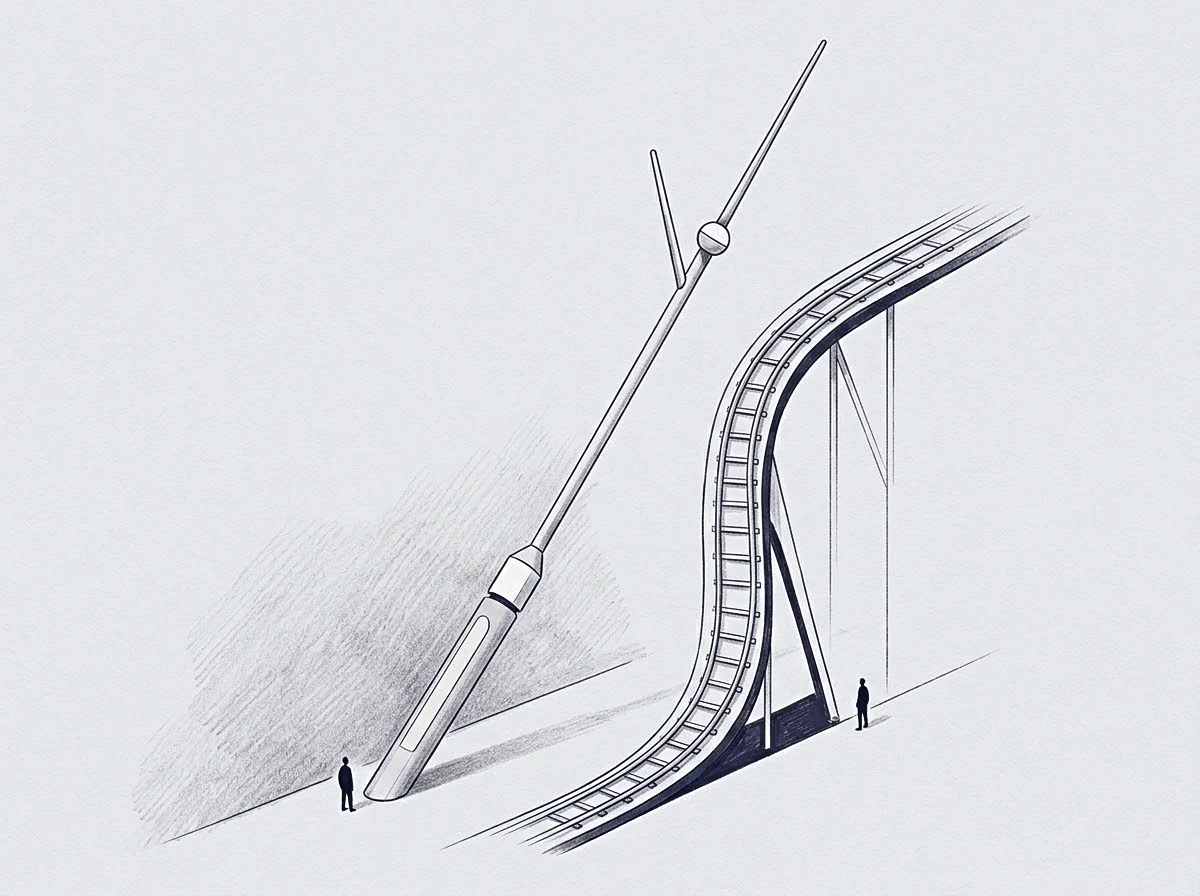
Release
Refactoring core workflows recovers capacity locked in administrative overhead. When an organization cuts out redundant coordination, internal throughput expands without added headcount. A company with eighty employees in delivery often finds that thirty full-time equivalents spend their days handling internal transfers, reconciling data discrepancies, and sitting in status meetings.
Clearing out procedural drag shifts focus from coordination overhead to delivery pace. As engineers remove friction from primary workflows, internal message volume drops and Slack channels go quiet. Status check-ins disappear from calendars because dashboards display pipeline progress directly in real time.
When operations follow the natural path of least resistance, throughput increases across the organization. Client onboarding drops from four weeks to four days. Quality measurements improve because automated checks catch data entry errors before they reach manufacturing systems, bringing daily output in line with designed capacity.
When refactoring succeeds, operations run quietly, mechanically, and predictably across every shift.