
Quantifying Structural Potential Accumulated Behind Technical Boundary Walls in Operational System Expansion
Structural potential behind technical boundary walls equals the inverted magnitude of operational energy expended in sustaining secondary diversion channels.
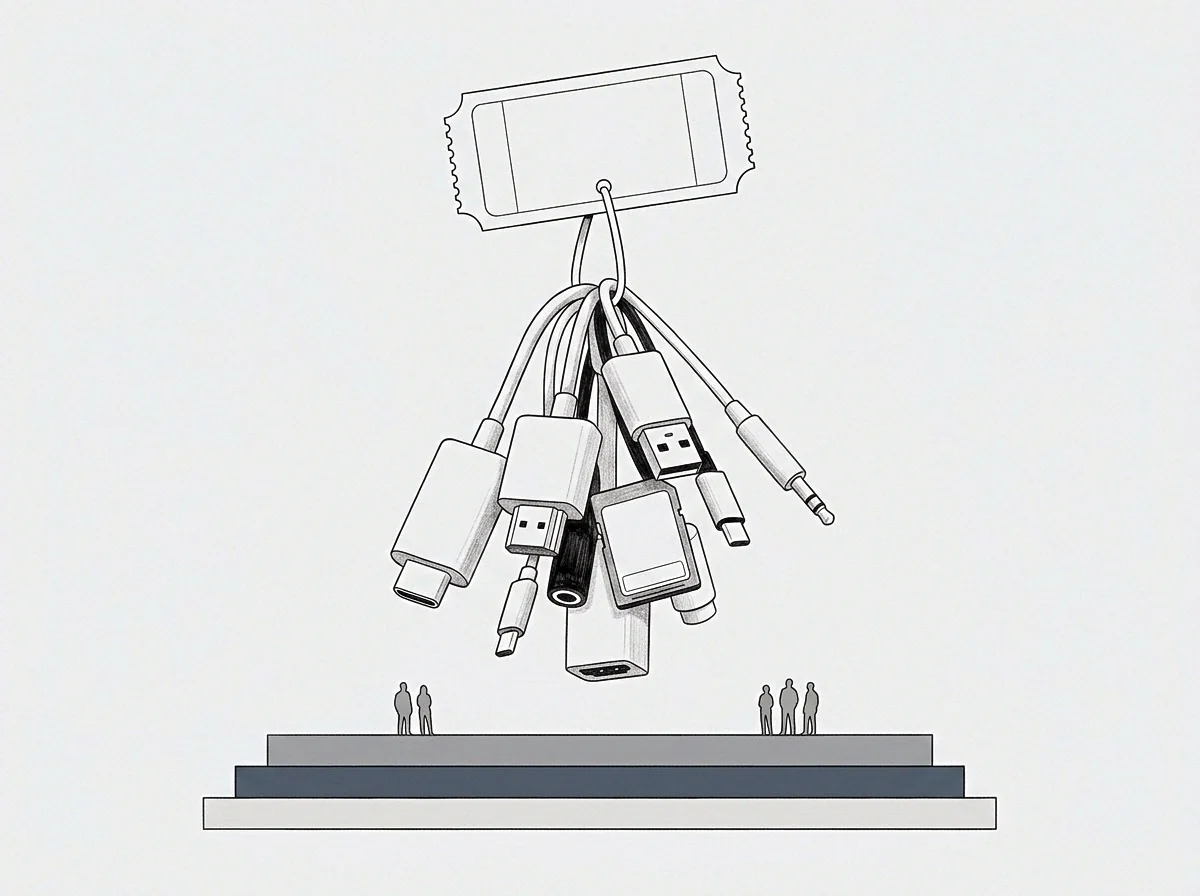
Weir
System architectures start to degrade when expansion traffic hits an immutable technical boundary. The database query timeout stays clamped at two seconds while checkout volume triples during the quarter. Engineering teams bypass the shared ledger service by writing secondary asynchronous worker pools that cache transient states in memory.
Upstream services continue to log completed transactions, yet the underlying system of record falls hours behind.
Engineers recognize this divergence by the proliferation of compensatory machinery. When an operational boundary prevents direct execution along the primary state transition path, teams build secondary routing channels. These bypasses absorb immediate throughput stress, working as a temporary diversion around an unaddressed constraint.
Every secondary worker, distributed message queue, and reconciliation script represents an ordinal unit of diverted force.
A system operating against an unyielding limit diverts its primary force into undocumented operational detours.
The accumulation happens quietly behind the architectural partition. While peripheral systems scale horizontally to absorb arriving customer traffic, the core constraint creates a reservoir of deferred state transformations. Latent demand pools behind the technical threshold.
A platform team observing aggregate uptime figures mistakes localized survival for architectural stability.
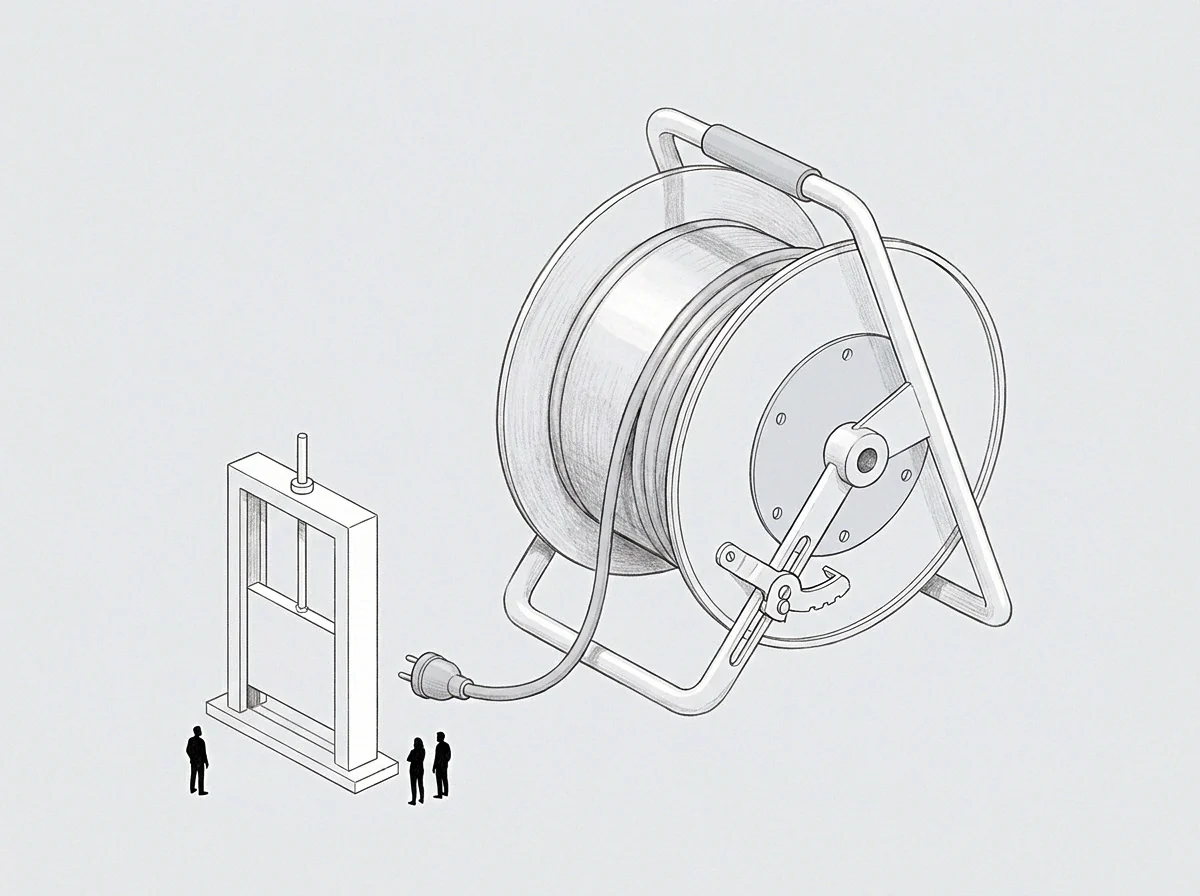
Consequences of Unmetered Diversion
Bypassing a technical boundary generates structural friction across organizational units. When the system routes traffic around a monolithic transaction manager, developers build out-of-band integrity verifiers. These reconciliation jobs consume compute cycles and engineering attention, competing directly with functional feature delivery.
Operational drag compounds across adjacent product groups who remain unaware of the original constraint.
Failure to measure this diverted volume creates systemic fragility during sustained commercial surges. When secondary caches exhaust allocated host memory during peak events, the diversion channels collapse simultaneously. The operational load cascades directly back into the original unyielding wall, precipitating total system failure, massive transaction rollback states, and prolonged platform recovery intervals.

Gradient
Mapping the trajectory of operational resistance requires treating system performance as a continuous topological slope. The value axis measures completed, verified business outcomes delivered per unit of computational and human expenditure. The descent gradient traces the trajectory of minimal resistance, capturing the operational compromises teams adopt when direct architectural expansion becomes prohibitively expensive.
Descent reflects the optimization path chosen by operators under immediate delivery pressure. When altering a core persistence layer demands months of schema migration work, teams implement local document stores to capture new entity attributes. This choice follows the steep downward path of low short-term friction.
The descent gradient records each compensatory adjustment, marking the distance between optimal design and expedient compromise.
A steep descent toward operational compromise reveals the magnitude of deferred structural adaptation.
Mirroring this downward trajectory across the performance baseline reveals the latent potential trapped within the organization. The magnitude of structural capacity waiting to be unlocked equals the exact volume of energy expended in sustaining workarounds, with inverted polarity. When an enterprise expends forty engineering hours weekly maintaining patch scripts for a billing interface, those forty hours establish the lower bound of dormant potential available upon boundary reconstruction.
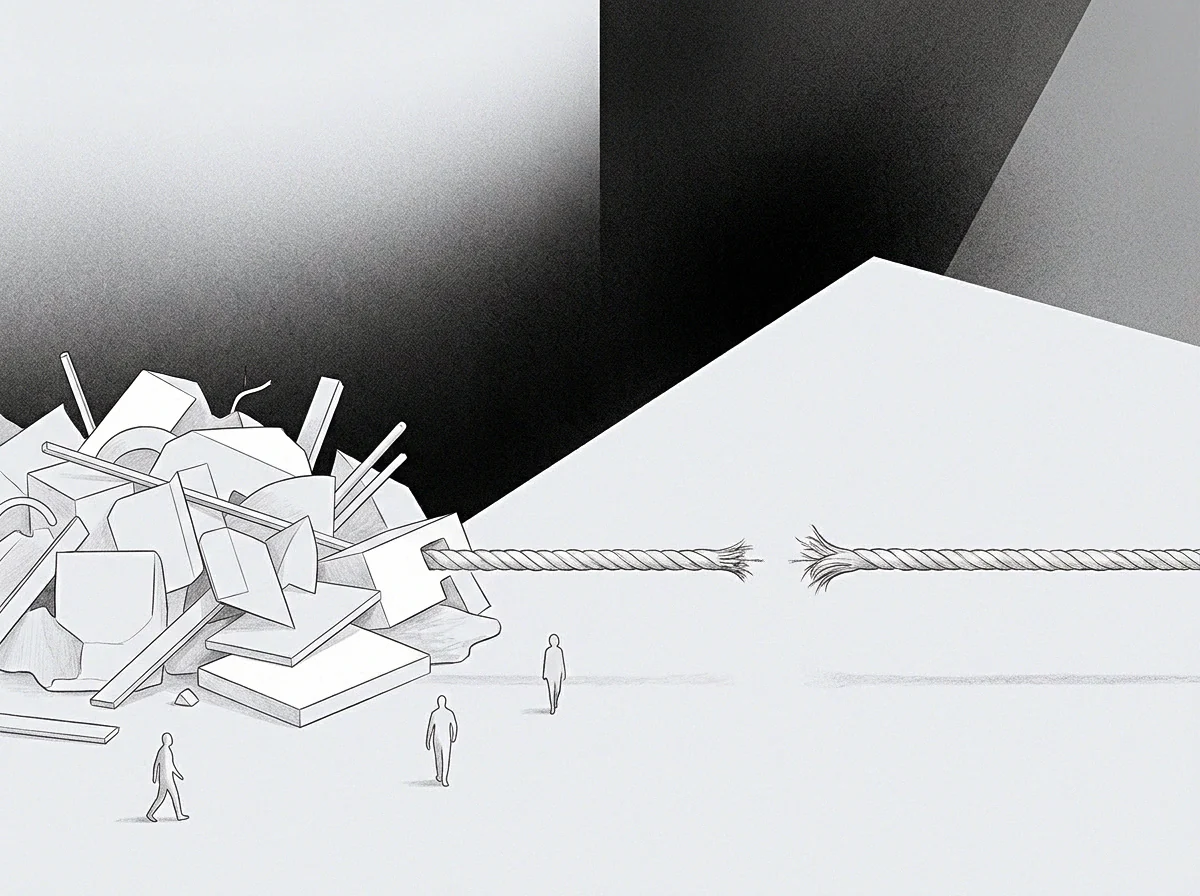
Where Does the Unspent Work Accumulate?
Avoidance functions as an exact spatial marker of operational blockage. Systems route traffic away from modules that carry high operational risk or excessive cognitive overhead. Tracking the frequency and geographic density of these diversionary routes identifies the exact coordinates of the technical constraint.
- Compensatory Cache Layers absorb read amplification resulting from unindexed core relations while increasing cache invalidation failures across fleet boundaries.
- Manual Remediation Queues capture malformed state transfers rejected by rigid upstream validation layers, requiring dedicated operations staff for resolution.
- Asynchronous Bridge Pipelines decouple tightly bound services through intermediate brokers, introducing eventual consistency gaps during high write volatility.
- Shadow Data Stores duplicate primary entities inside specialized query engines to satisfy analytical throughput without crashing production databases.
Each diversion route carries an identifiable operating tax. By quantifying the aggregate capacity consumed by secondary paths, engineering leadership calculates the structural potential waiting behind the boundary.

Metric
Quantifying accumulated structural potential requires clear distinctions between cardinal accounting tallies and ordinal vectors of operational friction. Financial ledgers track the monetary price of server infrastructure and engineering salaries as single cardinal figures. These figures fail to indicate whether a platform approaches catastrophic failure or holds substantial reserves for expansion.
Operational friction exists as an ordinal vector, describing the directional intensity of resistance encountered at specific architectural interfaces.
Measurement theory mandates defining baseline conditions prior to evaluating system deformation. The baseline records resource consumption, error frequencies, and task completion latency under nominal operating volumes. Deviations from this baseline indicate the formation of structural pressure.
When transaction completion times double while infrastructure utilization remains static, the degradation signals non-linear queuing behind an internal barrier.
A cardinal ledger entry records historic expenditures while omitting the directional strain accumulating inside system boundaries.
Engineers evaluate boundary walls across four concrete physical and computational dimensions. The following comparative matrix outlines the operational indicators, measurement criteria, and latent potential expressions observed when technical boundaries arrest system expansion.
| Boundary Classification | Primary Constraint Parameter | Observable Friction Vector | Accumulated Latent Potential |
|---|---|---|---|
| Relational Monolith | Write Lock Contention | Escalating connection pooling timeouts | Direct horizontal write throughput |
| Synchronous Network Core | Cascading RPC Latency | Growth in exponential retry volumes | Concurrent service decoupling volume |
| Schema Rigidity Barrier | Field Migration Overhead | Proliferation of unstructured payloads | Domain model expressiveness velocity |
| Deployment Pipeline Choke | Integration Test Durations | Batch deployment size enlargement | Continuous feature delivery frequency |
Analyzing these parameters allows an operator to forecast system behavior under stepped volume expansion. A relational monolith demonstrating elevated lock contention will not scale smoothly with increased processor allocation. Instead, lock wait times compound exponentially, converting incoming compute investments into wasted heat.
Tracking the ratio between primary execution attempts and compensatory mitigation events yields a clean multiplier of structural accumulation. As the multiplier expands, the latent capacity of the platform contracts into defensive posturing. The system that requires extensive supervision to perform routine operations stores massive potential within its boundaries, provided leadership unblocks the primary pathway.
Measure the work consumed by the bypass to know the value of dismantling the barrier.

Scale
Operational expansion transforms minor architectural omissions into catastrophic barriers. In early organizational stages, manual workarounds bridge technical gaps with negligible friction. A founder manually reconciles payment processing discrepancies at midnight using spreadsheets.
As transaction volumes expand by orders of magnitude, manual intervention ceases to be viable.
Consider an operational system processing ten thousand daily orders using a single synchronous event bus. The bus guarantees strict sequential execution across all transactional boundaries. When commercial expansion elevates volume to one hundred thousand daily orders, the thread pool saturates completely.
The engineering organization faces two divergent development pathways with radically distinct structural consequences.
- The organization wraps the existing bus in secondary priority queues, assigning operational preference to enterprise clients while retail transactions queue for extended intervals.
- Engineers introduce partition keys to segment event streams across distinct execution workers, introducing localized reordering anomalies.
- The organization deploys dedicated customer success personnel to explain transaction delivery delays to affected downstream clients.
- Leadership mandates scheduled batch windows during off-peak night hours to clear backlogged system state updates.
Each successive mitigation consumes organizational headroom. Rather than expanding commercial capacity, engineering resources remain locked in defensive triage. The technical boundary wall absorbs corporate momentum, redirecting creative initiative toward systemic preservation.
A team absorbed in sustaining historical compromises relinquishes the capacity to construct new operational capability.
Dismantling the boundary wall requires executing work against structural resistance. Teams must climb the ascent gradient, enduring the computational and organizational friction of refactoring shared state mechanisms. This process demands substantial temporary capacity allocation.
When leadership fails to budget for this ascent, teams instinctively retreat to familiar diversion channels.
A legacy event bus functions adequately when daily processing targets are eventually cleared before morning trading opens.
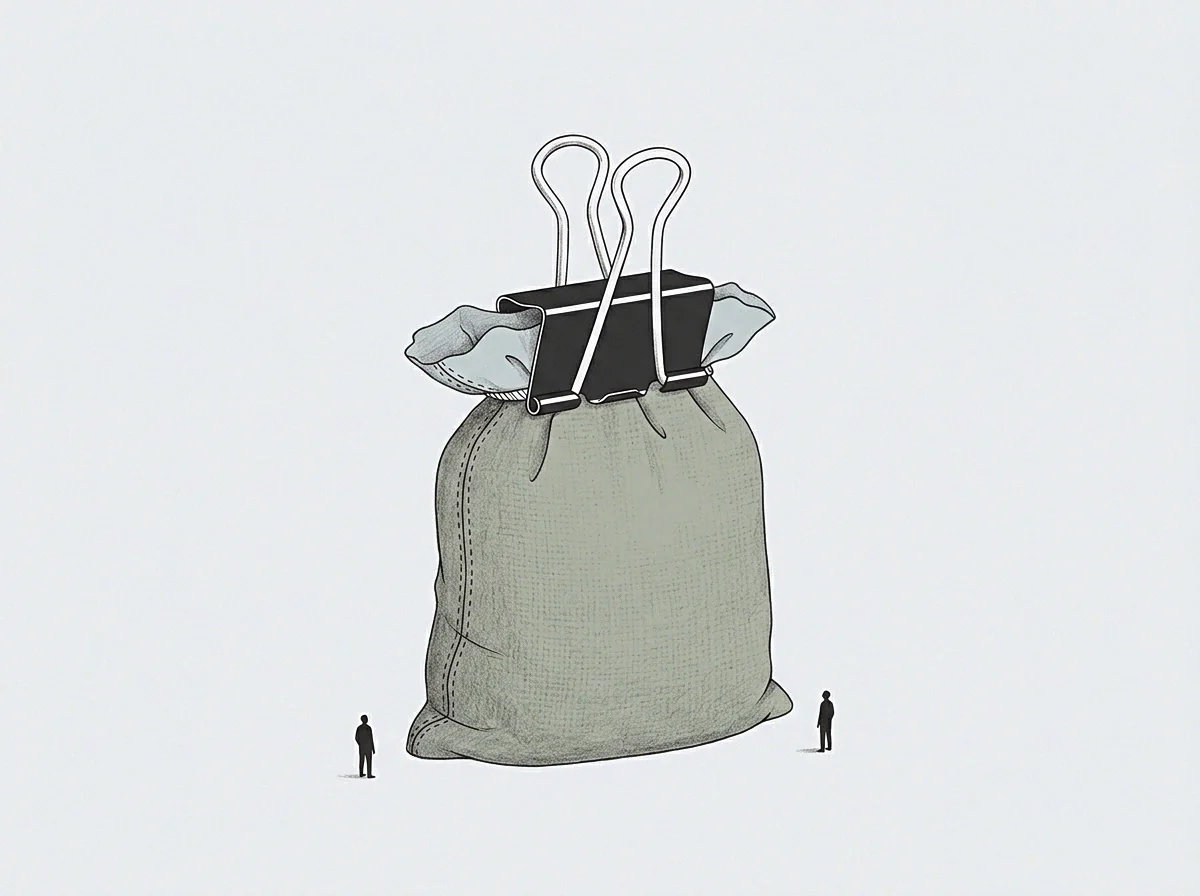
Gate
Releasing structural potential accumulated behind technical boundaries requires methodical boundary relocation rather than uncontrolled wall demolition. Demolishing an architectural constraint without managing downstream capacity introduces destructive operational shockwaves. When a constrained database bottleneck clears instantaneously, downstream notification pipelines, third-party logistics APIs, and fraud validation models experience unprecedented message volume.
Operators establish gated release valves using dynamic traffic allocation protocols. By provisioning rate limiters at the boundary release interface, systems gradually drain stored state backlog into modernized execution layers. This gradual drainage preserves system equilibrium while allowing observability instrumentation to capture emergent failure coordinates.
The engineering organization monitors queue latency gradients to ensure downstream consumers scale proportionally with released throughput.
Boundary governance requires clear operational contracts between architectural zones. Service level objectives must define acceptable operational drag, establishing explicit criteria for when bypass development must halt in favor of core architectural remediation. When a secondary caching layer crosses twenty percent of primary infrastructure costs, the governance protocol mandates immediate remediation of underlying query performance.
How does an organization distinguish between a technical boundary wall that safeguards core data integrity and one that merely preserves outdated operational conventions?