
Why Vector Velocity Normalisation Fails When Hidden Administrative Friction Compounds
Normalised vector velocity collapses when administrative friction multiplies queue latencies and diverts cognitive focus away from real value delivery.
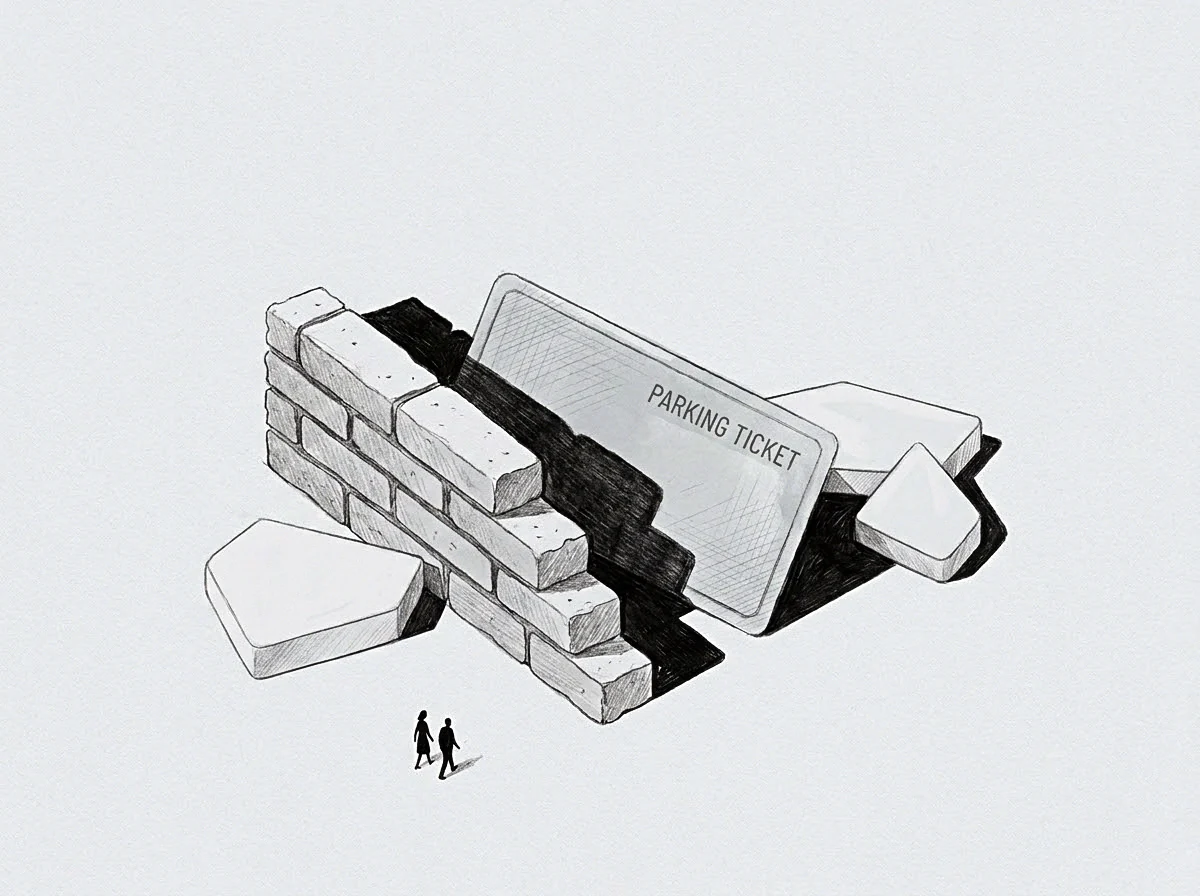
Wall
A dashboard in an autumn planning cycle recorded forty completed tickets across two sprint cycles, yet the release milestone drifted back eleven weeks. The team had normalized its velocity calculation by dividing closed story points by headcount, producing a clean horizontal line across four consecutive quarters. The metric reported steady momentum while working software ground to a standstill.
Behind the interface, six distinct approval layers had silently attached themselves to the deployment sequence, turning every three-line script alteration into an ordeal spanning nine calendar days. Progress registered on the chart because the definition of output had detached from delivery.
Vector velocity attempts to preserve both the speed of execution and the directional alignment of that effort along an intended value gradient. When an engineering or product team adopts normalisation, the mathematical operation scales raw throughput against an assumed capacity coefficient, treating administrative overhead as a constant linear tax. Linear taxes do not compound.
Administrative drag behaves as an exponential governor that redistributes engineering attention from creative synthesis toward compliance maintenance. The operator watches the nominal velocity vector maintain its length on paper while the physical boundary of the company hardens against new releases.
Friction unrecorded by the reporting instrument accumulates directly inside the operational baseline.
Each administrative checkpoint introduces an interface queue. Tickets sit waiting for architectural review boards, privacy audits, procurement verifications, and compliance sign-offs. Because each wait state carries a nonzero variance, queue latency multiplies rather than sums.
Context switching degrades the latent capacity of the builders. A developer interrupted three times a morning no longer solves deep spatial constraints; that person picks up small, safe tasks that fit between scheduled status calls. The tickets close quickly, the normalized score remains immaculate, and the actual product boundary stays stationary.
Friction left unmeasured produces a systematic distortion in organizational reality, leaving the enterprise unable to steer while convinced it moves at terminal velocity.

Gauge
Measurement systems fail through the omission of unpriced time. Cardinal indices tally story points, code commits, customer tickets closed, and documentation pages revised, assigning discrete numerical weights to discrete transactional units. Cost operates along an ordinal vector.
The true expenditure of an administrative mandate is ordinal rank displacement: the high-value technical problem that lost its position on the calendar because an audit questionnaire consumed four consecutive afternoons. Standard tracking instruments register the completed questionnaire as administrative output while leaving the displaced architecture unrecorded.

Distortions in Scalar Velocity Aggregations
A scalar representation of speed discards directional variance. When leadership normalizes team velocity by treating internal procedures as negligible background resistance, the metric conceals directional decay.
- Scalar Truncation Error collapses multidimensional development efforts into a single non-directional quantity, masking when productive velocity degrades into bureaucratic self-preservation.
- Administrative Absorption Coefficient tracks the progressive share of engineering cycles diverted into unlogged compliance routines, expanding quietly until overhead consumes available sprint reserves.
- Context Fragmentation Latency penalizes cognitive focus through scattered sign-off obligations, breaking contiguous problem-solving windows into unusable half-hour intervals.
Normalising vector velocity against historical output assumes an invariant coordinate system. When administrative hurdles multiply, the underlying terrain deforms. The shortest distance between conception and production curves around committee calendars and review boards.
A velocity vector that looks straight on an executive status page is tracing a convoluted loop through organizational holding pens. The team expends real kinetic effort, burnup charts reflect activity, and the project descends into an inescapable local minimum.
Mathematical normalisation masks systemic stall whenever process overhead scales faster than raw production.
Unmeasured process drag always extracts payment from the highest-leverage initiatives first.
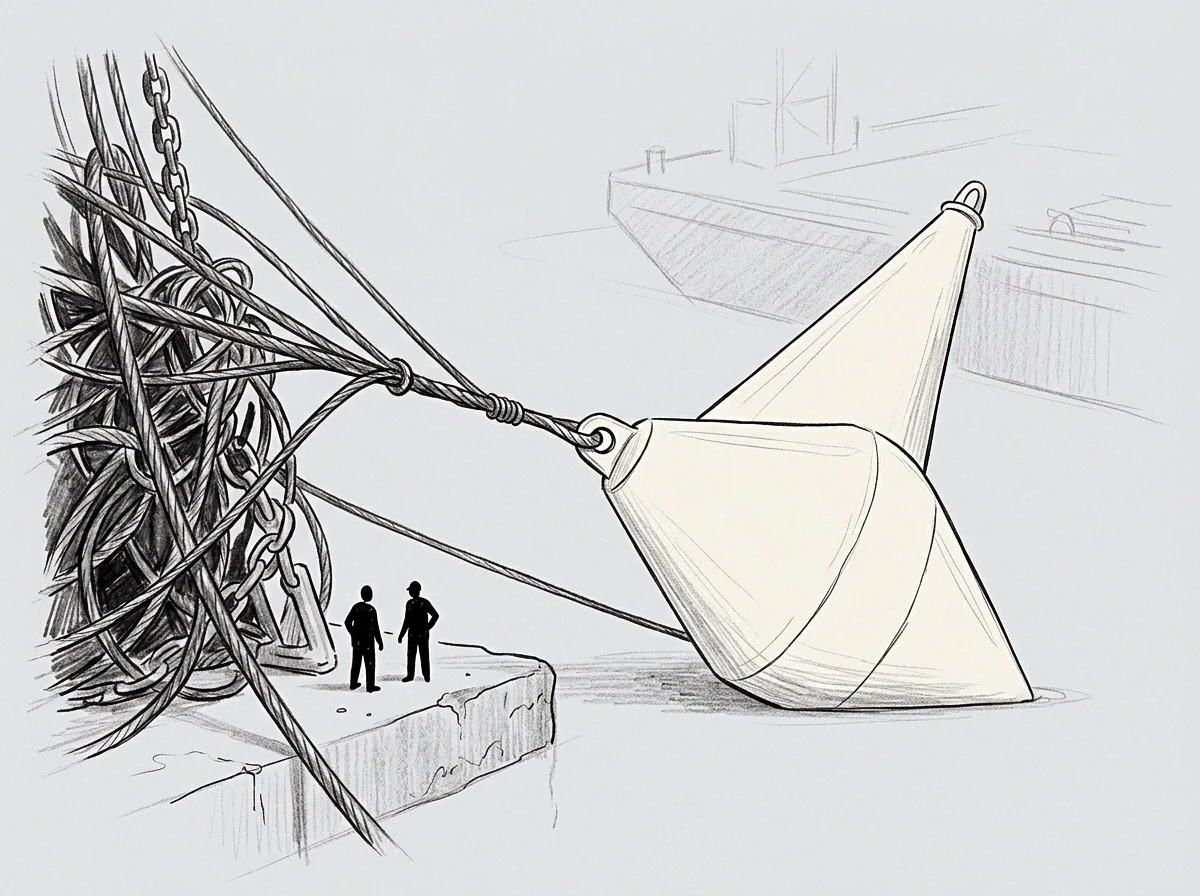
Mesh
Interlocking procedural obligations create an administrative mesh that traps organizational kinetic energy. Each gatekeeper establishes a localized setpoint designed to minimize parochial failure modes. The legal team adds a review gate to prevent liability exposure.
The security team injects automated scans and manual sign-offs to prevent data vulnerability. The platform team mandates architectural compliance tickets to maintain standardization. None of these individual requirements seeks to halt delivery.
Operating together, they form a dense network of mutual dependencies that arrests directional momentum.

Can Directional Purity Survive Multiplied Approvals?
Every additional gate alters the system gradient. The path of least resistance bends away from steep value delivery toward passive gate compliance. Engineers learn the institutional terrain.
They stop pursuing ambitious architectural refactors that trigger six oversight hearings, choosing instead trivial cosmetic modifications that pass through automated checkers without human review. The administrative mesh filters out substantive evolution while giving safe stagnation an unobstructed route to production.
| Evaluation Metric | Linear Friction Baseline | Compounding Administrative Regime |
|---|---|---|
| Throughput Calculation | Scalar subtraction of predictable overhead | Exponential decay driven by cross-functional queue latency |
| Directional Alignment | Direct projection toward product objectives | Deflection toward low-resistance procedural compliance |
| Capacity Utilization | High concentration of uninterrupted deep engineering hours | Severe cognitive fragmentation across recurring status reviews |
| Recovery Cost | Proportional to backlog volume | Disproportionate due to entrenched governance inertia |
The table displays the structural breakdown. In a linear friction environment, adding an administrative check deducts a fixed number of hours, leaving the direction of the vector intact. In a compounding regime, the interaction between checkpoints generates runaway coordination delays.
A delay in security sign-off invalidates an existing architectural approval, restarting the validation loop from scratch. The work cycles indefinitely through intermediate states without reaching the deployment threshold.
The standard operating protocol specifies that no production release occurs without concurrent authorization from four separate functional directorates, permanently fixing the minimum latency of any system modification regardless of urgency.

Volume
Unspent potential sits inside an enterprise as trapped volume behind the administrative barrier. When builders run into bureaucratic walls, they cease pushing against the boundary. They conserve personal capital, lower their expectations of velocity, and channel unspent energy into documentation, elaborate mockups, and internal socialization meetings.
This adaptation creates a false baseline. The executive suite observes that the team appears busy, calm, and operating at predictable cadences, failing to recognize that seventy percent of productive capacity has retreated behind an institutional levee.
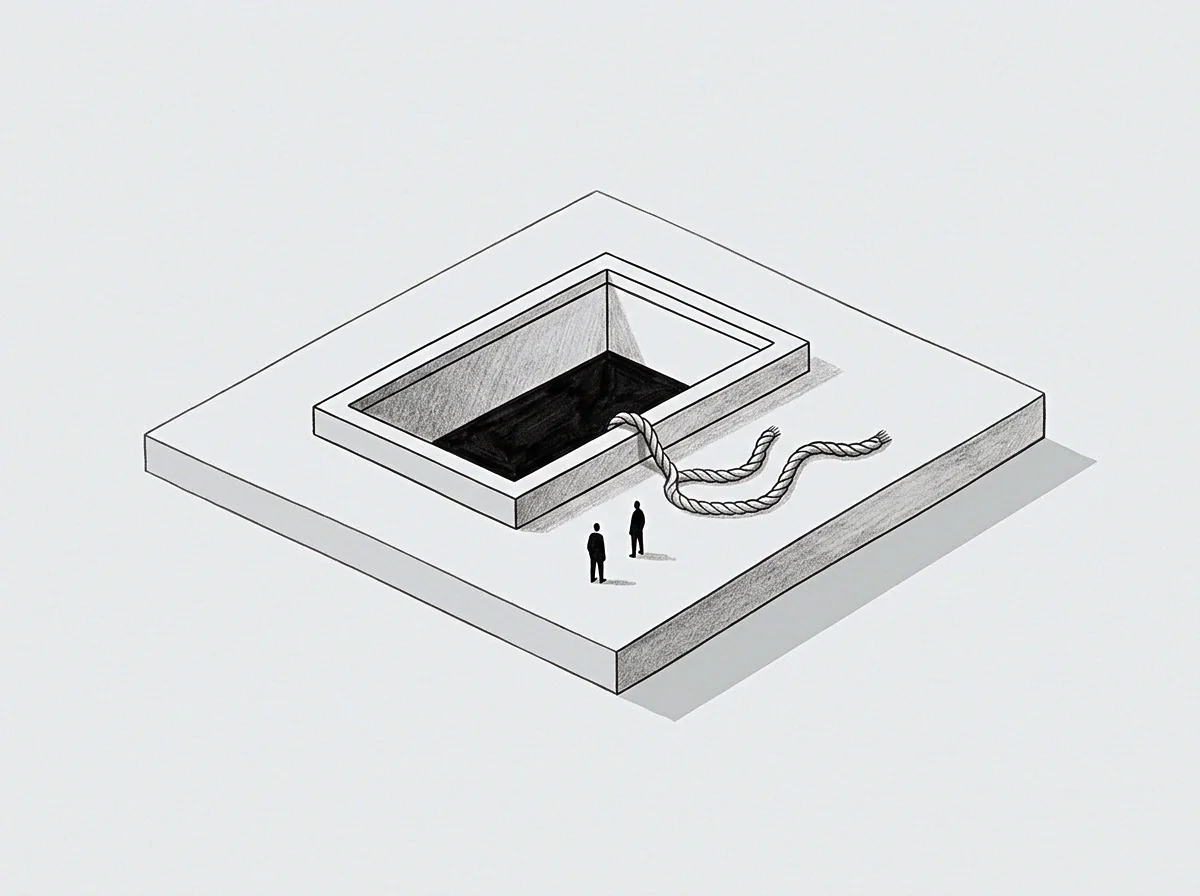
Reclaiming Lost Directional Gradients
Dismantling compounding friction demands structural intervention on the workflow geometry. Administrative rules persist because removing them exposes internal leaders to visible accountability.
- Pruning Operational Checkpoints eliminates non-statutory review steps, returning discretionary authority directly to the functional contributors who build the software.
- Collapsing Authorization Chains combines sequential committee approvals into single concurrent sessions, terminating iterative queue states that stall project progression.
- Establishing Unmonitored Build Windows secures whole days free from status reporting, protecting cognitive momentum from procedural interruptions.
Consider two organizations tackling an identical infrastructure modernization initiative over twelve calendar months. The first operates under an open delegation mandate, permitting engineering leads to modify deployment targets upon passing automated functional tests. The second maintains a three-tier governance committee requiring formal impact presentations before infrastructure modifications take effect.
The second organization expends four times the operational hours on documentation and cross-departmental coordination. Both enterprises record consistent weekly velocity points. The first organization ships eighteen updates; the second completes two.
Administrative structures expand until unmonitored development capacity reaches zero.
The procedural overhead exists to protect the organization from rogue errors, yet its compounded presence quietly suffocates the delivery of commercial value.
The reporting metric showed green for six straight months, so the failure to deliver cannot originate from our department.

Mirror
Looking into the baseline reveals what the organisation has chosen to avoid. The avoidance of hard commercial confrontation often disguises itself as procedural rigor. Setting up a governance task force costs less emotional friction than telling an executive that a product hypothesis failed in the market.
Teams construct elaborate administrative gauntlets to defer the moment of empirical reality. As long as a feature remains trapped in compliance reviews, it cannot fail in production. Administrative friction becomes a psychological shelter for both operators and leaders who dread the verdict of unmediated market exposure.
The mathematical normalisation of velocity functions as the accounting trick that makes this avoidance tolerable. By indexing throughput to internal activity scores rather than customer value delivery, the organization creates an artificial reality where motion substitutes for progress. The numbers look stable on quarterly slides.
The founders speak of methodical discipline and institutional maturity. Beneath this vocabulary of professional governance sits a stalled engine, spinning its wheels within an ever-thickening paste of internal sign-offs, risk assessments, and alignment calls.
The boundary of the business hardens precisely where procedural avoidance substitutes for empirical execution.
A true recovery of vector velocity demands discarding the scalar illusion. Progress requires measuring displacement across physical terrain rather than revolutions of the internal engine. That work hurts.
It forces leaders to dismantle protective bureaucracies, to eliminate comfortable committee seats, and to expose their teams to the raw friction of real-world deployment. The latent potential of the team can only translate into kinetic progress when the administrative mesh is cut away, leaving builders directly exposed to the consequences of their choices.
Will organizational leadership muster the resolve to dismantle the self-protecting compliance machinery before external competitors exploit the resulting inertia?