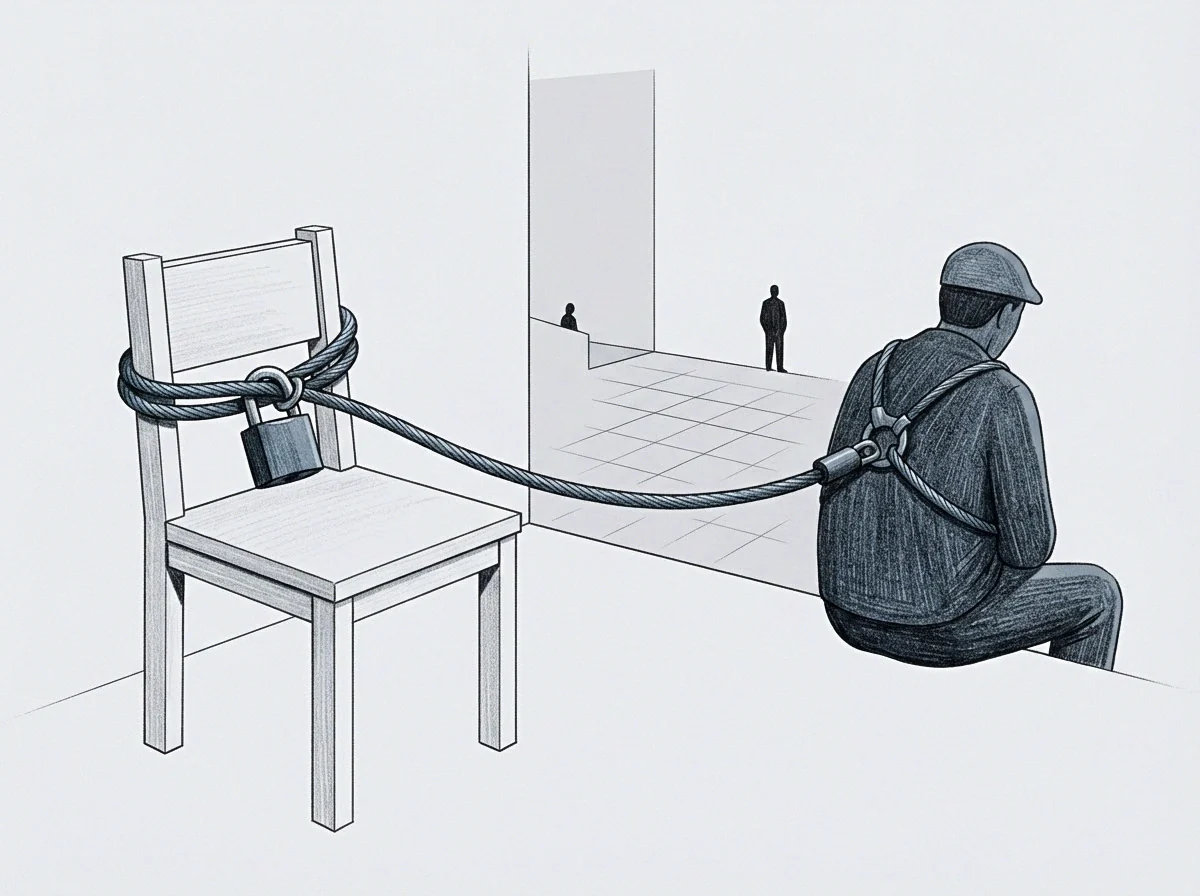
Meaning
Numerical arrays define the available bandwidth for project transition after the closure of a firm. Capacity vectors track the delta between current professional output and potential future engagement on secondary ventures. These units function as an ordinal scale for measuring the loss of focus following an exit.
Operational Scope
Individual assets possess distinct limits regarding the density of attention they can sustain outside of a singular founding role. Capacity vectors identify the gradient of that attention when a person shifts from intensive operational duties to an advisory or speculative mode. An increase in the frequency of external meetings alters the orientation of the vector toward a higher volatility state.
Calculation occurs by mapping the duration of active work blocks against the non-linear decline of residual mental energy. Monitoring this trajectory prevents the misallocation of resources across multiple disparate tasks.
Metric Precision
Mathematical rigor requires the conversion of qualitative commitments into a directional set of data points. Capacity vectors display the shift in intensity rather than a flat sum of hours spent. Normalization happens when the observer aligns these findings with a baseline established during the tenure of the previous company.
Deviations from this baseline appear as changes in the vector magnitude, which signals a saturation point where further project adoption results in degraded output quality.
Strategic Application
Decision logic relies upon the identification of the pivot point where energy expenditure exceeds the sustainable threshold. Capacity vectors provide the logic for choosing between competing commitments by highlighting which path minimizes the entropy of the professional portfolio. A higher vector magnitude indicates a state of overextension that restricts the ability to pursue high-value, low-frequency objectives.
Correct interpretation of this data enables the maintenance of a stable trajectory without the necessity for external intervention or artificial constraints.